About Roberts London

A continuing study of living and working in London.

Discover Roberts London, a continuing editorial study of the places, businesses, objects and cultural life encountered across the city.
London study of focused exploration
ROBERTS LONDON

A Continuing Study

London is too extensive, changeable and contradictory to be contained within a definitive guide. Places open, close and change hands. Buildings acquire new uses. Institutions reconsider their collections. Familiar streets reveal details that have been passed many times without being properly noticed. An understanding of London develops through repetition, comparison and return visits. Roberts London therefore approaches the city as a continuing study.

A Continuing Study

ROBERTS LONDON

The City in Use

Roberts London is interested in the places through which the city is lived rather than in London as an abstract idea.

Its editorial sections consider how people eat, meet, work, shop, make, perform, collect, preserve and spend time. Together, they form a record of London’s cultural, commercial and material life.

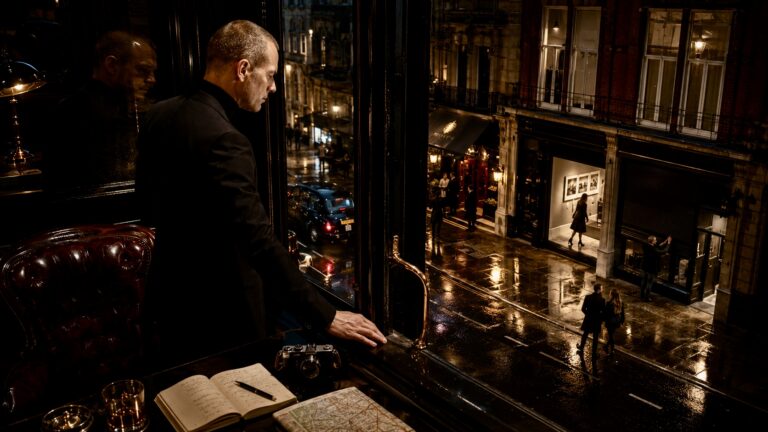
Contemplative moments in a rainy London street
How the Work Is Made

Roberts London begins with first-hand experience wherever that is possible.

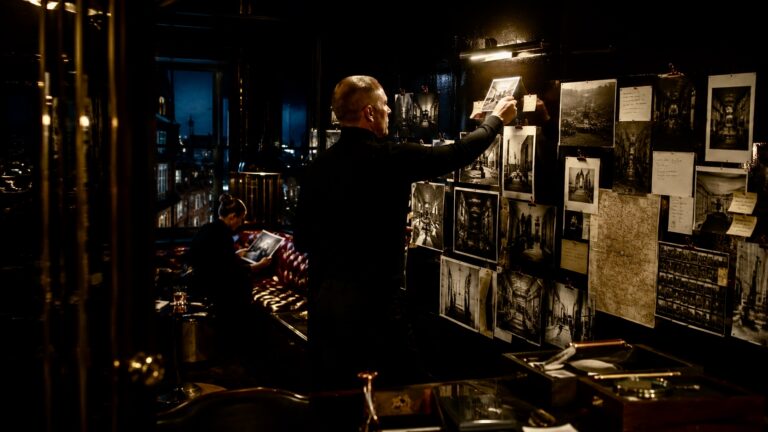
The work may involve visiting a place, walking a street, attending an exhibition, examining an object, photographing an interior or returning to somewhere previously covered. Direct observation is supported by reading, archival material, historical sources, published records and conversations with people who know the subject.
The purpose is not to manufacture certainty where it does not exist. Historical fact, personal observation and editorial interpretation should remain distinguishable from one another.

Publisher and Editor

Roberts London is published and edited by Barry Roberts.

His wider work concerns British businesses, jewellery, silver, design, objects and the ways in which companies, places and possessions acquire meaning over time.

Roberts London provides a broader editorial setting for those interests. It allows hospitality, art, retail, architecture, history and working life to be considered as connected parts of the same city.

The publication is intentionally larger than a personal diary while remaining accountable to a named editor. Its character comes from a recognisable point of view, but its long-term purpose is to build an editorial identity and archive that can also support other writers, photographers and contributors.
