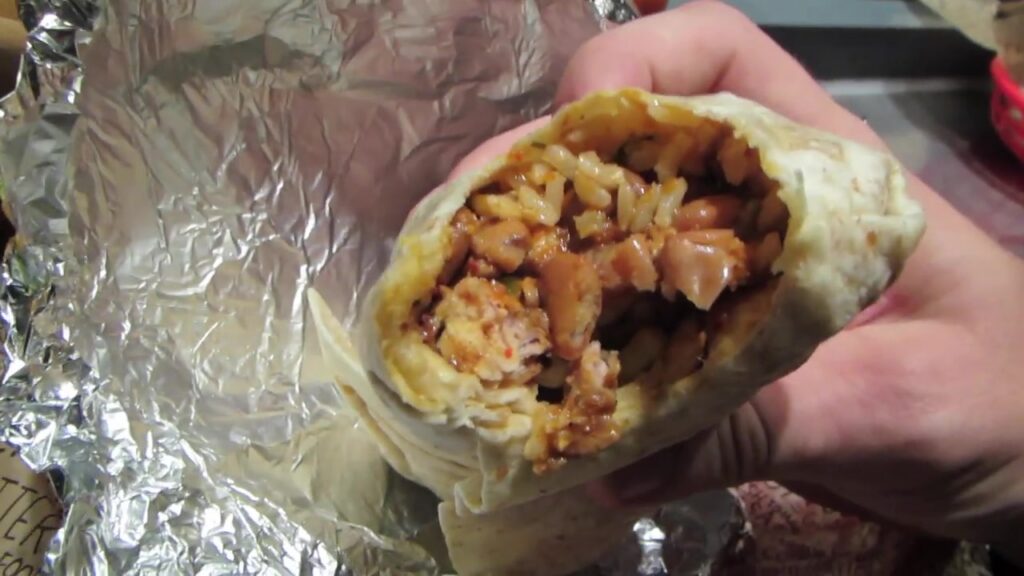
A short Roberts London film from October 2014 records the complete Chipotle ordering process in central London, from choosing rice, beans and grilled fillings to opening the finished burrito at the table.
London’s restaurant landscape changes quickly enough for an ordinary meal to become an archive record. New formats arrive, unfamiliar ordering systems become routine and international chains settle into the city alongside independent cafés, pubs and long-established dining rooms.
This Roberts London film, first published in October 2014, records a visit to Chipotle Mexican Grill in central London. At just over five minutes, it is a compact account of the experience: finding the restaurant, joining the queue, choosing the ingredients, adding chips and guacamole and finally opening the completed burrito.
The film does not attempt a comprehensive restaurant review. Its value lies in showing the process clearly, at a point when the American fast-casual format was still relatively new to many London customers.
A London opening at night
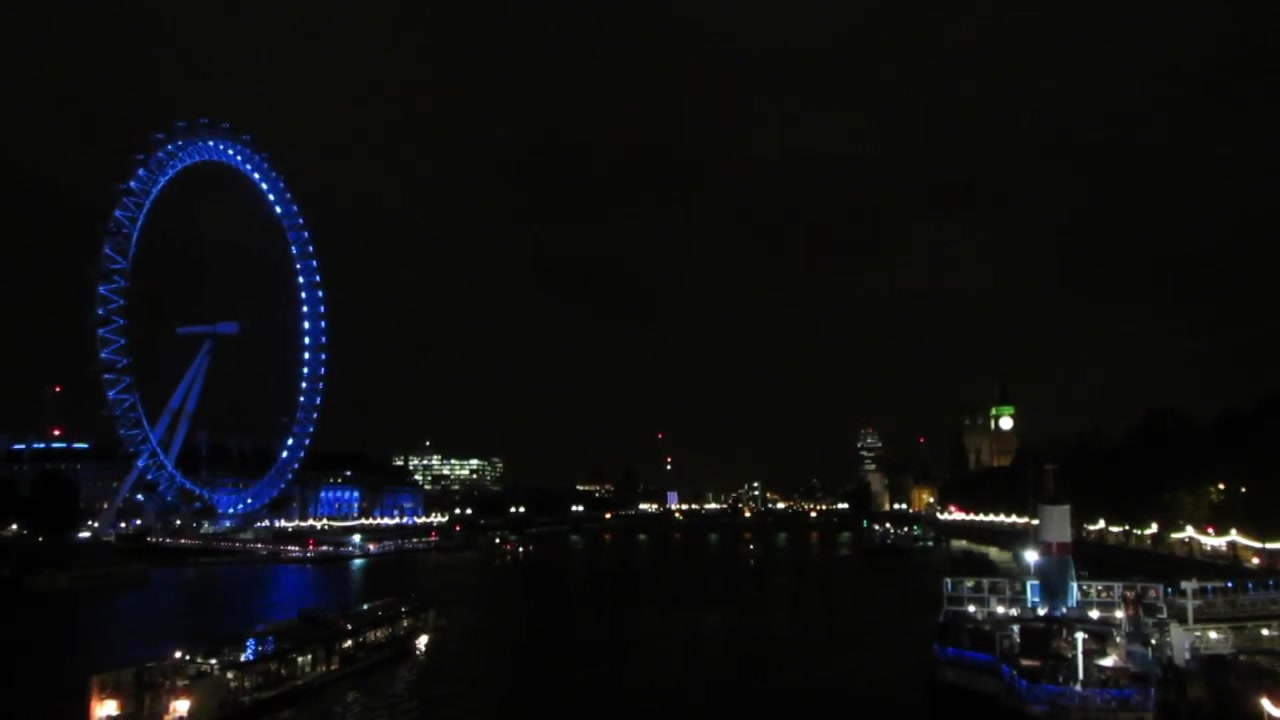
The film begins with the London Eye illuminated across the Thames. It is a familiar Roberts London device: establishing the city before turning towards a smaller everyday experience within it.
A brief daytime view and an on-screen map follow before the journey returns to the streets after dark. The contrast is useful. The film is not presenting the restaurant as a destination detached from London; it places the meal within a wider evening in the city.
The exact branch is not stated clearly enough in the surviving film to assign with confidence. The map points towards central London around the Tottenham Court Road and Oxford Street area, but the article leaves the location at that broader level rather than guessing an address.
Ordering along the counter
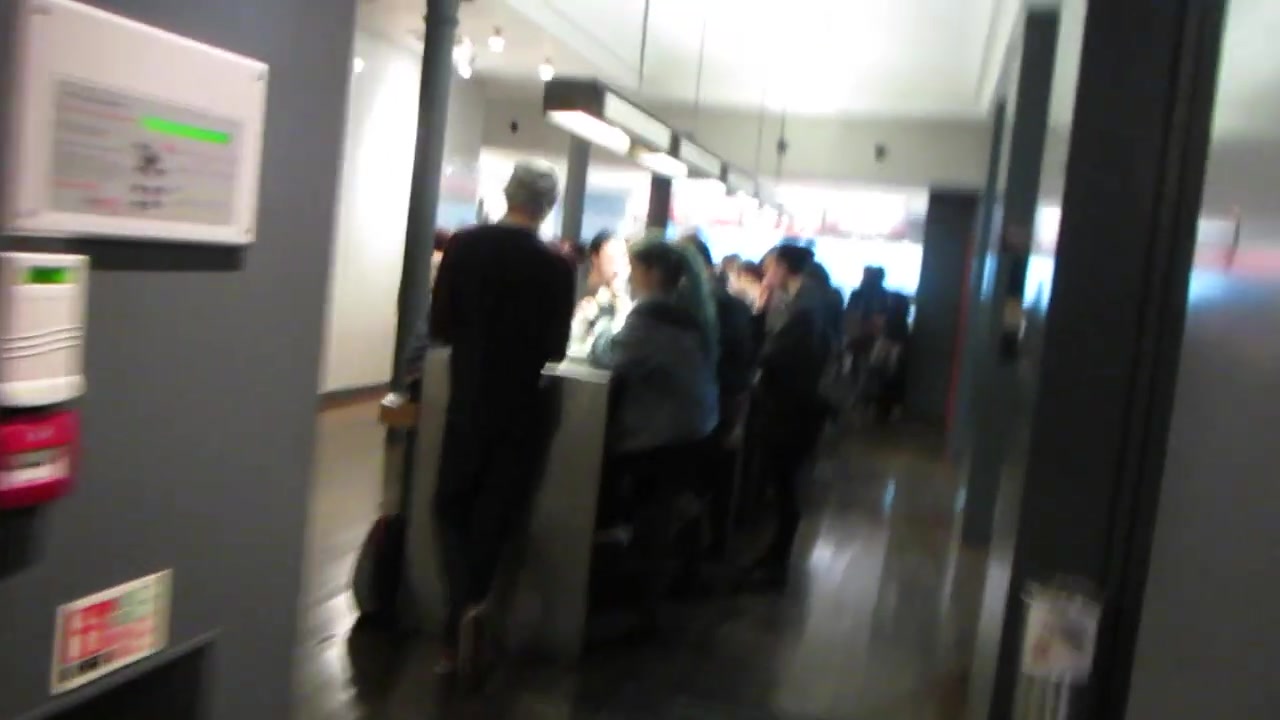
The central feature of the visit is the ordering line. Instead of selecting a fixed dish and waiting for it to arrive, the customer moves along a counter while the meal is assembled in view.
The process begins with a flour tortilla. Rice and beans form the base, followed by the chosen main filling. The film shows the stainless-steel containers arranged in sequence and staff working on several orders at once.
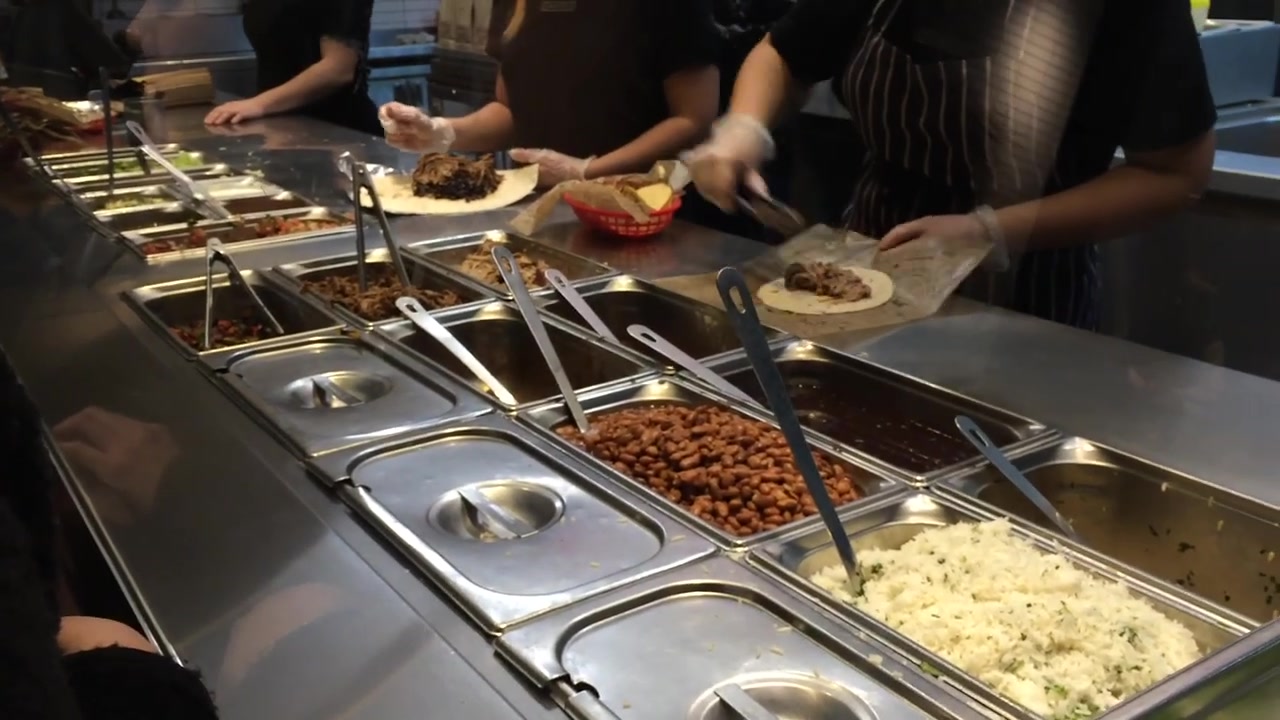
This format combines personal choice with speed. The number of possible combinations is large, but the decisions themselves are simple and made in a fixed order. Each customer can see what is being added and ask for more or less of a particular ingredient.
In 2014, this visible assembly process remained part of the attraction. It turned the counter into the principal stage of the restaurant, with preparation, service and ordering happening together.
Rice, beans and grilled fillings
The film gives particular attention to the food containers before the burrito is closed. White rice and beans are followed by grilled meat and vegetables, allowing the viewer to understand the meal as a collection of separate components rather than a sealed takeaway item.
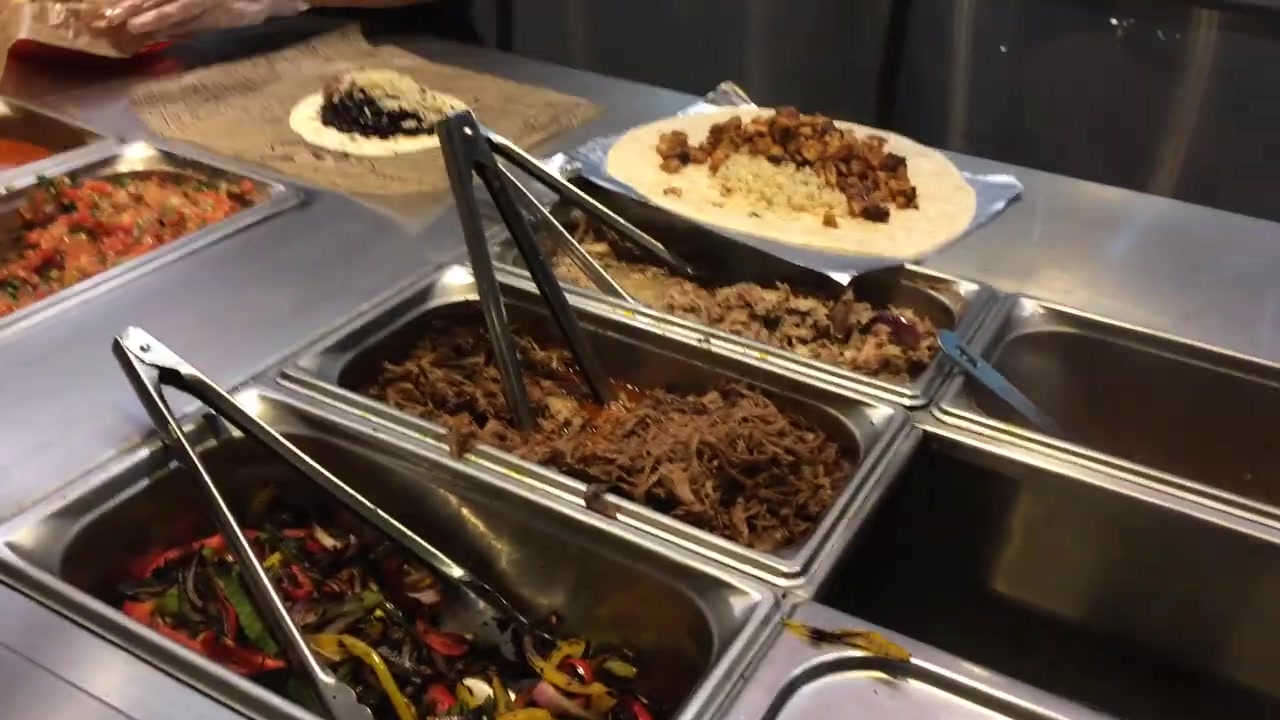
The burrito ordered in the film includes rice, black beans, chicken, guacamole, salsa, cheese and sour cream. The original description also records tortilla chips on the side, prepared with lime and salt.
These ingredients create the familiar contrast at the centre of the dish: warm rice and meat, soft beans, fresh salsa, rich guacamole and the cooler finish of cheese and sour cream. The tortilla has to contain a substantial amount of food without overwhelming the balance of the filling.
The preparation is functional rather than theatrical. Ingredients are portioned quickly, the tortilla is folded and the burrito is wrapped in foil for carrying to the table.
Salsa, guacamole and tortilla chips
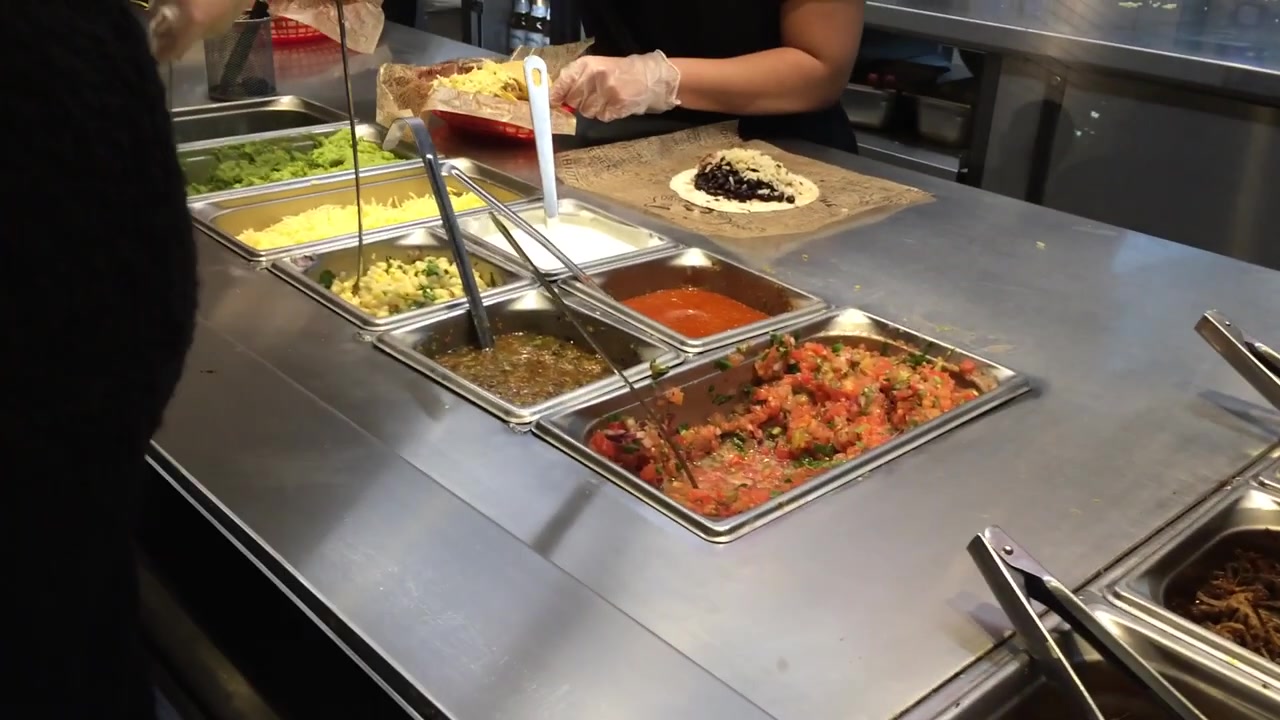
The later part of the counter introduces the brighter ingredients. Tomato salsa, green toppings and sauces change the colour and texture of the burrito before it is wrapped.
At the table, the meal is accompanied by a paper bag of tortilla chips, a drink and a small container of guacamole. The packaging is practical and informal, suited to a meal that can be eaten in the restaurant or carried away.
The guacamole receives its own close view in the film. It is a useful editorial detail because side dishes can otherwise disappear behind the main item. The chips and guacamole also change the pace of the meal: they can be shared or eaten while the burrito remains wrapped.
The finished burrito
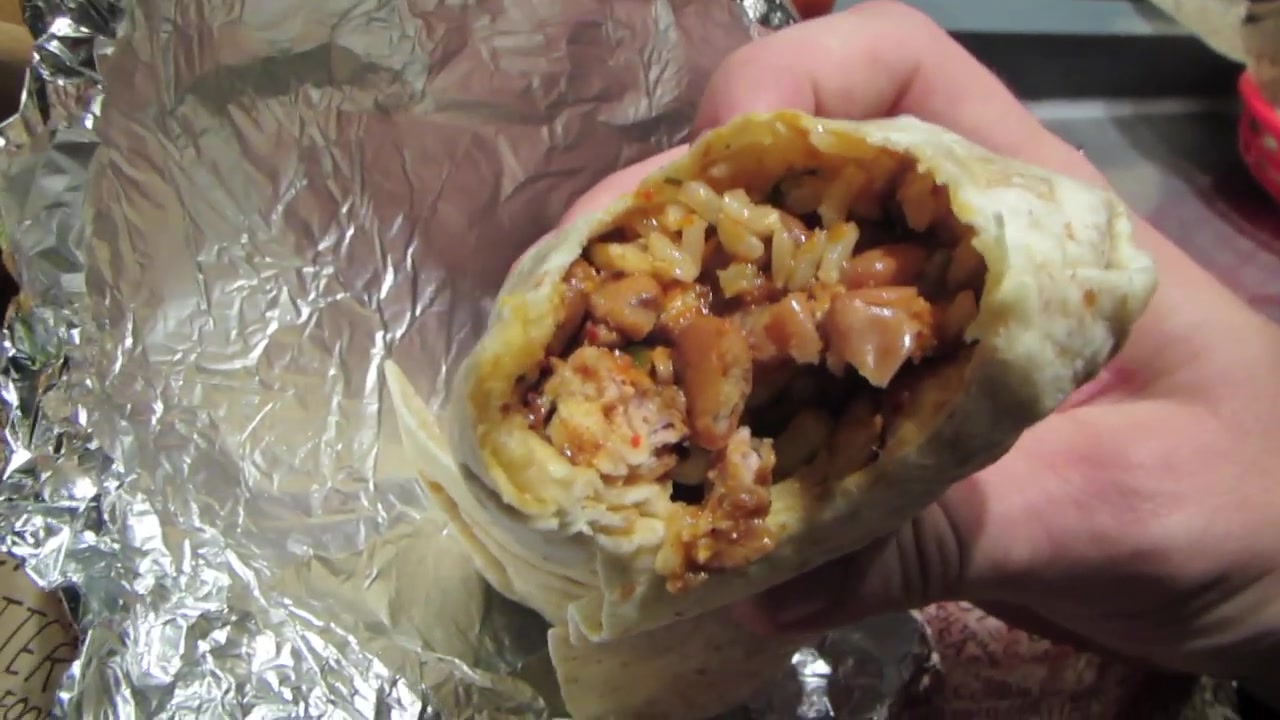
The strongest image arrives when the foil is opened and the burrito is shown in cross-section. Rice, beans, chicken and salsa remain visibly distinct inside the tortilla.
This final view completes the logic of the film. The viewer has watched the ingredients move along the counter and can now see how they sit together in the finished meal. It is more informative than a polished product photograph because it shows the burrito as it was actually served and eaten.
The portion is substantial, although the article does not try to translate a 2014 visit into current claims about size, price or value. Menus, recipes, restaurant interiors and service practices may all have changed since the film was made.
London’s changing casual-food landscape
The visit belongs to a period when London was rapidly absorbing new fast-casual formats. Customers were increasingly accustomed to food assembled to order, visible ingredient counters and meals positioned between conventional fast food and table-service restaurants.
Chipotle was one expression of that shift. The underlying system was easy to understand and adapt: choose a format, select a base, add a protein, finish with salsa and other toppings, then eat in or take away.
For Roberts London, the interest lies less in declaring a definitive verdict than in recording how the format looked and felt in the city at that moment. The film preserves the queue, counter, staff movements, ingredient layout, packaging and finished food—the small operational details that are often lost when restaurant history is reduced to openings and closures.
The closing street view returns the meal to London. Buses, traffic and pedestrians move past the restaurant, and the visit becomes another short entry in the continuing record of how the city eats.
Adapted from the Roberts London film: Roberts London Visit to Chipotle Mexican Grill for a Burrito, first published 25 October 2014.
