Covent Garden remains one of those parts of London where several versions of the city overlap at once. It is a place of restaurants, market passages, old façades, quick lunches, theatre-goers, visitors, regulars and performers, all compressed into a small and highly visible piece of the West End.
This short Roberts London film moves through Covent Garden as it is most often encountered in practice: not as a monument, but as a lived public scene. The piazza, the surrounding restaurant fronts and the covered market are all part of the same experience. One comes here to eat, to pass through, to look around, to meet someone, or simply to stand still and watch the district perform itself.
The Piazza as a Public Stage
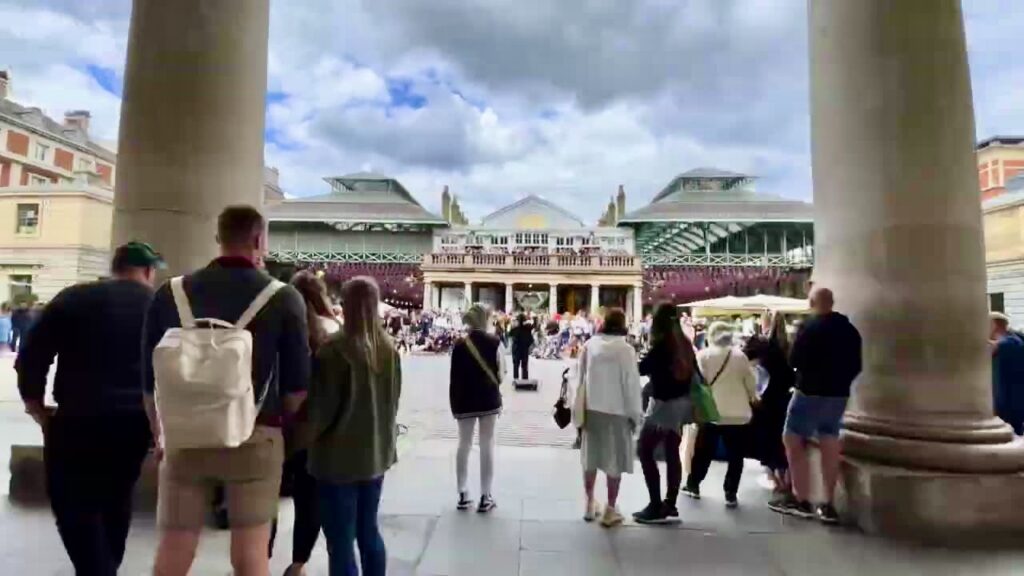
Few places in central London are so openly theatrical. Even before one reaches the market buildings themselves, Covent Garden announces its character through movement and observation. The broad open space, the colonnades, the flow of pedestrians and the habit of people pausing to watch others all contribute to the feeling that the area is never entirely still.
That has always been part of its appeal. Covent Garden works because it is not only something to see. It is also a place from which to watch London happening around you.
Restaurants Around the Edges
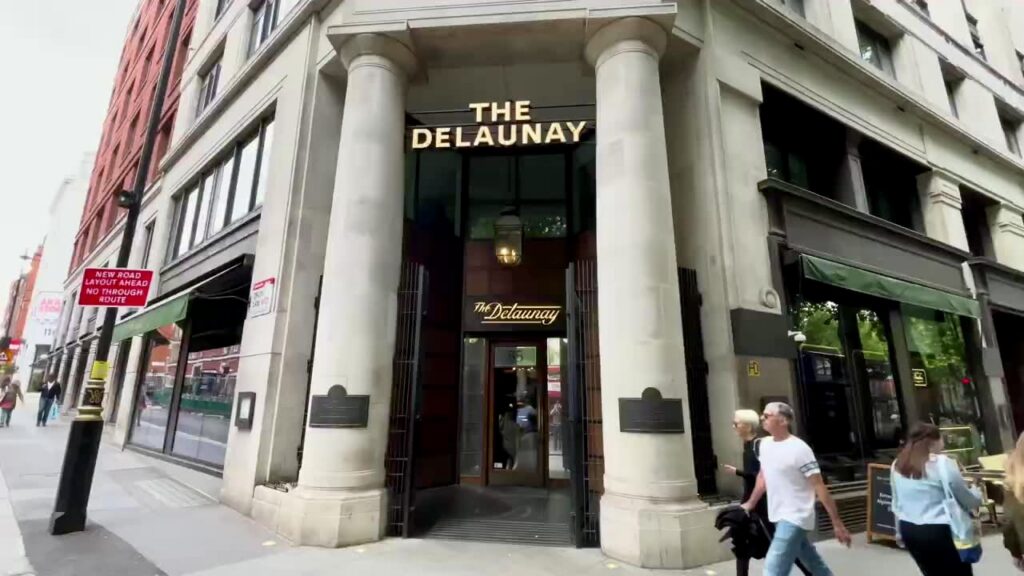
The surrounding streets and corners give the district much of its texture. In this walk, restaurant façades and dining addresses appear as part of the wider atmosphere: places such as Balthazar, The Oystermen and The Delaunay add to the sense that Covent Garden is as much about lingering as it is about passing through.
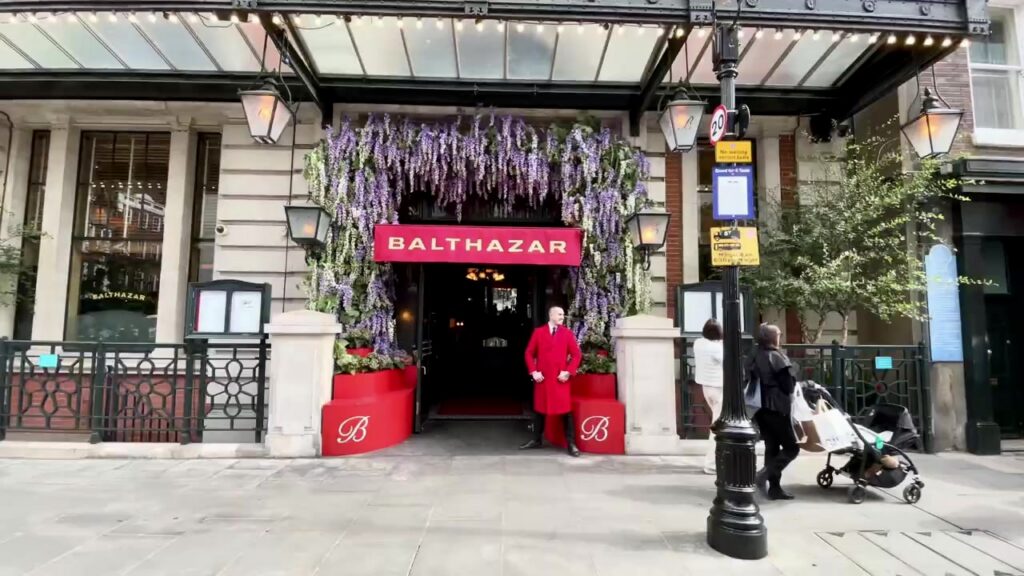
These places help define the area’s rhythm. Some are formal and established, some more casual, but together they reinforce the idea that Covent Garden is one of those London districts where eating out is woven directly into the public life of the street.
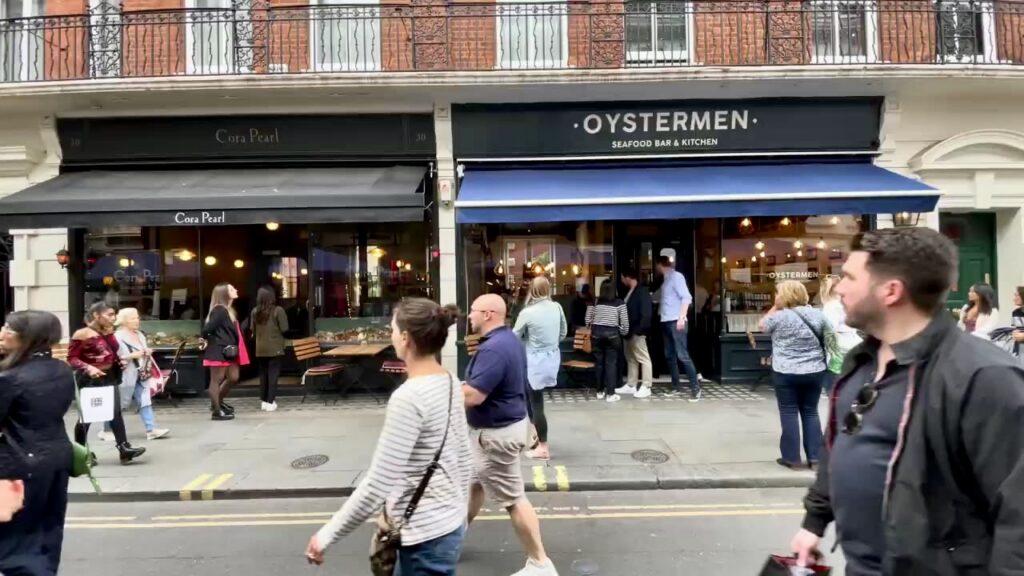
What matters here is not any single recommendation so much as the relationship between tables and pavement. The district has long understood that hospitality is also a visual experience. Window fronts, corner sites, awnings, entrances and terraces all contribute to the theatre.
The Covered Market
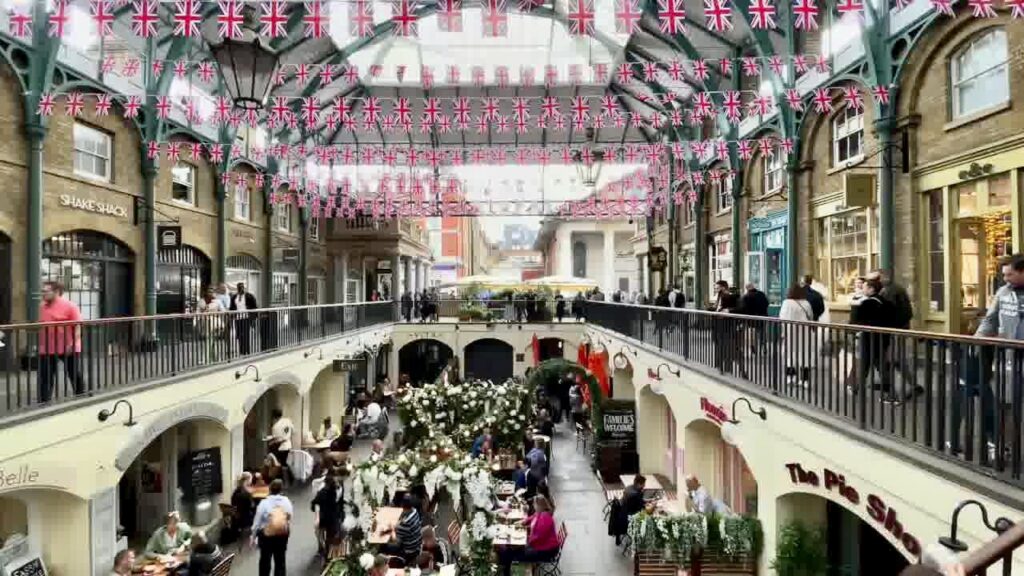
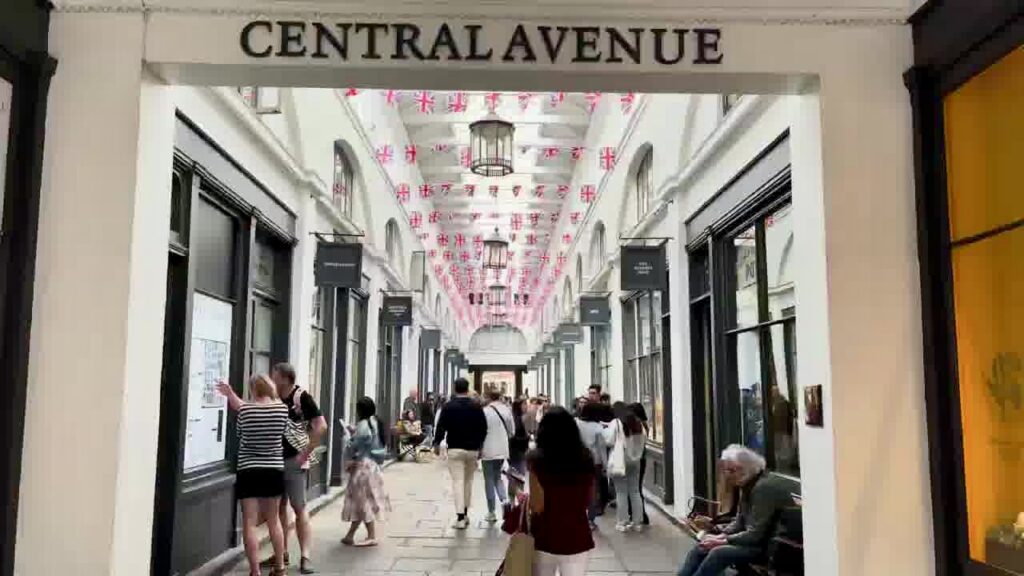
Inside the market, the atmosphere shifts but does not lose its energy. The covered passages frame the movement of shoppers and visitors, while the central space opens into a more layered scene of balconies, decoration, retail activity and gathering crowds.
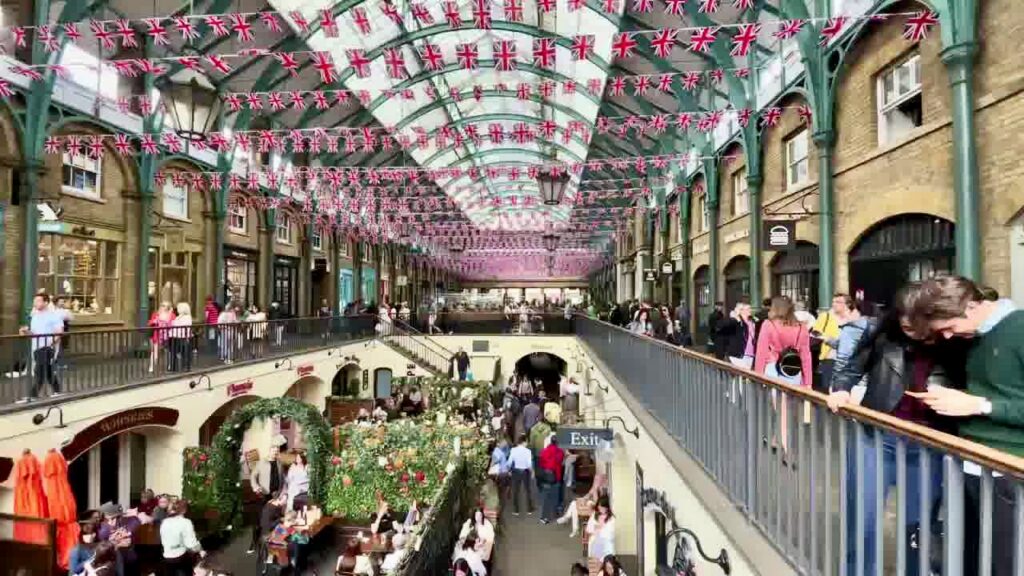
In this footage, the market is dressed with overhead decoration, giving the interior a festive lightness that contrasts with the heavier masonry and older structure. Seen from above, Covent Garden becomes even more legible as a designed social space: part marketplace, part meeting place, part performance venue.
Street Performance and Everyday Spectacle
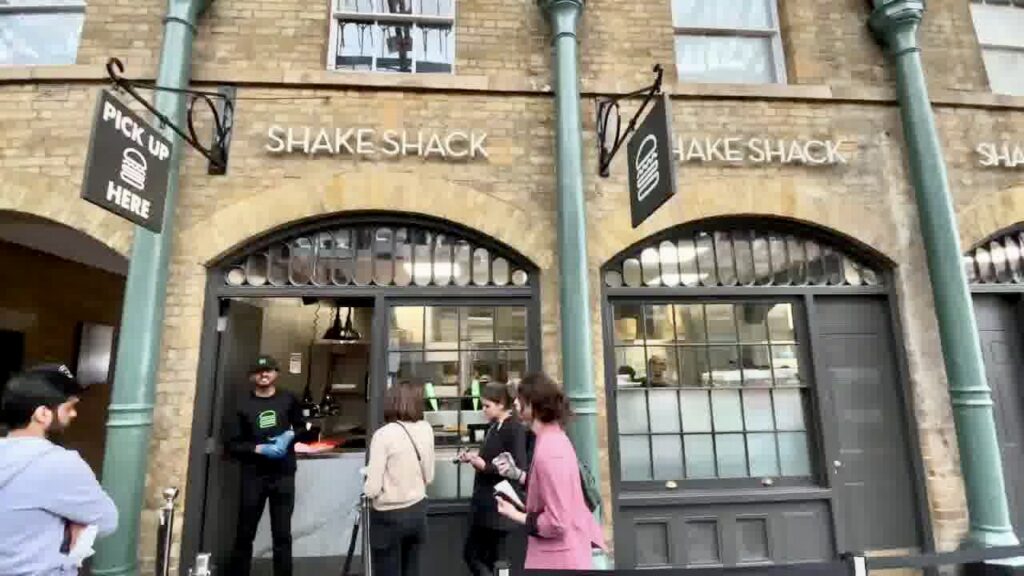
Street performance is one of the defining features of Covent Garden. In many parts of London, entertainment is hidden inside venues. Here, it remains part of the public surface of the district. Performers, onlookers and passing trade all exist together, creating an atmosphere that is unusually open, participatory and visible.
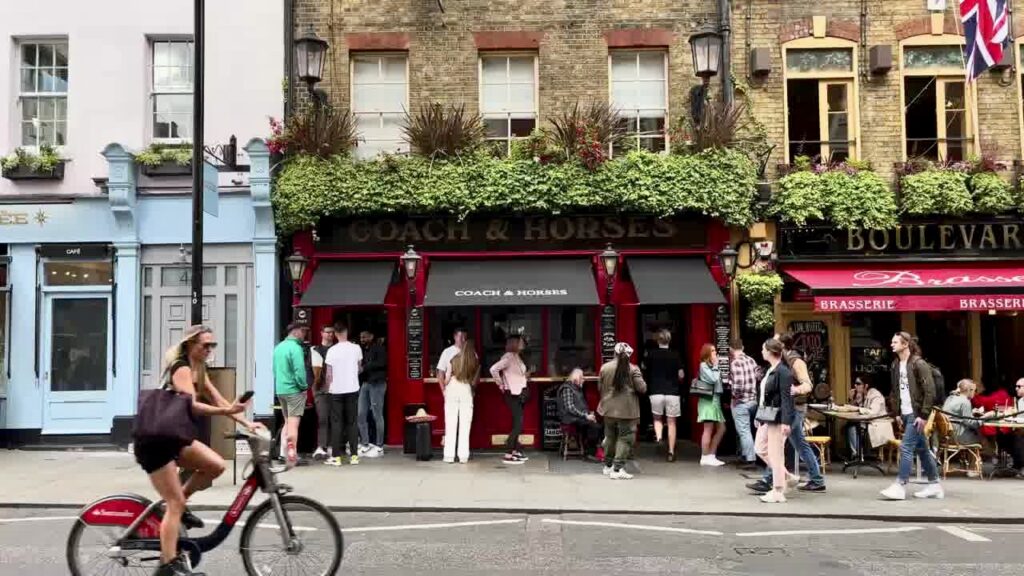
This is one reason Covent Garden continues to attract such mixed crowds. It offers more than retail or dining alone. It offers incident, interruption and spectacle. Even a short visit can contain several layers of experience: a meal, a walk, a performance, a conversation, a glance into a shop, or the simple pleasure of standing in a well-known part of London and allowing it to unfold around you.
Why Covent Garden Endures
Covent Garden is too well known to feel secret, and too heavily visited to feel private, yet it still works. Part of that is down to architecture, part to habit, and part to the district’s ability to accommodate different kinds of use at once. It functions as a destination, a thoroughfare, a stage set and a social habit.
For Roberts London, it is worth recording not because it is hidden, but because it remains a reliable example of how London gathers itself in public: through food, movement, commerce and performance, all within a compact urban setting that people continue to return to.
Roberts London is not a finished authority. It is a continuing study. Covent Garden, in all its visibility and choreography, remains part of that study.
