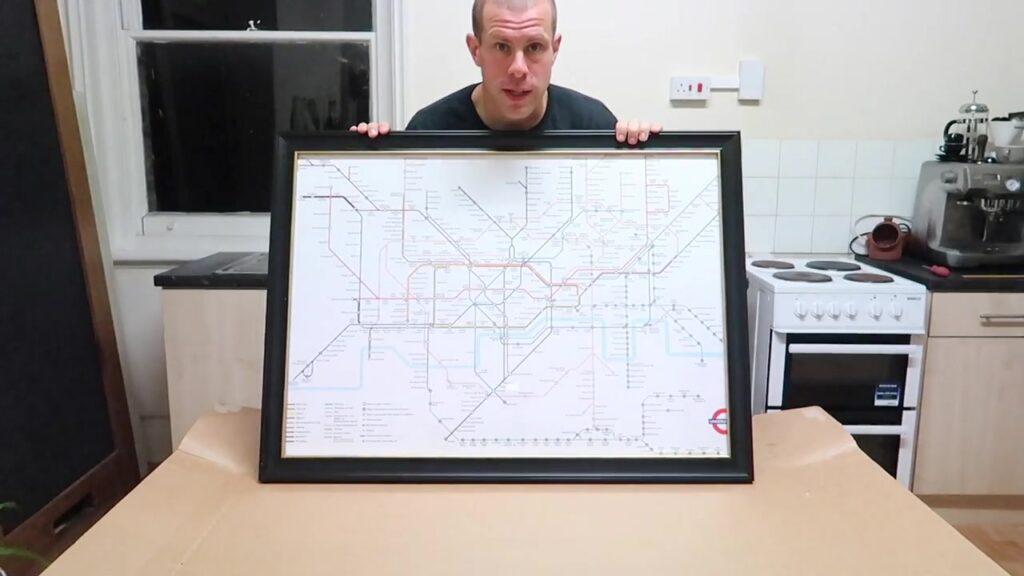
My London Underground Tube map began as a practical idea: put a large map by the front door so I could plan unfamiliar journeys before leaving home. In this October 2017 film, I travel from Victoria to Covent Garden, buy a poster from the London Transport Museum shop and discover that fitting it into a frame is less straightforward than expected.
Originally published on 3 October 2017. This is a personal archive of the trip and framing project. The Oyster charges, deposits and fare caps discussed in the video are historical, not current travel guidance.
An Oyster card and a journey from Victoria
The film begins in my kitchen with the way I usually travelled around London. I used a pay-as-you-go Oyster card alongside walking and cycling. Some days I made several journeys; on others I hardly used public transport at all. For that pattern, topping up as needed suited me.
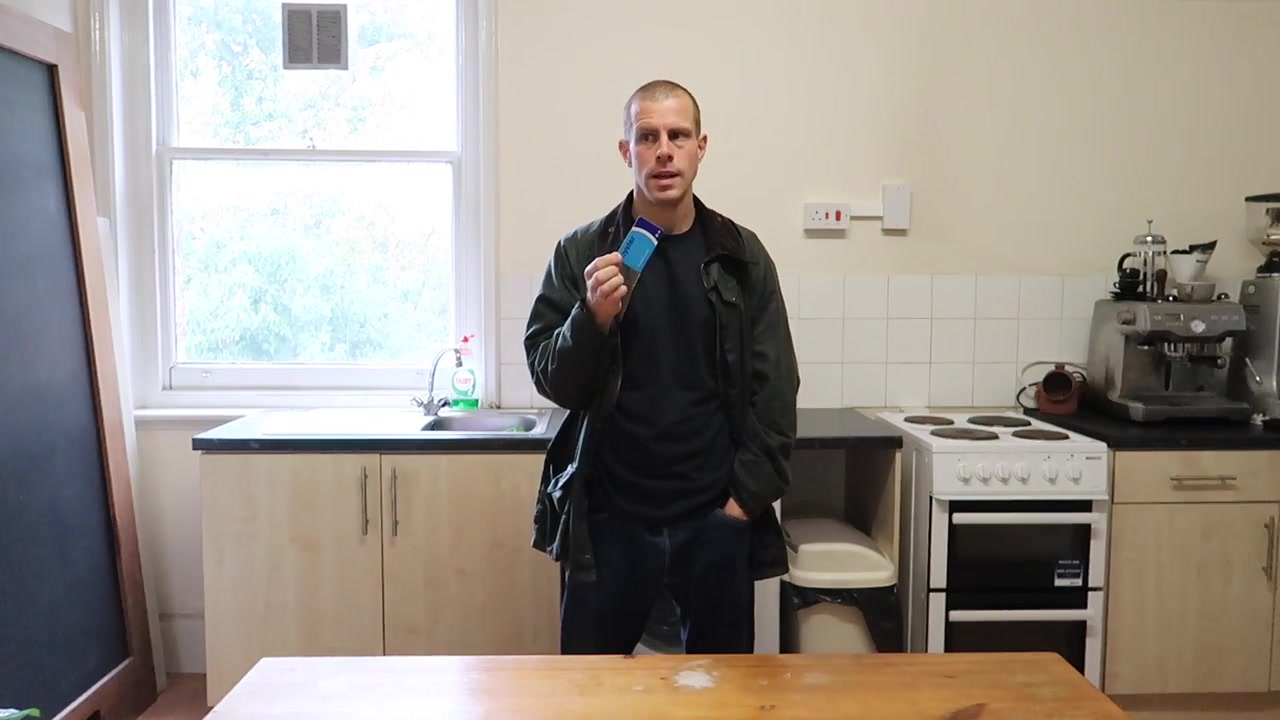
I also talked about buses as a way to see the streets above ground, although the Tube was usually my first choice. The point was to get out into London without making every journey into a complicated calculation. The specific prices I mention belong to 2017 and should stay with that period of the film.
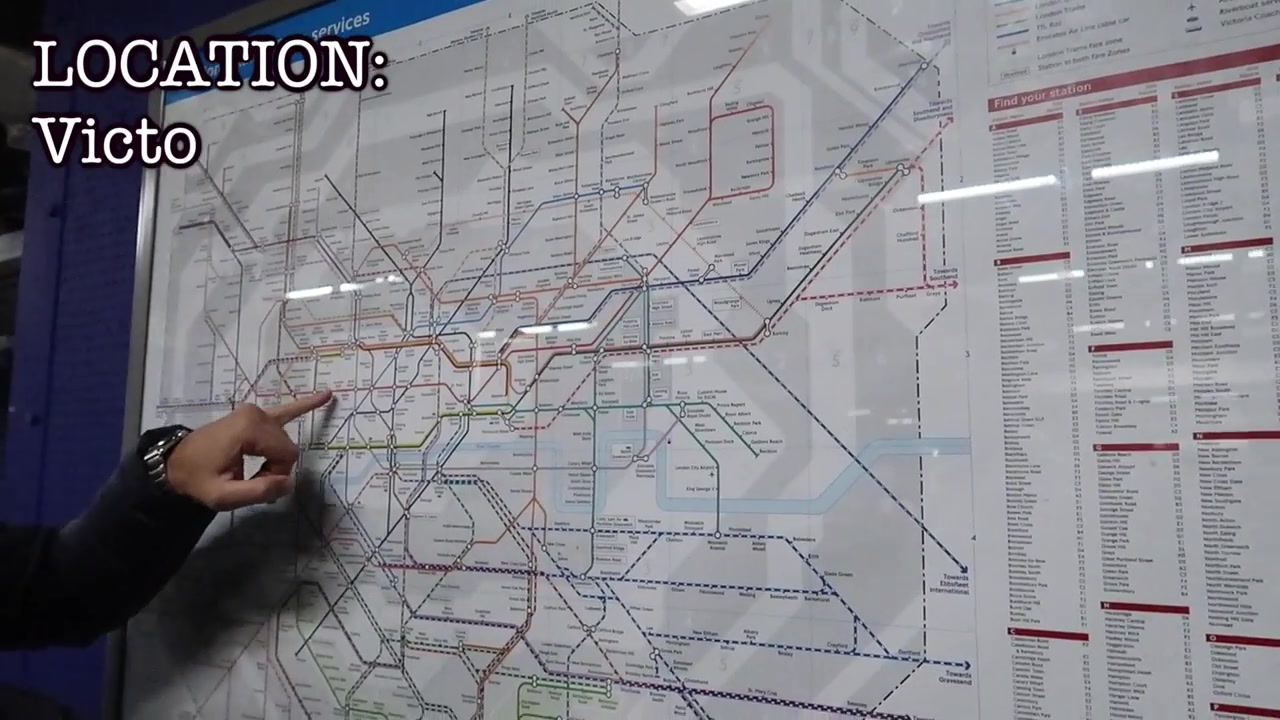
At Victoria, I stopped beside a station map. It was exactly the sort of large display I wanted at home: something I could look over before setting off on an unfamiliar route.
From there, it was through the station, down the escalators and onto the train. The journey gave me a chance to share a few everyday observations about using the Underground, including leaving space for other passengers on the escalators.
Covent Garden and the London Transport Museum shop
Arriving at Covent Garden prompted another thought about getting around. I often walked from a nearby station rather than change lines for a short final stretch. That was easy because I knew the surrounding streets. In the film, I point out that a visitor might find it simpler to check a street map and choose the station that best suits the destination.
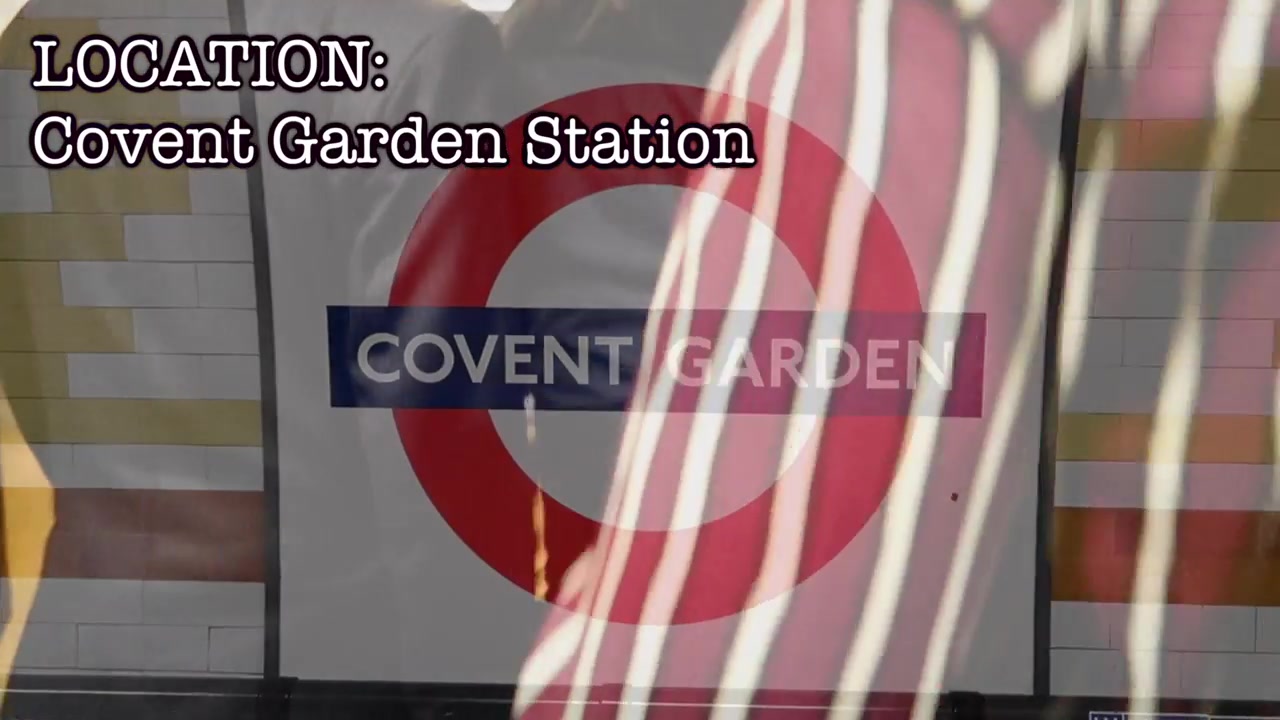
The piazza was busy, with a street performer preparing to entertain the crowd. I walked towards the London Transport Museum at the corner of the square. This visit was for the shop rather than the museum itself.
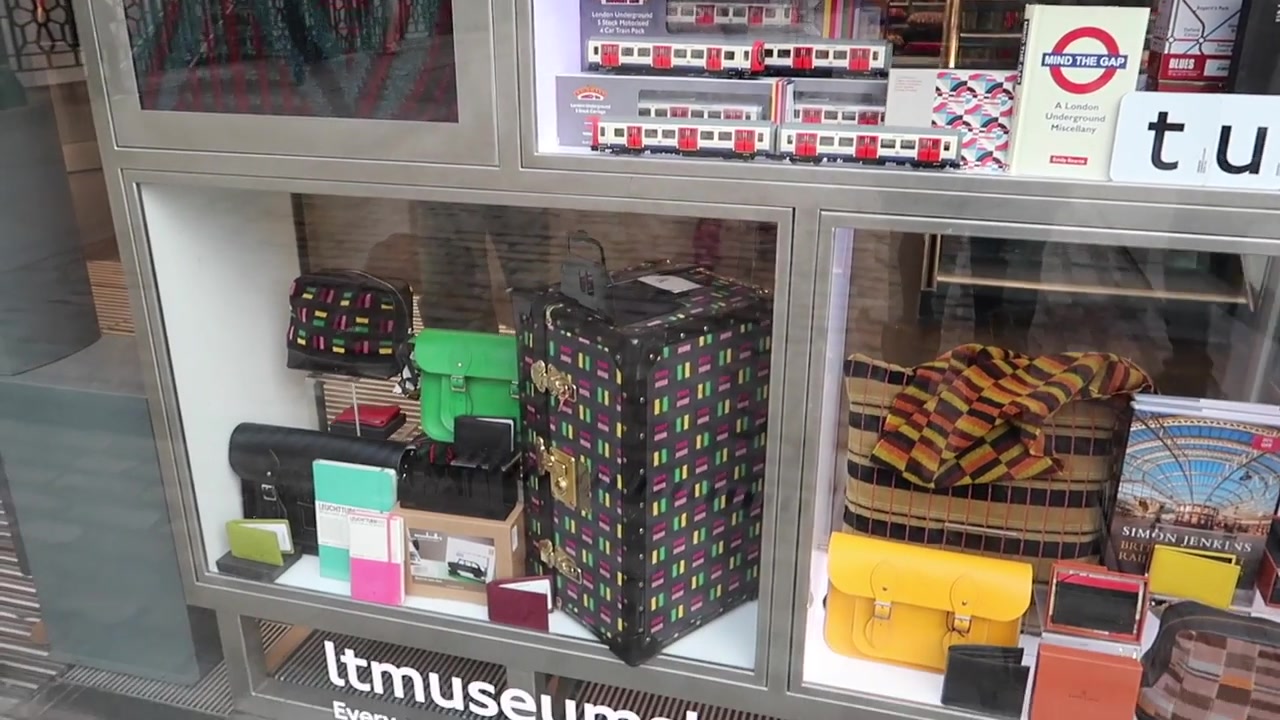
Inside were gifts, souvenirs, collectables and artwork connected with London’s transport system. I found the large Tube map I had come for and took it home rolled up. I wanted to frame it before showing the finished result.
My London Underground Tube map meets an A1 frame
Back in the kitchen, I unpacked the poster and an inexpensive black frame ordered from an eBay seller. I had chosen an A1 frame, hoping the map would need no more than a little adjustment around its white border.
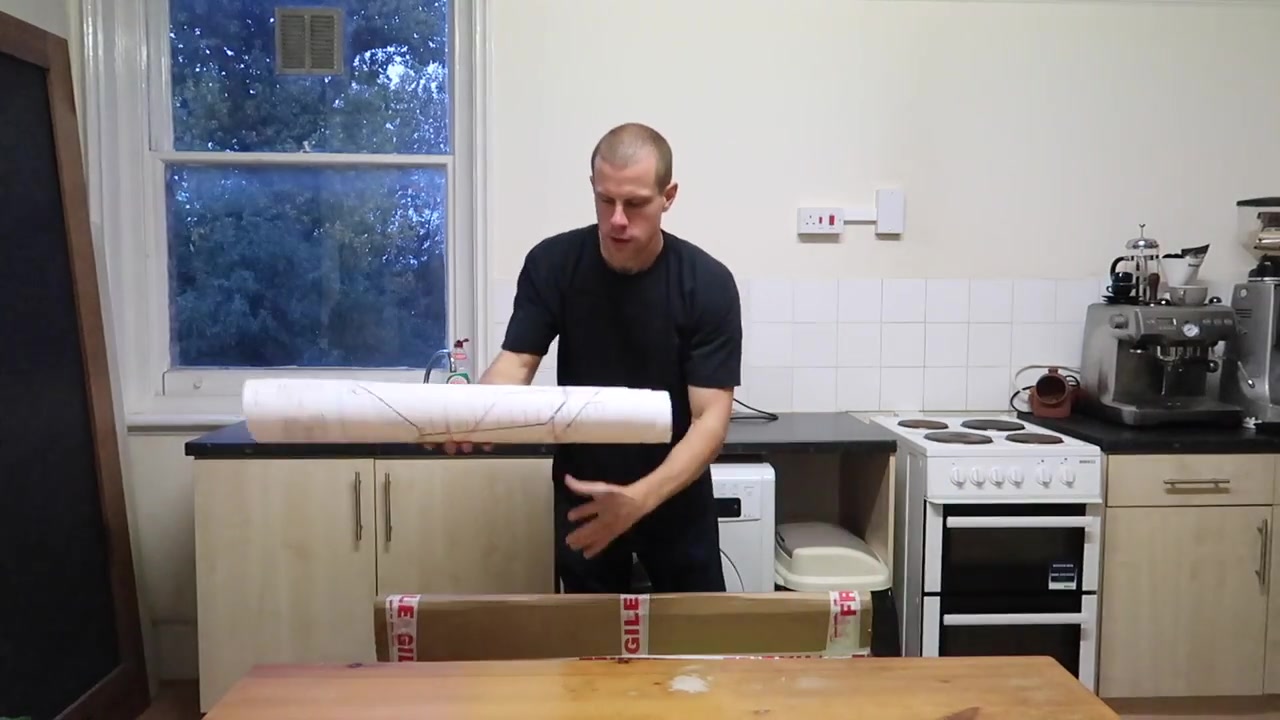
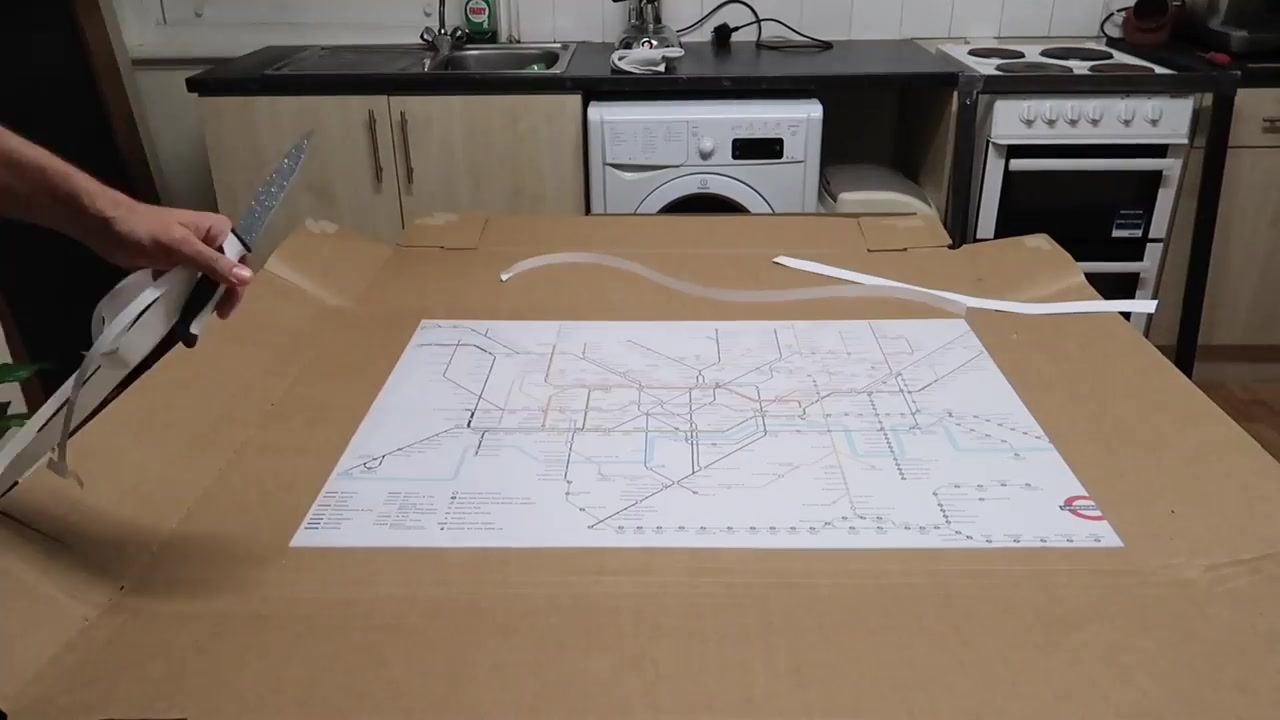
Once the two were laid out together, the problem was clear. This particular poster was slightly wider than the frame. The height was manageable, but fitting the width meant losing a little of the printed map as well as the margin.
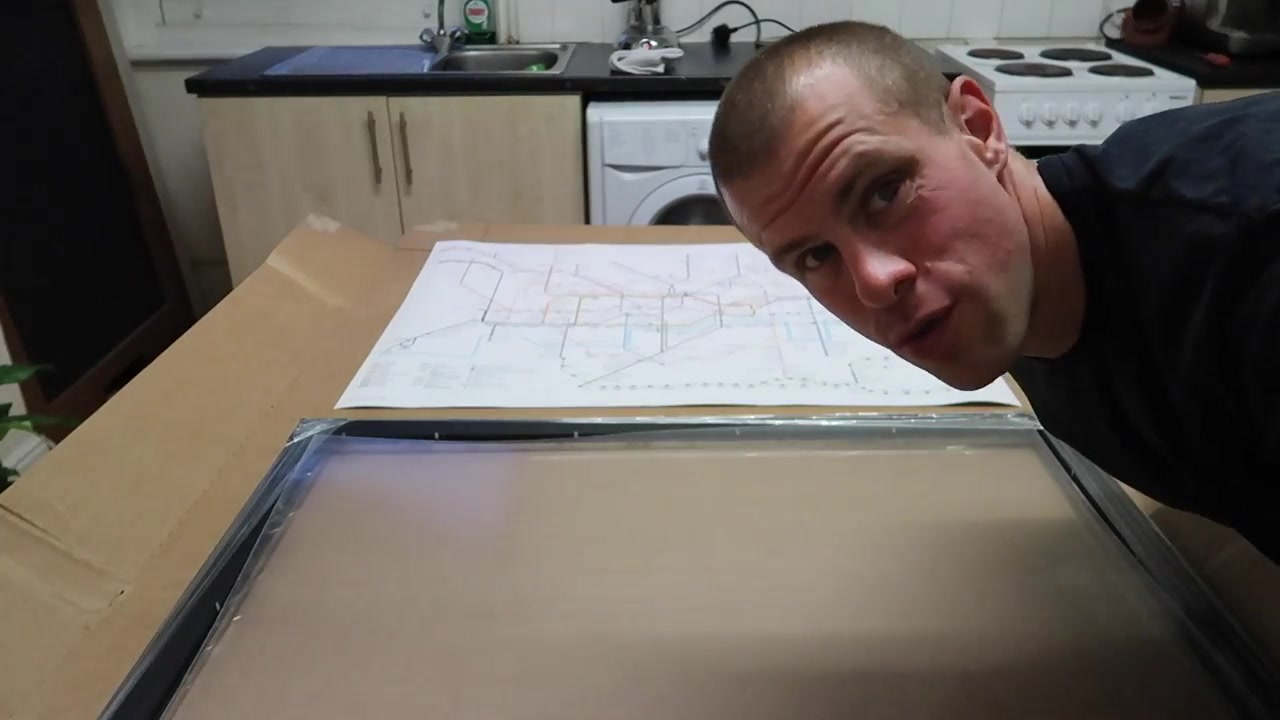
That turned a simple framing job into a decision about what mattered most. Keeping the Underground symbol and the eastern edge would cost me part of the line-colour key and the Heathrow end. Moving the frame the other way preserved the details I used more often but cut into the opposite edge.
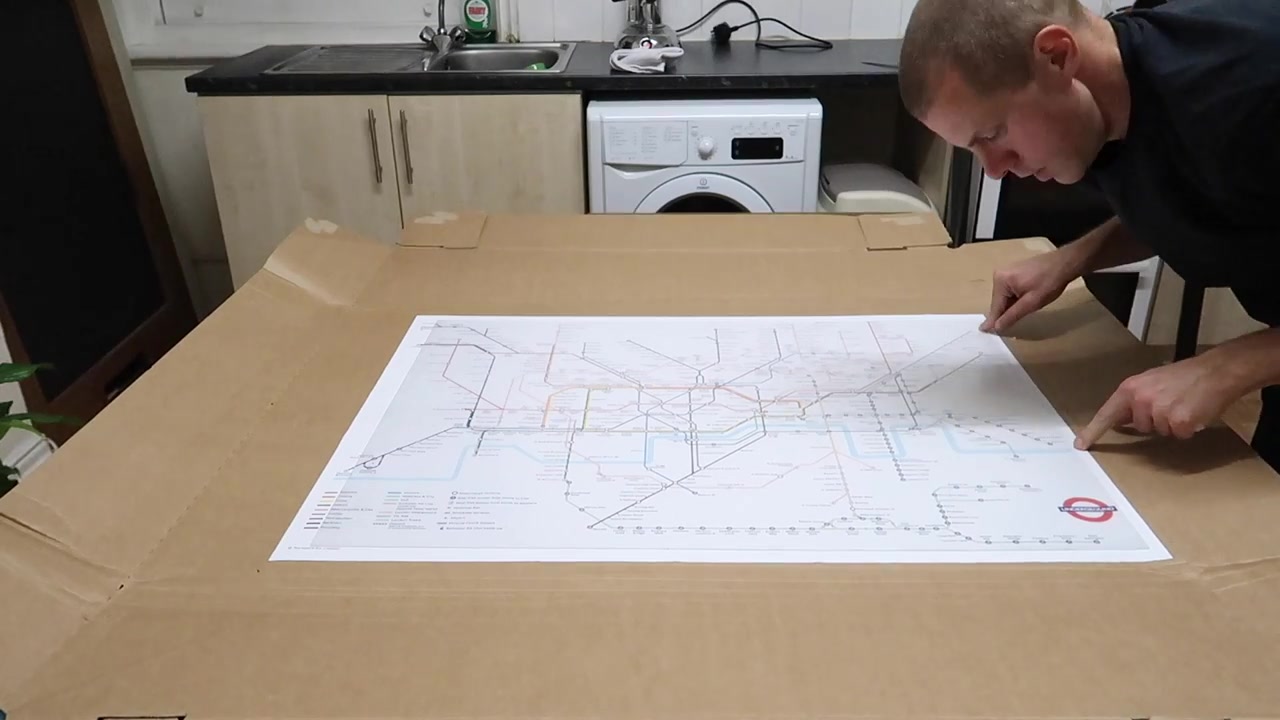
I chose to retain the key and Heathrow. The compromise meant losing part of the roundel and some eastern station names, including Beckton, Upminster and Shenfield. It was not the pristine result I had imagined, but I was treating the map as something useful for my own journeys.
Trimming and assembling the framed map
With the position decided, I trimmed the poster around the frame’s clear front panel. The film then follows the small, fiddly jobs of removing the protective film, placing the map inside and taking off the remaining packaging.
The finished frame held the part of the network I expected to consult most often. I had wanted a map for the entrance to my London home, where it could help answer a question before I stepped outside: which way should I go?
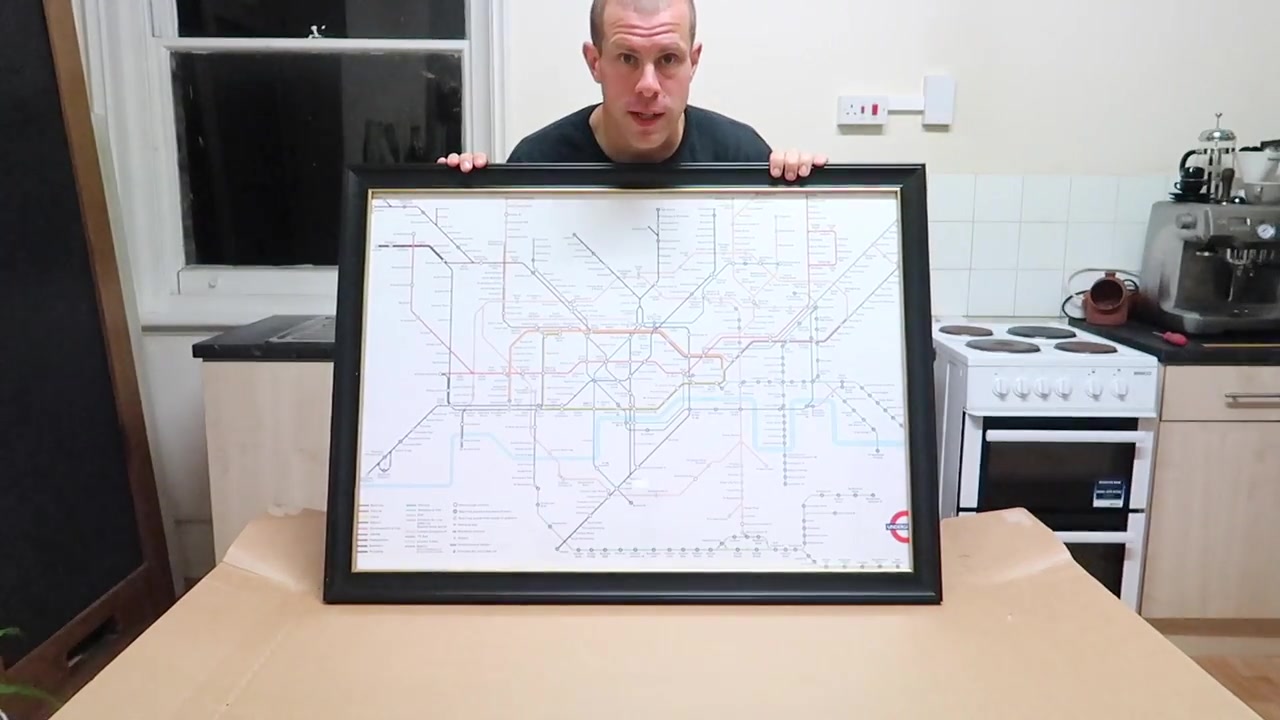
In the film, I recall paying just under £10 for the poster and just under £20 for the frame. Those were the costs of this project in 2017. Looking at the result, I considered whether a smaller poster with a mount, or a frame made to the right dimensions, might have avoided the compromise.
The useful lesson from my attempt is specific and simple: check the actual poster measurements against the frame opening before ordering. My map and frame did not quite match; that does not tell us the dimensions of every edition sold before or since.
Watch the original Tube map and Oyster cards film
The full video combines the journey, the museum shop visit and the work at the kitchen table. It is a small record of London transport becoming part of everyday life at home, as well as a reminder that even a modest framing project can take an unexpected turn.
