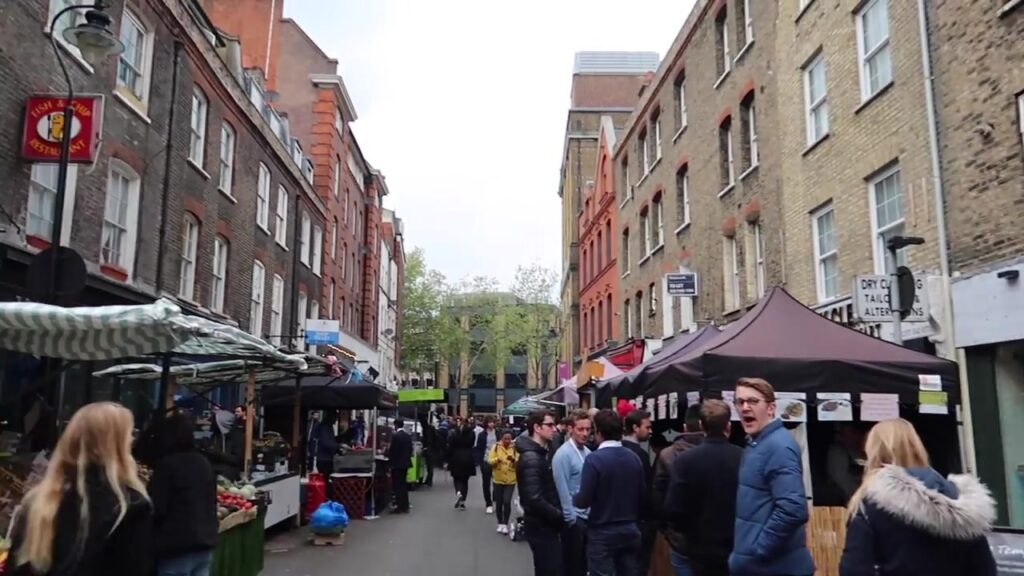
Leather Lane Market is one of those London places that makes most sense at lunchtime. Running between High Holborn and Clerkenwell Road, just west of Hatton Garden, it fills with office workers, traders and local regulars looking for something quick, good and independent. This Roberts London archive film follows the market from Chancery Lane to Clerkenwell, stopping for coffee at Prufrock and fish and chips from the Traditional Plaice before continuing into the remains of London’s historic Italian quarter.
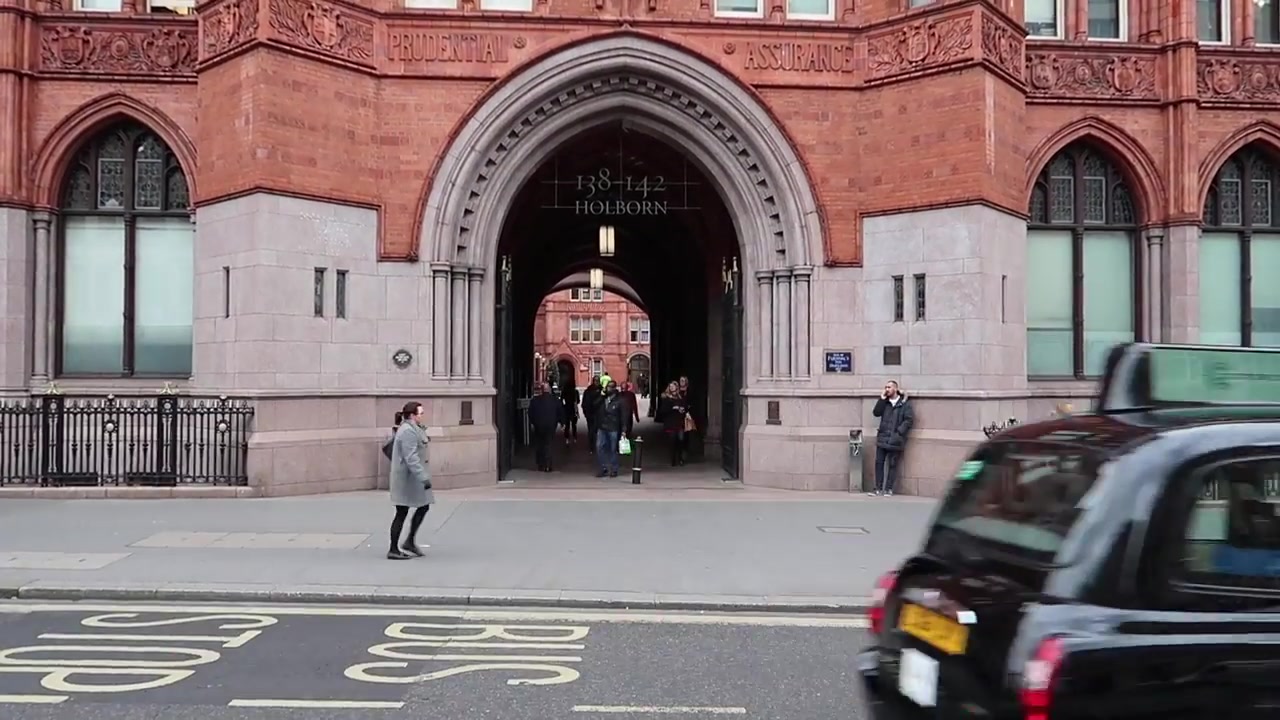
From Chancery Lane into Leather Lane
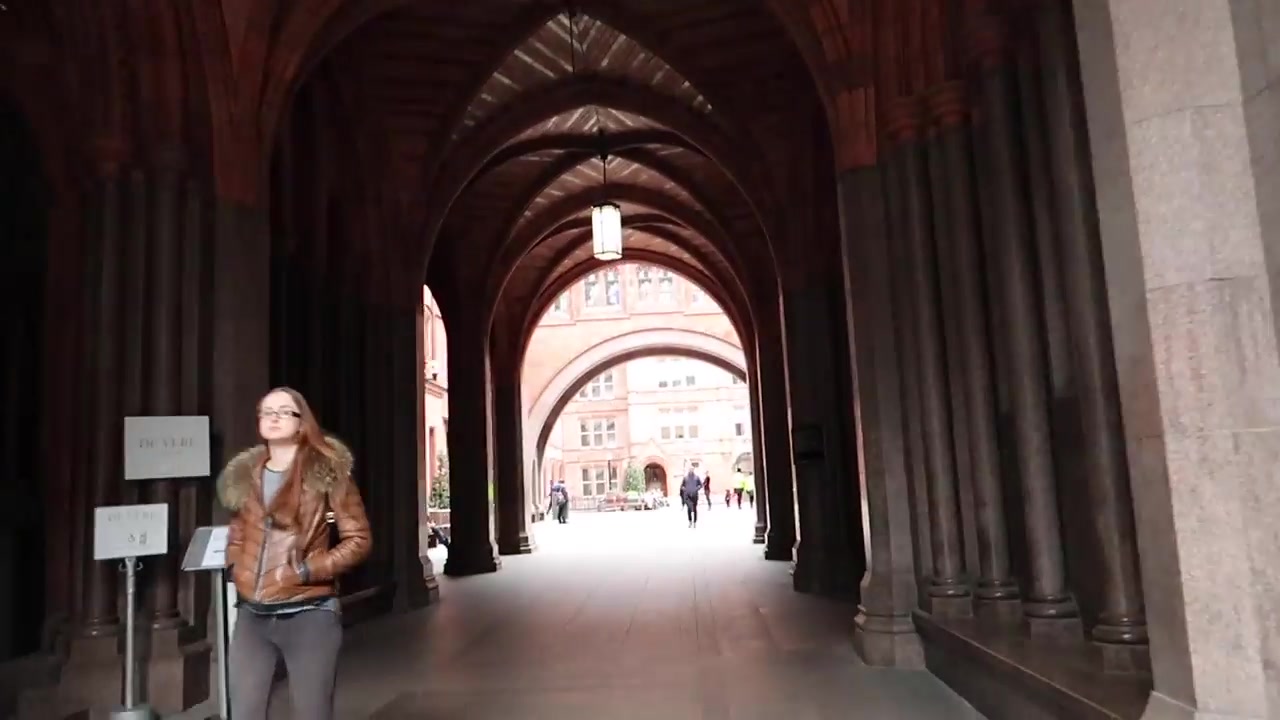
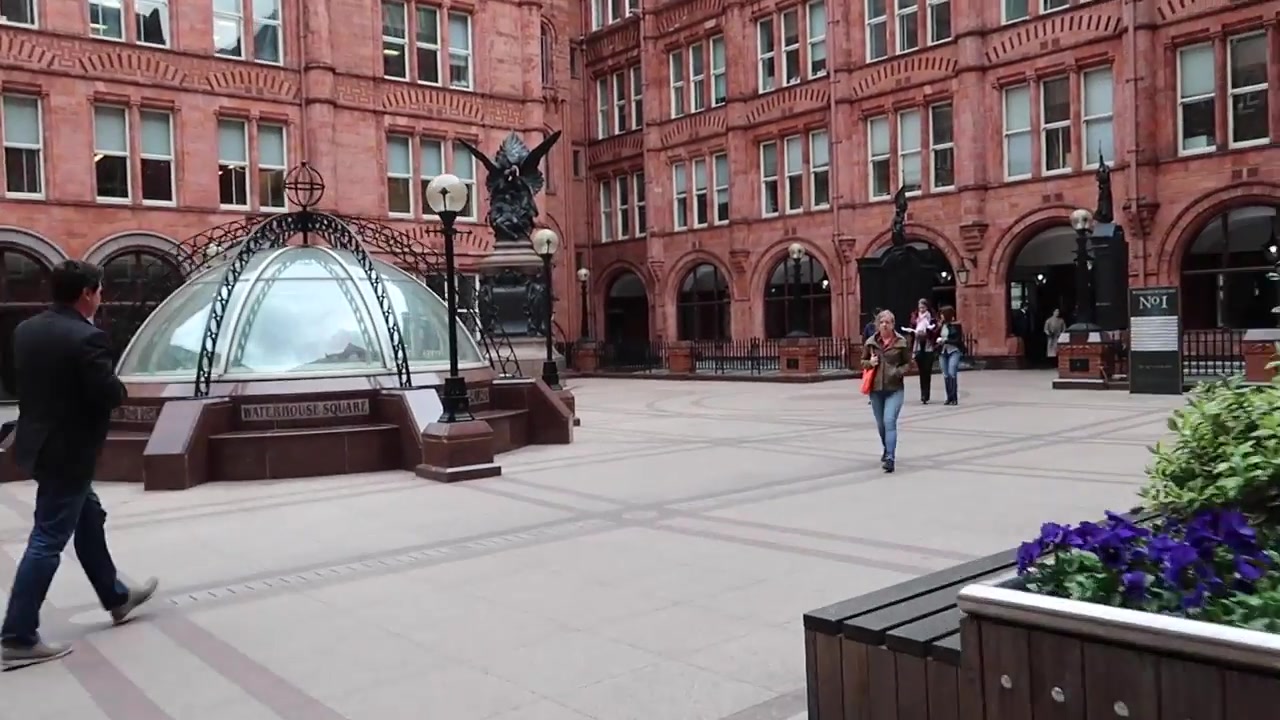
The walk begins beside Chancery Lane station, where the timbered frontage of Staple Inn marks the entrance to an older legal London. Behind it rises Holborn Bars, the great red-brick Prudential building designed principally by Alfred Waterhouse. Historic England lists the Prudential Assurance Building at Grade II*, while the surviving chambers of Staple Inn are Grade I. Together they make an unusually theatrical gateway to a market street.
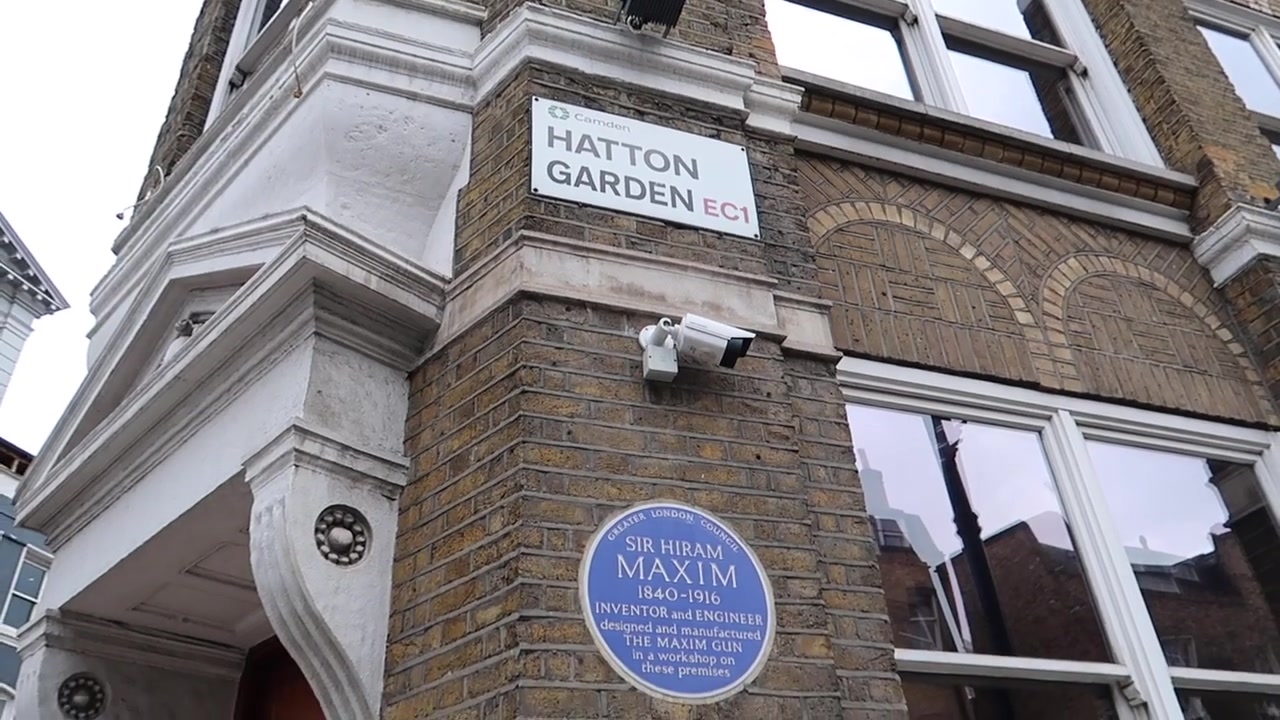
Leather Lane runs north from this junction, parallel with Hatton Garden. It lies outside the City of London boundary but has always been shaped by the City’s working population. The stalls seen in the film are not arranged chiefly for sightseeing. They answer the daily rhythm of nearby offices, workshops and jewellery businesses, becoming busiest when the surrounding streets empty for lunch.
A weekday London market
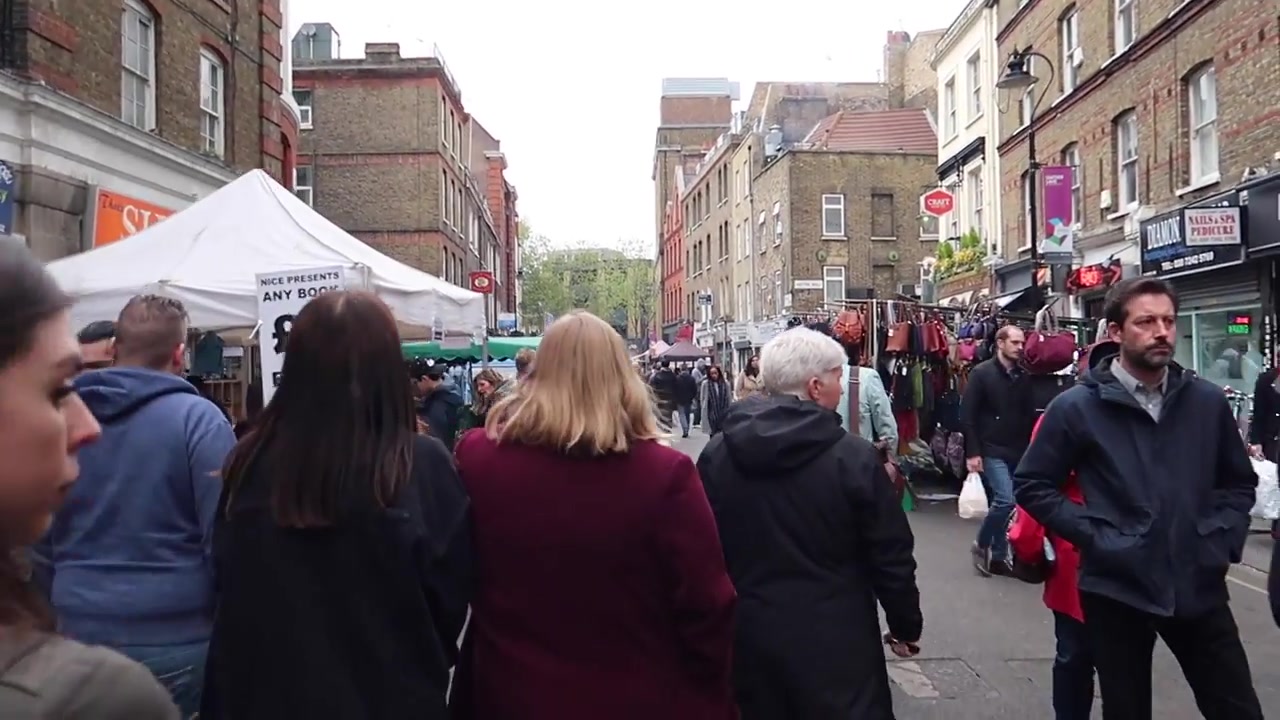
Trading has taken place around Leather Lane for centuries, and the market has repeatedly changed with its customers. In this 2017 visit, the southern end still mixes clothing, flowers and general goods before giving way to an increasingly dense run of street-food stalls. Queues form quickly in front of the most popular traders, making the street feel less like a formal attraction and more like a daily vote by local appetite.
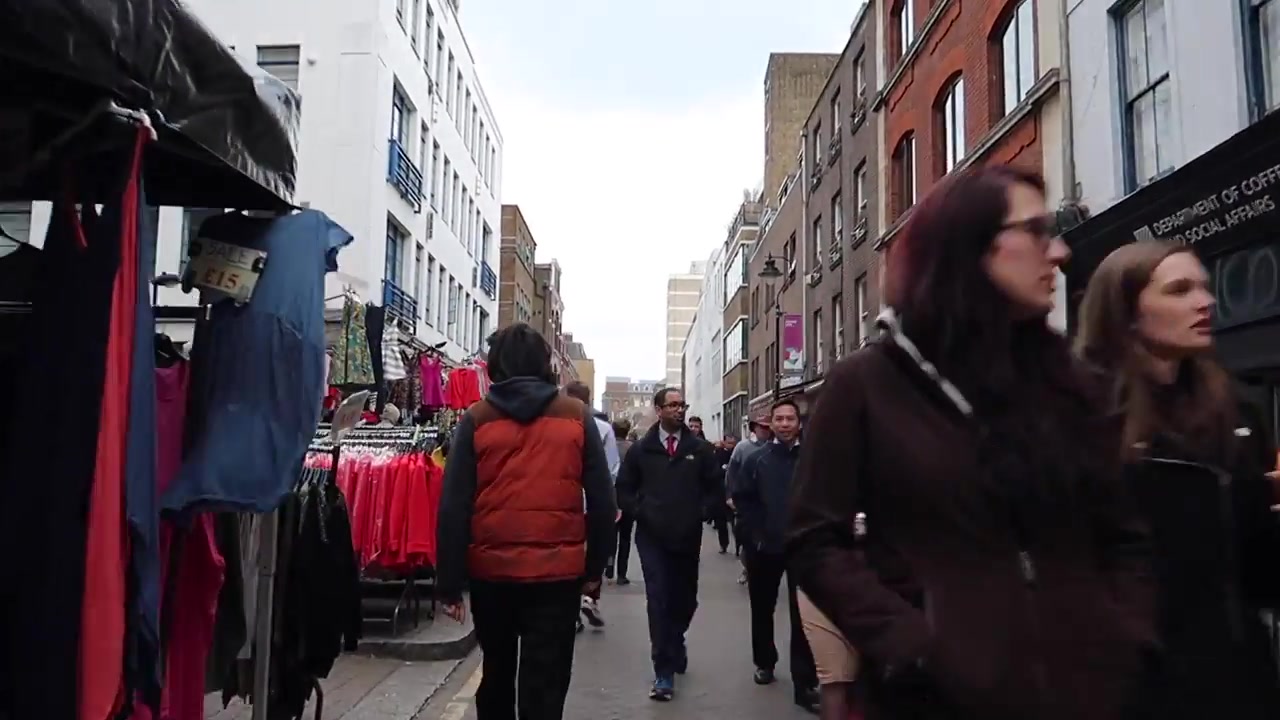
That weekday character survives. Camden Council currently lists Leather Lane Market as open Monday to Friday, with the market mostly active between 10am and 4pm. Those hours are broader than the 10am-to-2pm pattern described in the film, so present-day visitors should use the council’s current information rather than treating the archive timetable as fixed.
Coffee at Prufrock
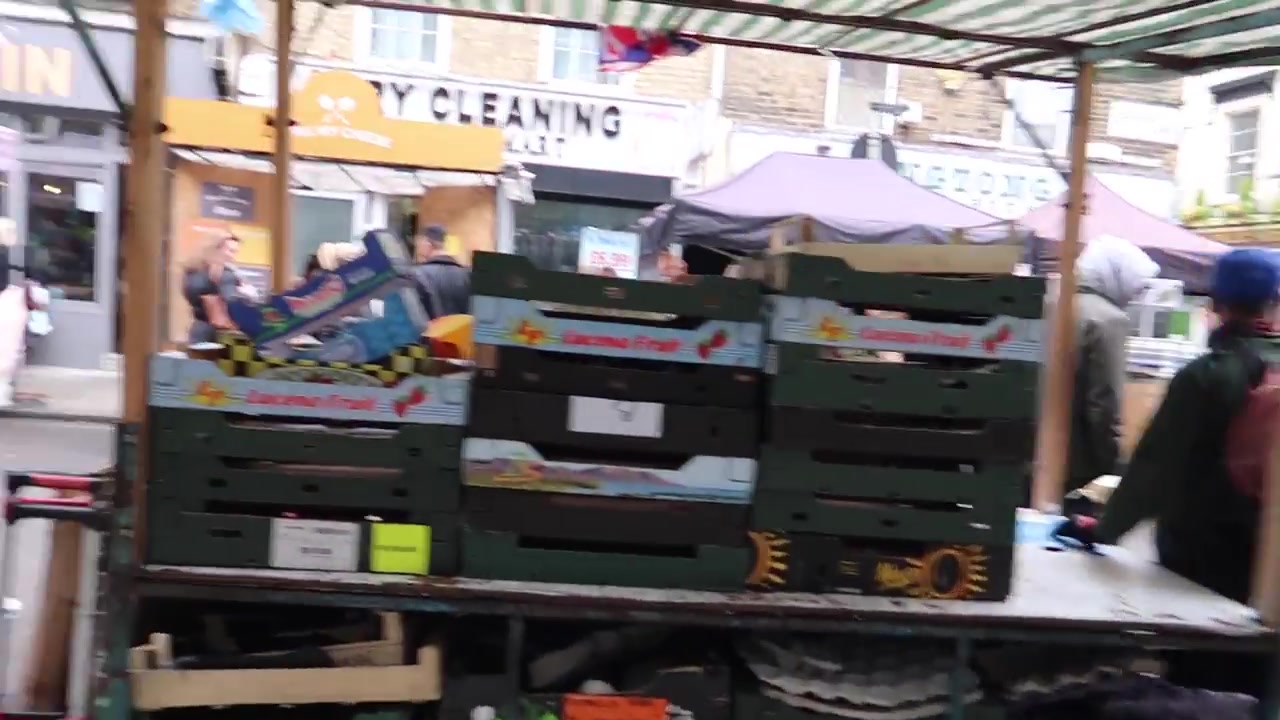
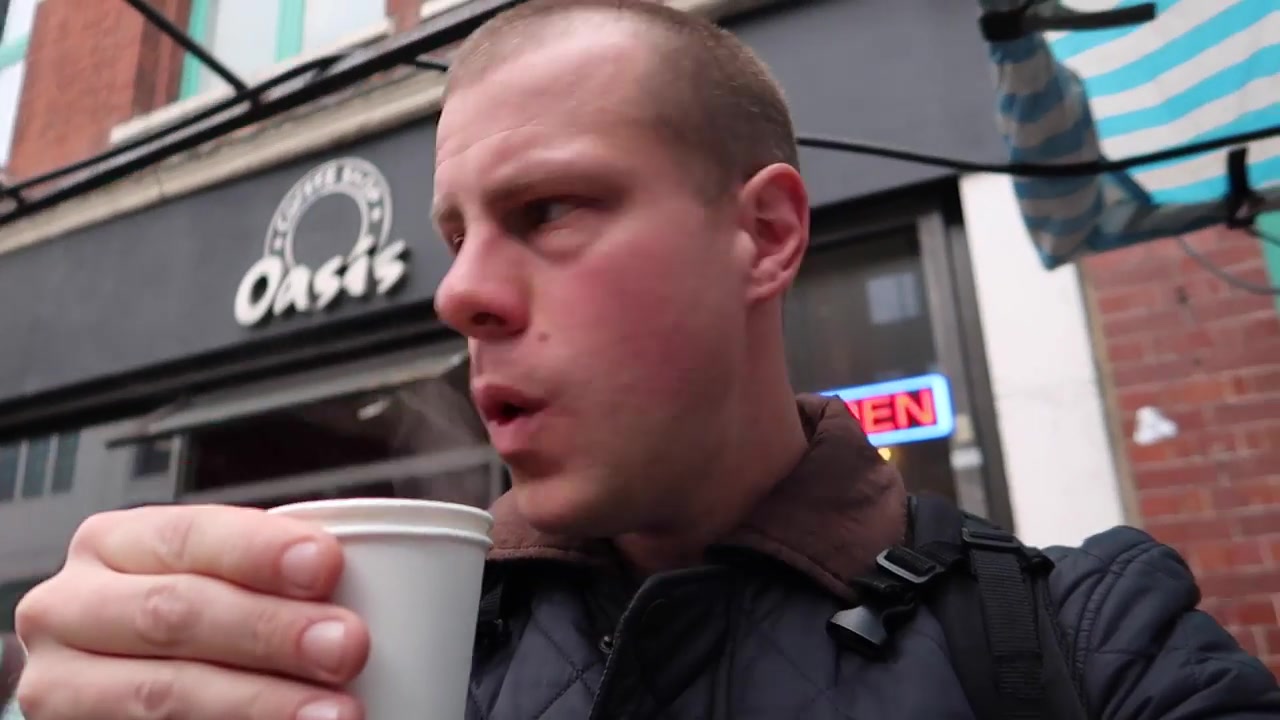
The first stop is Prufrock Coffee at 23–25 Leather Lane. In the film, Barry orders a long black and reflects on the area’s unusually strong concentration of independent coffee shops. Prufrock combines a working café with serious coffee training, a pairing that helped make Leather Lane part of London’s speciality-coffee map.
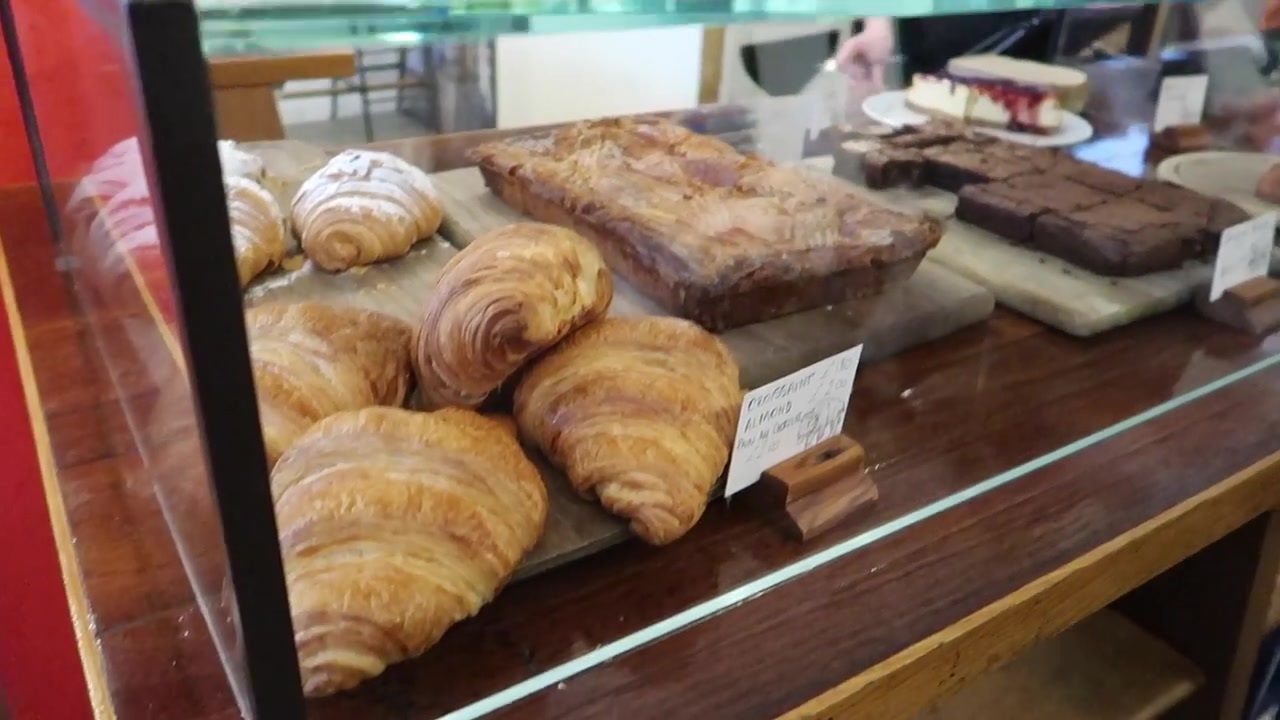
Prufrock remains on Leather Lane today. Its current information describes coffee from Square Mile and rotating European roasters, seasonal cooking, and professional and home barista courses downstairs. That continuity matters: although the film is an archive visit, the café is not merely a vanished piece of the street’s past.
Fish and chips at the Traditional Plaice
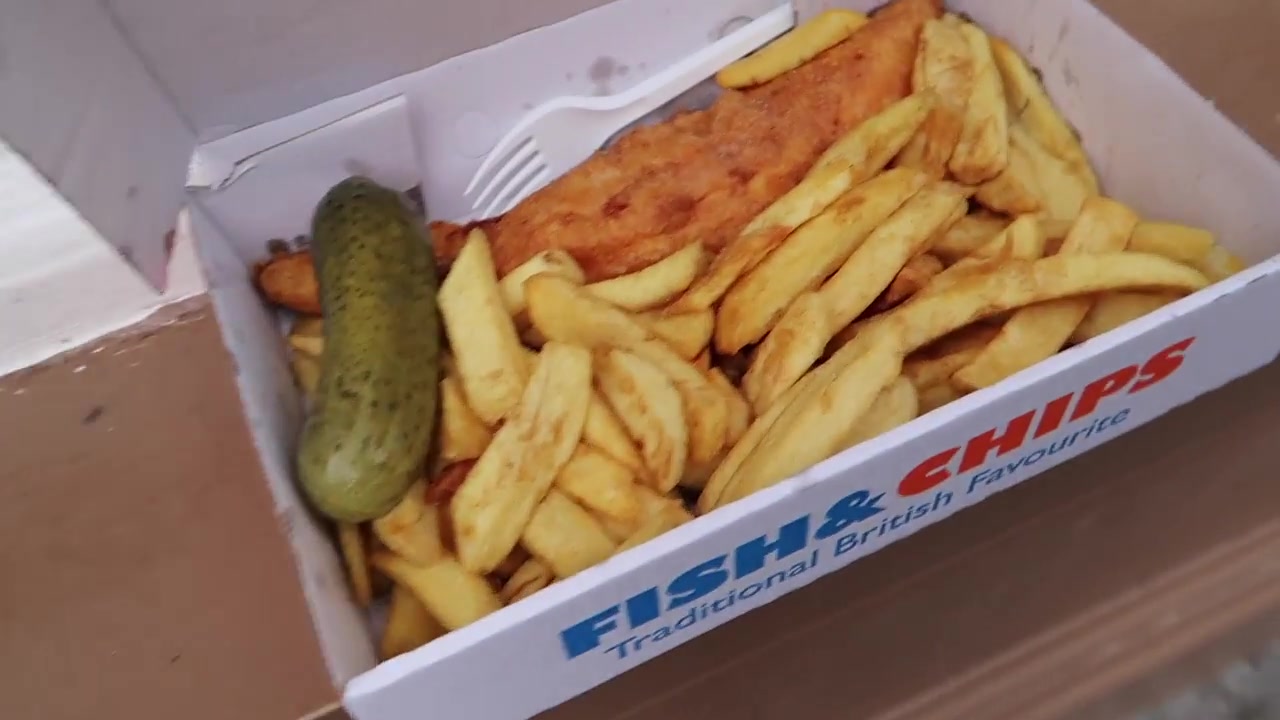
Farther north, the market becomes overwhelmingly about food. The film passes popular traders and permanent shops before choosing a more traditional British lunch from the Traditional Plaice on the corner of Hatton Wall. The order is simple: fish, chips and a pickled gherkin, eaten outside on a handy ledge while the market continues around it.
The fish is praised for its flavour, while the batter could have been crisper. That small piece of honest judgement is the value of the sequence. This is not a retrospective list of supposedly essential places; it is a record of an ordinary working lunch in London, bought and eaten on the street in May 2017.

Little Italy at the end of the lane
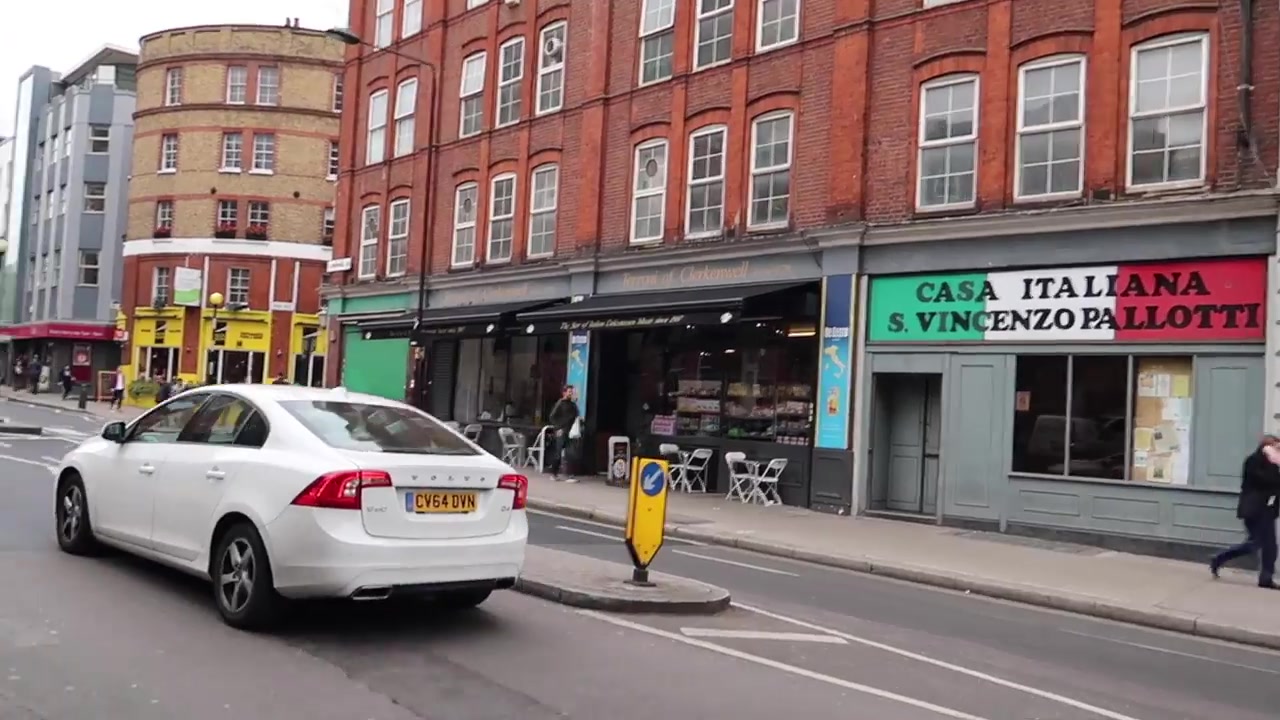
The route then turns towards Clerkenwell Road and the surviving heart of London’s historic Italian community. St Peter’s Italian Church, consecrated in 1863, stands near the northern end of Hatton Garden with long-established Italian food shops nearby. The church remains a focal point for London’s Italian Catholic community and for the annual procession of Our Lady of Mount Carmel.
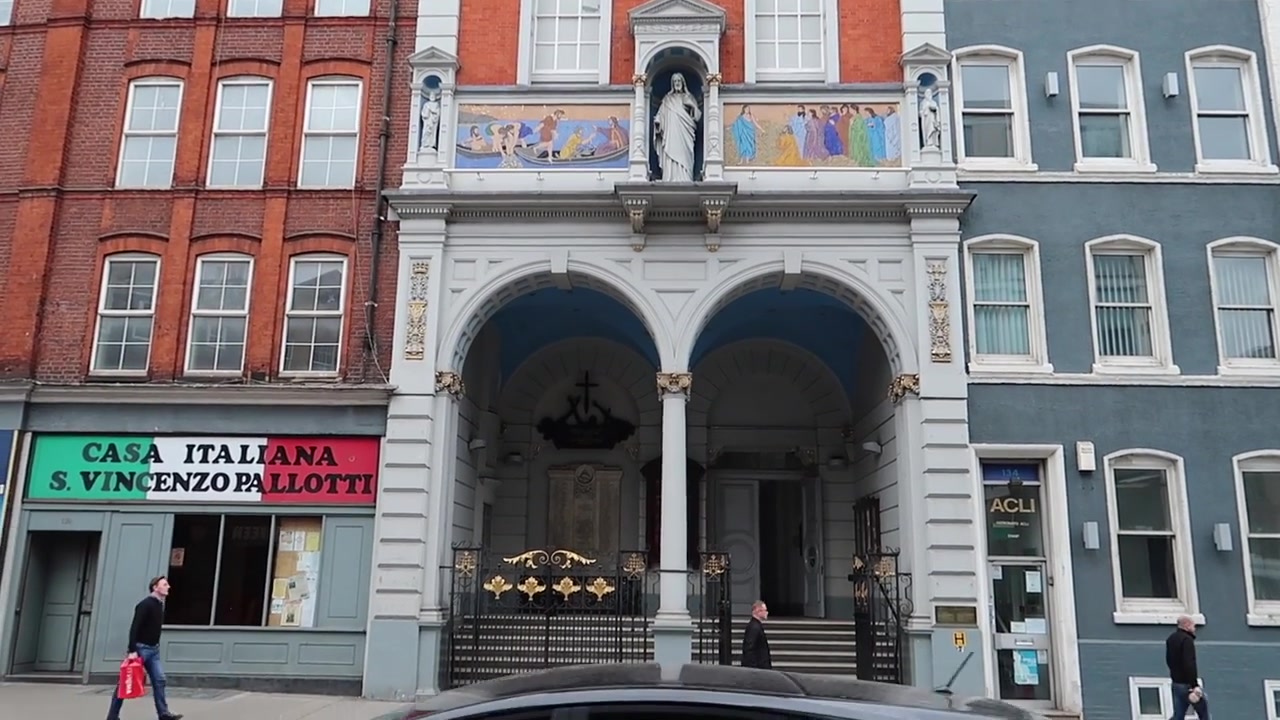
Inside the entrance is a memorial connected with the Arandora Star. The ship was torpedoed in July 1940 while carrying internees and prisoners of war to Canada, with the loss of more than 800 lives. Its presence gives the end of this market walk a deeper historical register, linking Clerkenwell’s Italian story to wartime internment, loss and remembrance.
A market shaped by working London
Leather Lane’s attraction is the way several Londons meet within a few hundred yards. Tudor legal chambers, Victorian insurance architecture, jewellery workshops, Italian Clerkenwell, speciality coffee and a weekday food market all occupy the same short route. The film’s coffee and fish-and-chip stops provide the narrative, but the street itself is the subject.
For visitors, Chancery Lane and Farringdon are the easiest approaches. For Roberts London, this May 2017 film preserves something more specific: the lunchtime life of a market that still works because Londoners return to it.

Recent Comments