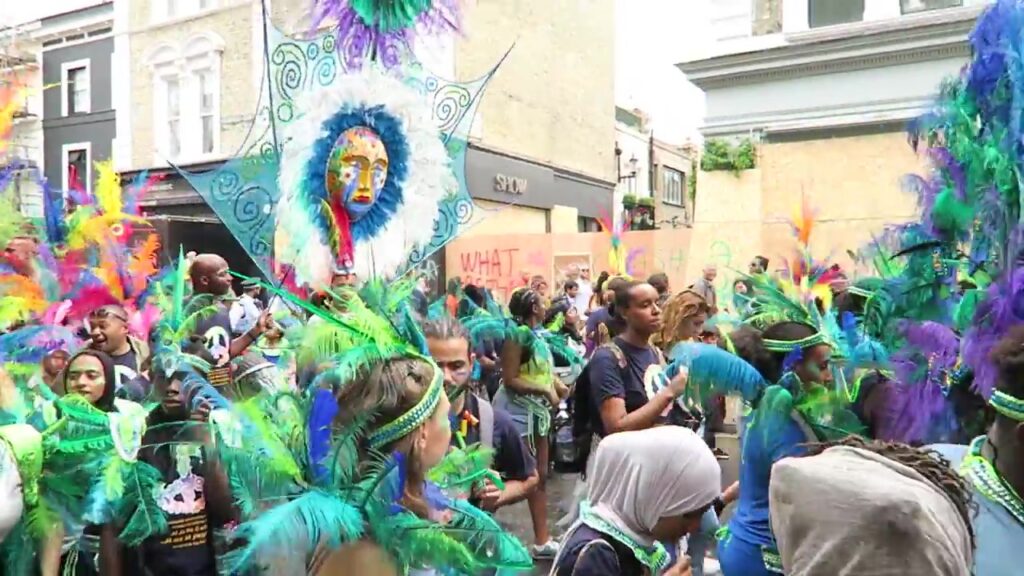
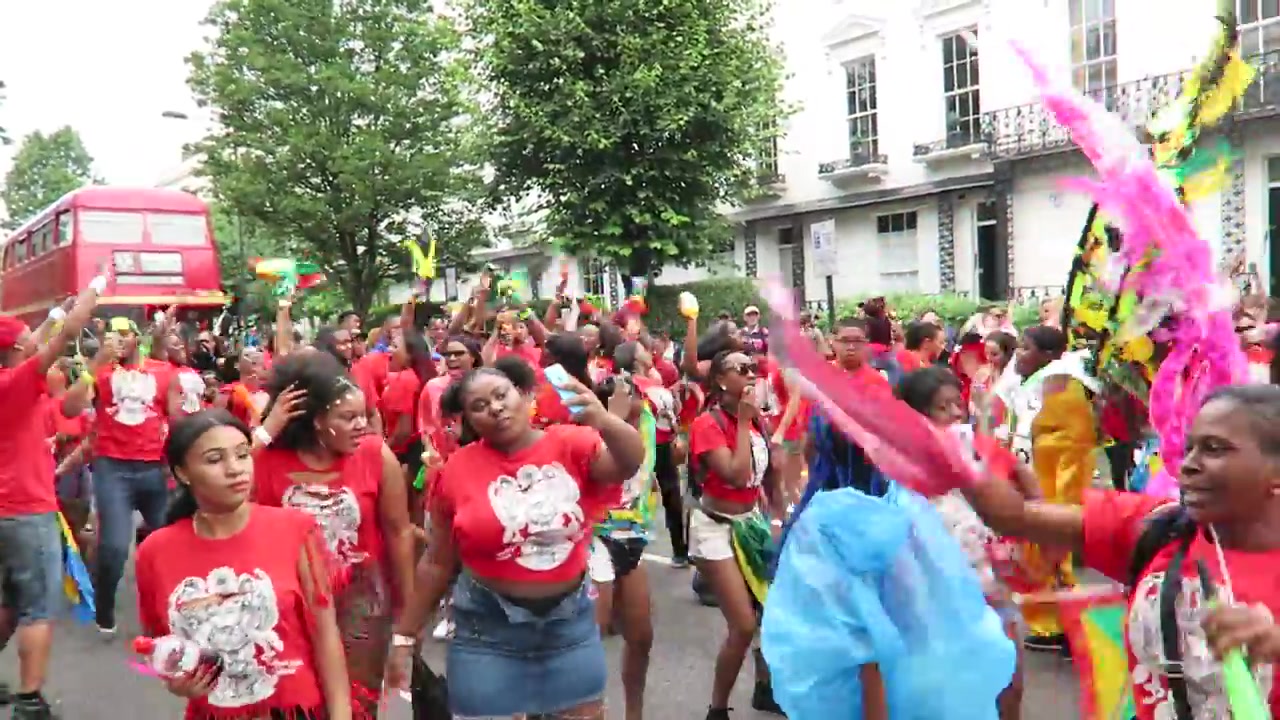
Notting Hill Carnival is London at its most vivid: streets filled with masquerade costumes, steelpan, calypso, soca, sound systems and the unmistakable energy of a city celebrating its Caribbean heritage. Yet the Carnival’s history is more than the story of a great annual party. It grew from community action, cultural memory and the determination to answer hostility with creativity.
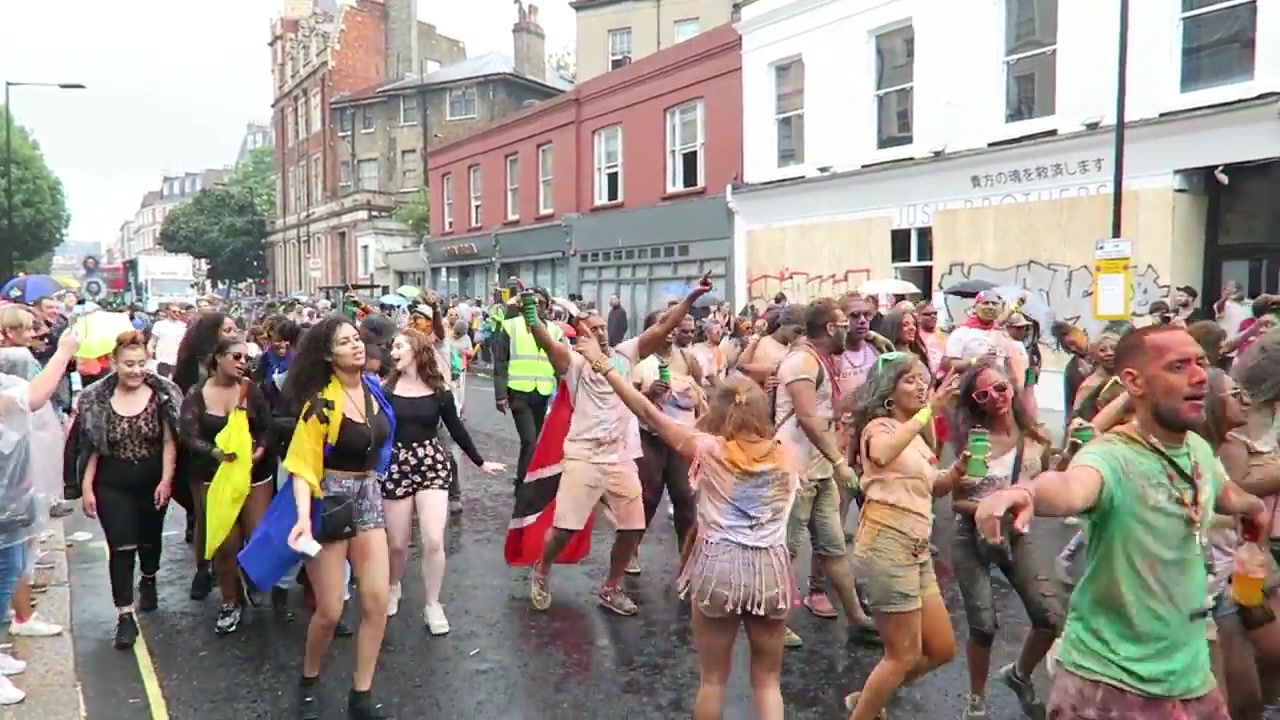
This Roberts London archive film was made in 2016, as Notting Hill Carnival marked fifty years since the outdoor festival of 1966. It follows Barry Roberts from High Street Kensington into Notting Hill on a wet Sunday morning, combining the Carnival’s history with the experience of entering an event that steadily takes possession of the surrounding streets. A decade later, the Carnival’s sixtieth anniversary offers a fitting moment to revisit how several strands of London history came together there.
Before the street carnival
The story begins in the difficult social landscape of post-war Notting Hill. Caribbean people who came to Britain during the Windrush era helped rebuild the country, but many encountered open discrimination in employment and housing. In 1958, racist attacks brought violence to the neighbourhood; the following year, the murder of Antiguan-born carpenter Kelso Cochrane intensified the demand for solidarity and change.
Trinidadian journalist and activist Claudia Jones understood the cultural power of celebration. On 30 January 1959 she organised a Caribbean carnival at St Pancras Town Hall. It was an indoor event rather than the street procession familiar today, but it brought Caribbean music, performance and identity into a prominent London setting. Jones is therefore an essential figure in the wider history of Carnival in Britain.
Rhaune Laslett and the 1966 street festival
The direct beginning of the modern street event came in 1966. Rhaune Laslett, a local resident, social worker and community activist, organised a children’s street festival intended to bring together the many communities living in Notting Hill.
Laslett invited Trinidadian musician Russell Henderson and his steel band to take part. When the musicians began moving through the streets around Portobello Road, people came out of their homes, joined the procession and danced behind the band. That spontaneous meeting of steelpan, neighbourhood and moving crowd supplied the form from which Notting Hill Carnival would grow.
From community festival to Caribbean Carnival
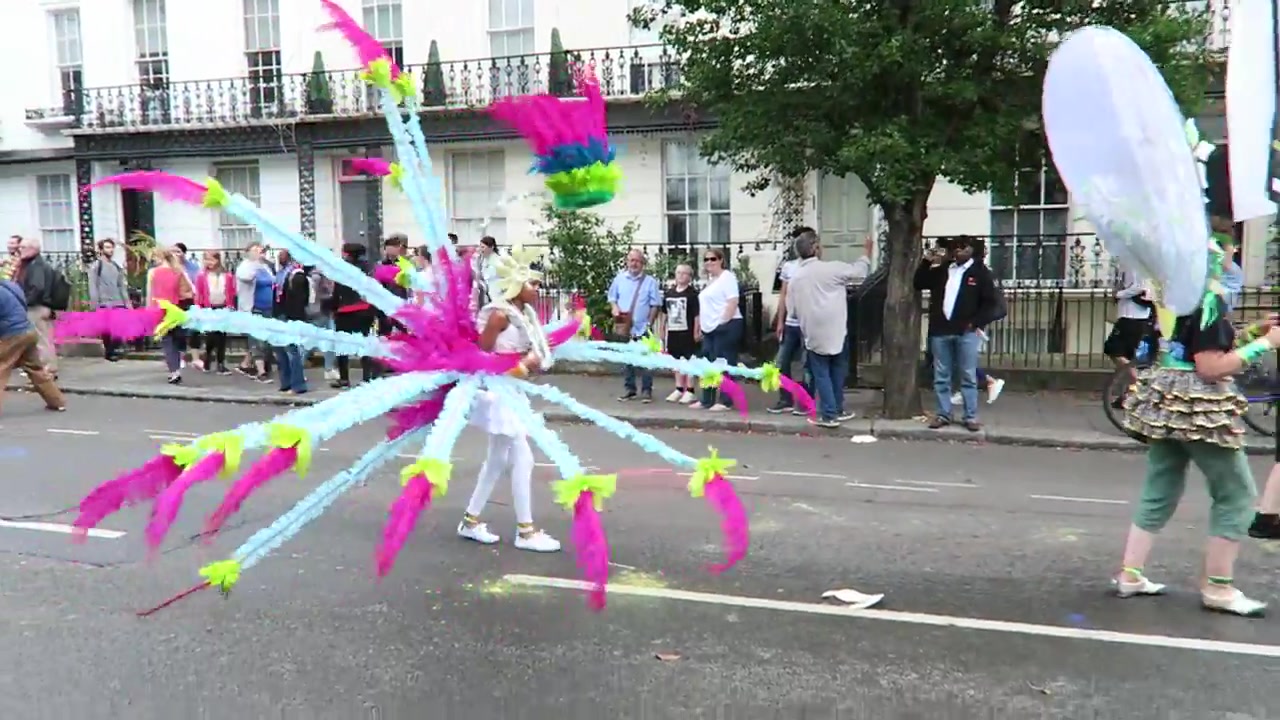
The event developed rapidly during the 1970s as its Caribbean character became more pronounced. Masquerade bands brought elaborate costumes and the traditions of mas. Calypso, soca and steelpan remained fundamental, while the introduction of static sound systems gave reggae and dub a powerful place in the streets.
Leslie Palmer, who organised the Carnival from 1973, helped broaden participation, recruit bands and extend the route. The sound systems introduced during this period were especially important. They did more than provide music: each created its own gathering place and sonic identity, turning surrounding streets into a network of open-air stages.
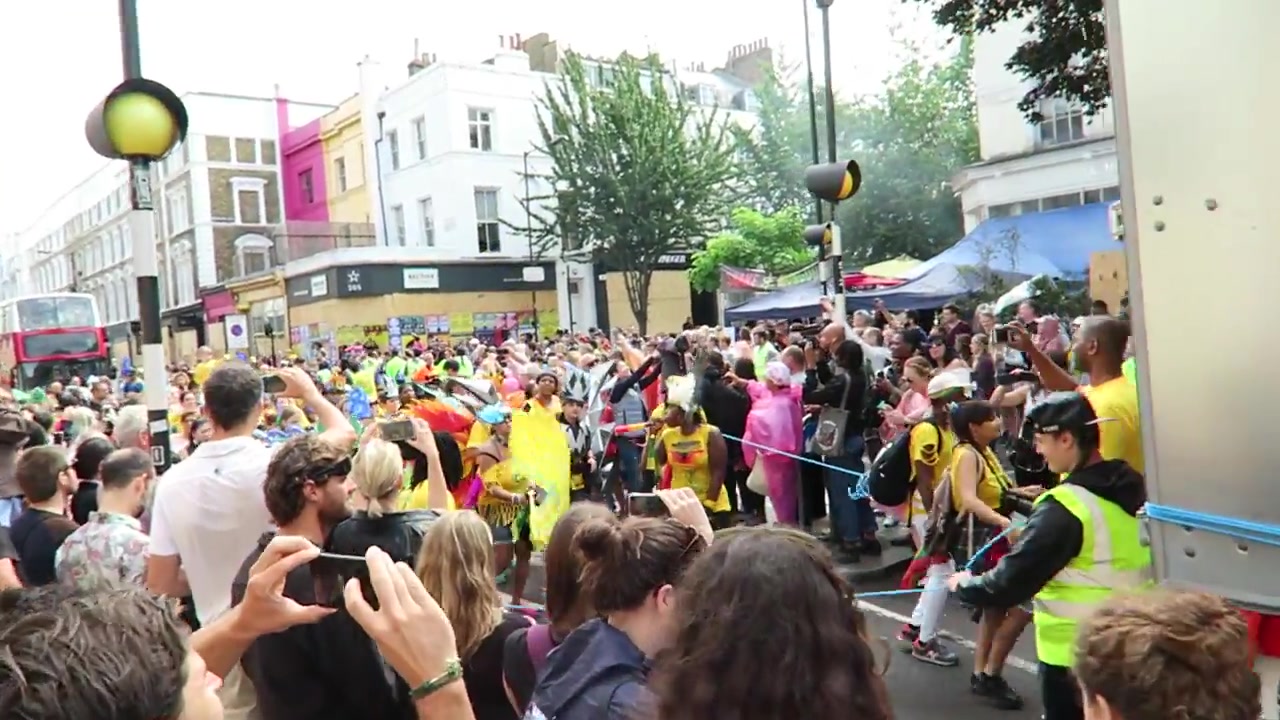
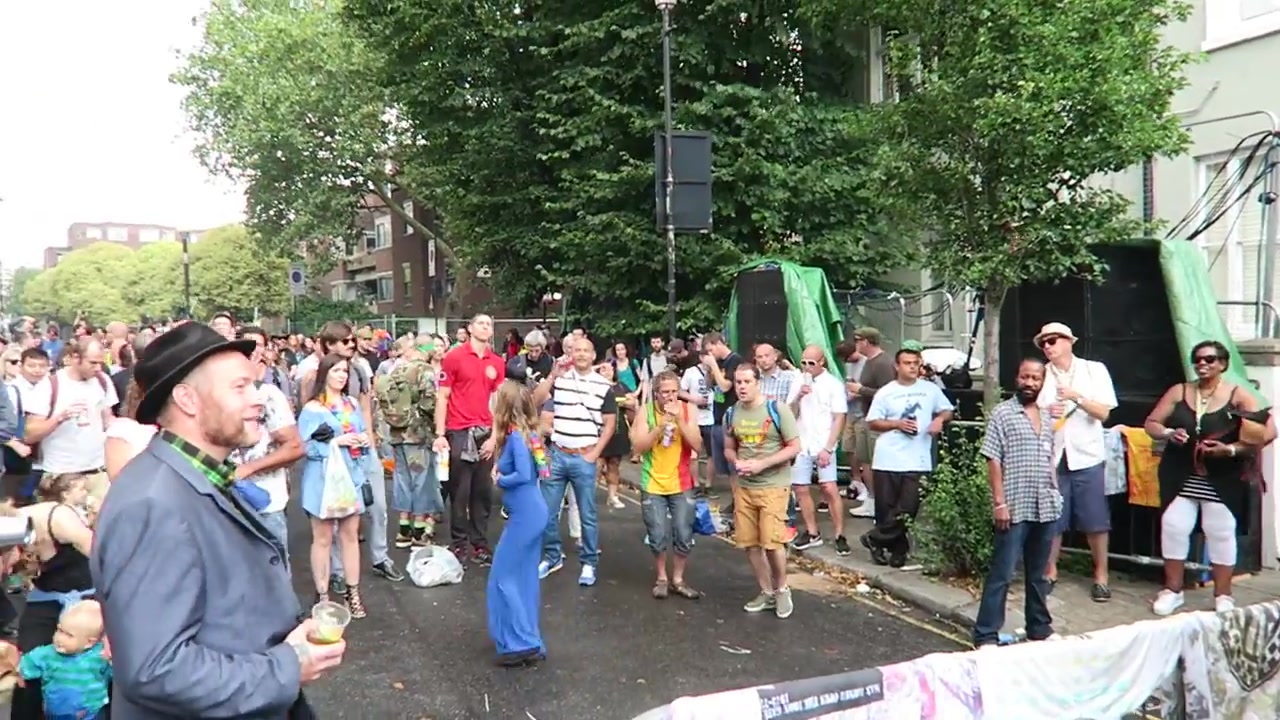
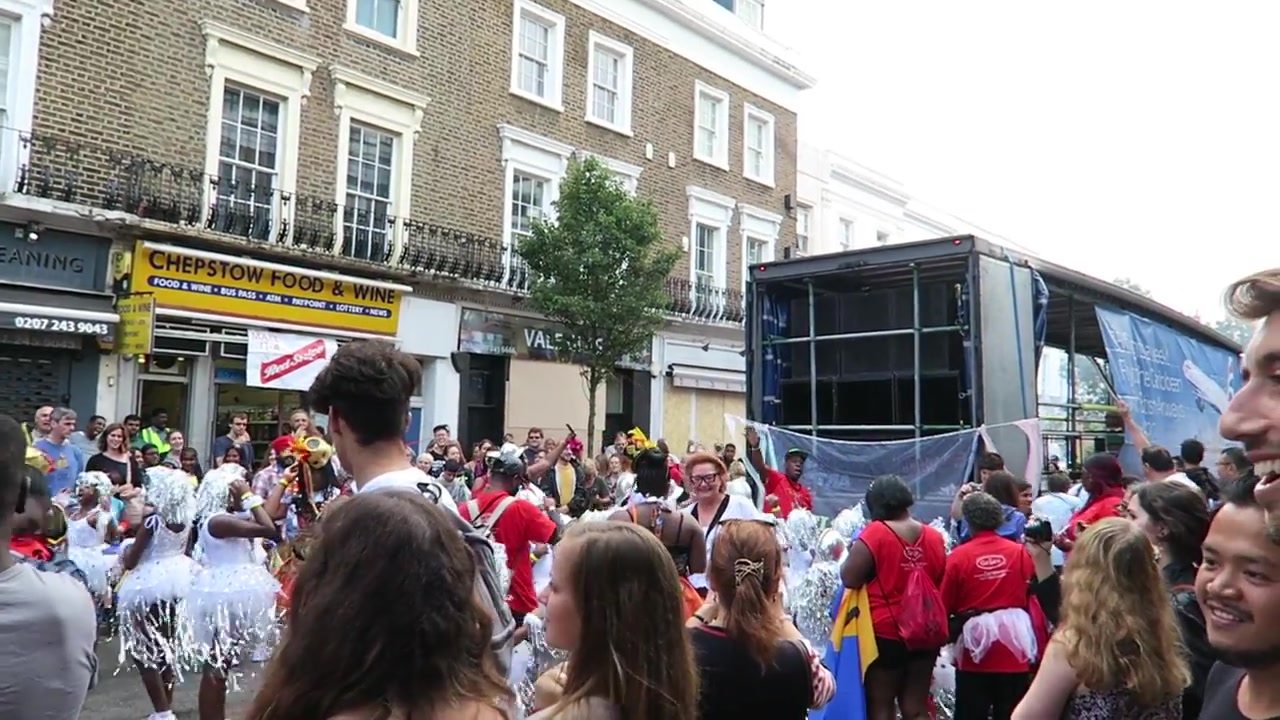
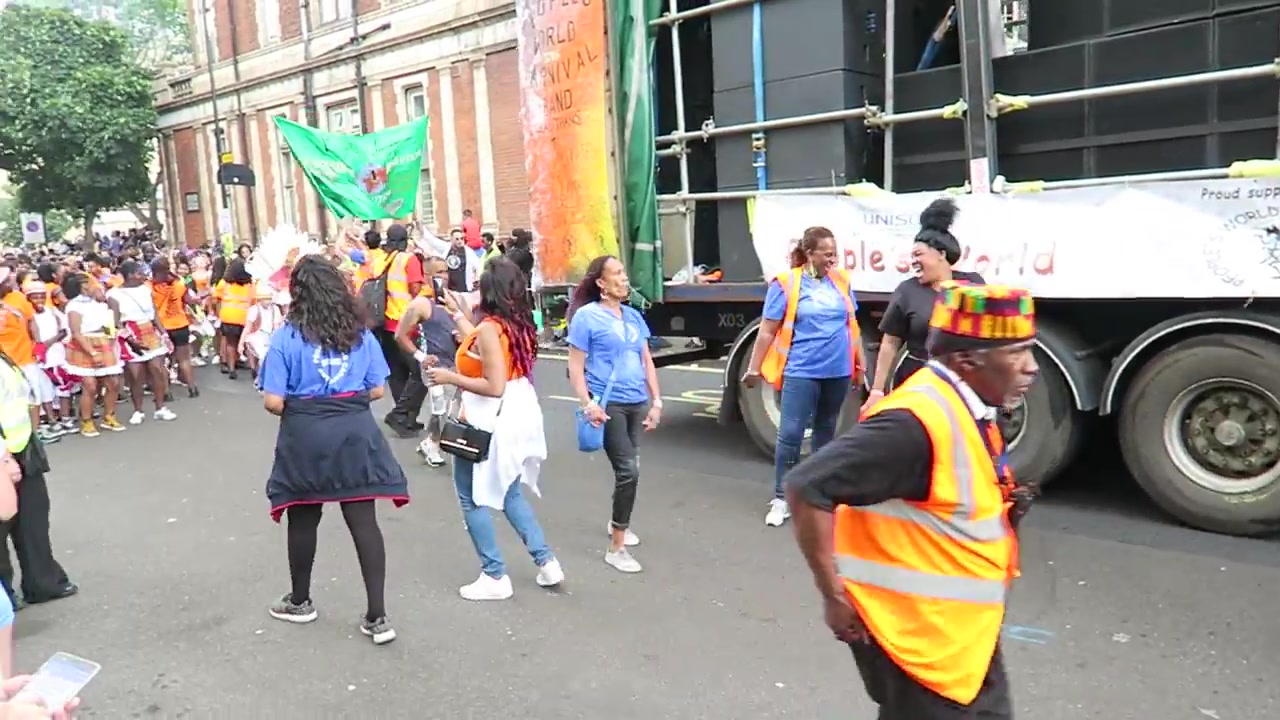
The archive film makes their physical force unusually clear. A recording can reproduce the music, but not the sensation of bass from speaker stacks large enough to fill the back of a truck. Barry describes streets that seem to shake with the sound, mixed with smoke and the smell of food cooking nearby. The parade’s moving systems, dancers and costumes are complemented by static systems whose DJs and performers draw their own dense crowds.
Mas, music and the art of Carnival
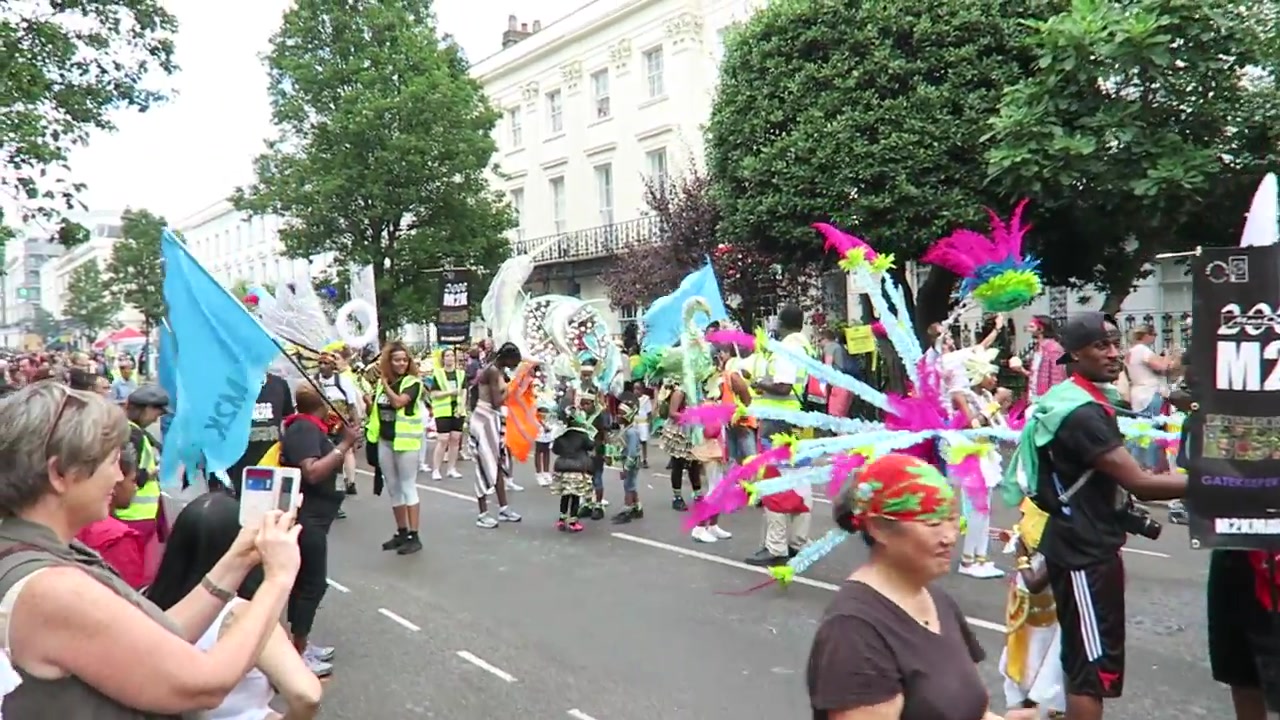
What a spectator sees over one August weekend represents months of creative work. Mas bands select themes, design and construct costumes, rehearse performances and pass specialist skills between generations. Steel bands and sound systems sustain their own musical communities throughout the year.
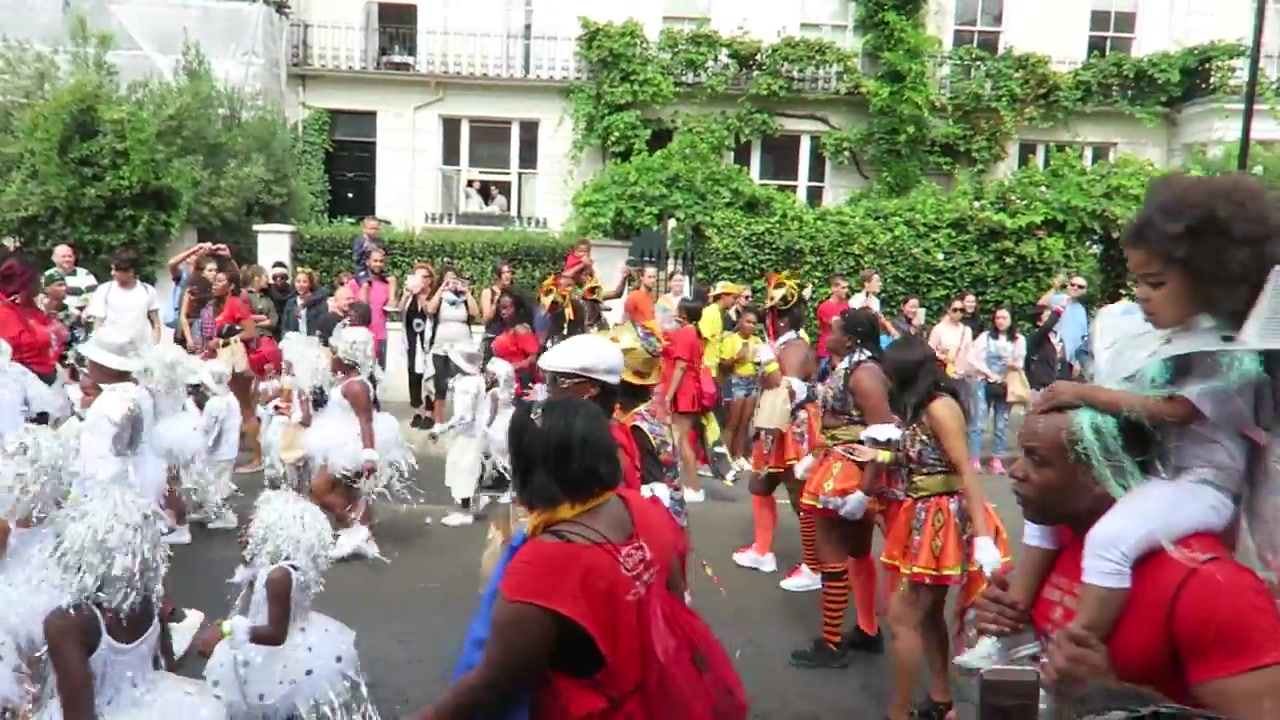
This is why Notting Hill Carnival is best understood as a major London arts event as well as a street festival. Costume, movement, music and public space combine on a scale found nowhere else in the city. Its art is not confined to a gallery or stage: the neighbourhood itself becomes the setting, and the crowd becomes part of the performance.
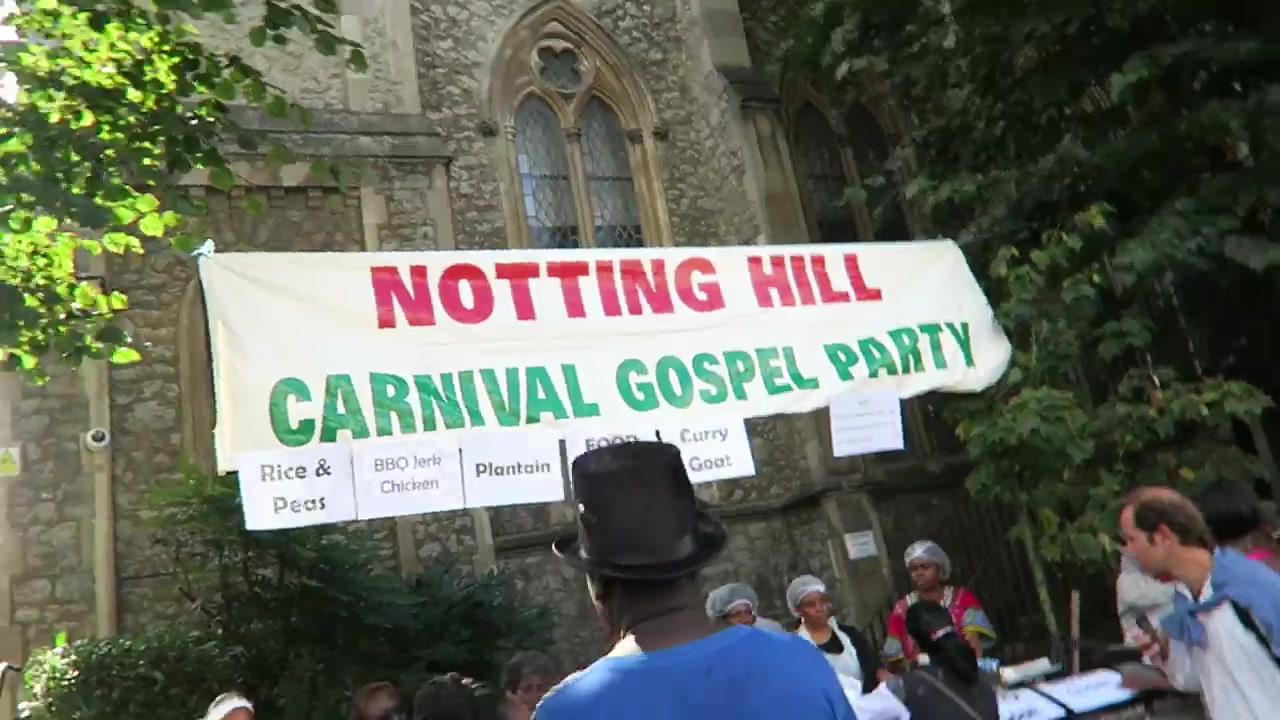
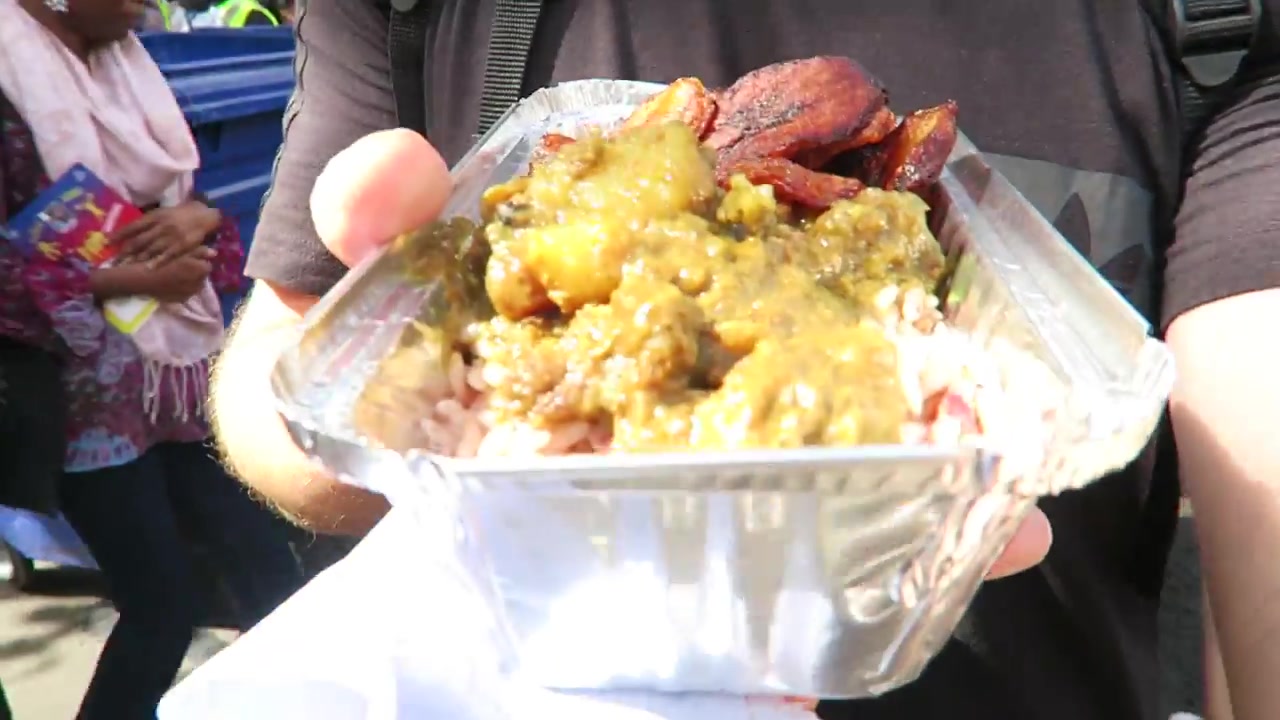
Food is part of that experience too. Near the end of the film, Barry stops outside Kensington Temple on Kensington Park Road for curry goat with rice and peas and crisp plantain. It is a small moment within a vast event, but an important one: Carnival is experienced through taste and smell as much as colour and sound.
A distinctly London tradition
Notting Hill Carnival remains rooted in Caribbean culture and the experience of Black Britain, but it has also become inseparable from London’s identity. It embodies the city’s ability to absorb traditions, reshape public space and create something locally distinctive without losing sight of where those traditions came from.
The annual August Bank Holiday gathering still carries the elements that defined its growth: the procession first animated by Russell Henderson’s steel band, the mas traditions of the Caribbean, the sound-system culture that transformed British music, and the community purpose that shaped the earliest celebrations.
It also changes character through the day. Filming early on Sunday, Barry finds a relatively relaxed, family-centred atmosphere before the crowds thicken during the afternoon. Some residents and businesses protect their buildings behind temporary hoardings; others open their doors, set up bars or watch from windows, balconies and roof terraces. The result is both an international cultural event and an intensely local negotiation between celebration and everyday neighbourhood life.
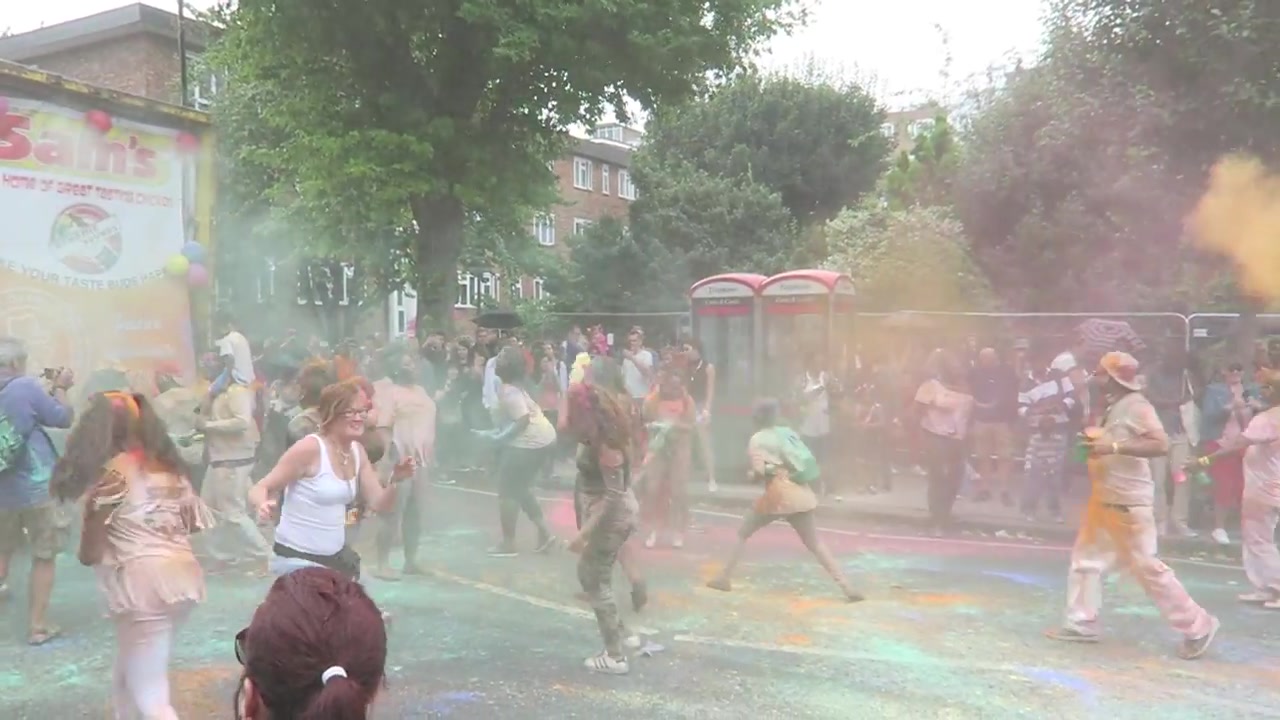
Filmed and first published on 30 August 2016, this Roberts London archive records the Carnival at its fiftieth anniversary. Its history explains why the event endures: Notting Hill Carnival is not simply held in London. It is one of the ways modern London tells its story.

Recent Comments