Pride in London filled the centre of the city on Saturday 7 July 2018. From Trafalgar Square to Regent Street and Soho, this Roberts London film records the parade as a public celebration, a political statement and one of the busiest days of the West End summer.
Pride Matters in 2018
The theme for 2018 was #PrideMatters. Organisers asked people to consider what Pride meant to them, connecting the colour and celebration of the day with the continuing need for visibility, equality and freedom from discrimination.
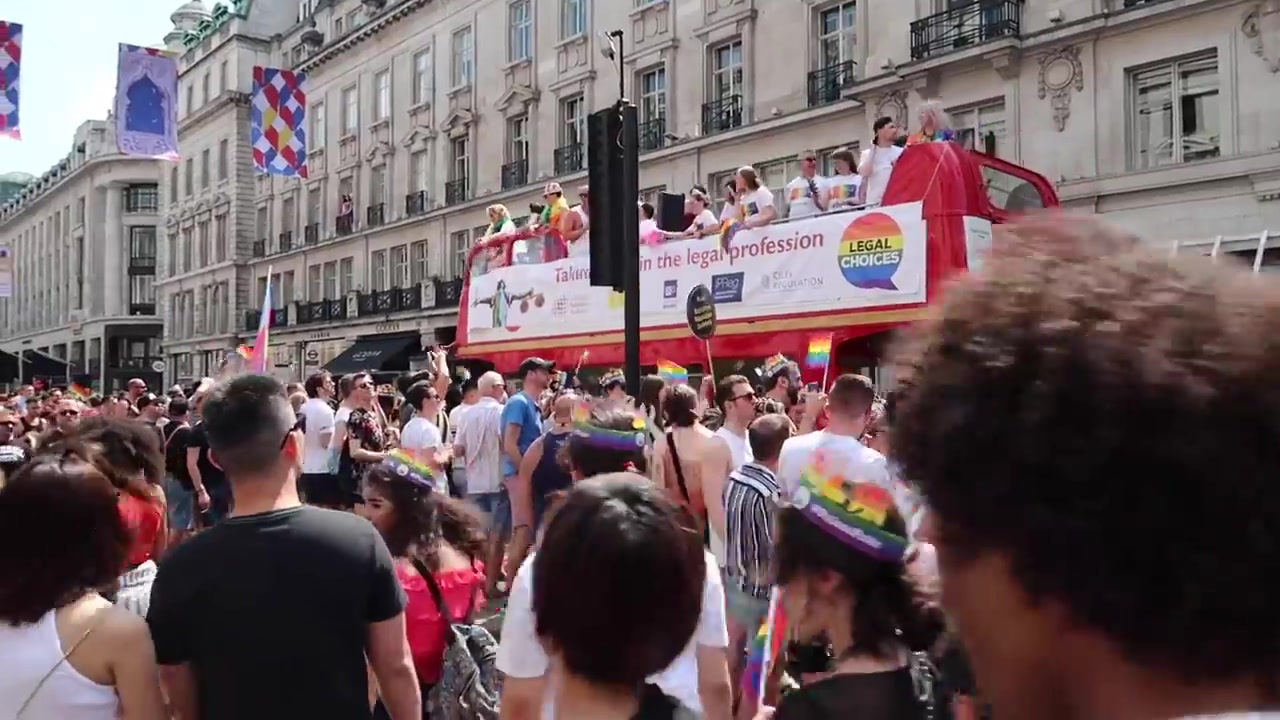
More than 30,000 registered marchers from roughly 250 groups took part. Community organisations, charities, professional networks, public services and businesses appeared together, while very large crowds lined the route. The variety is central to the film: Pride is not presented as one organisation or one kind of participant, but as a broad and sometimes complicated London gathering.
Trafalgar Square and the parade route
The 2018 parade set out from Portland Place at noon. It moved through Oxford Circus and Regent Street to Piccadilly Circus, then continued along Lower Regent Street and Pall Mall, past Trafalgar Square and towards its finish in Whitehall. The formal procession was expected to conclude at about 4.30pm, although celebrations continued across central London.
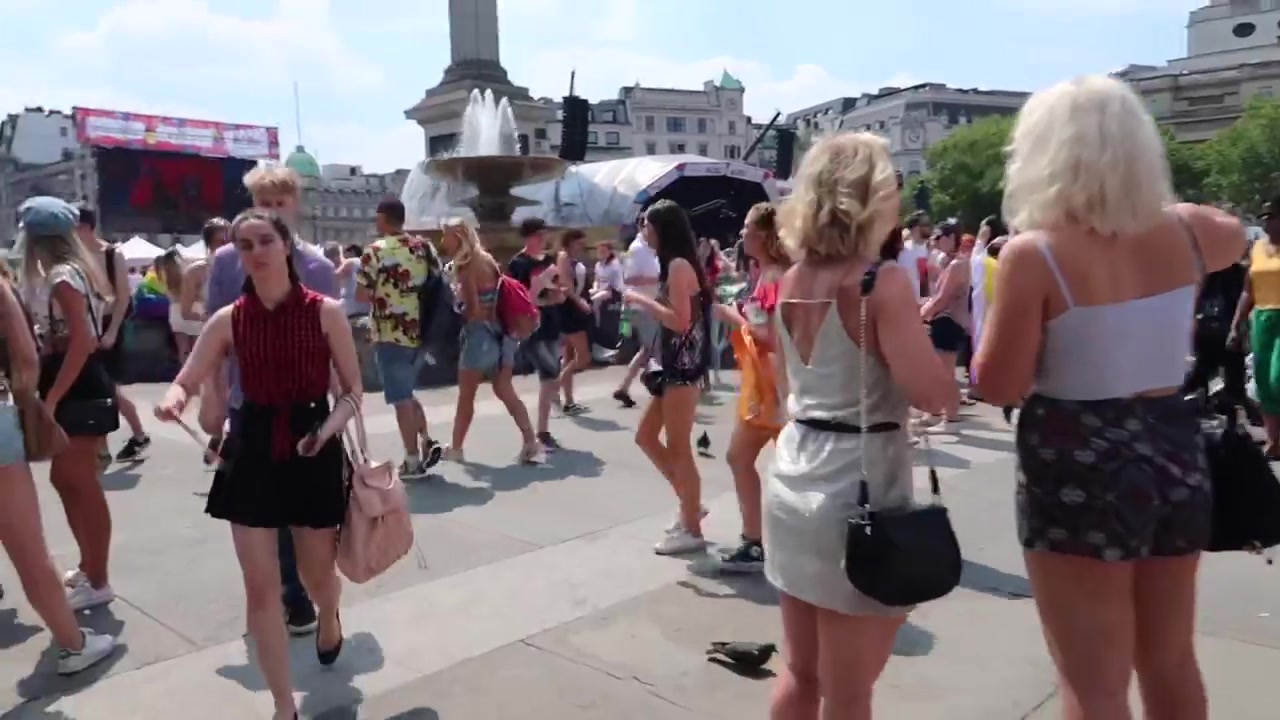
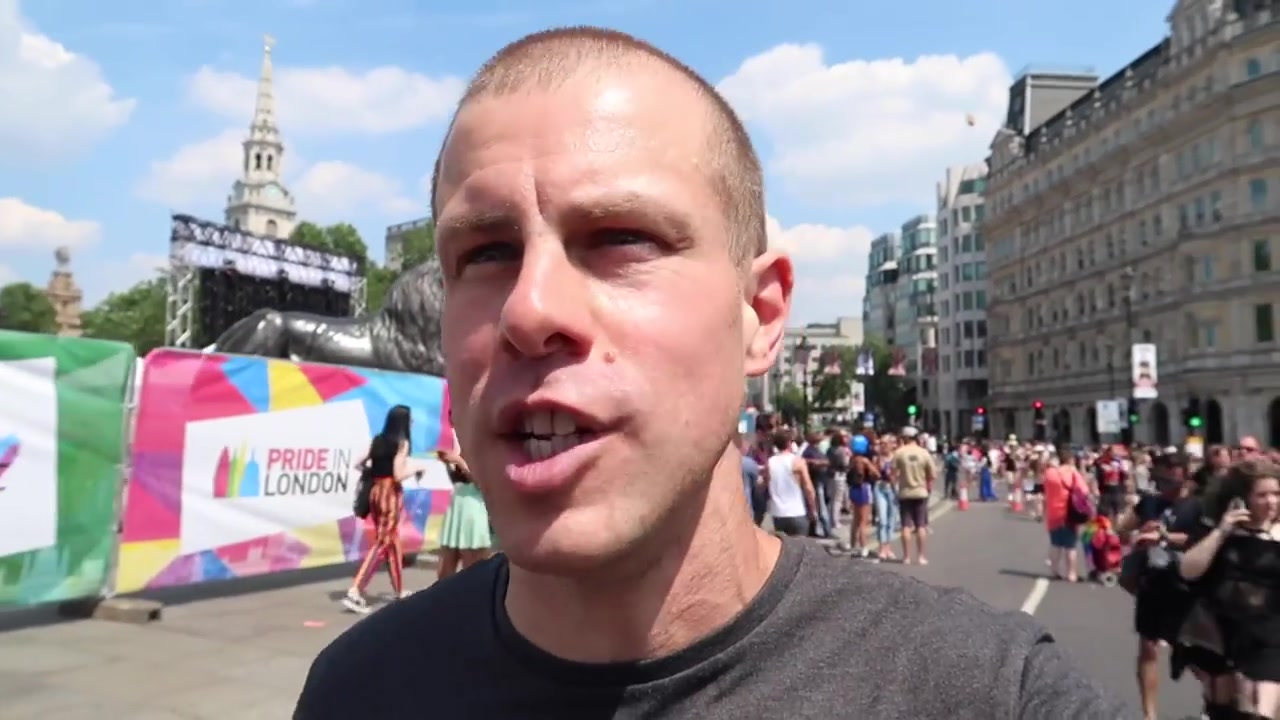
Trafalgar Square provided the principal stage, live entertainment and community stalls. In the film, the square works as a meeting point before the camera joins the denser movement of spectators and parade vehicles through the surrounding streets.
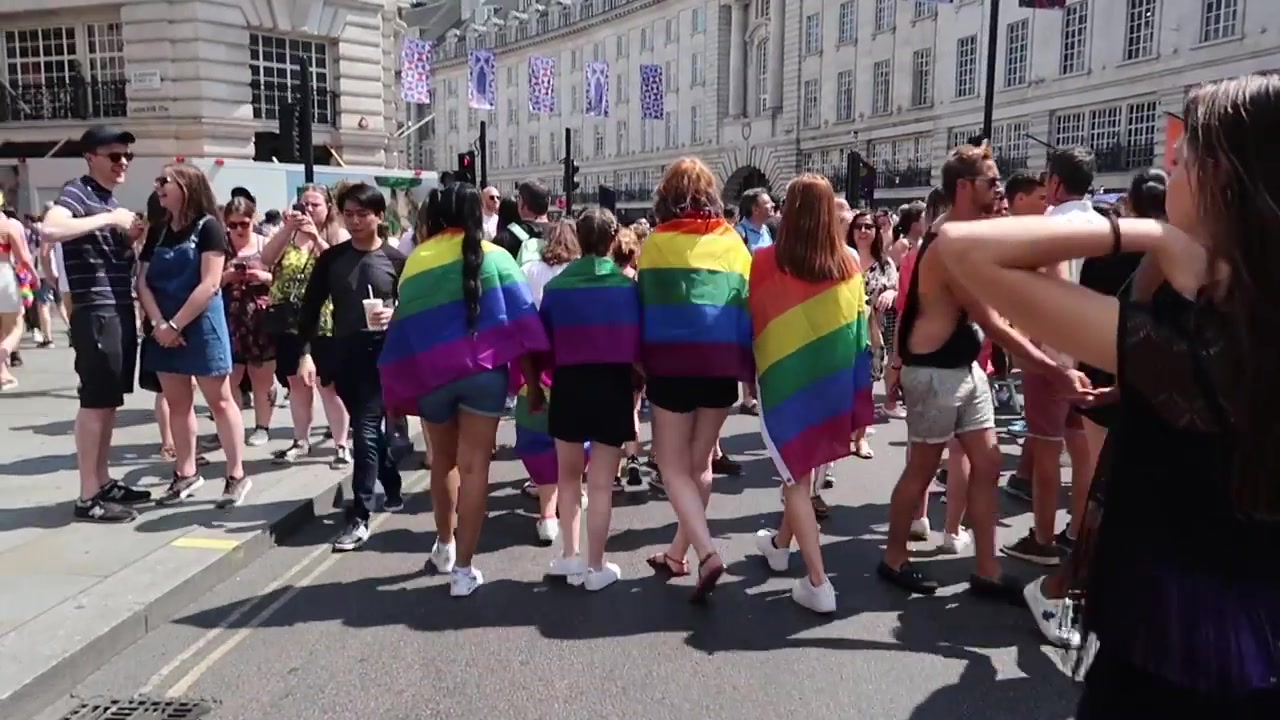
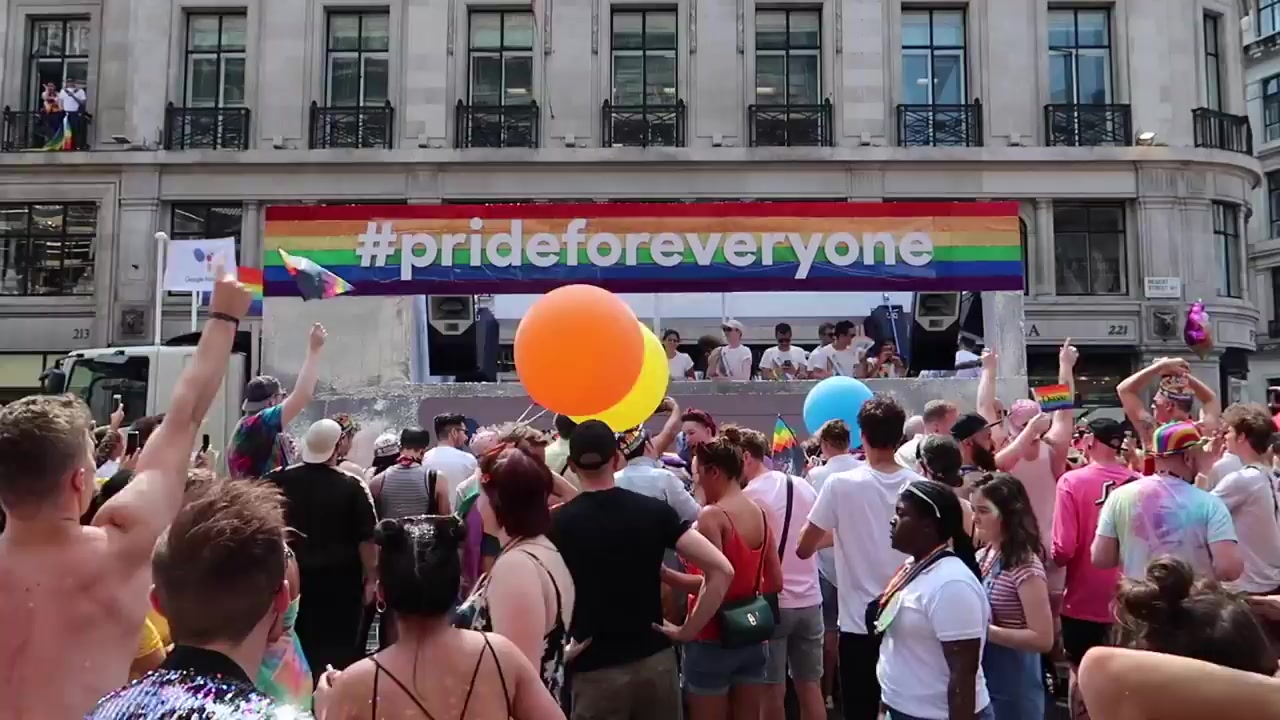
A street-level view of the West End
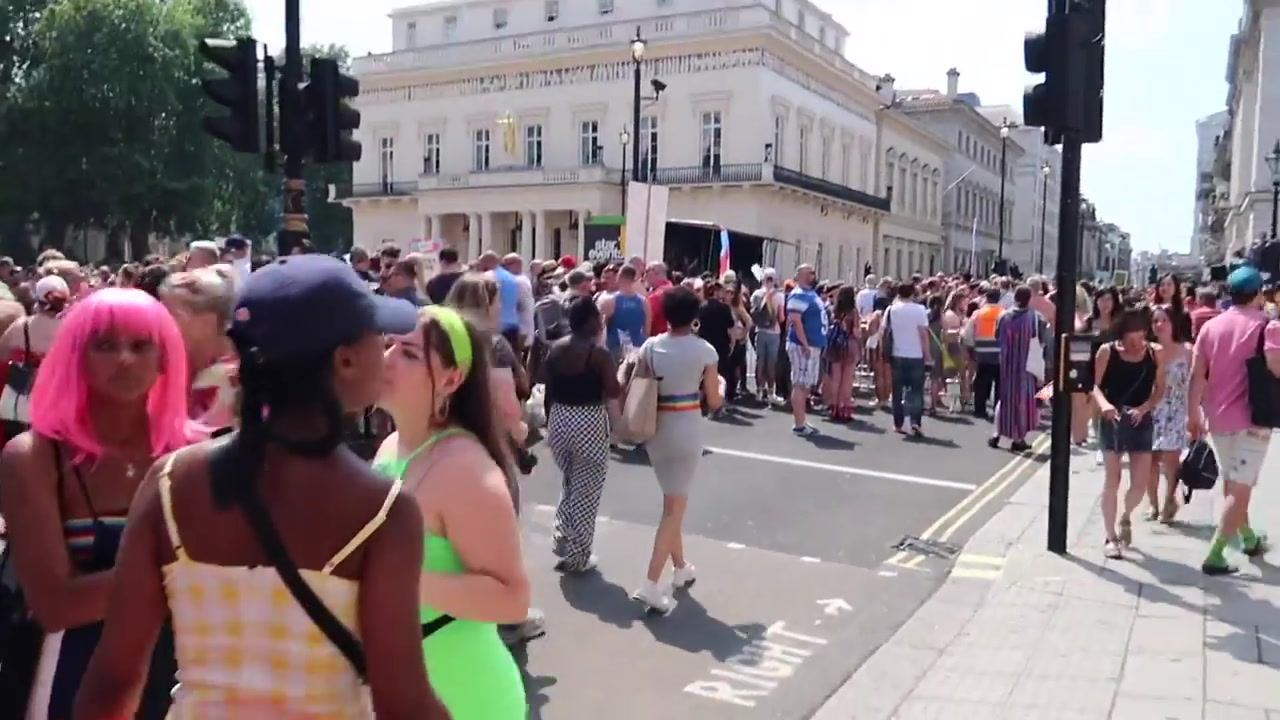
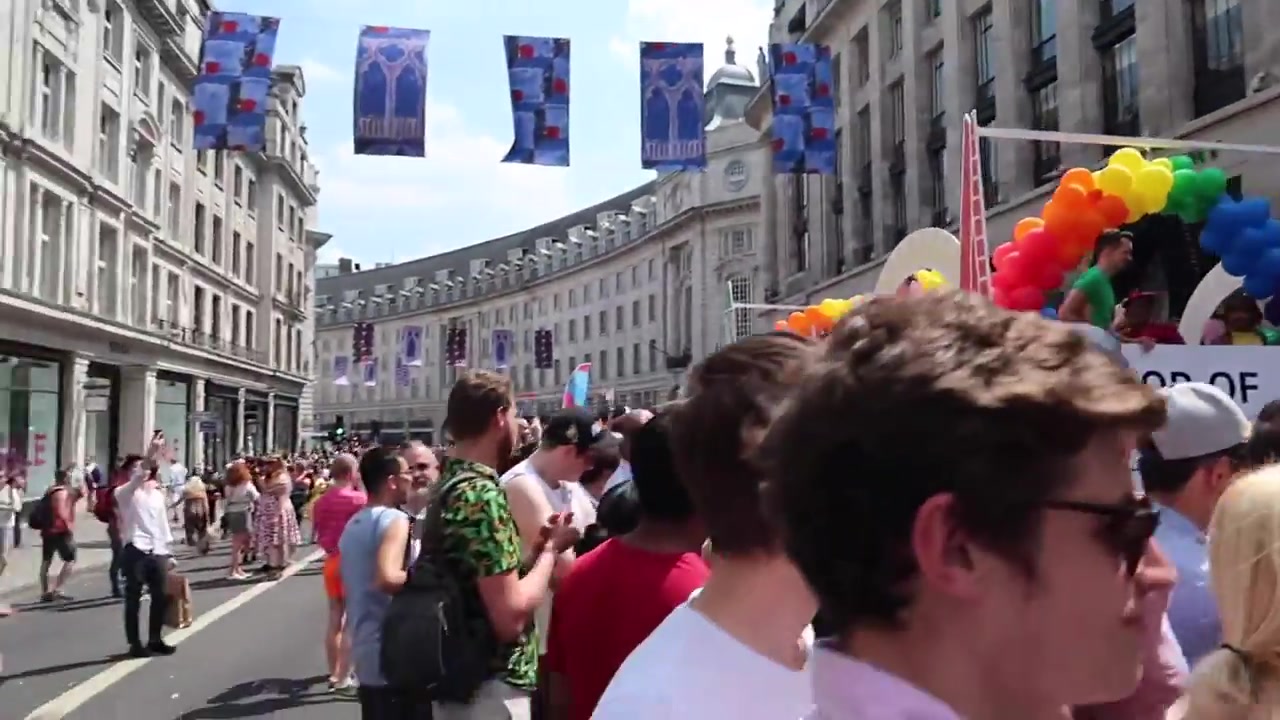
The strongest quality of the recording is its position inside the crowd. Parade buses and organised groups pass close to the camera, spectators watch from temporary platforms and upper floors, and police keep routes open through streets that are usually dominated by traffic.
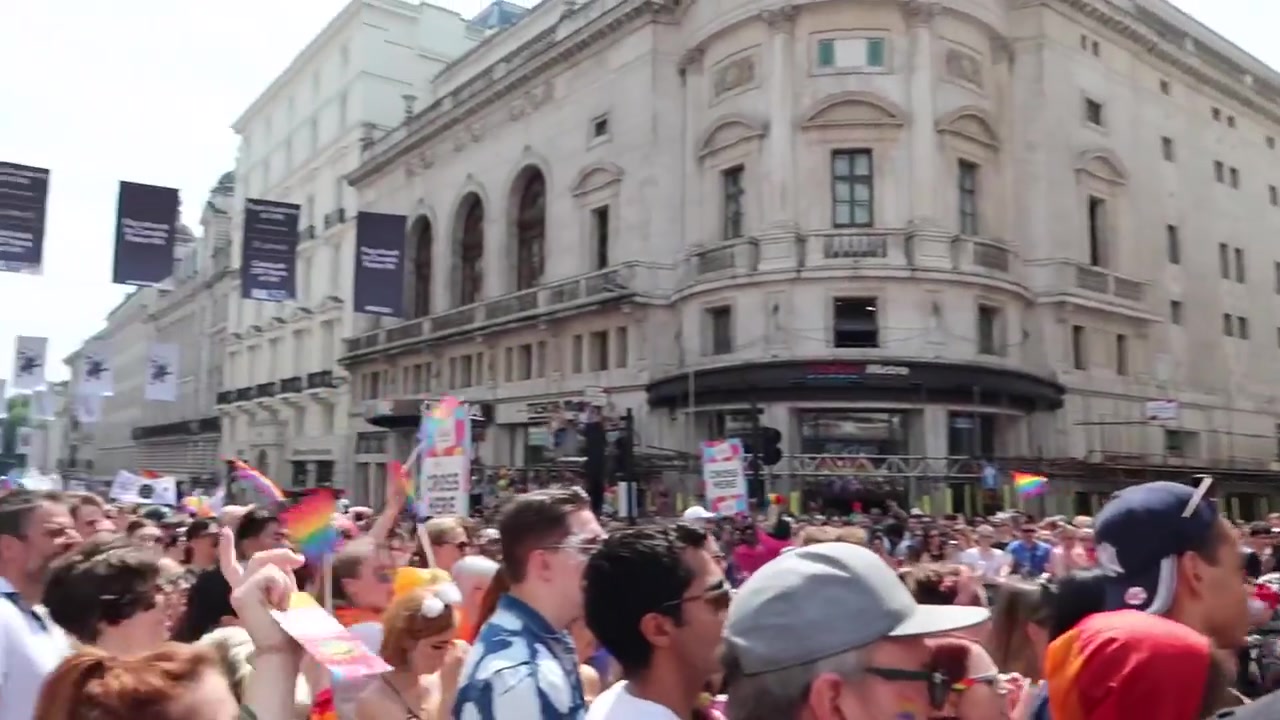
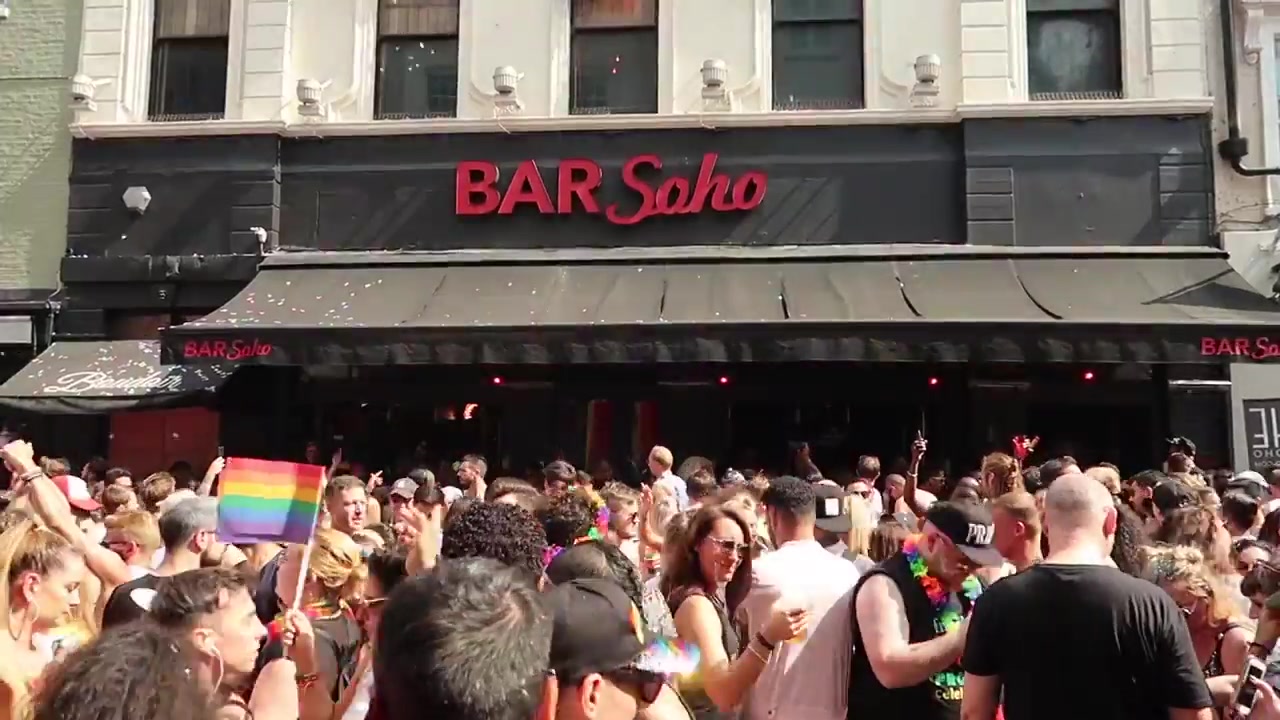
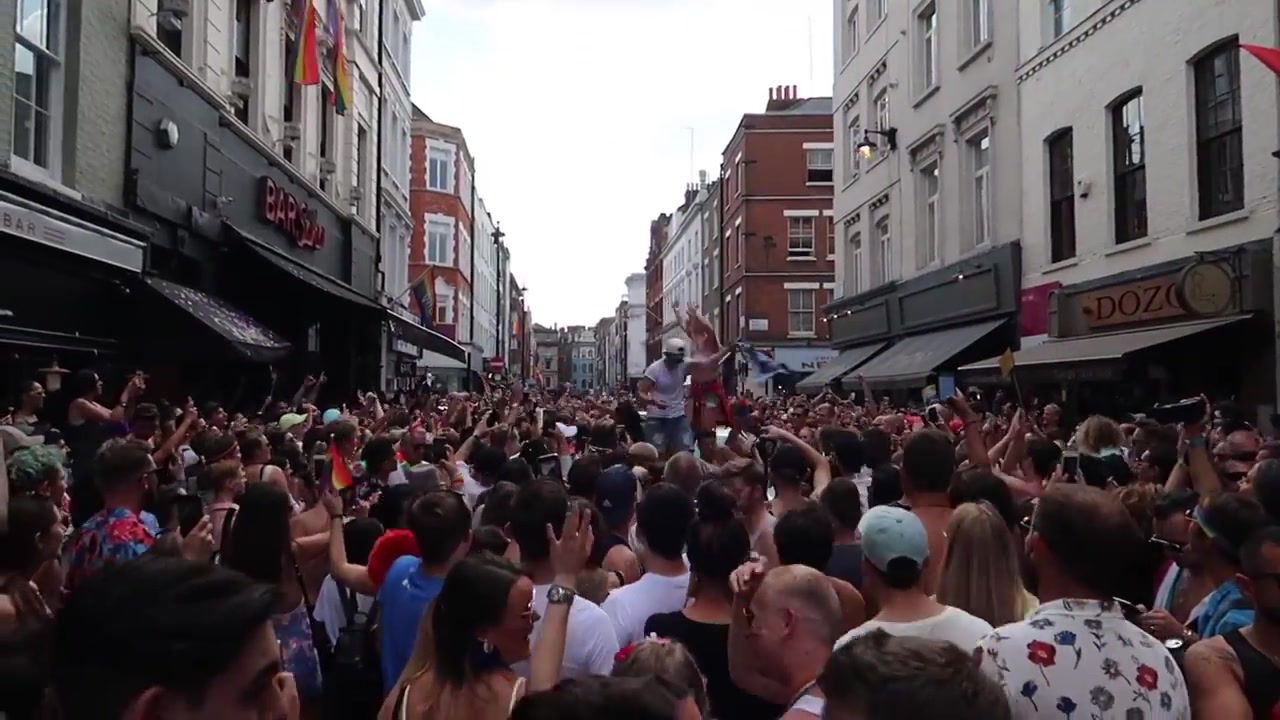
Regent Street’s flags create a ceremonial background, but the atmosphere changes again in Soho. Around Old Compton Street, the organised parade gives way to a less formal street gathering outside bars and shops. The distinction shows how Pride occupied the wider West End rather than remaining contained within the official route.
Celebration and continuing purpose
The film is cheerful and immediate, but the 2018 theme prevents the event from being reduced to colour alone. Pride marked progress already made while drawing attention to the prejudice and inequality that remained. That combination of celebration and public purpose is what gives this short Roberts London archive record its lasting value.
A London tradition with protest at its roots
London’s first official Pride march took place in 1972, when several thousand people travelled from Trafalgar Square towards Hyde Park. It grew from the gay liberation movement and treated public visibility as an act of freedom. By 2018, Pride had become a far larger civic event, but its origins remained relevant to the Pride Matters message.
Viewed as an archive film, the recording also preserves a particular moment in London’s changing language and public culture. The article uses current LGBTQ+ terminology while retaining the date, places and visible messages of the event itself. The purpose is not to rewrite 2018, but to document it clearly and respectfully.

Recent Comments