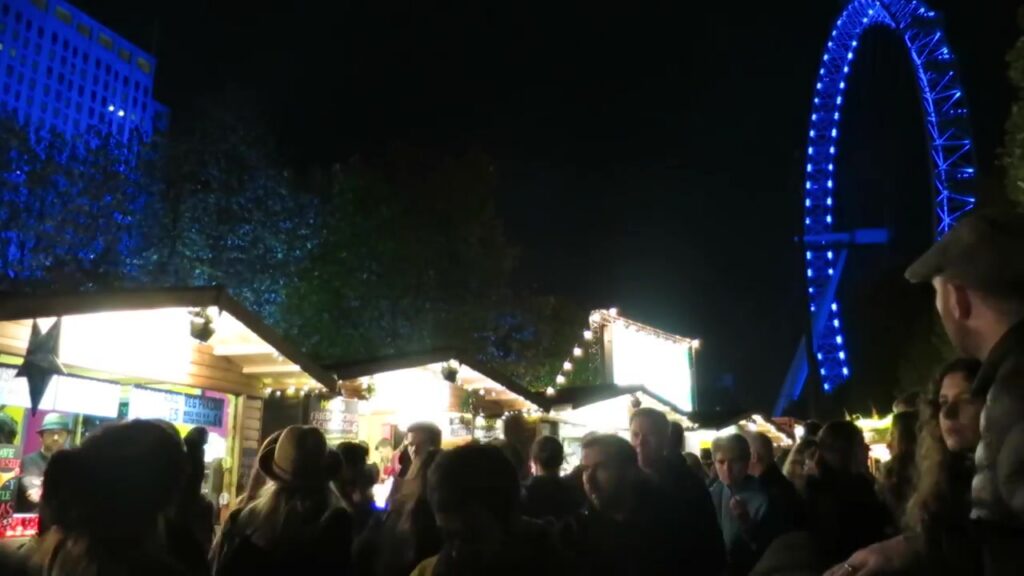
The South Bank was already fully in Christmas mode during this November 2014 visit beside the London Eye. Wooden chalets filled the riverside path, strings of warm bulbs crossed the dark sky and the market crowds moved between food counters, gift stalls and the illuminated attractions around Southbank Centre.
First published on 16 November 2014, this short Roberts London film is a record of the opening stretch of that winter season. It is not a modern guide to traders or opening hours; it preserves one evening when the Christmas market formed part of Southbank Centre’s wider Winter Festival, with the London Eye glowing over the stalls and the Thames reflecting the lights of the opposite bank.
Arriving beneath the London Eye
The film opens at ground level among the weekend crowd. I am standing beside the market with a bright carousel behind me and the rim of the London Eye visible through the trees. It immediately fixes the place: this is the South Bank rather than a generic collection of seasonal stalls.
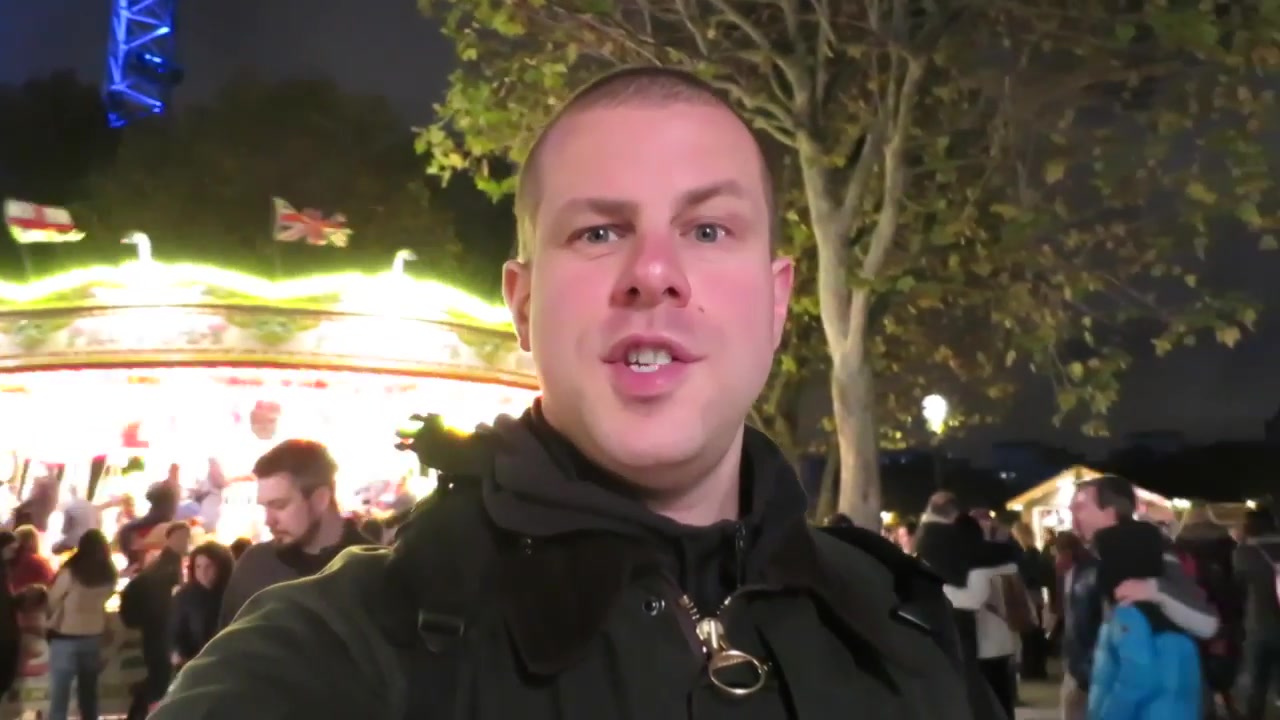
The market occupies the route between the Southbank Centre buildings, Jubilee Gardens and the river. In 2014 the chalets sit close together, so the path narrows wherever people stop to read menus or watch food being prepared. The Eye appears and disappears above the roofs, providing a blue-lit landmark throughout the walk.
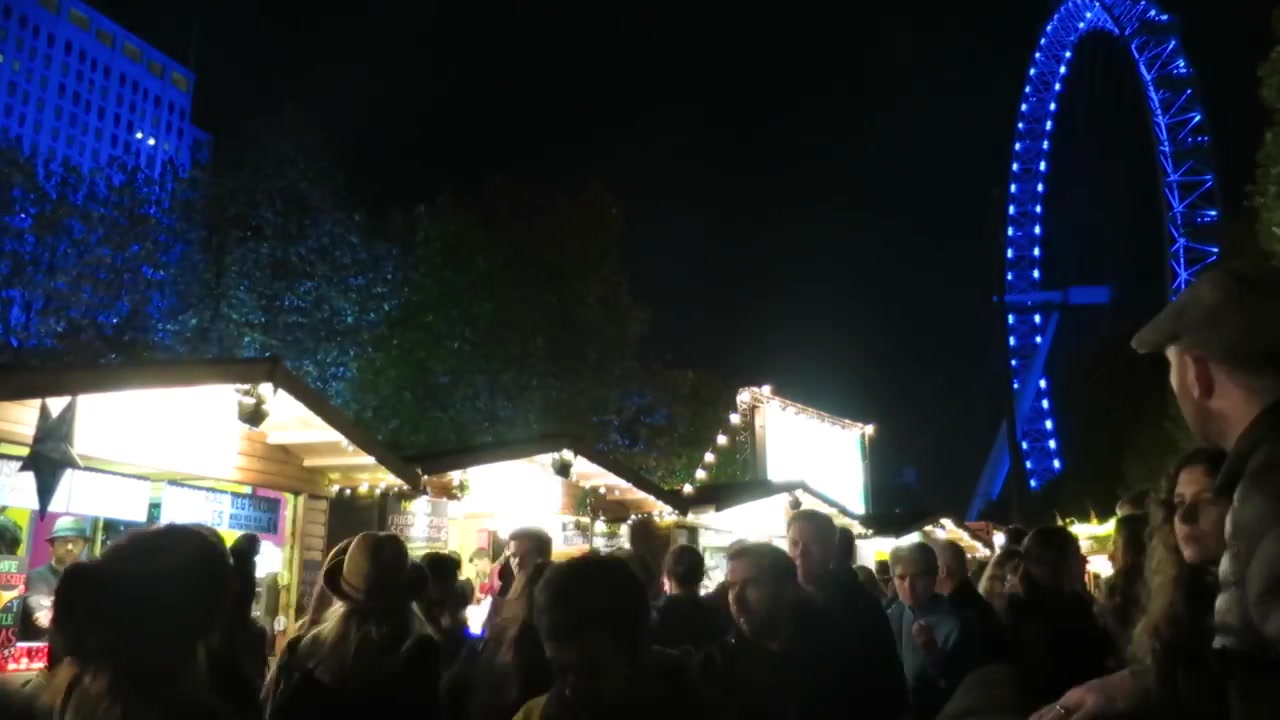
Winter food from the wooden chalets
Food gives the first section of the market its energy. Grills throw bright light onto the pavement and queues form in front of counters serving the kind of warming dishes associated with London’s Christmas markets of the period. One chalet has rows of sausages cooking on a large flat grill, with rolls ready beside them and a server wearing a Santa hat.
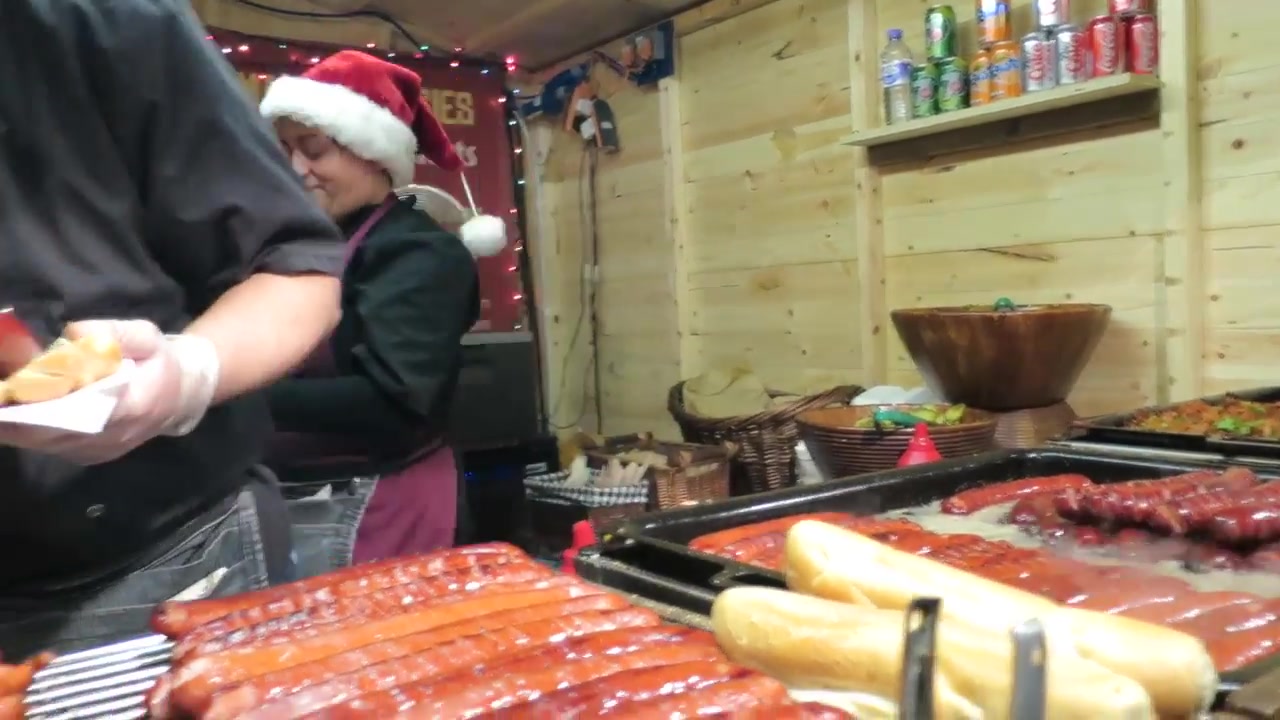
The original film description presented the market as part of the Winter Festival with NatWest and named the Rekorderlig Cider Lodge, the Viewing Deck Bar and the Christmas Tree Cafe among the seasonal places to stop. The pictures support that sense of a festival spread across the site rather than a single straight row of stalls.
Handmade gifts and colour
The craft stalls provide a change from the grills. A particularly vivid chalet is filled with illuminated paper stars in red, pink, green, orange and blue. Customers hold the stars up while the vendor stands against a wall of glowing patterns.
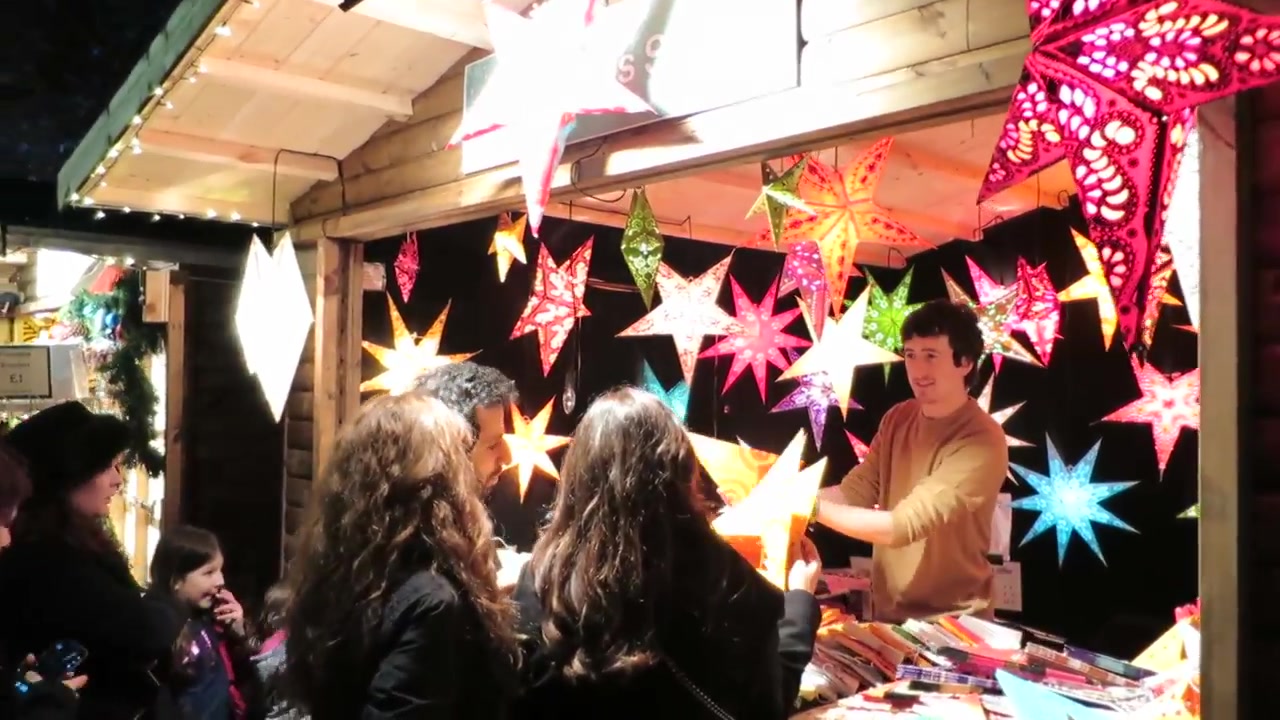
That mixture of food and gifts is central to the 2014 market. The original video description presented the market as a mixture of handmade craft gifts, festive food and warming drinks. In the film, the close spacing and low roofs create a busy, enclosed atmosphere even though the Thames is only a few steps away.
The Thames after dark
Whenever the camera turns away from the stalls, the setting opens dramatically. Boats move past Festival Pier and the buildings on the north bank shine across the water. Blue reflections from a passing vessel cut through the warmer street and building lights.
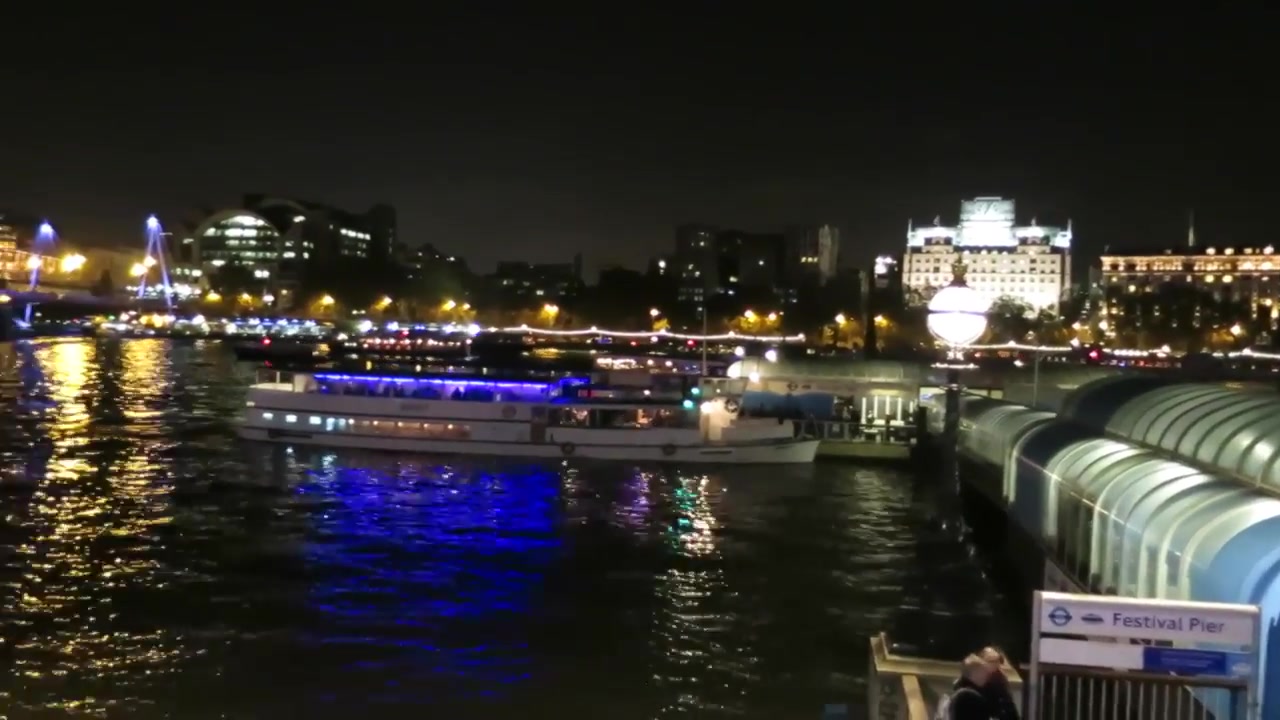
This riverside view separates the film from the later Roberts London visits to the food market. The evening is as much about the location and winter atmosphere as it is about a particular meal. For a closer food-led visit from five days later, see Southbank Real Food Market in 2014: Bruschetta and Winter Lights.
Carousel and Winter Festival programme
A traditional carousel supplies the brightest moving colour in the film. Its painted horses turn beneath rows of red, green and gold bulbs while families and market visitors gather around the railings.
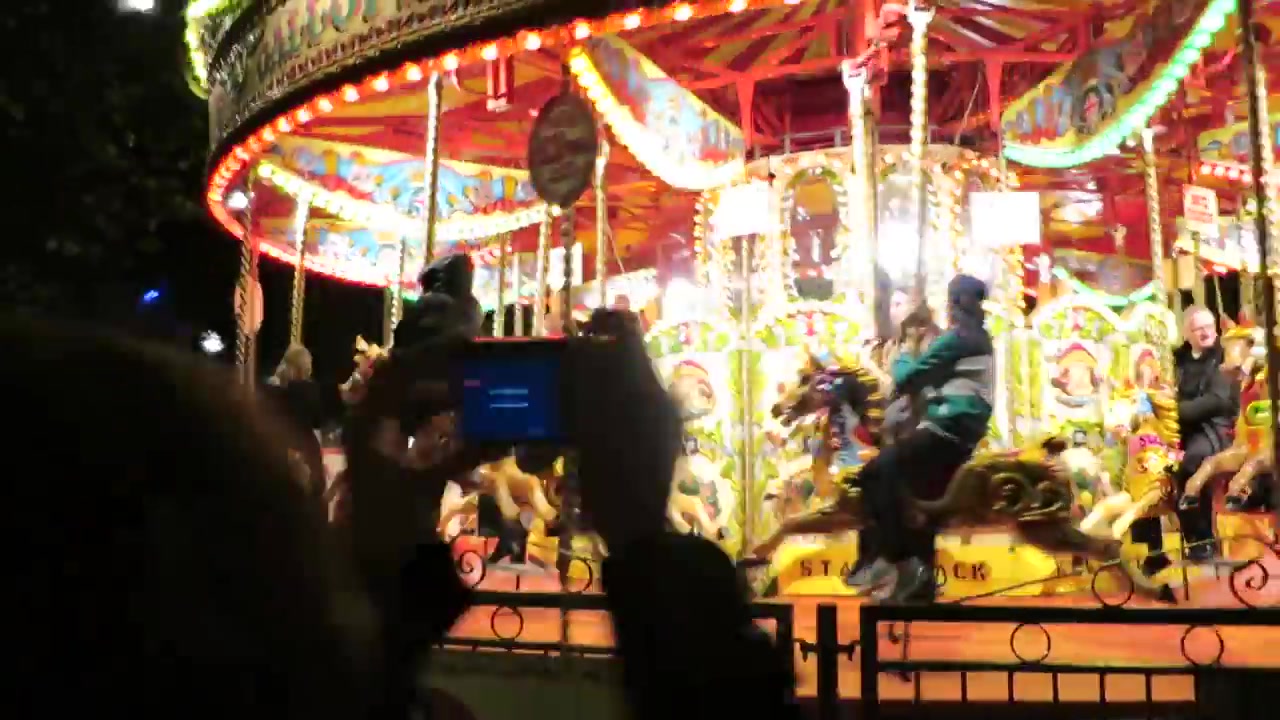
Southbank Centre’s 2014 programme extended well beyond the outdoor market. Signs in the film point towards La Soirée’s Spiegeltent, and the original description also names Slava’s Snowshow in Royal Festival Hall and MIRRORCITY at the Hayward Gallery. The original description presents the Winter Festival as a combination of seasonal installations, theatre and exhibitions across the Southbank Centre site.
The market therefore worked as an entrance to a much larger cultural programme. Someone could arrive for food or gifts, encounter the carousel and lights, then continue towards a performance or exhibition. That layering of activities is visible even in a seven-minute walk.
Blue lights on the Festival Terrace
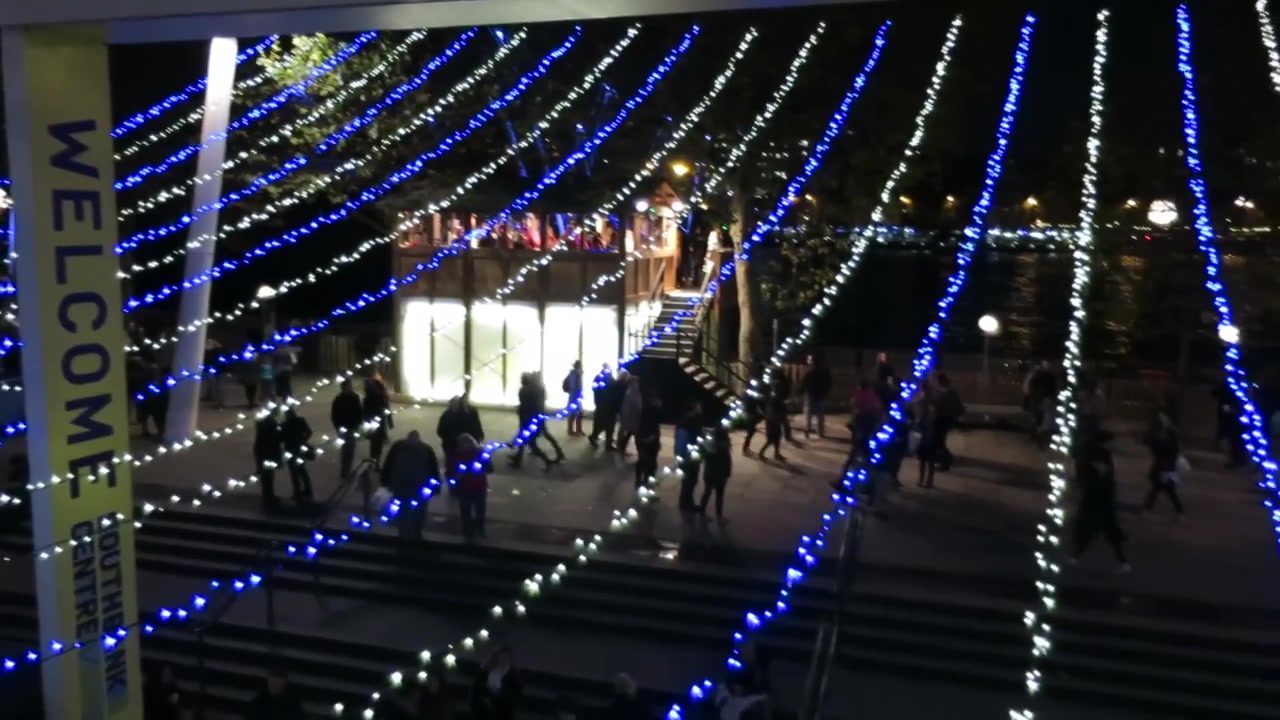
Towards the end, the camera moves away from the chalets and looks down over the Southbank Centre steps. Lines of blue and white lights form a canopy across the terraces, turning the concrete architecture into part of the festival.
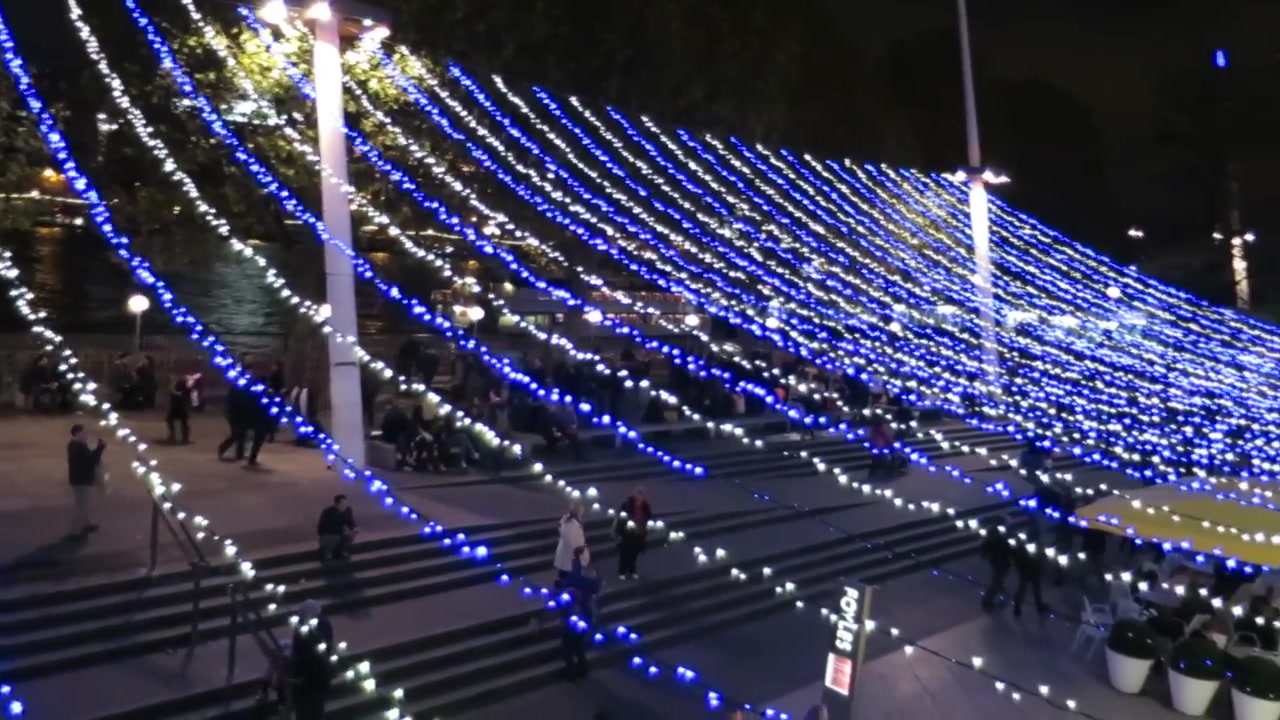
From above, the lights create a route rather than a single display. People cross beneath them, the river remains visible beyond the railings and the Royal Festival Hall complex frames the scene. The final elevated view includes the Southbank Centre welcome sign and the illuminated terraces stretching towards the Thames.
A South Bank Christmas archive
Viewed now, the film captures a recognisable London Christmas setting at a particular moment. The chalets, carousel and paper stars feel familiar, but the 2014 programme, stall layout and filming style make the date clear. This is a historical record, not a claim that the same traders or attractions remain in place today.
It also sits within a wider Roberts London record of Christmas along the Thames. The Tate Modern Christmas Market in 2014 shows the distinct Bankside market a month later, while London Eye Ice Skating in 2014 records another seasonal attraction only a short walk away.
Together, those films show how several different winter events occupied the river route in 2014. This Southbank Centre visit is the broadest of them: an evening of market food, handmade gifts, riverside views, performance signs, a carousel and terraces transformed by light.

Recent Comments