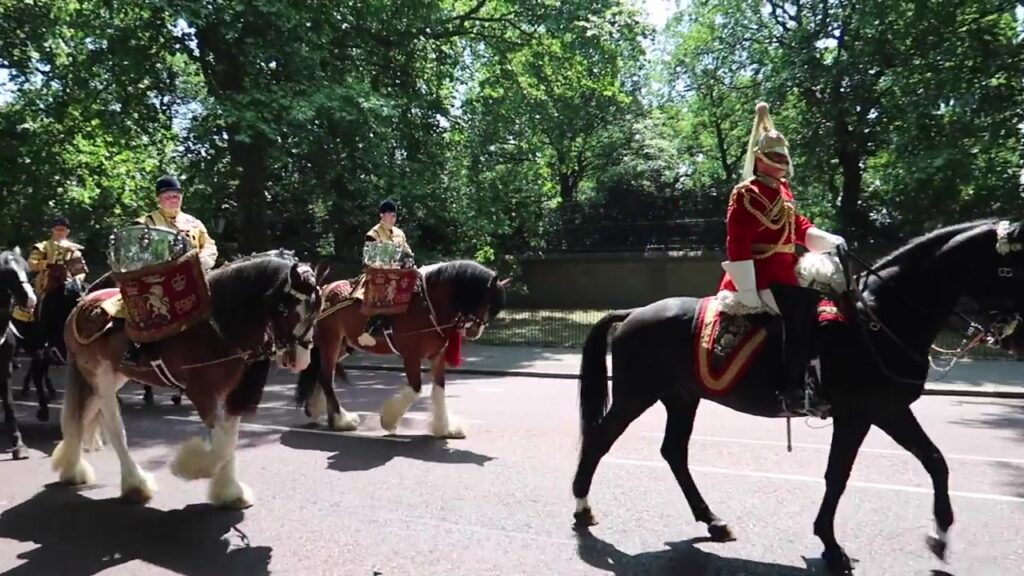
On Saturday 9 June 2018, London marked Queen Elizabeth II’s official birthday with Trooping the Colour. Roberts London watched the public procession from St James’s Park and The Mall, recording the crowds, mounted troops and ceremonial formations as they moved between Horse Guards Parade and Buckingham Palace.
This archive film does not attempt to reproduce the formal parade from the ticketed stands. Instead, it preserves the experience available to thousands of spectators beyond Horse Guards: finding a position beneath the trees, hearing the procession approach, and seeing flashes of scarlet, gold and polished metal pass between the Union flags.
Arriving through St James’s Park
The film begins with the journey into central London and an approach towards St James’s Park. By the time the camera reaches the processional route, spectators are already gathered beneath the mature trees. Some have secured a clear view of The Mall; others are moving through the park looking for a gap between the crowds.
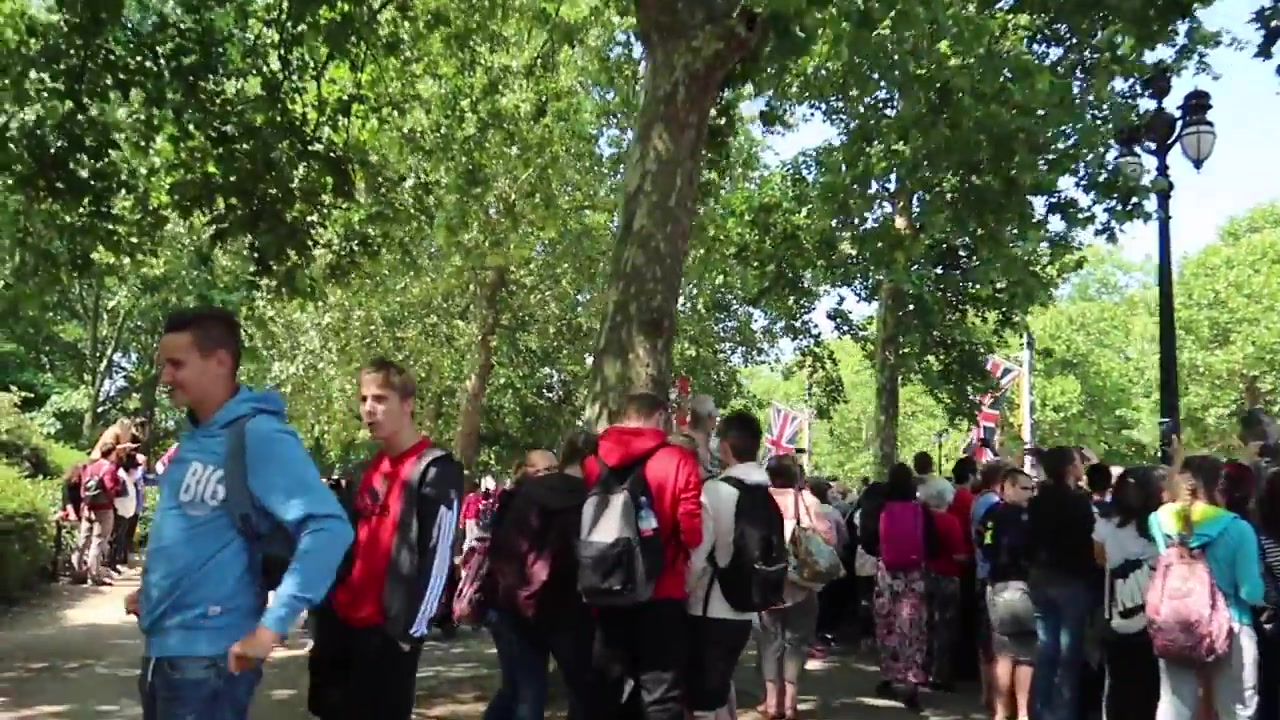
Trooping the Colour is centred on Horse Guards Parade, but the wider London setting is essential to the occasion. The royal procession travels from Buckingham Palace along The Mall, while military units and mounted formations continue through the surrounding ceremonial landscape. St James’s Park therefore offers a different view from the formal stands: less complete, perhaps, but immediate and full of movement.
The Queen’s Birthday Parade in 2018
The 2018 parade took place on 9 June. The Colour of the 1st Battalion Coldstream Guards was trooped before Queen Elizabeth II and members of the Royal Family. Contemporary plans described a ceremony involving more than 1,400 parading soldiers, approximately 200 horses and 400 musicians.
The tradition connects the Sovereign’s official birthday with the colours once used by regiments as rallying points on the battlefield. In the modern ceremony, the selected Colour is carried through the ranks on Horse Guards Parade before the guards march past the Sovereign in slow and quick time.
Watching the procession from The Mall
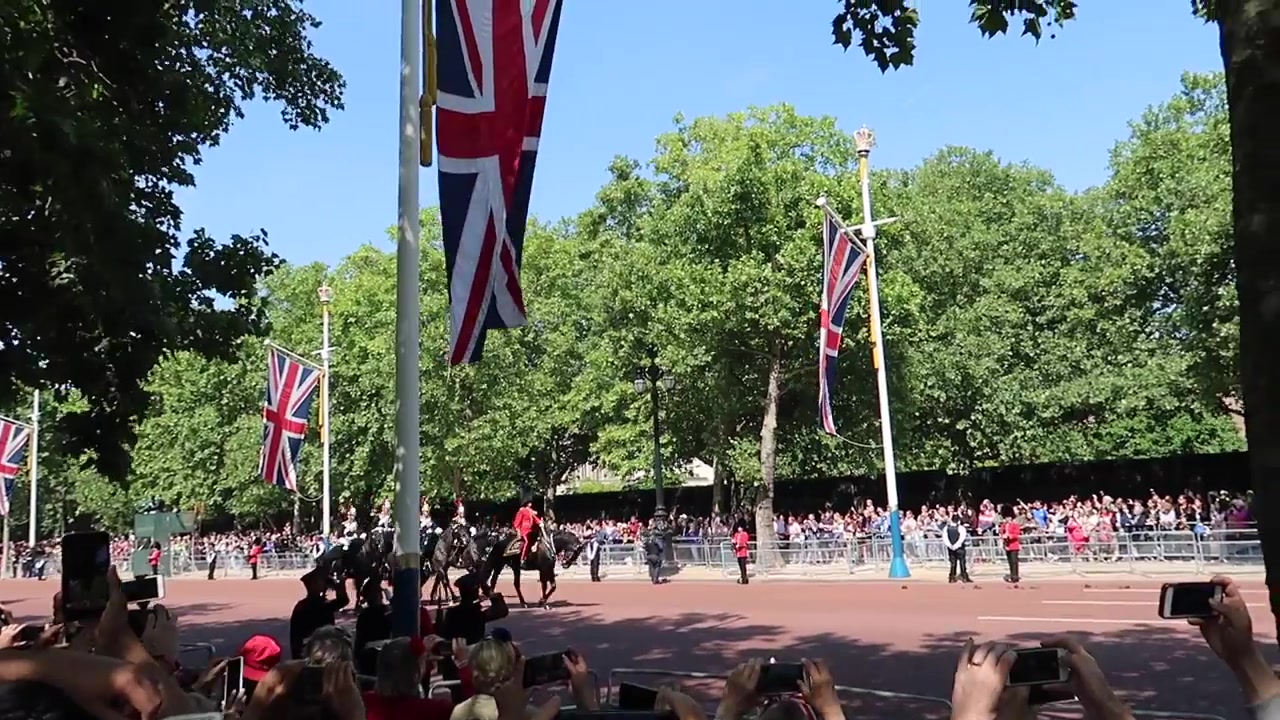
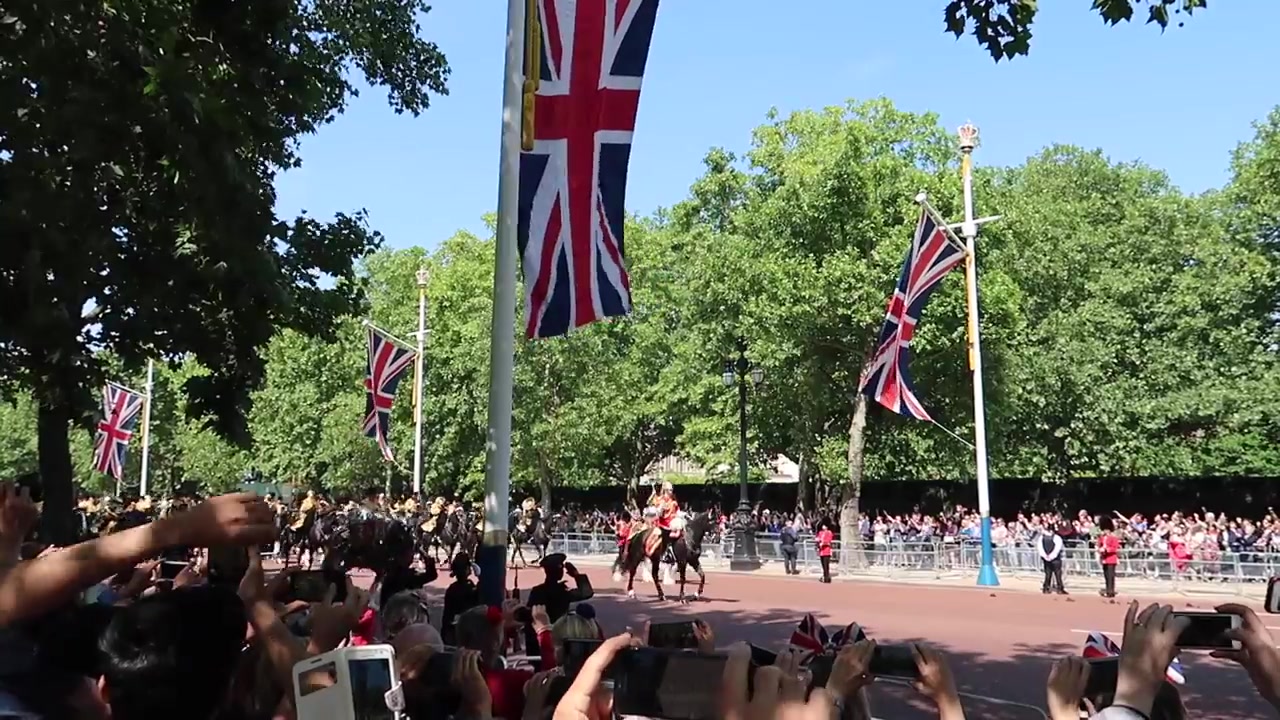
From the park boundary, the film catches the procession in fragments. Mounted figures appear between spectators and flagpoles. Lines of troops pass beneath the summer trees. Phones rise above the crowd whenever the next formation comes into view.
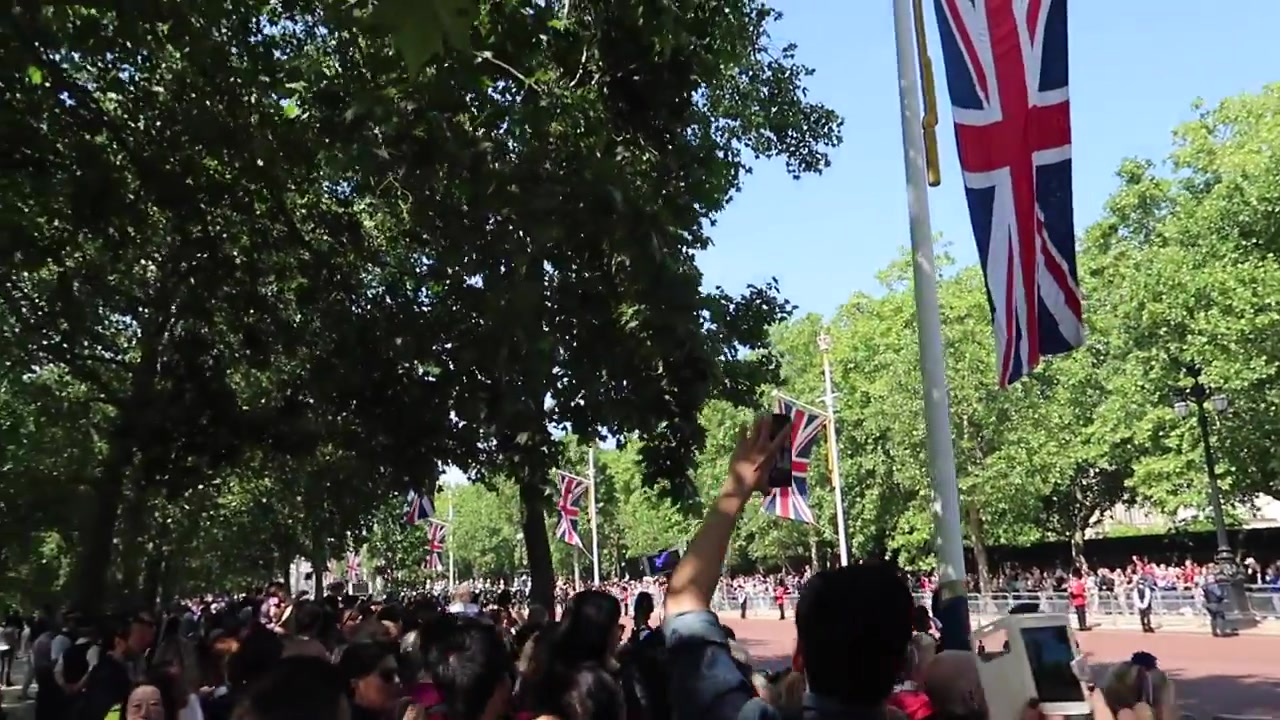
This is one of the film’s most useful qualities as a London record. Broadcast coverage naturally concentrates on the precision of Horse Guards Parade and the royal balcony. The camera here stays at street level, among the people who have arrived without grandstand seats and are sharing whatever view the route provides.
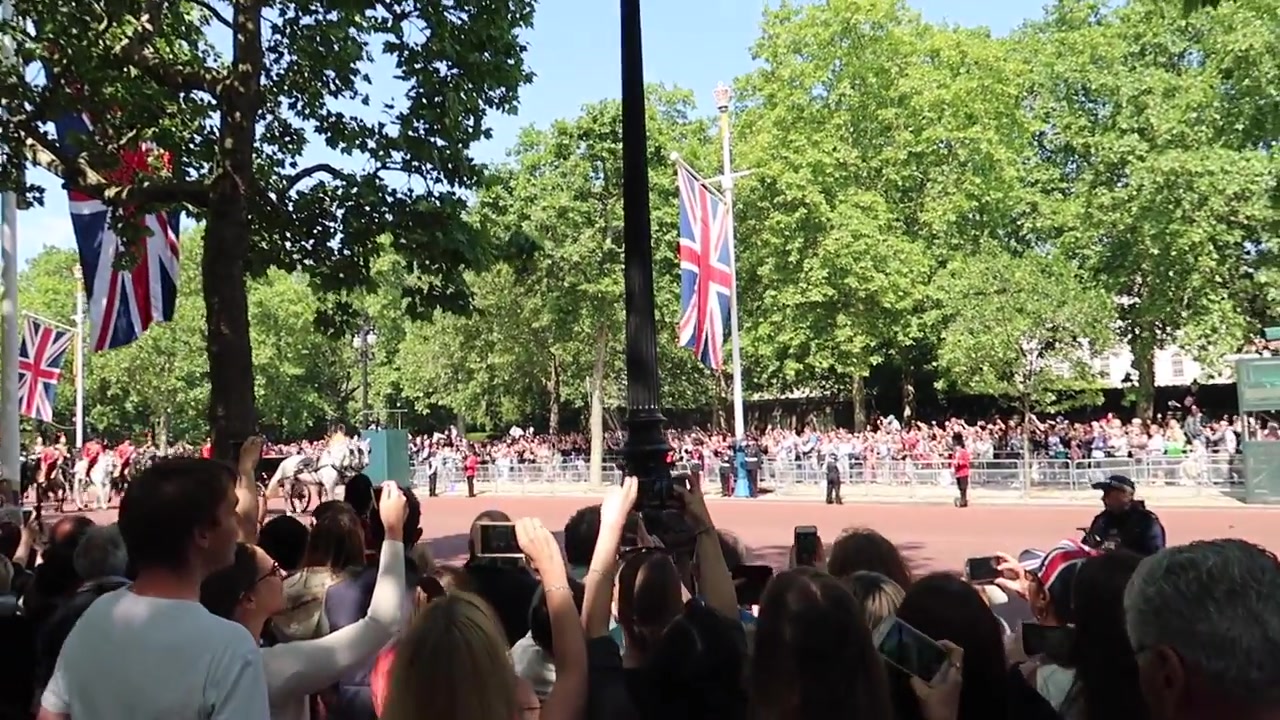
Foot Guards and mounted formations
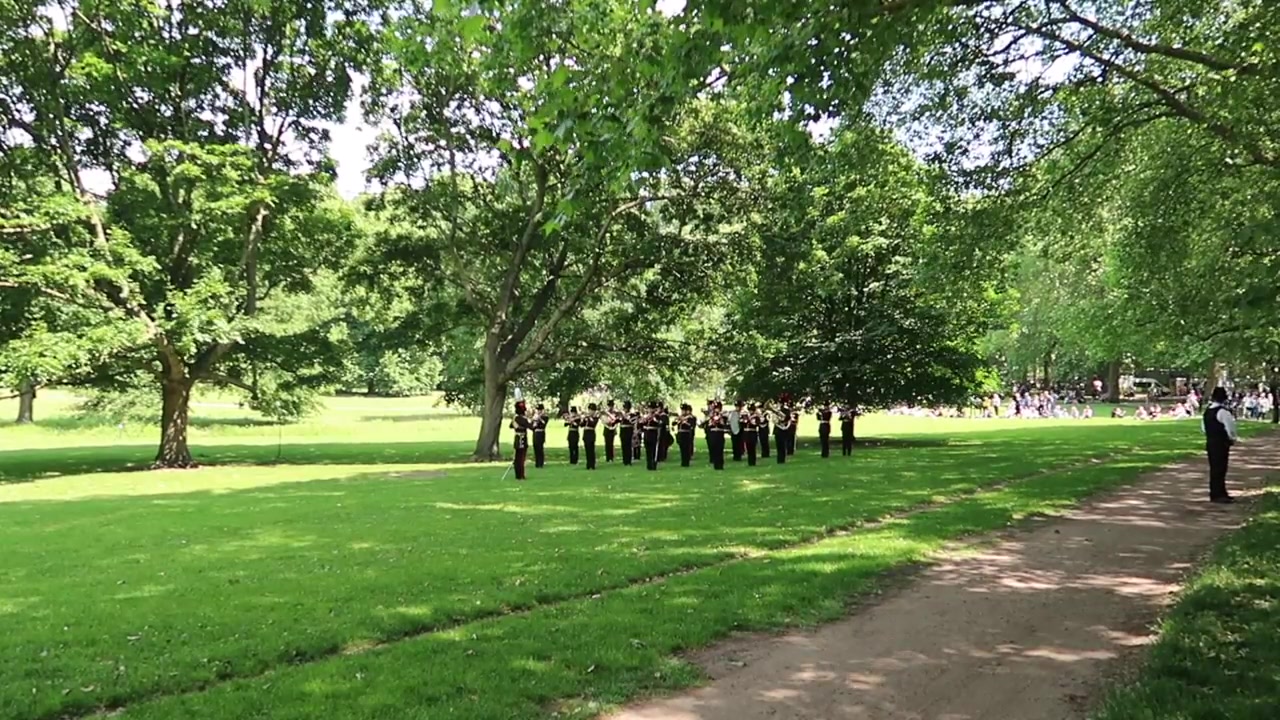
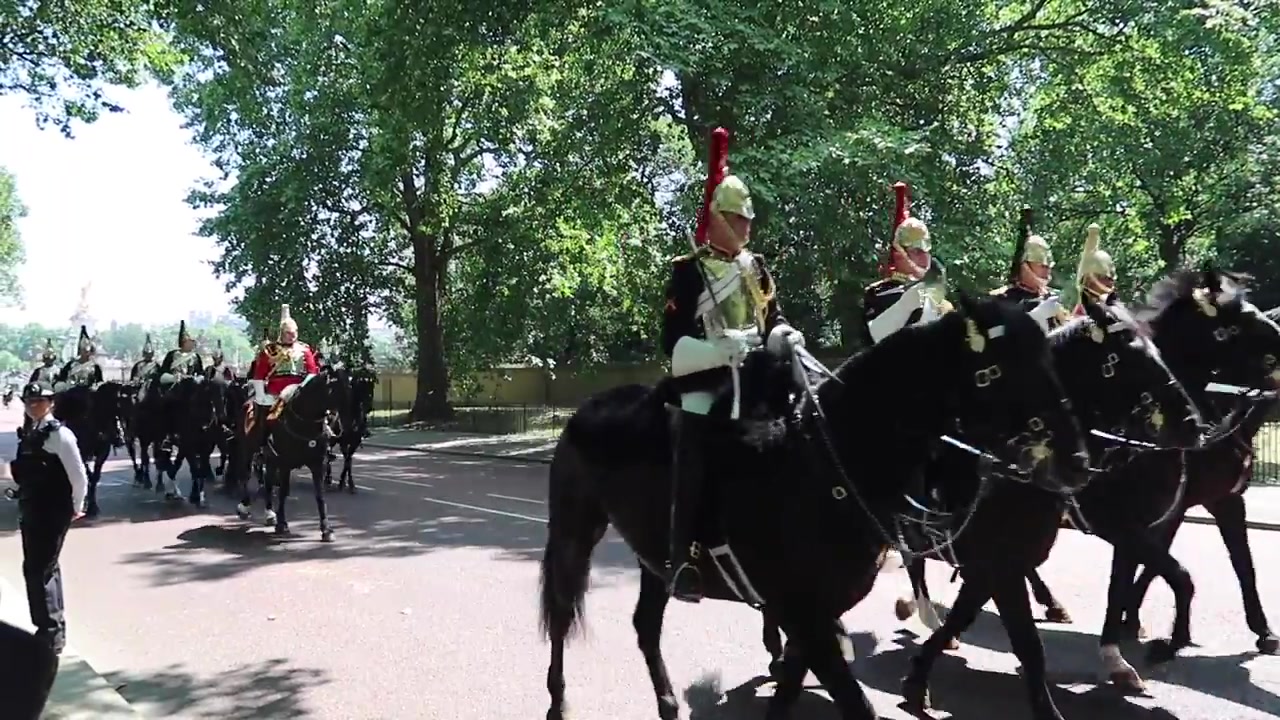
As the main public procession passes, the film follows further ceremonial movements through the park. Foot Guards march in formation across the grass, their disciplined lines contrasting with the relaxed summer scene around them. Mounted guards then move through the same landscape, bringing the scale and working detail of the ceremony unusually close to the camera.
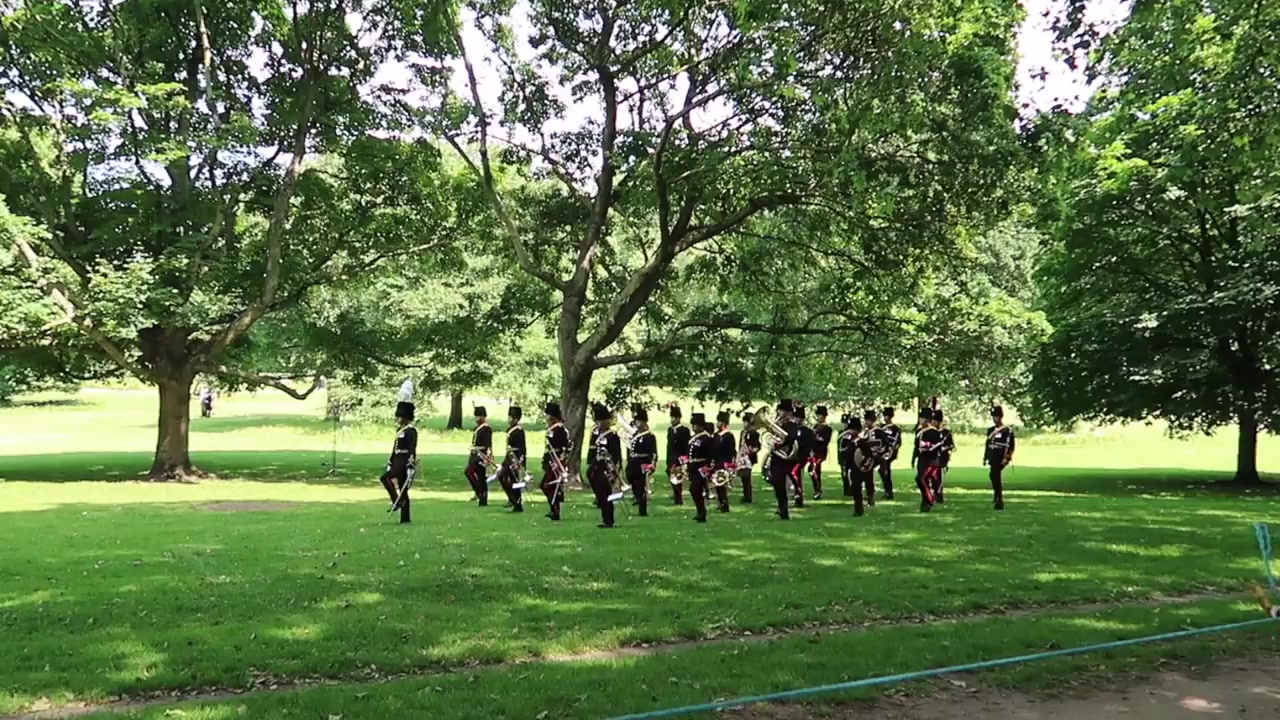
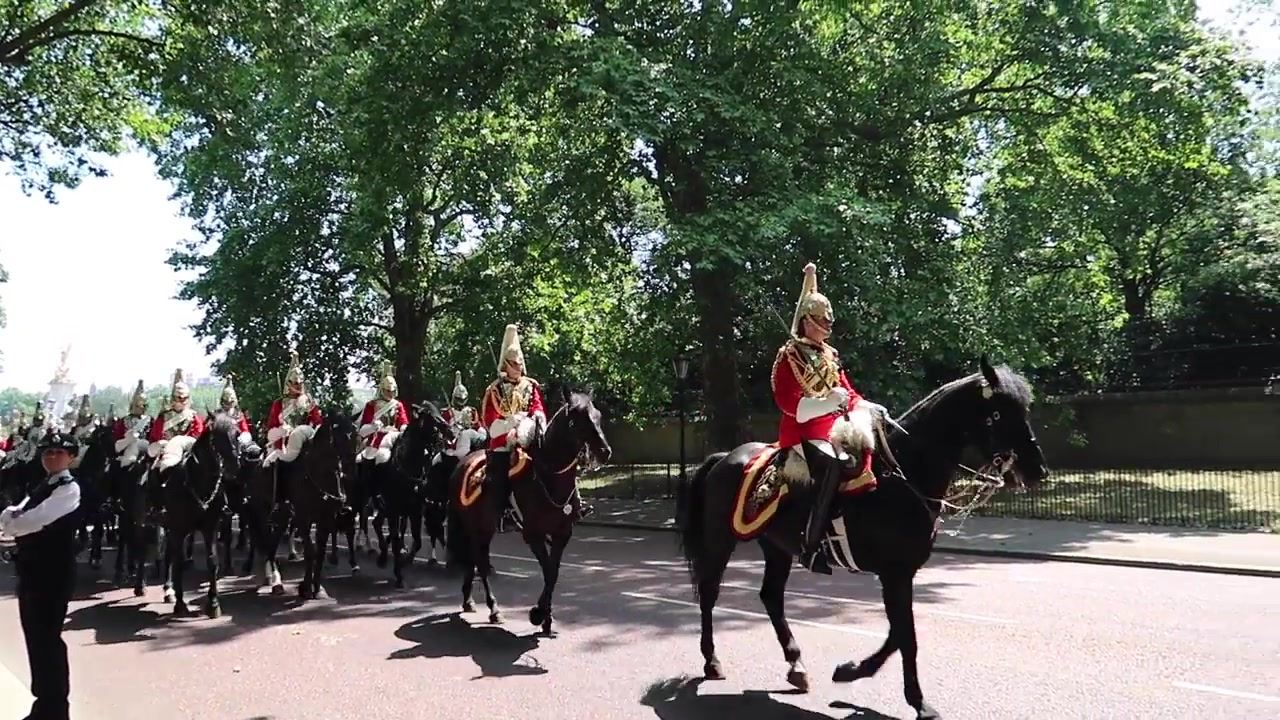
The uniforms and horses can appear purely decorative from a distance, yet the film also captures the organisation required to move large formations through a crowded capital. Police motorcycles, barriers and carefully held routes sit alongside the historic pageantry.
Ending beside Buckingham Palace
The final part of the walk reaches Buckingham Palace. Crowds remain gathered around the Victoria Memorial and the palace frontage, completing the connection between the public route, the royal residence and the parade ground beyond the park.
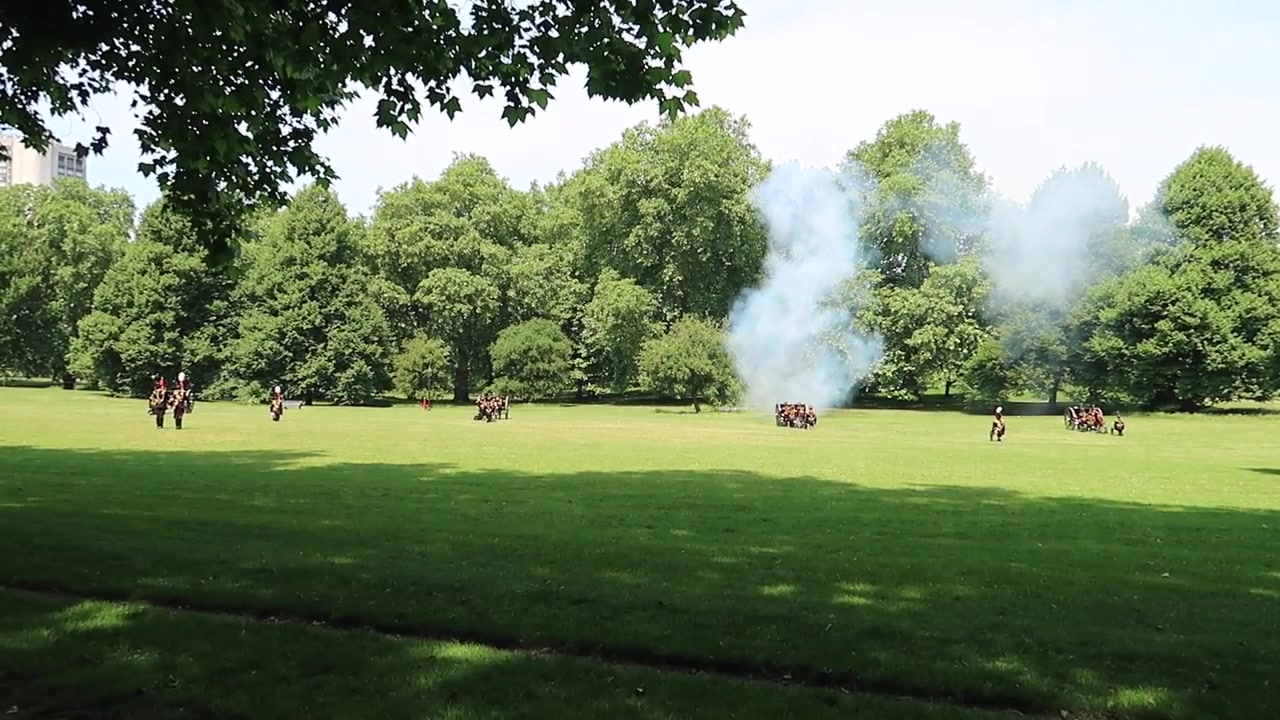
Published on 10 June 2018, the day after the parade, this Roberts London film is now an archive of Queen Elizabeth II’s reign and of a familiar London ritual seen from outside the official enclosure. Its value lies not only in the ceremony, but in the spectators, park paths and fleeting street-level views that surrounded it.

Recent Comments