Standfirst
A Roberts London film from 2016 records a Saturday at Broadway Market, from coffee and contemporary street food to the tiled interior of F. Cooke’s historic pie-and-mash shop.
Article
Broadway Market presents two different versions of East London within a few hundred yards. On a Saturday, the street fills with coffee, bread, produce and food assembled for a new generation of market visitors. In 2016 it also retained one of the clearest links to an older local food culture: F. Cooke, the eel, pie and mash shop at number 9.
This Roberts London film records both worlds in the same visit. Beginning near London Fields, it follows the market through its Saturday crowds, pauses for coffee at Climpson & Sons, surveys the street-food stalls and ends with lunch inside F. Cooke. A final drink at the Cat & Mutton completes a compact portrait of the street as it appeared in June 2016.
The film has acquired additional value with time. F. Cooke stopped trading on Broadway Market at Christmas 2019, after 120 years at the address. What was filmed as an ordinary London lunch is now an archive record of a business, interior and way of eating that can no longer be encountered there in the same form.
From London Fields to Broadway Market
Broadway Market runs between London Fields and the Regent’s Canal. Its scale is part of its appeal: it is long enough to accommodate a substantial market, but compact enough for the shops, pubs, cafés and stalls to remain part of one recognisable street.
The film approaches it as a working Saturday market rather than a checklist of attractions. People move between permanent businesses and temporary pitches, with the street closed to ordinary traffic. Food is prepared in view of the crowd, and the market becomes as much a place to eat as somewhere to buy ingredients.
Broadway Market has served the surrounding area since the nineteenth century, although its character has changed repeatedly. The successful Saturday food market of the twenty-first century revived a street whose traditional market trade had diminished. By 2016, it had become one of London’s established destinations for independent food, drink and retail.
Coffee at Climpson & Sons
The first stop is Climpson & Sons, the coffee shop and roastery associated with Broadway Market since the early years of London’s speciality-coffee expansion.
Placing coffee at the beginning of the film is revealing. The modern market is built not only around shopping but around a sequence of small experiences: coffee before walking, samples from stalls, lunch and finally a drink in the pub. Each business benefits from the same steady movement along the street.
The café represents the newer Broadway Market, but it does not feel detached from the market around it. The coffee is part of the morning’s rhythm and a starting point for looking at what the stalls have to offer.
Watch the Climpson & Sons coffee stop
The short coffee edit, published on 3 October 2016, gives a closer look at this part of the day. It revisits the same Broadway Market outing featured in the full June film, rather than a separate October visit.
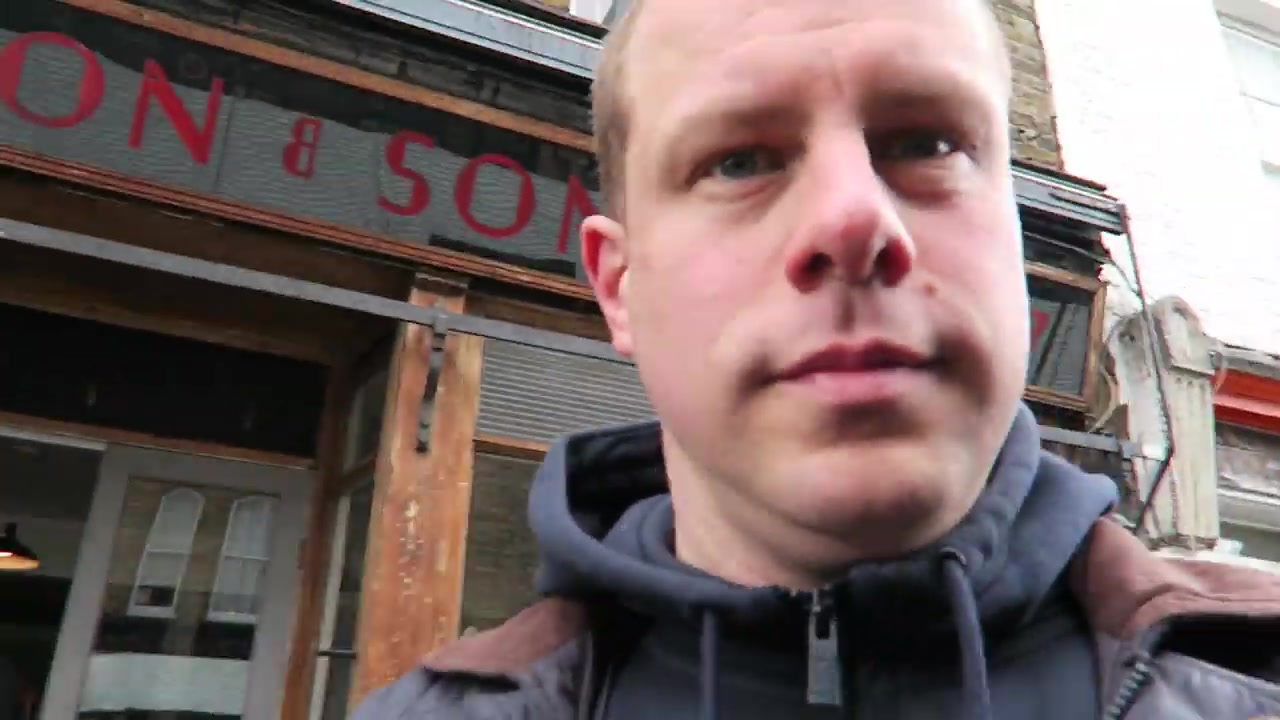
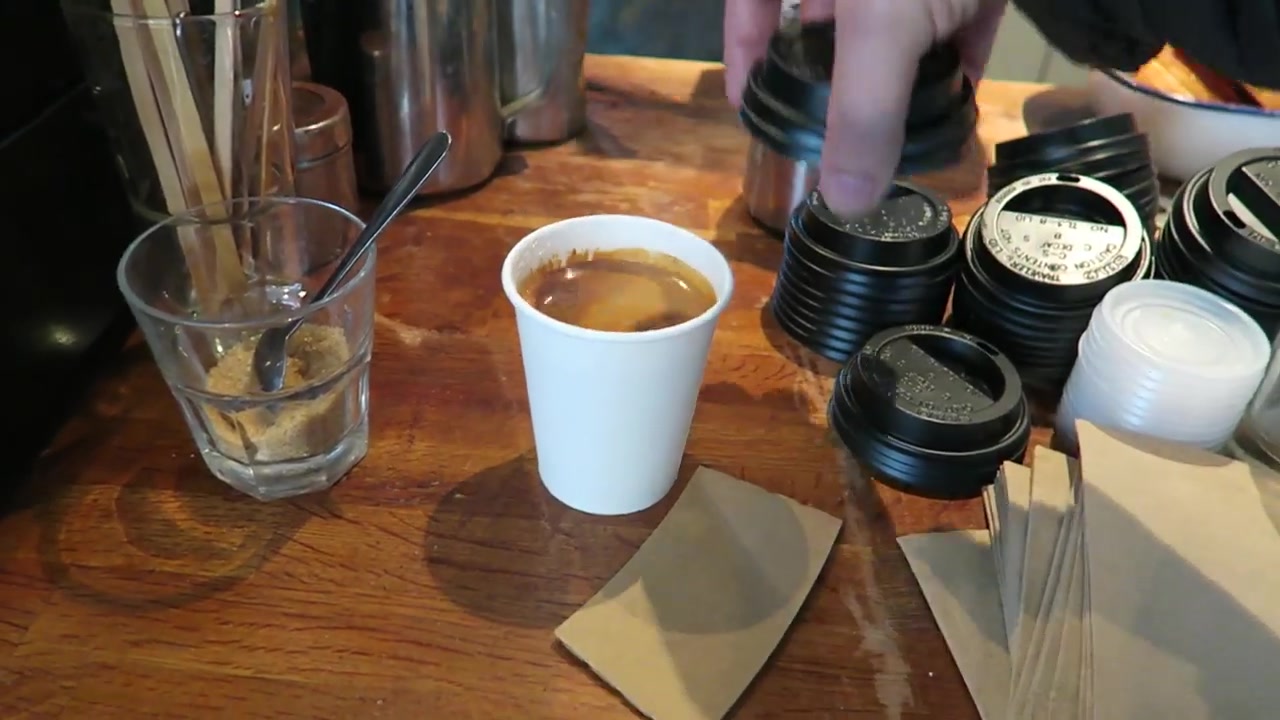
I had hoped to order a pour-over coffee, but the café was serving espresso-based drinks at that moment. I chose a black Americano instead. The cakes on the counter caught my eye too, although the coffee was the focus of this stop.
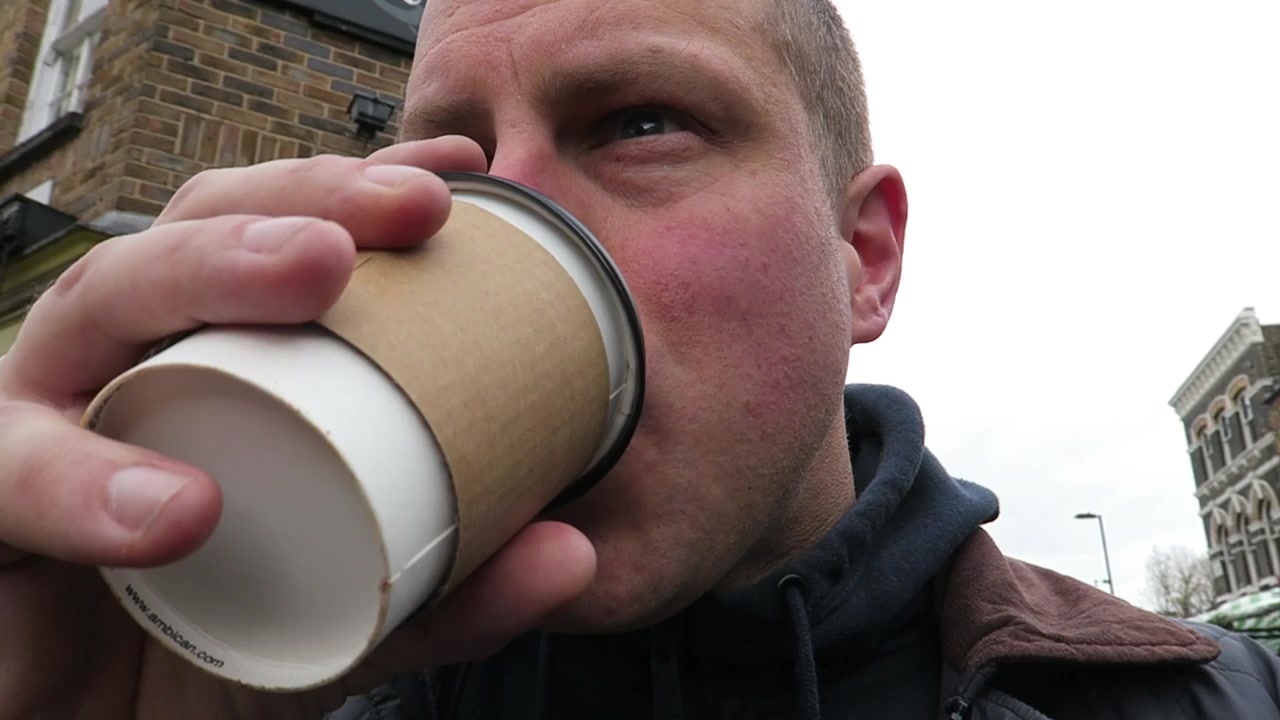
Outside, I mentioned the local roastery in the railway arches near London Fields station. Then came the important part: trying the drink. My verdict was simple — good coffee. With the cup in hand, I set off through the busy stalls towards the Regent’s Canal to find something to eat.
The café service and surroundings shown here belong to the 2016 visit.
A Saturday street-food market
The central section of the film moves among the market’s food stalls. The range is broad and deliberately international, with dishes cooked to be eaten while walking or carried to the nearby park.
This is the familiar contemporary language of London street food: specialist traders, a short menu, visible preparation and a dish that can be understood at a glance. The stallholders turn a narrow street into a changing open-air dining room.
The market’s popularity also reveals the changing expectations of London shoppers. Produce remains important, but visitors increasingly come for prepared food, coffee and the atmosphere of the market itself. The result is lively and abundant, although the older businesses along the street tell a more complicated story about continuity and change.
F. Cooke at number 9
F. Cooke occupied a narrow shop at the southern end of Broadway Market. The business opened there in 1900, while the Cooke family’s involvement in London’s eel, pie and mash trade reached back into the nineteenth century.
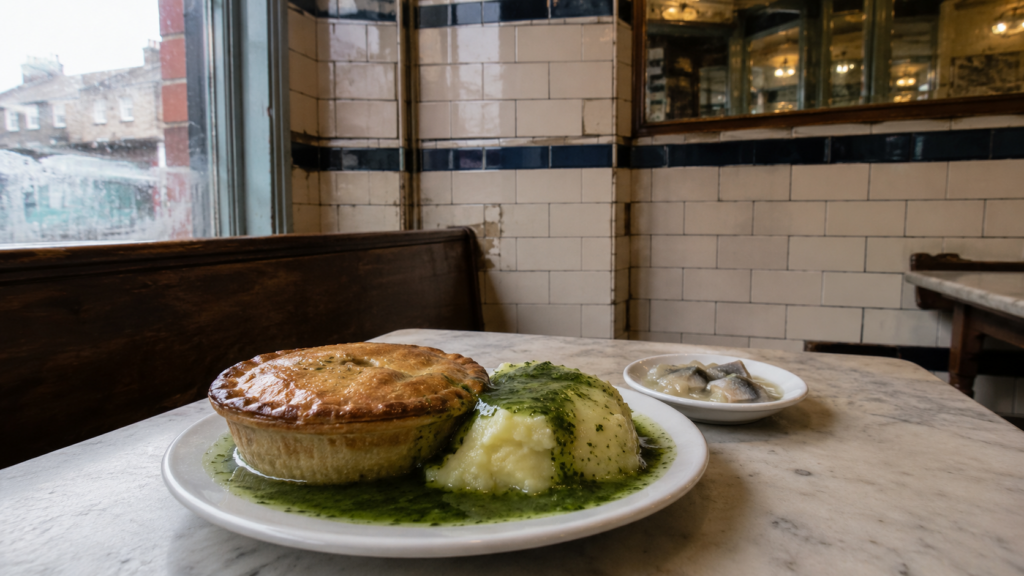
Inside, the contrast with the temporary stalls was immediate. The shop retained the characteristic materials of a traditional London pie-and-mash house: glazed tiles, mirrors, marble-topped tables, wooden seating and a serving counter designed for a simple, highly specialised menu.
The surviving interior largely dated from a 1930s refit. Its completeness was later recognised when the premises were listed at Grade II in 2018. The listing described it as an unusually intact example of a distinctive London building type, as well as a place connected to the history of inexpensive working-class food.
The film therefore captures more than a restaurant visit. It records the room in use, with food being served and customers occupying a setting created for precisely that purpose.
Pie, mash, liquor and eels
The traditional order is built from a small group of components: a minced-meat pie, mashed potato and liquor, the green parsley sauce associated with London pie-and-mash shops. Eels could be ordered hot or jellied and cold.
The food is direct, filling and largely unchanged by presentation. It belongs to a tradition in which price, speed and sustenance mattered more than decoration. Pie-and-mash shops developed from London’s earlier street trade in pies and eels, becoming permanent eating houses with their own instantly recognisable interiors.
In the film, lunch at F. Cooke follows the wide choice of the market outside. That sequence makes the shop appear neither as a museum nor as a novelty. It is simply another place to eat on Broadway Market—although one with a history far longer than most of its neighbours.
This distinction matters. Traditional London food is sometimes presented as a performance for visitors, but F. Cooke remained a family business serving customers who had known pie and mash throughout their lives. Comments left beneath the original film include memories of regular meals, family connections and journeys back to Broadway Market after moving away from Hackney.
The Cat & Mutton
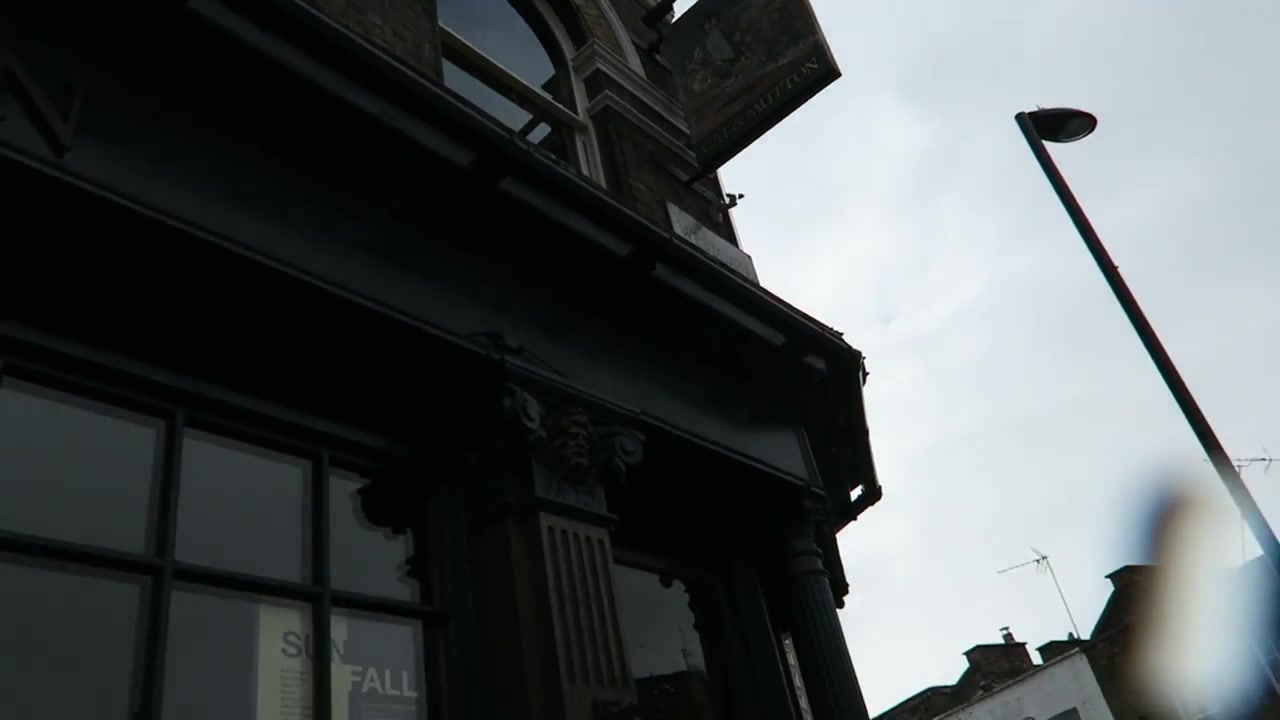
The visit ends at the Cat & Mutton, the pub overlooking the junction near London Fields. It provides a natural final point in the route: coffee, market stalls, pie and mash, then a drink before leaving.
Like the market, the pub has adapted to the changing area while retaining a long-established name and position. Its presence reinforces the sense that Broadway Market is more than the stalls erected on a Saturday. The permanent businesses give the street continuity during the rest of the week and connect its different periods.
Watch the Cat & Mutton short film
I returned to this part of the day in a short edit published on 14 October 2016. It begins with the nearby schoolyard market, then follows me to the Cat & Mutton for a pint before leaving via London Fields.
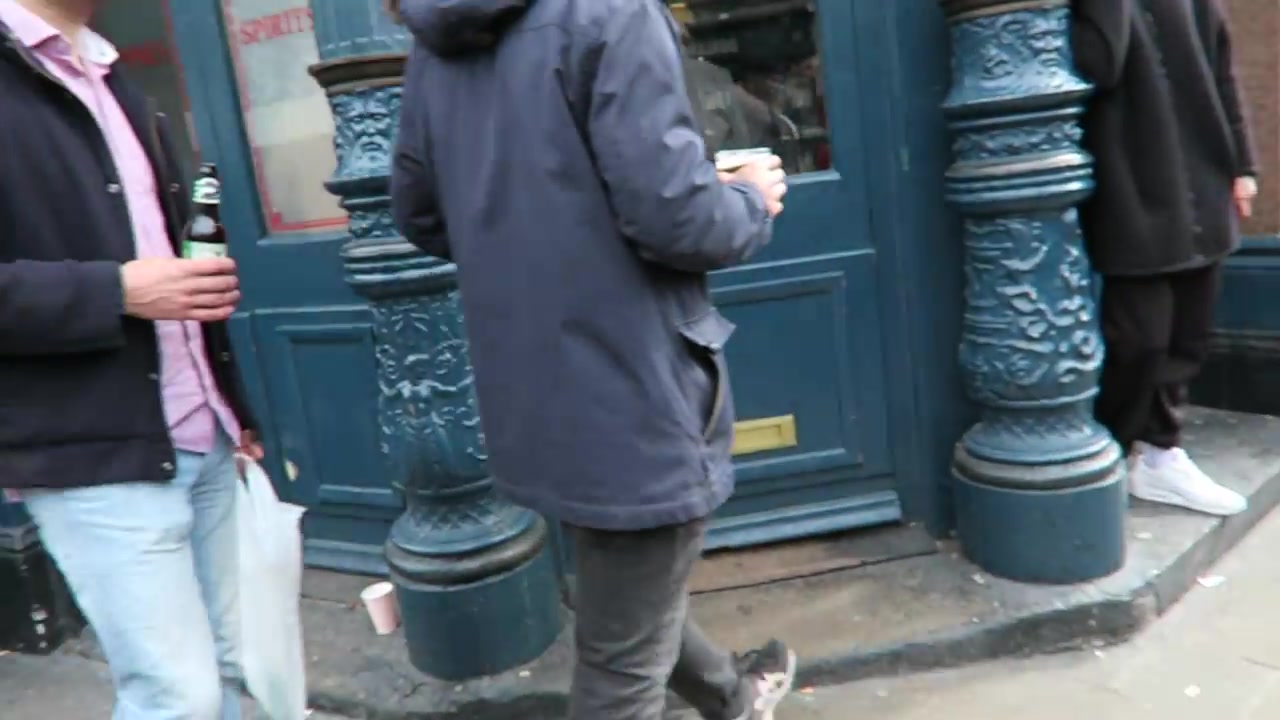
The film gives a closer look at the pub stop: its blue painted entrance, the busy room inside and the market just beyond the door. I take my drink outside and give a candid account of the crowd and atmosphere. The style of the place was not entirely my thing, but I liked the choice of beer and drinks.
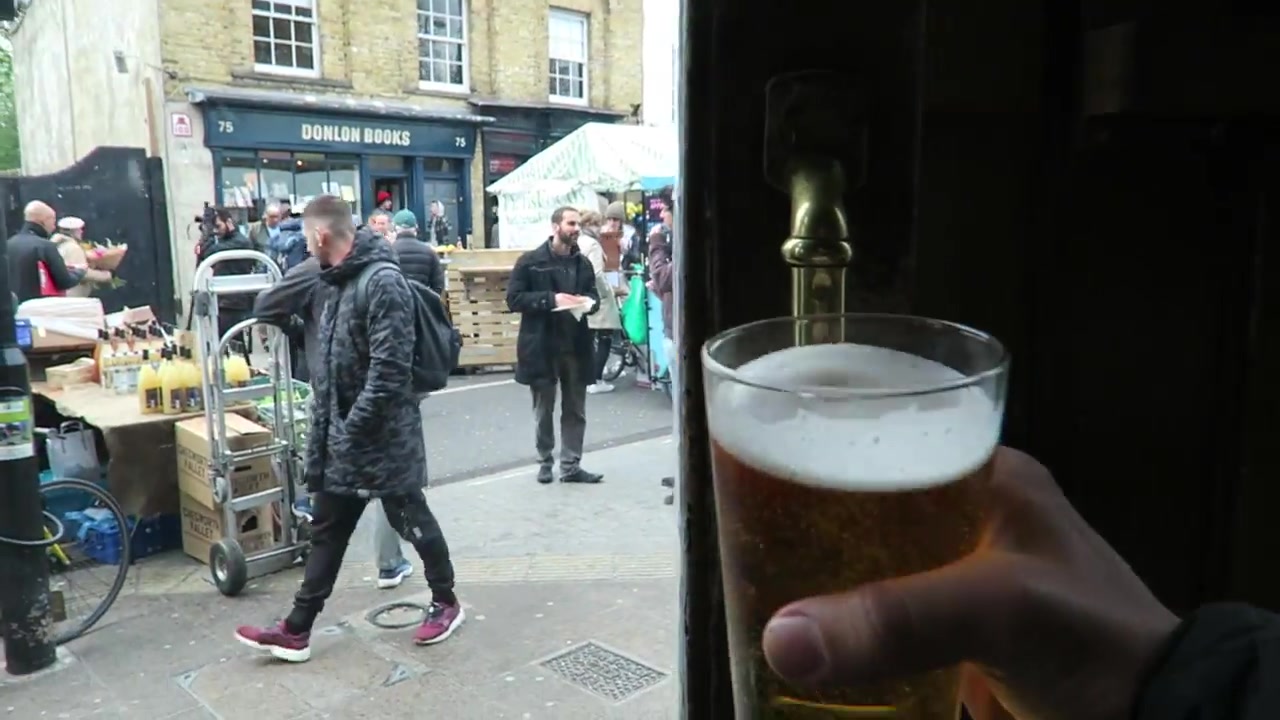
A pint overlooking the stalls makes a fitting end to the visit. These scenes belong to the 2016 archive; the October date is the publication date of this shorter edit, rather than a separate return visit.
A record of Broadway Market in 2016
F. Cooke ceased trading at number 9 on Christmas Eve 2019. The closure was attributed to declining business, rising costs and changing tastes—the same pressures that have reduced the number of traditional pie-and-mash shops across London.
The premises survive, protected by their listed status, but the Roberts London film preserves something the building alone cannot: the experience of entering the working shop, ordering the food and eating it within the original interior.
Broadway Market continues to change, as London markets always have. The 2016 film does not argue that one version of the street is more authentic than another. Its value lies in showing them together: contemporary coffee and international street food outside, pie, mash, liquor and eels within a room shaped by more than a century of East End trade.
Source block
Adapted from the Roberts London film Broadway Market + F Cooke Eels, Pie and Mash Cockney London Street Food, published 5 June 2016. YouTube video ID: qQz8pl5f8D0.
