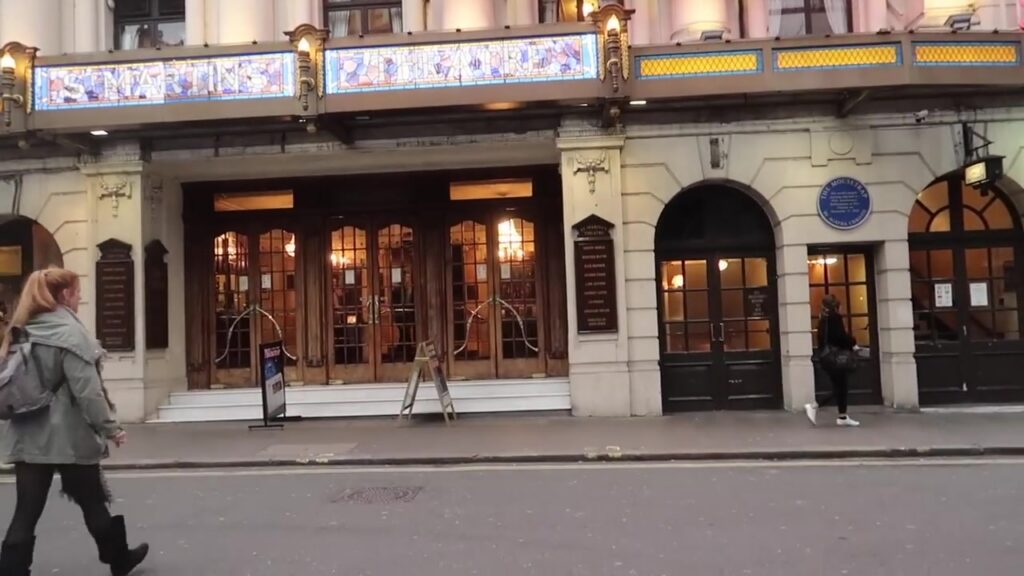
Filmed in April 2018, this Roberts London walk explores West End theatre, the Leicester Square ticket booth and an evening performance of Agatha Christie’s The Mousetrap at St Martin’s Theatre.
London’s West End is not a single theatre district with formal boundaries. It is a dense collection of playhouses, restaurants, ticket offices and illuminated signs spread between Soho, Covent Garden, Leicester Square and the Strand.
This Roberts London film, published on 15 April 2018, approaches it as a theatre-goer rather than a formal architectural tour. Barry begins in Leicester Square, considers the different ways of buying tickets, passes several of the West End’s best-known venues and then attends Agatha Christie’s The Mousetrap at St Martin’s Theatre.
The result is both a practical guide from its period and an archive of an ordinary London theatre visit: choosing a show, finding the building, taking a seat and joining the audience at the curtain call.
Beginning in Leicester Square
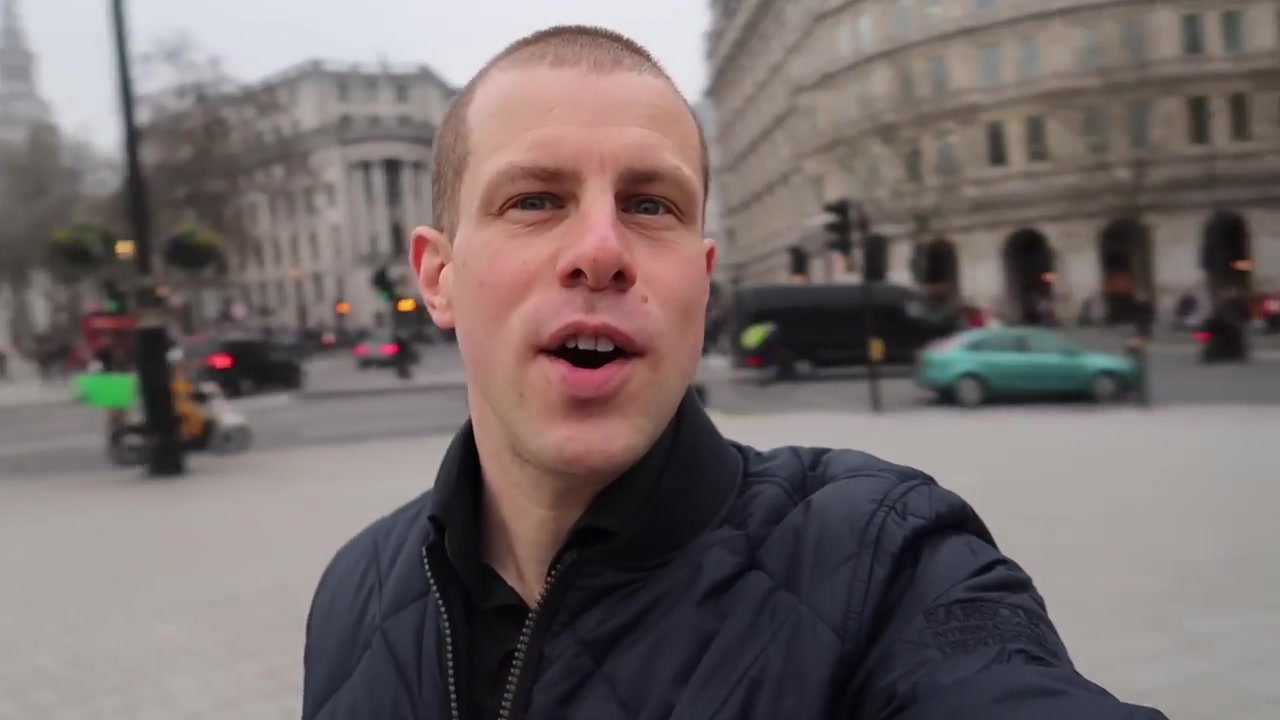
Leicester Square provides a natural starting point. It sits close to many West End theatres and has long been associated with same-day and discounted ticket sales.
Barry opens the film near the square before walking towards the ticket booth in its clocktower building. The booth was then known as TKTS London and displayed the shows for which tickets were available that day.
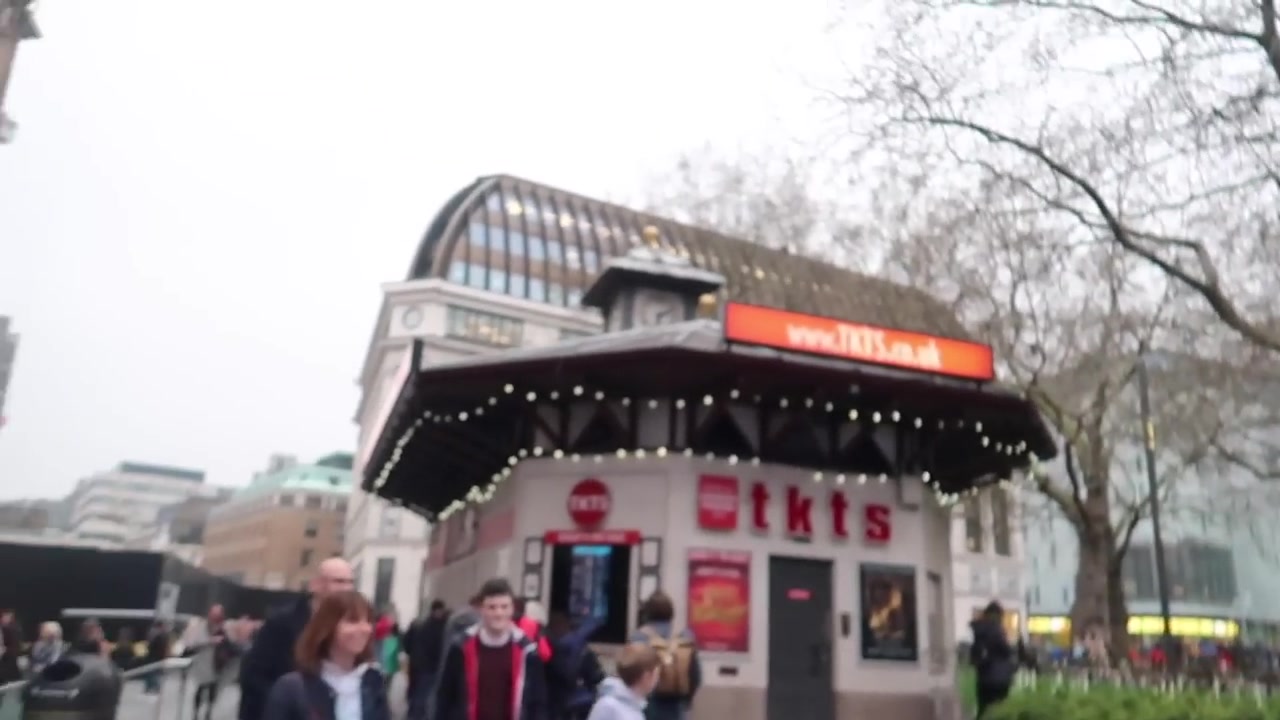
The film’s advice is deliberately practical. A visitor who has not committed to a particular production can compare the available shows, prices and seating options before deciding. That flexibility can be useful, but the precise offers change constantly and the arrangements recorded in 2018 should not be treated as today’s ticket list.
The Society of London Theatre opened the original Half Price Ticket Booth in Leicester Square in 1980. It moved to the clocktower building in 1992 and continues there today as the Official London Theatre Ticket Booth, formerly TKTS London.
Choosing a West End show
The streets around Leicester Square demonstrate the range of London theatre. Large commercial musicals sit close to long-running plays, smaller productions and historic venues.
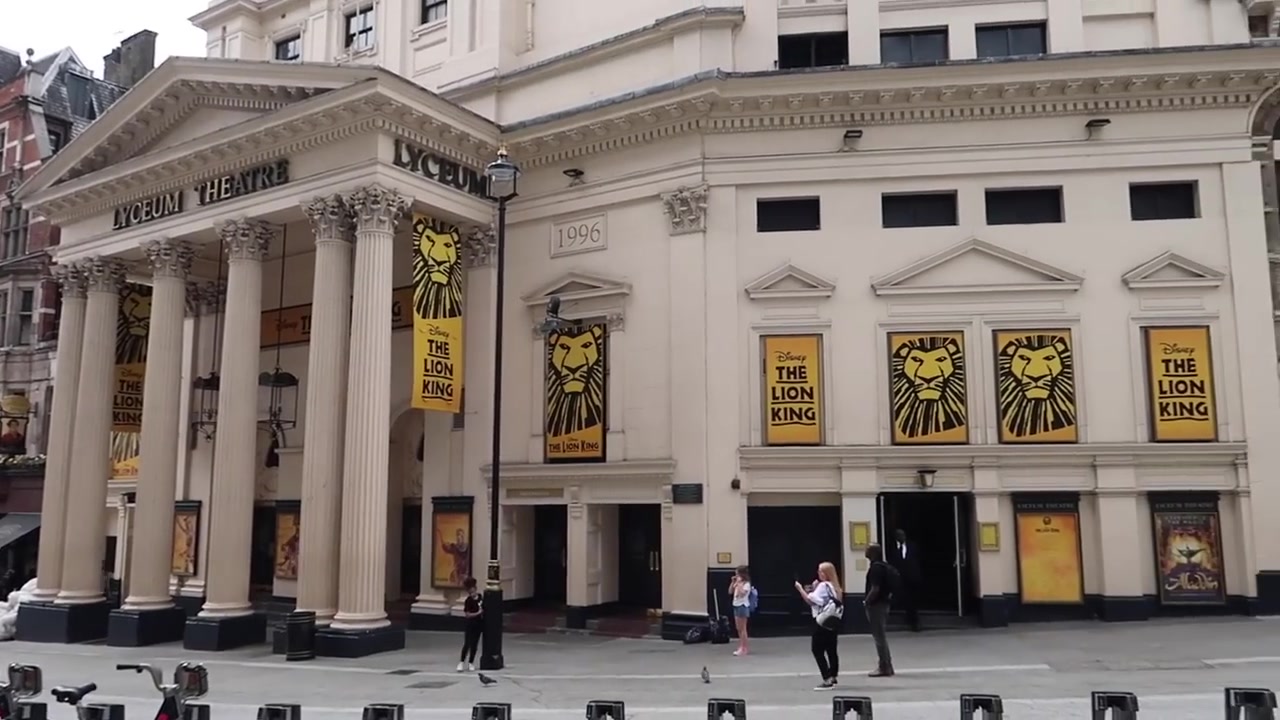
The film passes the Lyceum Theatre on Wellington Street, its classical portico carrying the familiar yellow signs for The Lion King. The production and the building form one of the West End’s most recognisable combinations, but the theatre’s pale façade also makes clear how much older the venue is than the show advertised outside it.
Barry also discusses the importance of deciding what matters most: the production, the date, the price or the position in the auditorium. A flexible date may produce a different opportunity from a fixed Saturday evening, while an inexpensive seat is not necessarily the best value if the view is severely restricted.
St Martin’s Theatre
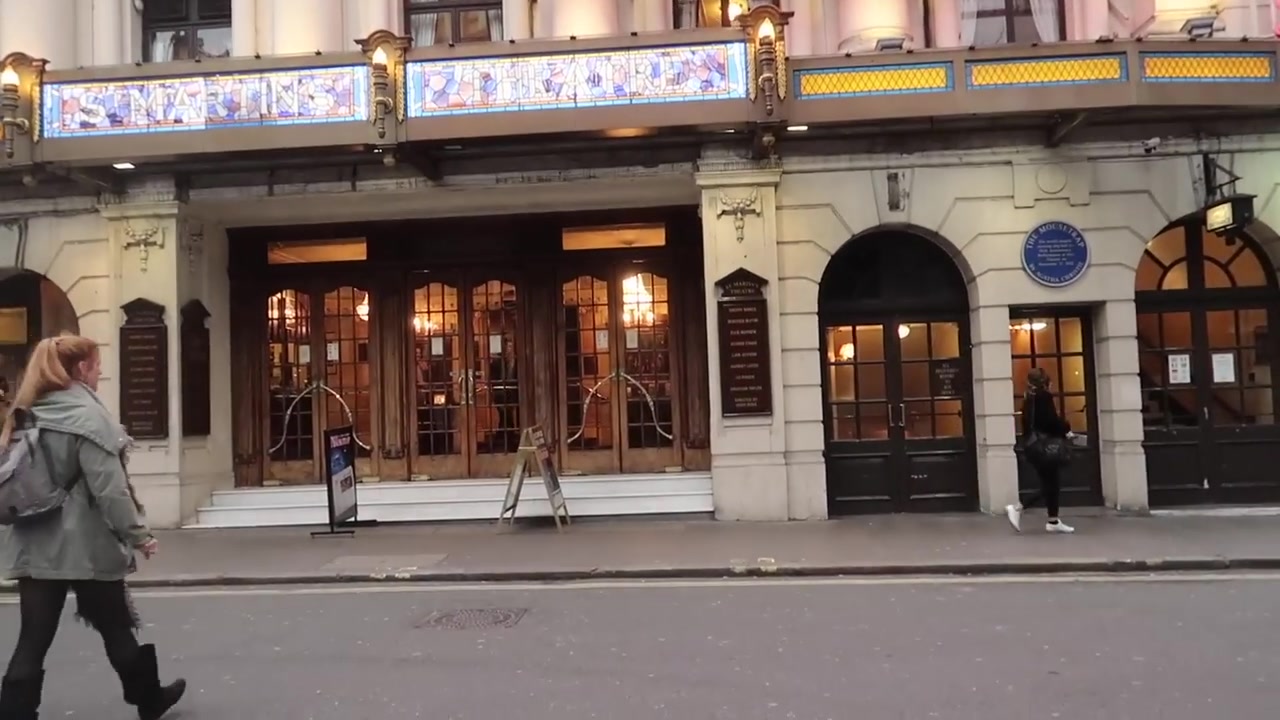
The principal destination is St Martin’s Theatre in West Street. Designed by W. G. R. Sprague as a companion to the neighbouring Ambassadors Theatre, St Martin’s opened in 1916. Its exterior is restrained by West End standards, with a stone façade, arched doors and an illuminated canopy.
Agatha Christie’s The Mousetrap first opened in London in 1952. It spent its first 21 years at the Ambassadors before transferring next door to St Martin’s in March 1974.
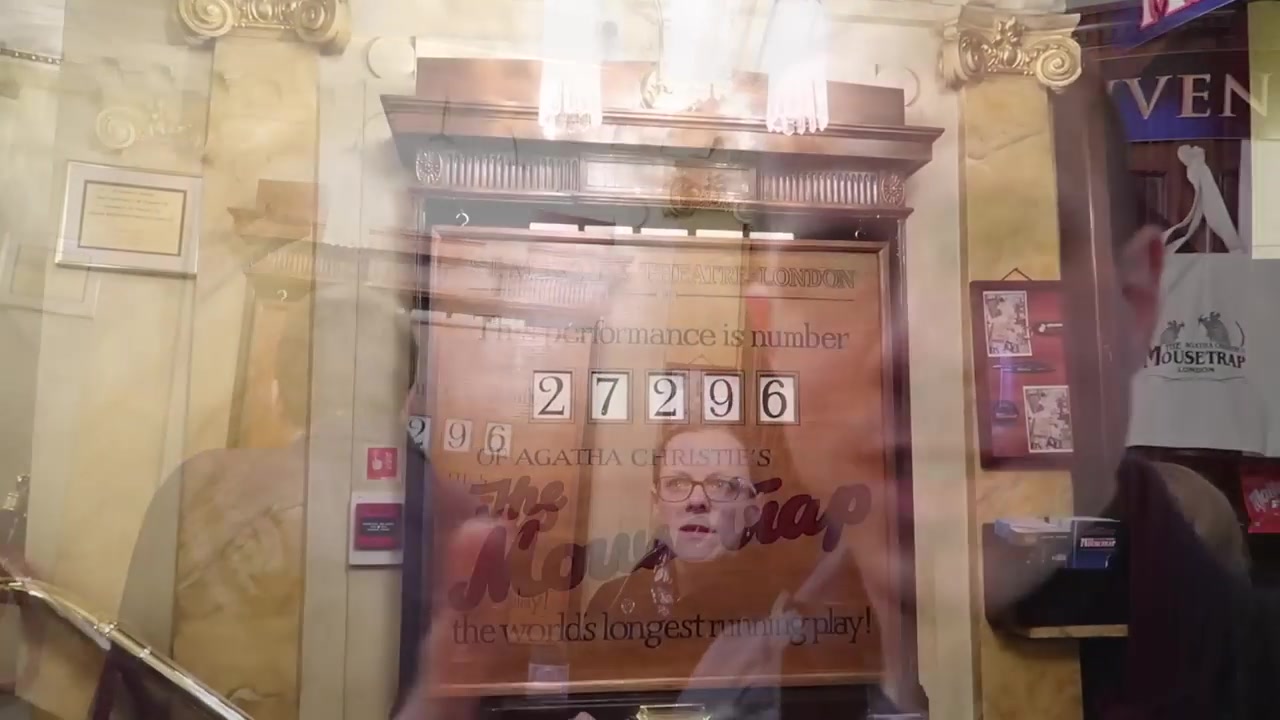
The display recorded in the film counted 27,296 performances. Later in 2018 the production passed 27,500, another milestone in a run that had already made it the longest-running play in theatre history.
Watching The Mousetrap
The film enters the theatre and records the surroundings without revealing the mystery. Barry’s seat is in the dress circle, giving an elevated view towards the stage. The red curtain, compact auditorium and traditional decoration create an atmosphere quite different from the broad, modern foyers of newer entertainment venues.
There is a useful distinction between seeing the stage and feeling close to it. Seats further back or higher in the theatre may give a complete view of the set, while stalls seats can offer greater immediacy. Price alone does not describe that difference, which is why a seating plan and any stated viewing restrictions matter when choosing tickets.
The performance itself remains outside the film. The Mousetrap depends upon its concealed solution, and audiences have traditionally been asked not to reveal the identity of the murderer. Roberts London respects that convention.
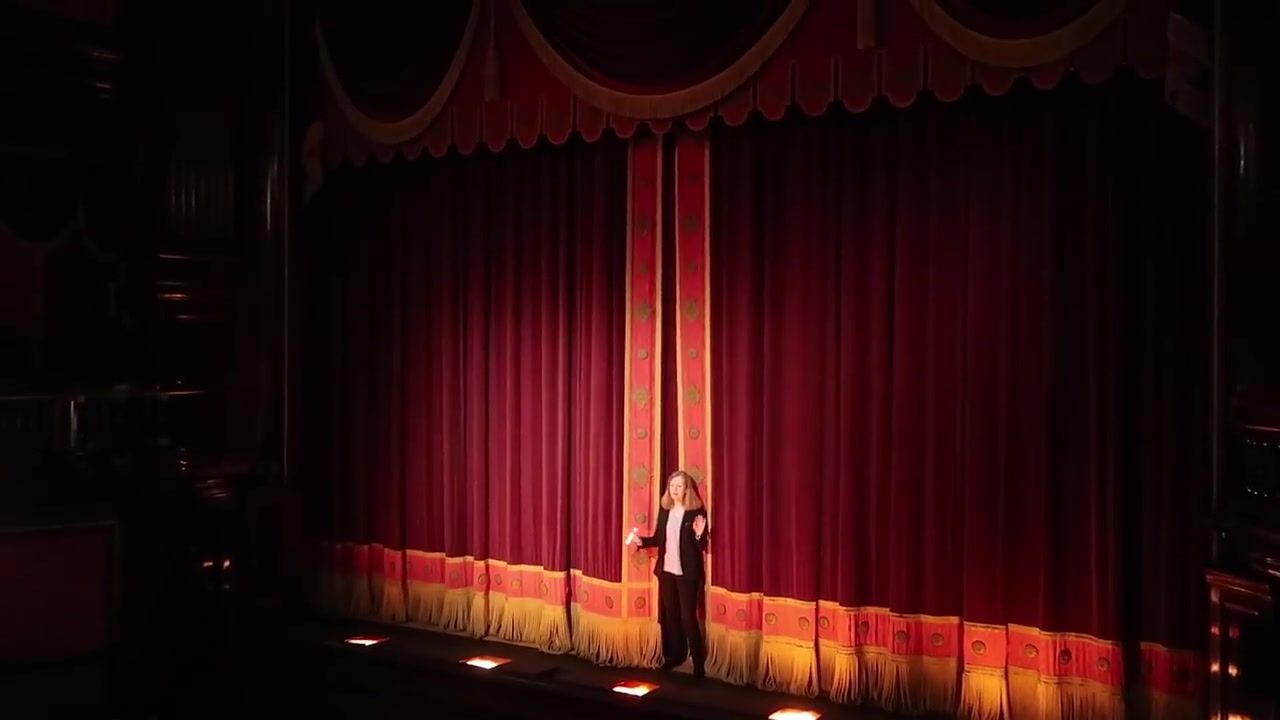
The camera returns only at the curtain call, when a member of the company addresses the audience before the red curtain. It preserves the shared conclusion of the evening without recording the play or disclosing its secret.
A record of theatre-going in 2018
Much of the West End’s essential rhythm remains recognisable: the choice of shows, the search for tickets, the walk to the theatre and the gathering audience. Individual productions, prices and booking systems inevitably change.
The film should therefore be read as a guide to one theatre visit in April 2018 rather than current purchasing advice. Anyone planning a visit today should check current performances, prices, access information and authorised ticket sources.
What the recording captures most successfully is the pleasure of making an evening from the process itself. London theatre begins before the curtain rises: in the streets, architecture, signs and last-minute decisions that lead an audience towards a particular stage.
Adapted from the Roberts London film:
Ultimate London Theatre Guide: Best West End Shows, Discount Tickets and The Secrets of The Mousetrap
Roberts London, published 15 April 2018.
Watch the original film on YouTube
