Borough Market rewards a visit without a rigid plan. The railway arches and covered market halls bring together specialist food shops, produce stalls, hot-food counters and restaurants within a few streets beside London Bridge.
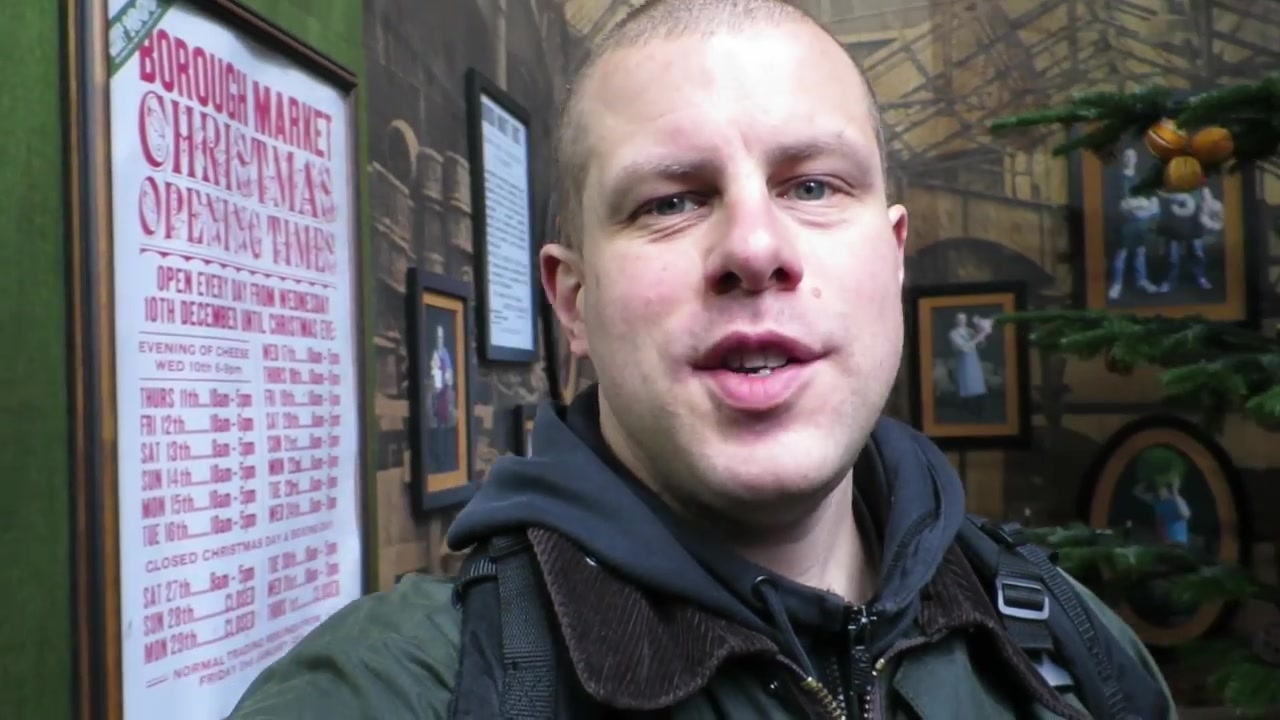
This Roberts London film was recorded in March 2015. It begins outside London Bridge station before entering the market and following a loose food trail through some of its best-known traders. Monmouth Coffee, Neal’s Yard Dairy and Roast provide the main landmarks, but much of the pleasure lies in the crowded passages, changing displays and smaller stalls encountered between them.
The film belongs to a particular moment in the market’s modern development. Borough had already become one of London’s most recognisable food destinations, while still retaining the compressed, slightly improvised atmosphere created by its railway architecture and wholesale history.
Arriving at London Bridge
The walk begins around London Bridge station, with the Shard and the surrounding transport infrastructure placing the market firmly in contemporary London. Buses, commuters and construction form the approach before the view narrows into the streets and arches around Borough Market.
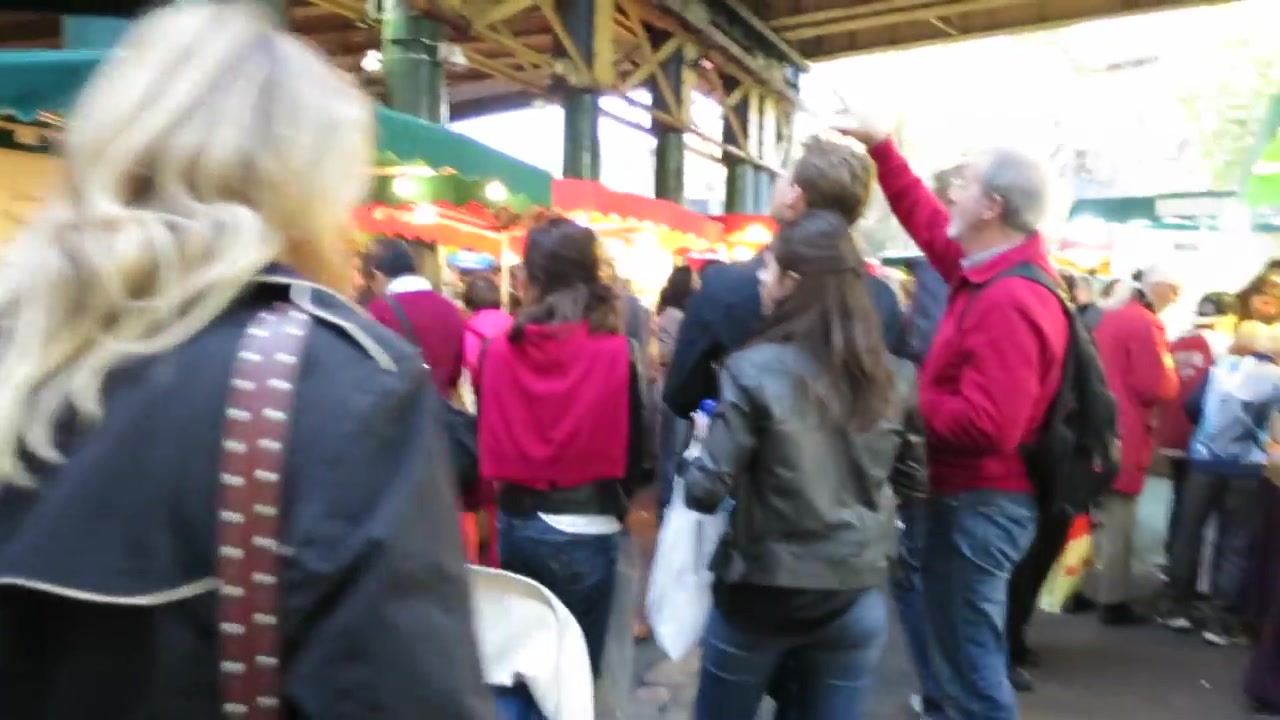
Inside, the pace changes. Shoppers move between tightly arranged stalls while traders serve, cut, weigh and prepare food in full view. The market works as both a place to buy ingredients and a place to eat immediately, which is central to the journey recorded in the film.
Coffee at Monmouth
Monmouth Coffee on Park Street is one of the first recognisable stops. The shop is busy, with customers gathering around the counter for coffee and beans.
Monmouth began roasting and retailing coffee in 1978 and was among the specialist businesses that helped shape Borough Market’s modern food identity. Its Borough shop offers beans sourced from farms, estates and cooperatives, alongside filter and espresso-based coffee.
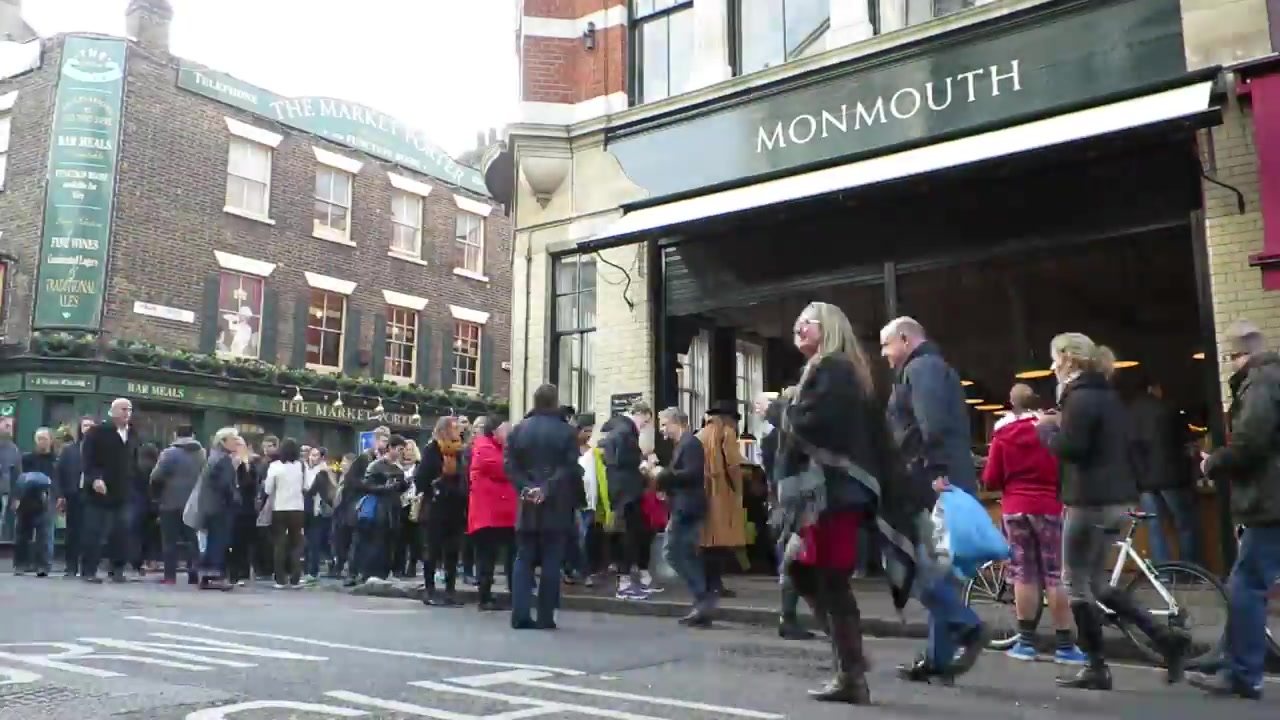
In the film, the queue and the compact counter are as important as the drink itself. They show how a specialist retailer becomes part of the rhythm of a market visit: people step away from the main flow, wait together, then carry their coffee back into the surrounding streets.
Seafood, produce and market displays
The route continues past seafood counters, cheese displays and hot-food stalls. Oysters are opened at the counter while fish and shellfish are arranged over ice. Elsewhere, wheels of cheese, cured meats, bread and prepared dishes create a dense visual record of the market’s range in 2015.
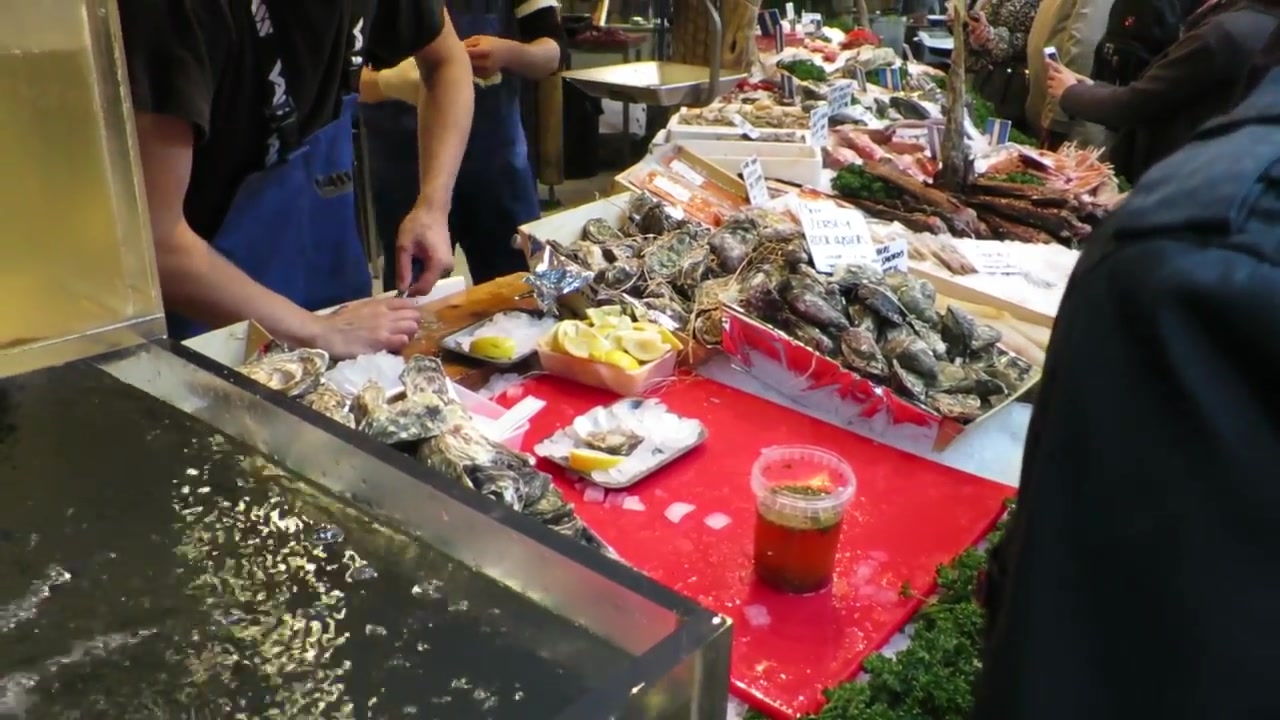
These displays are not simply decorative. They make the work of selecting and preparing food visible. Fish is cleaned, cheese is cut to order and hot dishes are assembled in front of the customer. The result is closer to a working food district than a conventional shopping centre.
The film also catches views of the Shard and the surrounding railway structures. Their scale contrasts with the handwork taking place at the counters below.
A roast-meat baguette from Roast
Lunch comes from the takeaway counter associated with Roast, the British restaurant overlooking Borough Market. Behind the glass are joints of roasted meat, sandwiches and accompaniments prepared for the lunchtime crowd.
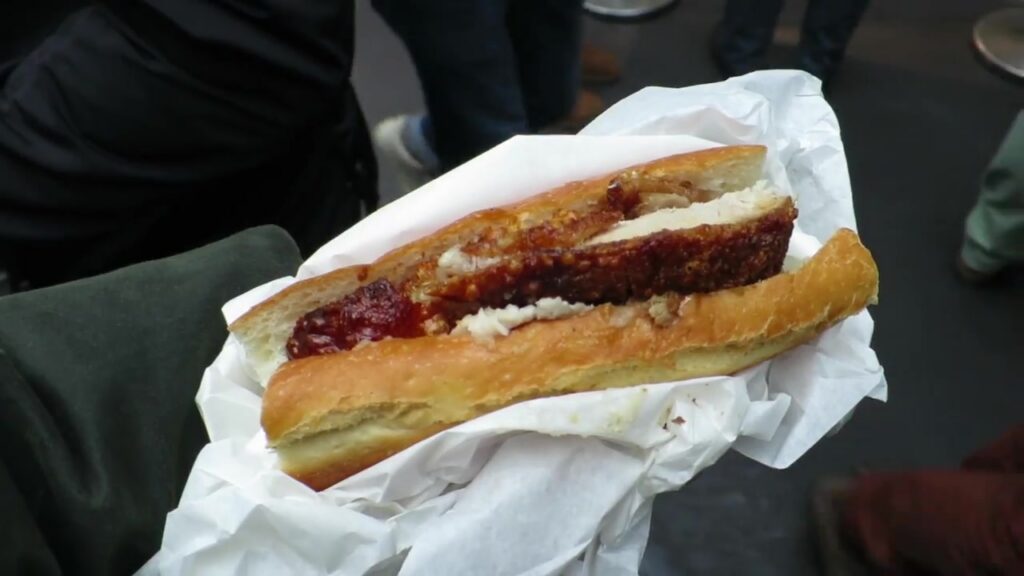
The chosen baguette is built around slices of roast meat with crisp crackling and sauce. It is substantial, direct market food: ingredients drawn from the language of a traditional British roast, arranged to be eaten while walking.
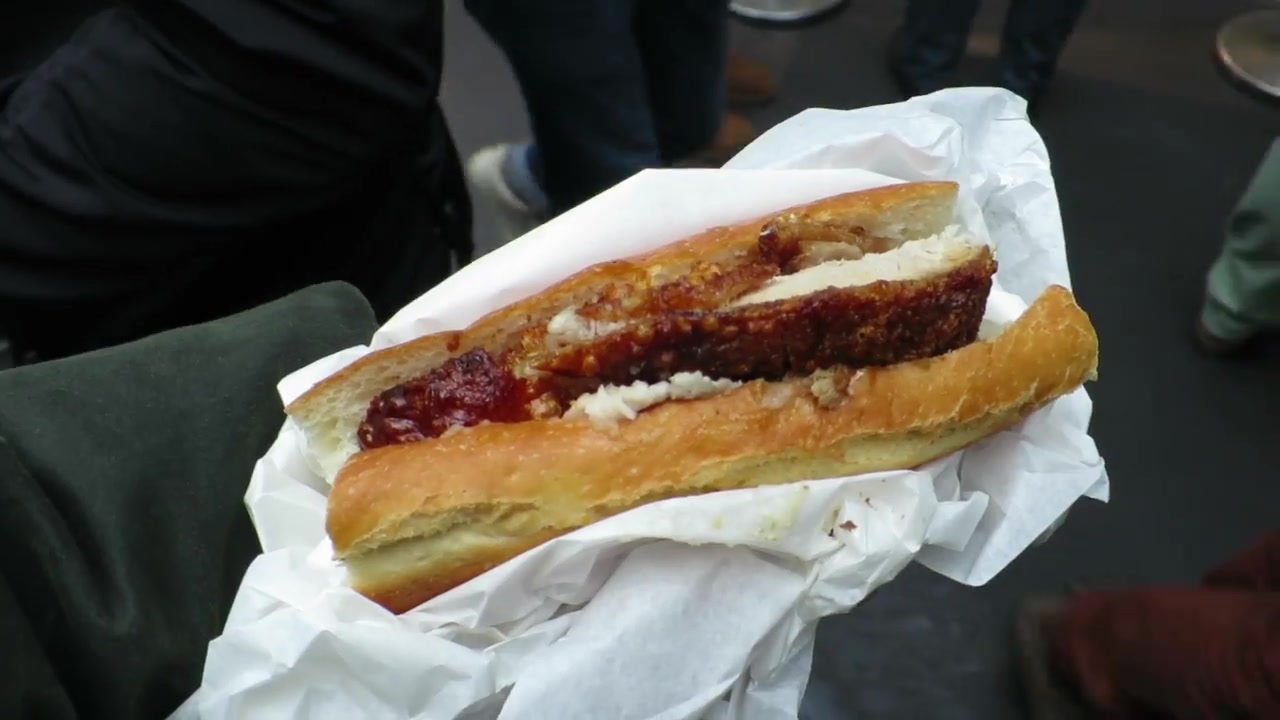
The finished sandwich is one of the film’s strongest images. It also explains why Borough Market works so well on camera. The journey moves naturally from sourcing and preparation to the moment the food is finally held, opened and eaten among the crowd.
Neal’s Yard Dairy and British cheese
The visit continues to Neal’s Yard Dairy on Park Street. Founded in Covent Garden in 1979, the business was among the specialist retailers that established themselves around Borough Market during its modern revival.
Its focus is British and Irish farmhouse cheese. Cheeses are selected from specialist makers and matured with careful attention before being sold through the London shops. In the film, large wheels and cut sections fill the display while staff offer samples and prepare pieces for customers.
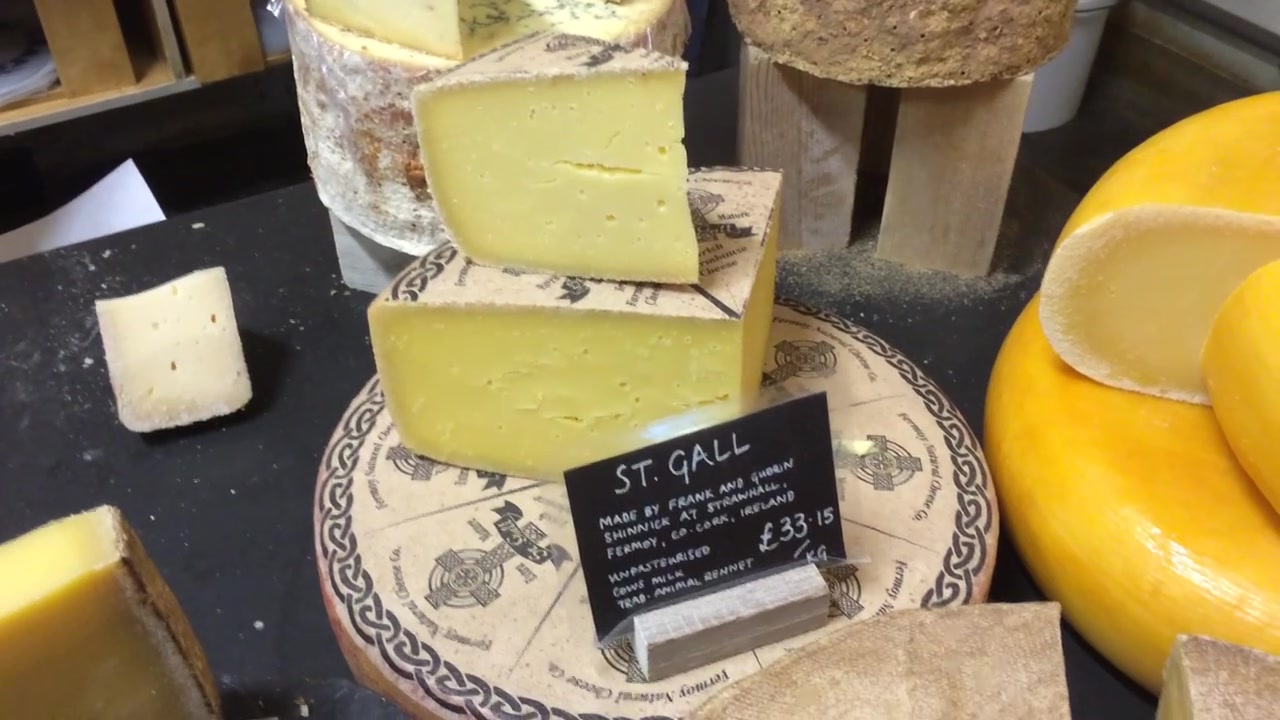
The shop demonstrates another side of the market. Borough is not only a collection of ready-to-eat dishes; it is also a place where specialist knowledge connects producers with people buying food for home.
The market as a London food district
The final section moves back through the covered halls and surrounding passages. Hot pans, produce displays, charcuterie, bread and seafood appear in quick succession as the Saturday crowd thickens.
Borough Market’s modern retail identity grew from the successful food fairs of the late 1990s, which brought specialist producers into a market then facing decline in traditional wholesale trade. Businesses including Monmouth Coffee and Neal’s Yard Dairy became part of that revival and remain closely associated with the area.
The market has continued to change since this film was made. Traders, opening arrangements and individual menus should therefore be checked before a present-day visit. What the 2015 recording preserves is the character of a particular Saturday: crowded arches, food prepared at arm’s length and a route shaped as much by appetite as by geography.
It ends without attempting to catalogue everything. That is appropriate. Borough Market is best understood through a sequence of choices—a coffee, a sample of cheese, an oyster counter, a hot sandwich—and the feeling that another visit could follow an entirely different route.
