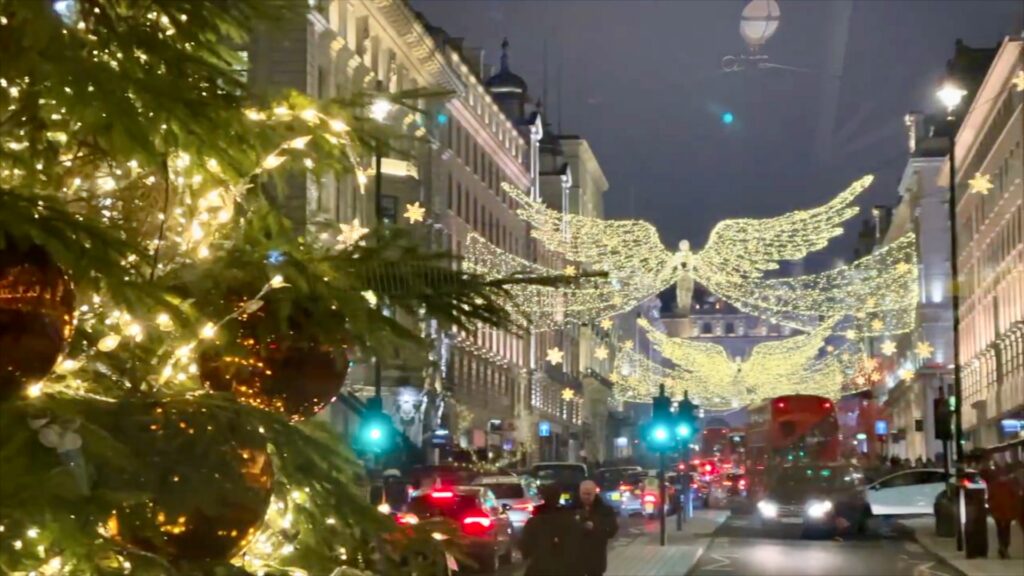
Christmas in London is rarely contained in a single place. It appears in fragments: lights above familiar streets, warm market stalls beside the river, people gathering beneath illuminated buildings, and parts of the city taking on a different character after dark.
This Roberts London film follows one such evening across London, moving from Trafalgar Square and Covent Garden to the South Bank and Battersea Power Station. What emerges is less a conventional Christmas itinerary than a sequence of changing atmospheres: crowded squares, decorated markets, riverside lights, a journey across the city and the quieter moments found between the obvious attractions.
London After Dark in December
December changes London remarkably quickly.
Daylight disappears early. Office workers meet evening visitors on the pavements. Restaurants begin filling while shops are still open, and streets that might otherwise feel purely functional become part of the seasonal spectacle.
Christmas appears almost incidentally.
A tree stands at the end of a familiar street. An entrance is framed with greenery. Light falls from a hotel or restaurant onto wet pavement. Temporary decorations sit against buildings that remain unchanged throughout the rest of the year.
It is this collision between the permanent city and its temporary Christmas identity that makes London particularly interesting at this time of year.
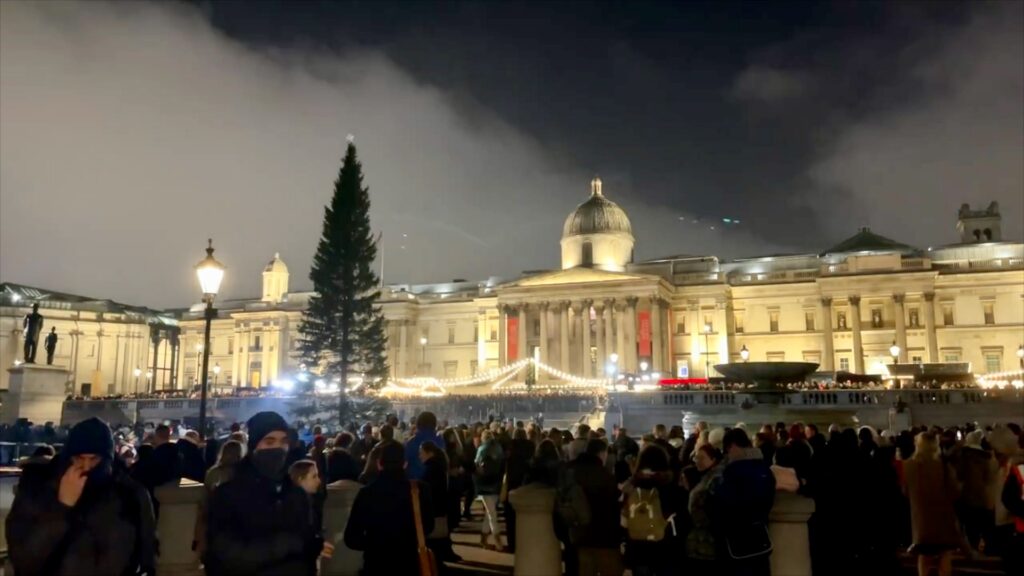
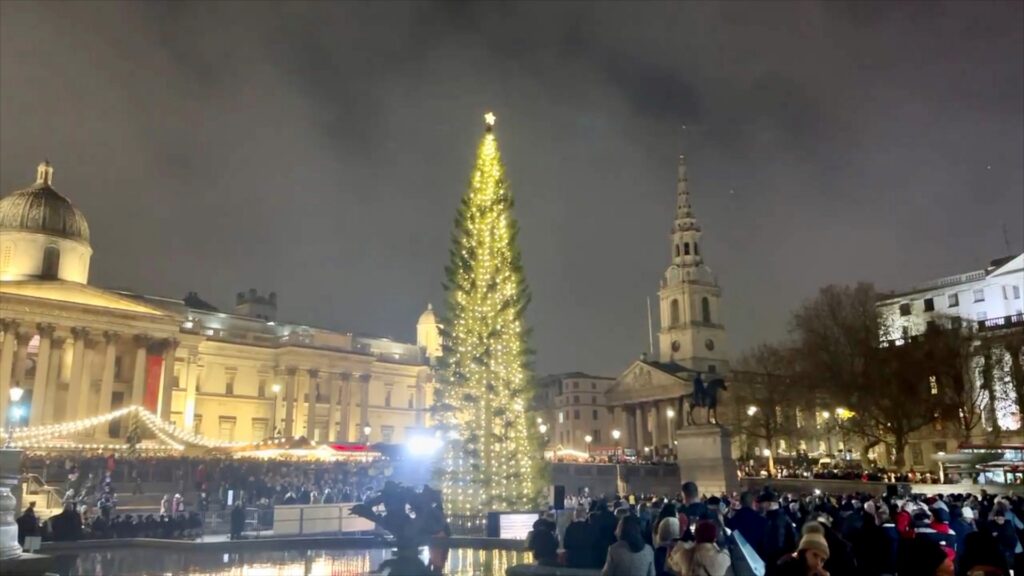
Trafalgar Square
Trafalgar Square offers Christmas at an unusually large scale.
The National Gallery, fountains, monuments and surrounding architecture give the square a formality that contrasts with the temporary character of the festive season.
Yet once darkness falls, the atmosphere becomes more intimate.
People gather beneath lights, stop for something warm to eat or drink and move between the square and the surrounding West End streets. Monumental London becomes the background to very ordinary winter rituals.
That contrast is one of the pleasures of Christmas in the city: grand architecture and public space occupied in entirely human ways.
Covent Garden in its Festive Season
From the openness of Trafalgar Square, Covent Garden feels more concentrated.
The historic market building naturally gathers people beneath its covered passages, while restaurants, shops and surrounding streets create several layers of activity at once.
Christmas exaggerates this character.
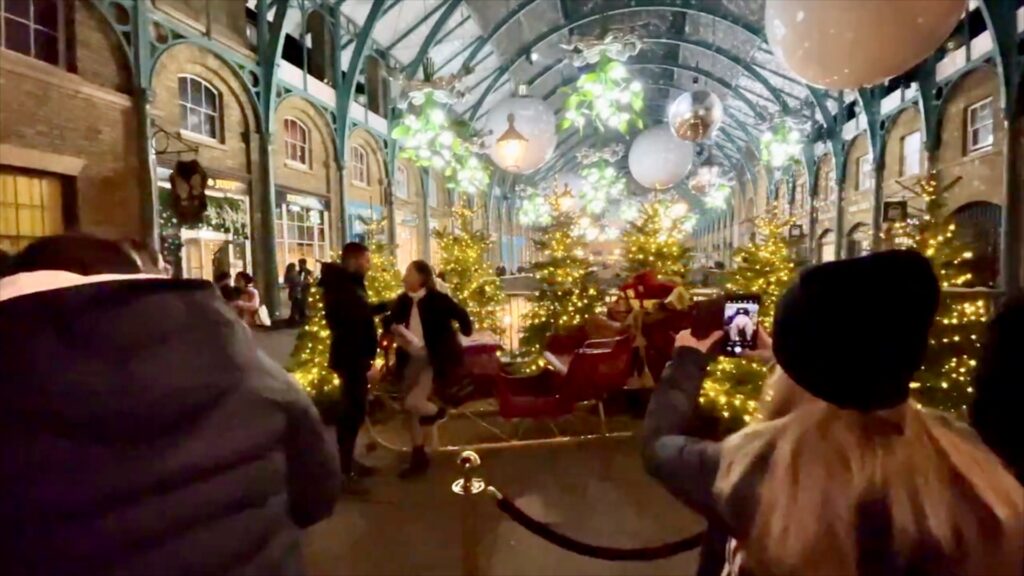
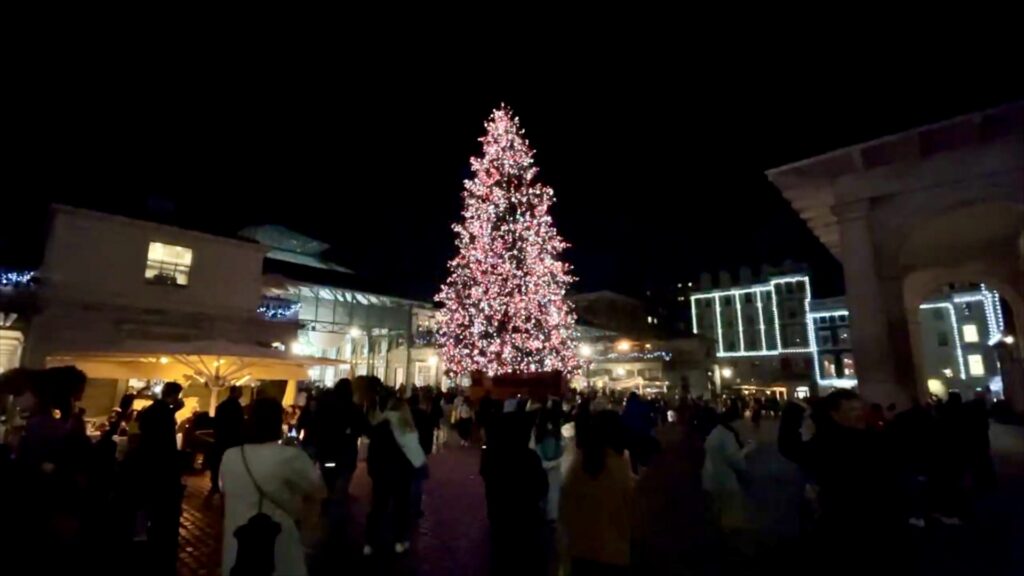
Decorations hang above the market. Warm light escapes from restaurants. People stop to photograph the displays while others continue through on their way to dinner, the theatre or somewhere entirely unrelated.
Street performers, visitors, shoppers and Londoners all share the same relatively small piece of the city.
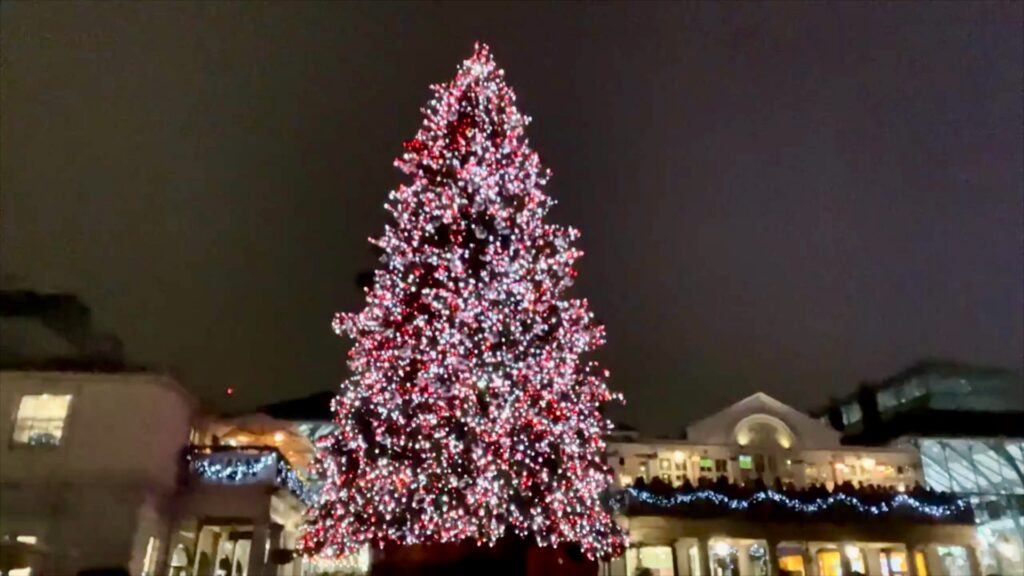
The pleasure of Covent Garden lies partly in this density. A few minutes of walking can move between an open piazza, a covered market, a restaurant frontage, a churchyard and a crowd gathered around a performance.
At Christmas, none of these things disappears. They simply acquire another layer.
Towards the South Bank
Moving towards the river changes the evening again.
The South Bank works differently from Covent Garden because it is experienced primarily through movement. People walk beside the Thames, cross bridges, stop outside cultural buildings, buy food, watch performers and look across the water towards Westminster.
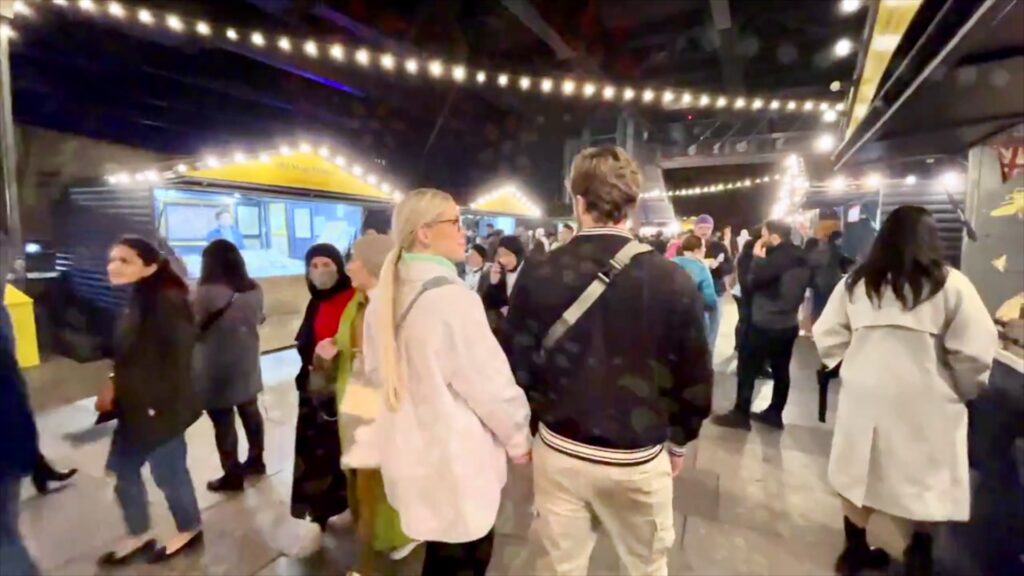
During the Christmas season, temporary market stalls introduce pockets of warmth along that route.
Wooden stalls glow against the darker riverfront. Food is prepared in view of passing crowds. Steam, strings of lights and the movement of people create a scene that feels temporary without being detached from London around it.
The city remains constantly visible beyond the market.
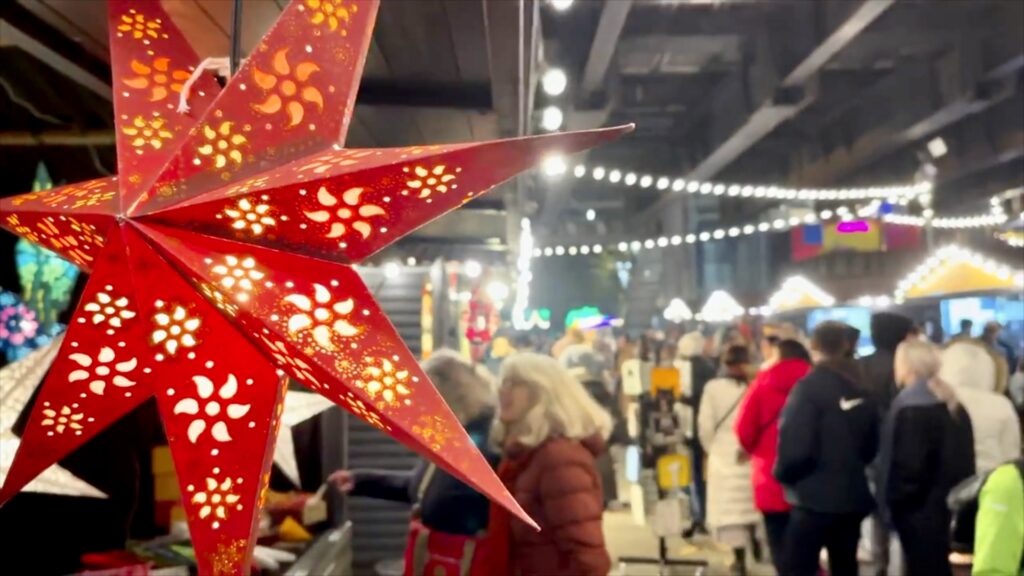
The Thames is only a few steps away. Westminster appears across the water. The London Eye rises above the surrounding buildings and trees.
One can stand with something hot to eat while looking across one of the most familiar views in London.
The ordinary and monumental occupy the same frame.
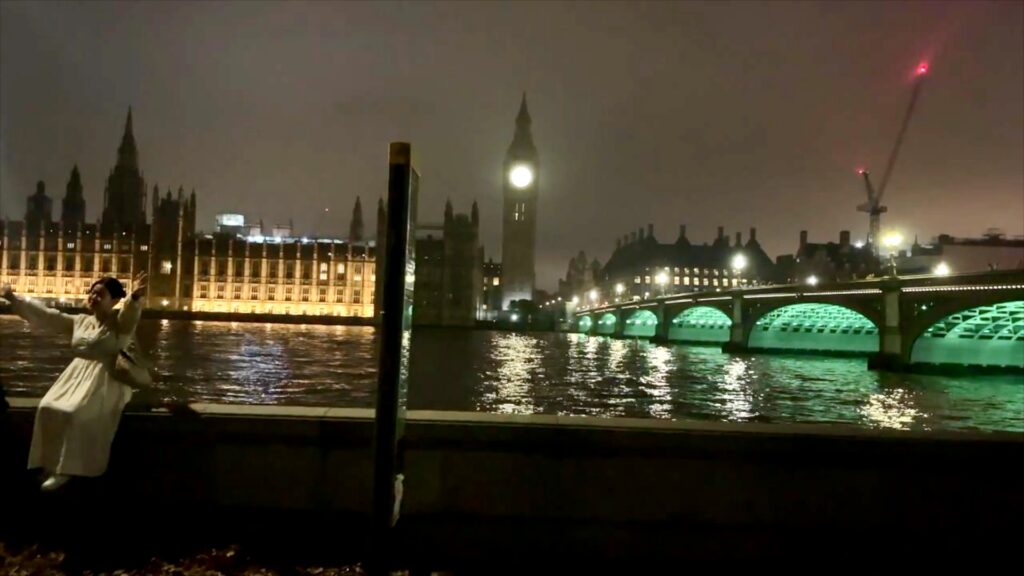
The Thames After Dark
The river becomes increasingly important as the evening continues.
London seen from beside the Thames is a different city from London experienced through its streets.
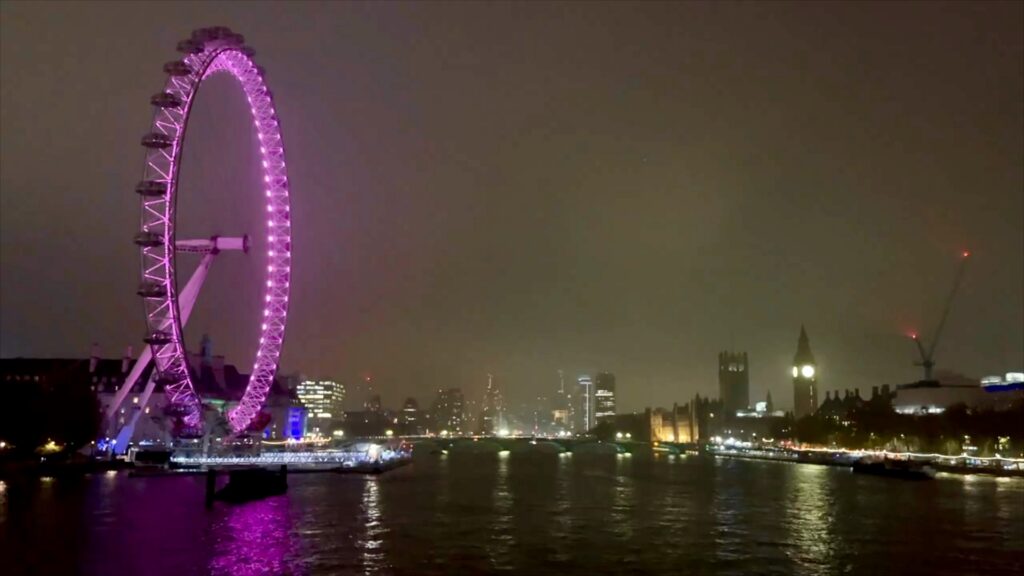
Buildings become silhouettes and illuminated façades. Bridges organise the view. Reflections extend light across the surface of the water, while landmarks that appear dominant during the day become part of a much wider night-time landscape.
Christmas adds illumination, but the river prevents the city from becoming visually overcrowded. It creates distance.
From here, London can be watched rather than simply occupied.
Across London by Bicycle
The journey then changes pace.
Leaving the concentrated activity of central London behind, the route continues by bicycle towards Battersea.
Cycling changes the way a city is observed.
Places no longer arrive as isolated destinations. The streets between them become part of the experience.
Brightly decorated areas give way to darker roads. Residential buildings replace visitor attractions. A bridge, an illuminated entrance or a glimpse of the Thames appears briefly and disappears again.
These transitions are easy to remove from conventional travel writing because they do not necessarily contain anything famous.
Yet they are often where a city becomes most legible.
Christmas at Battersea Power Station
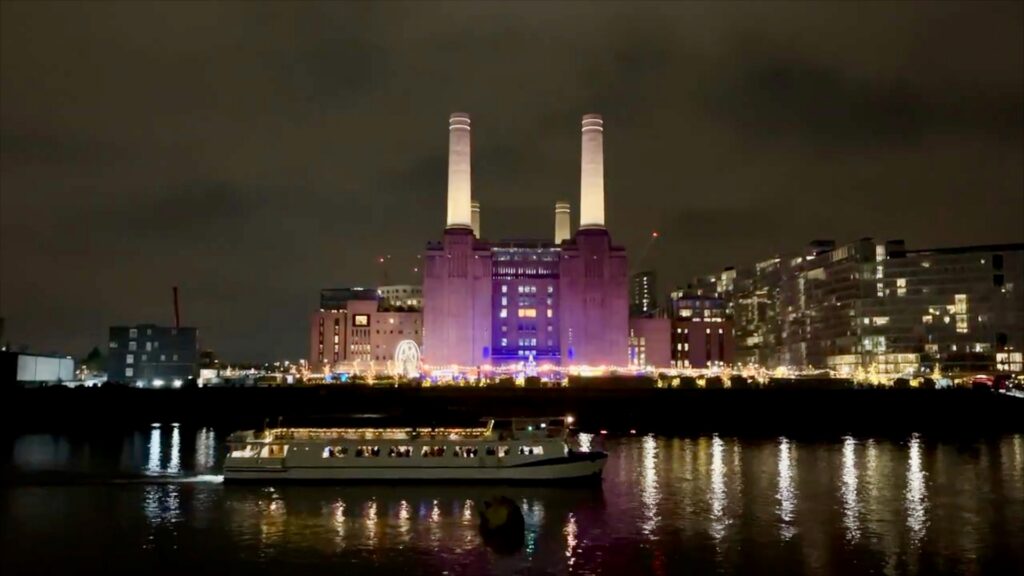
Battersea Power Station provides a very different setting for Christmas.
Where Covent Garden feels historic and compressed, Battersea is monumental and open.
The great brick structure and its four chimneys dominate the surroundings, while shops, restaurants and public spaces occupy what was once an entirely industrial landscape.
Christmas decorations introduce an almost deliberately playful contrast.
Large ornaments, illuminated trees and seasonal installations sit against one of London’s most recognisable pieces of industrial architecture.
It should feel incongruous, yet somehow it works.
Ice Skating Beneath the Power Station
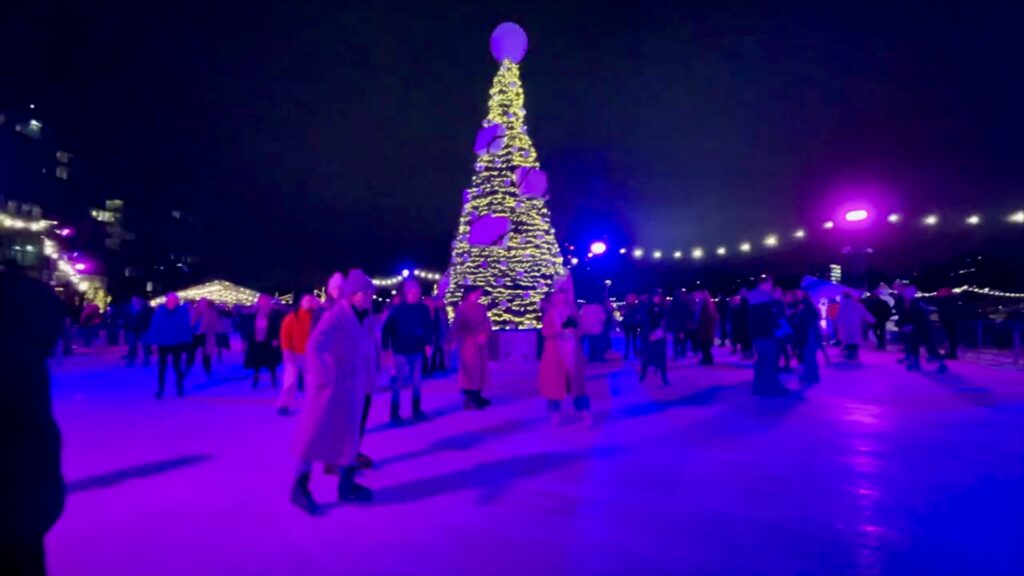
One of the most striking scenes from the evening is the seasonal ice rink beneath Battersea Power Station.
Skaters move around the rink beneath lights and a large Christmas tree, while the vast brick building remains visible above them.
The appeal is as much about the setting as the skating itself.
London has a particular talent for placing temporary experiences against architecture that belongs to an entirely different period and purpose.
For a few winter weeks, an industrial landmark, an ice rink, Christmas lights and hundreds of people become part of the same scene.
Then the season changes and the temporary layer disappears.
A Quieter London
After the crowds, markets and lights, quieter parts of the evening become increasingly important.
A journey through London does not need to maintain one continuous mood.
Within a relatively short distance, the city can move from crowded Christmas attractions to almost empty pavements, from riverside spectacle to a quiet gallery, café or street.
These pauses give the larger experiences context.
A warm interior after several hours outside. A coffee away from the crowds. A few minutes sitting rather than moving.
They may not be the moments someone sets out specifically to find, but they often become part of what is remembered.
Back Towards the West End
The evening eventually returns towards central London.
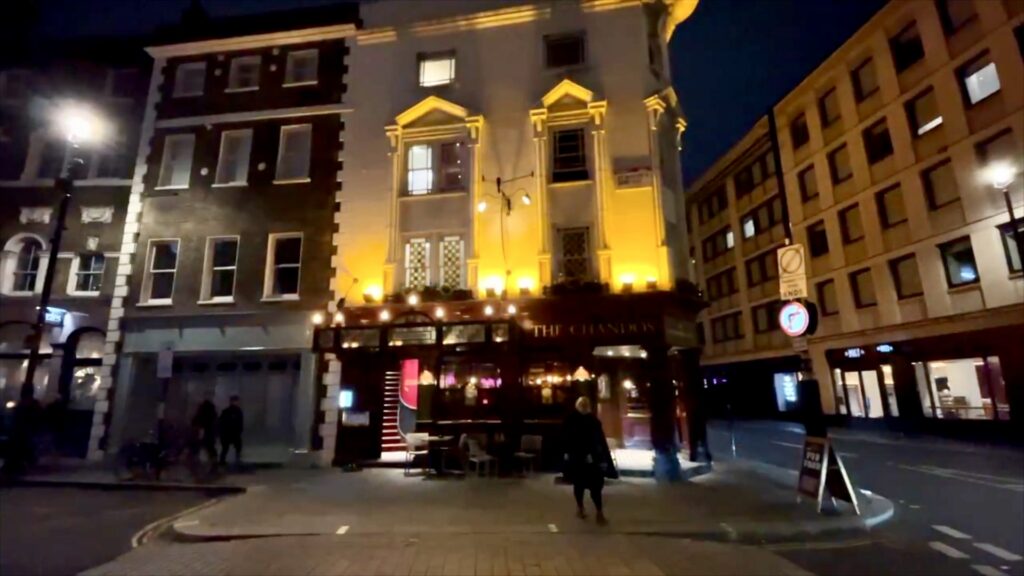
After Christmas markets, the river, cycling and Battersea, a pub near Trafalgar Square provides a very London conclusion.
Christmas is not limited to places specifically decorated or promoted as festive attractions.
It changes familiar rituals too.
A pub entered from a cold December street feels different. Coats gather around chairs. Glasses arrive at the table. Conversation replaces movement, and the warmth of the room becomes part of the pleasure.
Outside, the West End continues around it.
The City Between the Attractions
Looking back at an evening such as this, the obvious landmarks are easy to remember.
Trafalgar Square. Covent Garden. The South Bank. Westminster across the Thames. Battersea Power Station.
But London is not simply the sum of its attractions.
It is also the movement between them.
Walking beside the river. Waiting at crossings. Riding through streets after dark. Eating something from a market stall. Stepping inside somewhere warm. Watching other people occupy the city in their own ways.
These are the moments conventional guides tend to compress or remove entirely.
In reality, they are where much of London happens.
A Christmas evening here does not need to be one spectacular destination. It can be a route through several different versions of the city: ceremonial, commercial, historic, industrial, domestic and temporary.
For one winter evening, they become part of the same journey.
Roberts London is not a finished authority. It is a continuing study.
