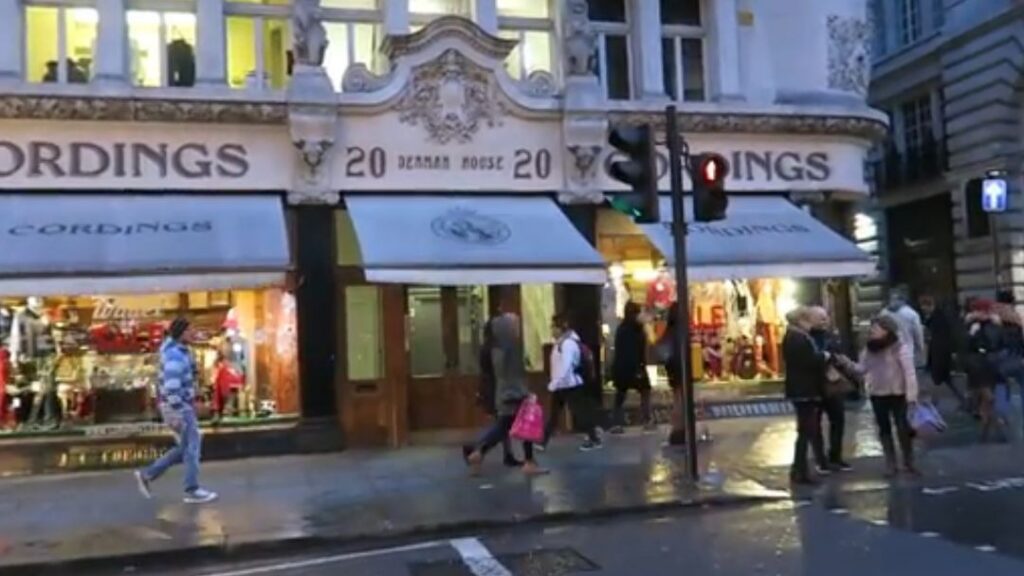
A winter hat is a small errand, but in London even a practical purchase can lead into a much longer story. This archive film follows a January visit to Cordings of Piccadilly: part shop, part city landmark, and still one of the clearest expressions of the road between town and country.
A London shop with country instincts
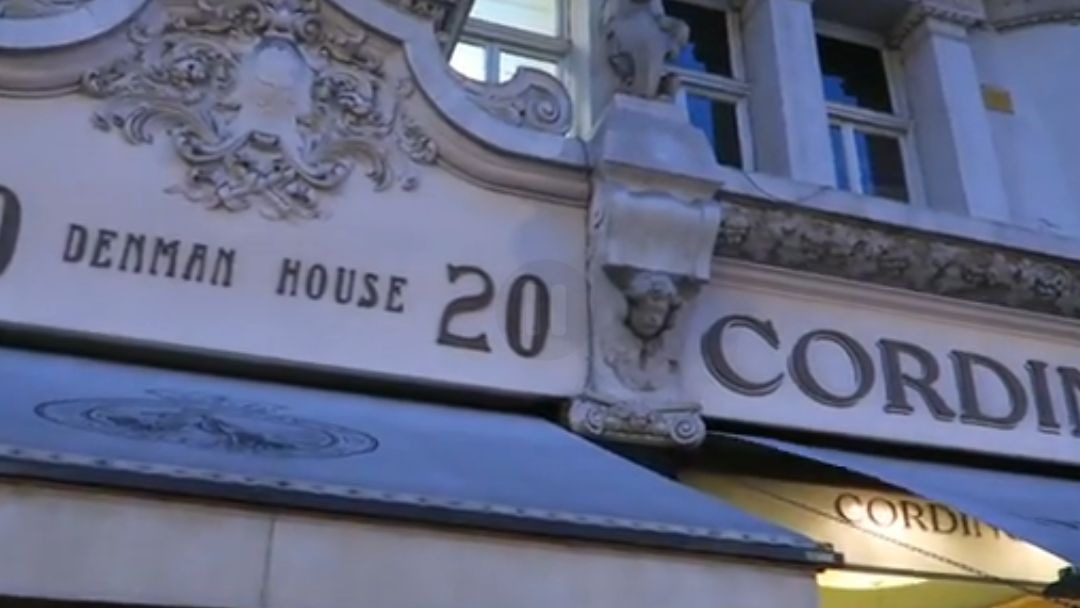
Cordings began in 1839, when John Charles Cording opened a shop in the Strand selling practical outerwear for British weather. The business moved to Piccadilly in the nineteenth century and remains at number 19 today. Its present shopfront belongs to Denman House, an Edwardian Portland-stone building completed in 1903 and now Grade II listed.
The address matters. Regent Street is only a short distance away, but Cordings feels removed from the quick turnover of mainstream fashion. The brass lettering still announces the firm as “waterproofers”, while the oak entrance, mosaic, old hat boxes and shop fittings hold the memory of a specialist outfitter rather than a seasonal retail concept.
Looking for a British tweed cap
The reason for my visit was straightforward: I had mislaid the winter hat bought a few weeks earlier and needed a replacement. In the film I settle on Cordings’ grey Urban Piccadilly cap, made in Britain from Scottish tweed and fully lined.
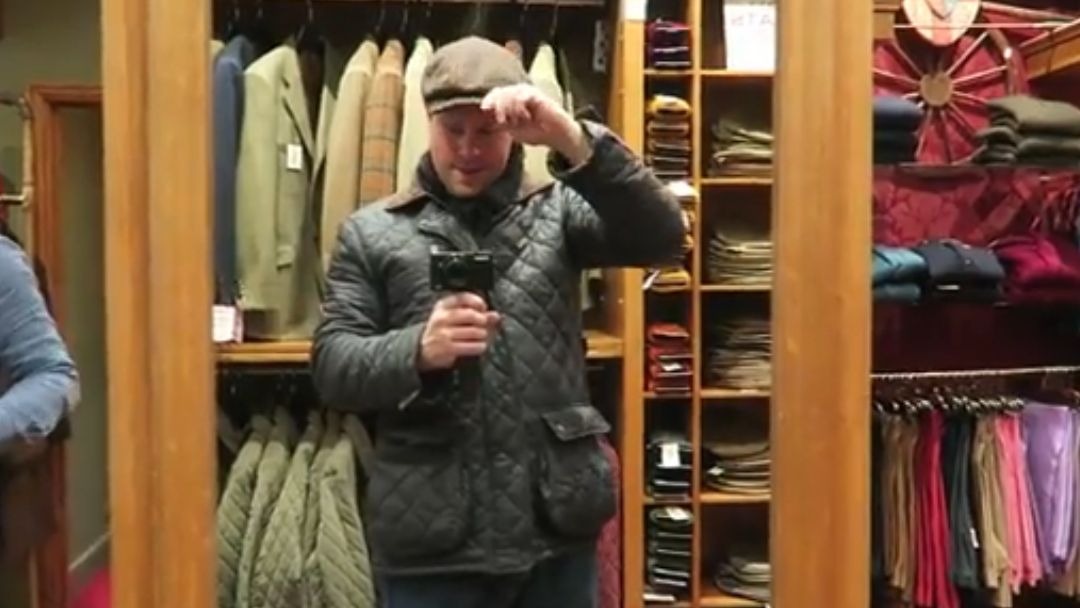
Buying a cap in person is still worthwhile. Nominal sizes vary between makers, and the difference between a hat that feels right and one that survives a gust on Piccadilly is best discovered in front of a mirror. I tried several sizes before finding the comfortable fit that would stay put in the wind.
This was the January sale of 2016, and the film records £10 off the hats. That price detail belongs to the archive rather than to current shopping advice, but the scene is recognisable: the normally measured shop was unusually busy, the staff were occupied, and I was largely left to try the caps at my own pace.
Clothes designed for movement
Cordings is best known for the meeting point between city clothes and country use: tweed jackets, covert coats, rainwear, shirts and accessories made to be worn rather than merely displayed. In the film I mention the room in its shirts. Designed with shooting and outdoor movement in mind, they are less restrictive than shirts conceived only for a desk or dinner table.
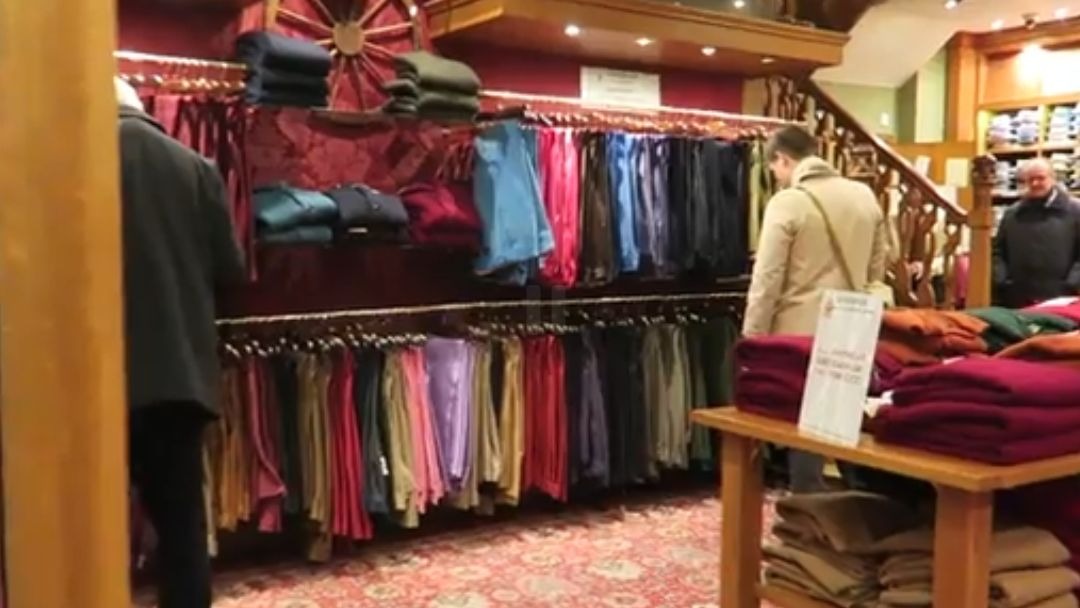
That practical quality is central to the shop’s character. Cordings built its reputation on waterproof clothing and still presents British style as a matter of function, materials and longevity. Not everything sold there is British-made, but the firm continues to give British cloth and manufacturing a prominent place.
Why Cordings still belongs on Piccadilly
London changes through replacement, but it also changes around certain survivors. Cordings has occupied this part of Piccadilly since 1877, adapting its premises and collections while keeping a recognisable point of view. The result is not a museum: it is a working shop whose history remains visible in ordinary transactions.
That is what makes the film worth returning to. The cap is useful, the sale is incidental, and the larger pleasure is seeing a distinctive London business doing what it has done for generations: fitting people for the weather, and sending country clothes back out into the city.
Archive note: filmed and first published on 22 January 2016. Store details and opening times can change; check Cordings’ official store page before making a special journey.

Recent Comments