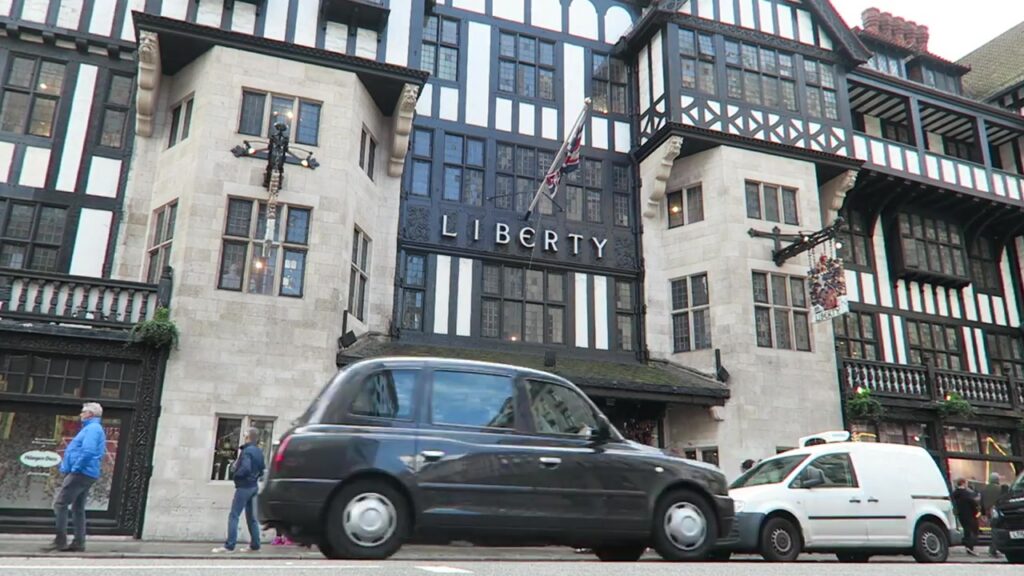
A morning at Liberty can easily become several different London outings at once. In this Roberts London film from June 2016, Barry begins outside the famous Great Marlborough Street store, walks through Soho for coffee, returns to browse Liberty-print Havaianas and fabrics, then finishes with breakfast inside the building.
The film is an archive record of the store and its departments as they appeared in 2016. Products, displays, menus and the arrangement of the floors may have changed, but the visit preserves the experience of moving through one of London’s most distinctive department stores.
Liberty’s unmistakable London façade
Liberty’s black-and-white timber frontage immediately separates it from the conventional department stores of Oxford Street. The Great Marlborough Street building opened in 1924, designed by Edwin T. Hall and his son Edwin S. Hall. Liberty’s own history records that its construction used timbers from two former naval ships, helping to give the store the atmosphere of an old English house assembled in the middle of modern London.
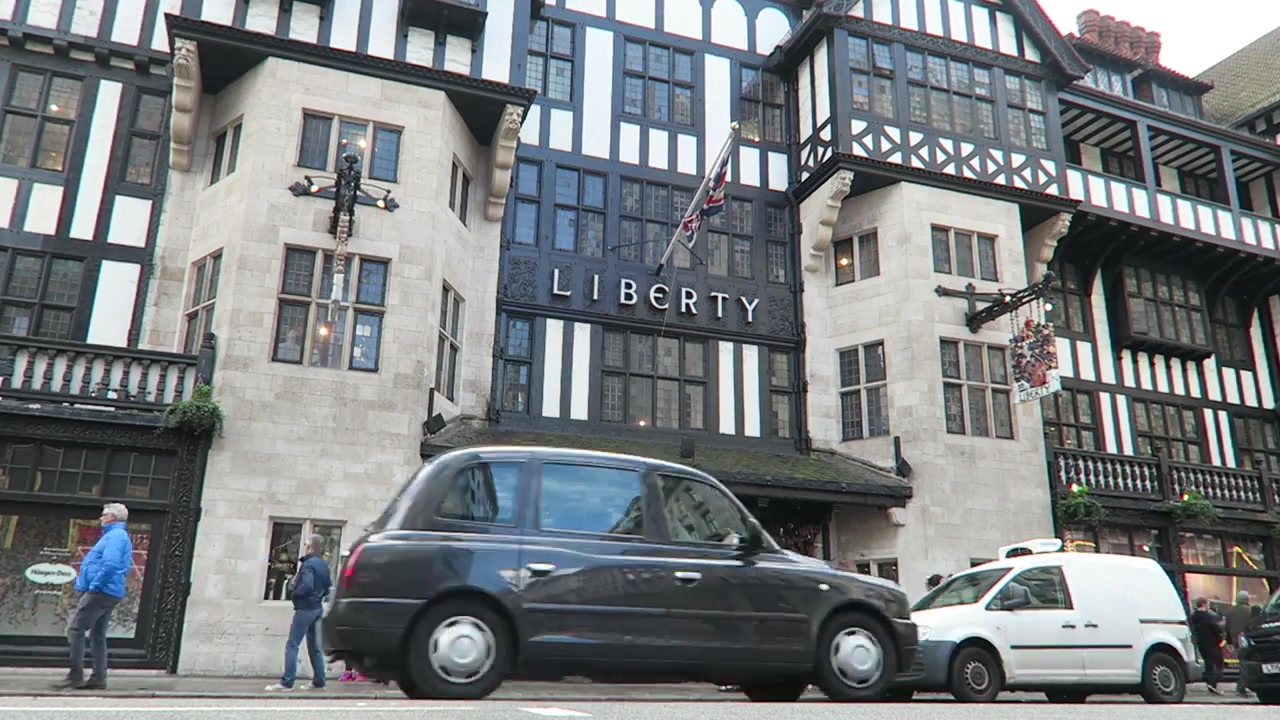
That architectural character continues inside through dark timber galleries, staircases, small rooms and open atriums. Rather than seeing everything at once, visitors discover the store section by section.
Coffee at Soho Grind
Before shopping, Barry heads through Soho for a first coffee stop. The route passes the smaller streets around Carnaby and Beak Street before reaching Soho Grind, with its compact espresso-bar frontage and busy interior.
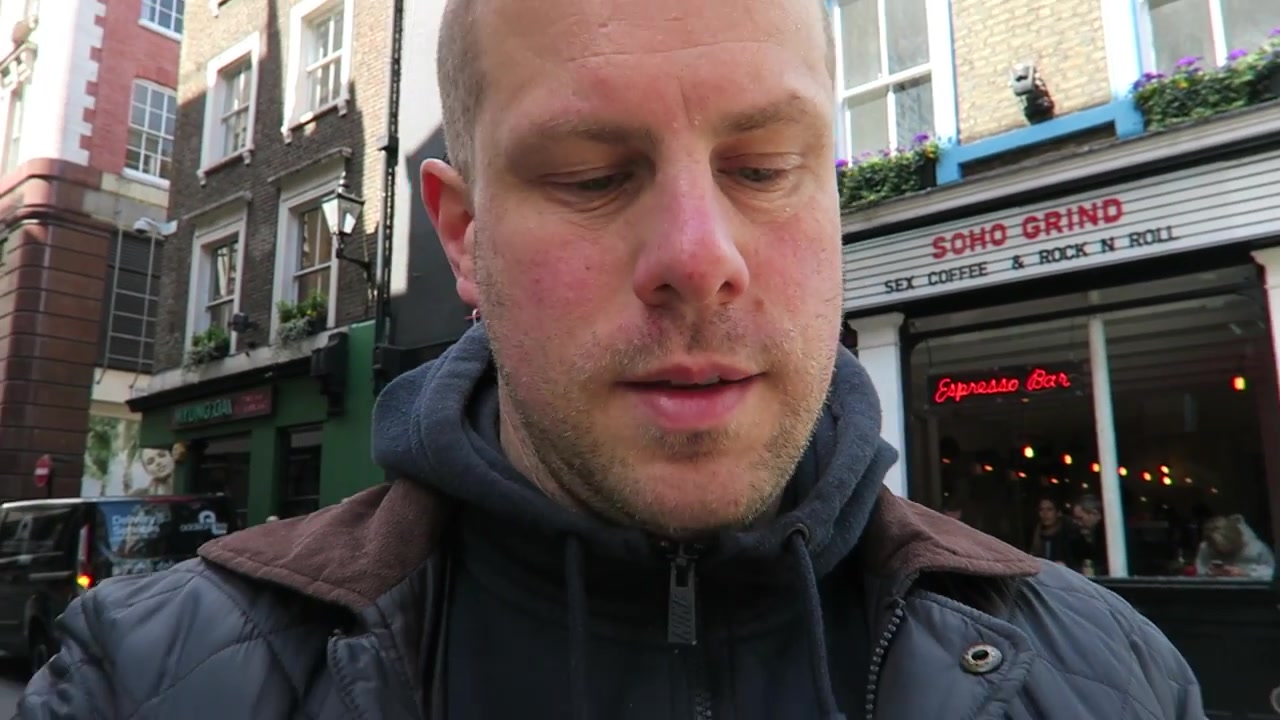
The café is narrow and energetic, with customers gathered beneath simple hanging lights while coffee is prepared behind the counter. It provides a contemporary Soho contrast to the historic-looking building waiting just a few streets away.
After coffee, Barry walks back towards Liberty. The store’s mock-Tudor elevation repeatedly appears at the end of the surrounding streets, acting almost like a landmark for this part of Soho.
Liberty-print Havaianas
Inside Liberty, the first focused stop is a colourful display of Havaianas made with Liberty prints. In 2016, the collaboration applied small-scale floral patterns to the footbeds of the Brazilian flip-flops, with bright pink and purple straps picking out colours within the designs.
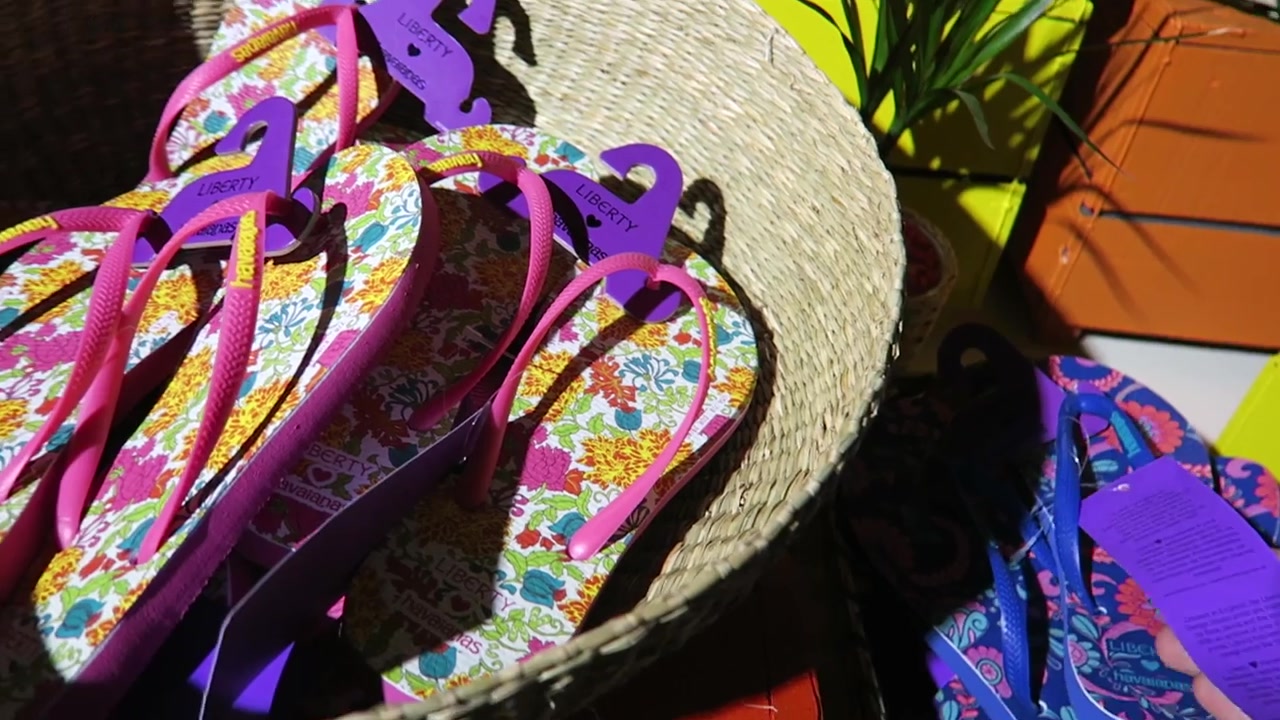
The display places the sandals among straw baskets, plants and vivid blocks of colour. It is a good example of how Liberty’s textile identity extends beyond fabric sold by the metre: familiar prints can move into clothing, accessories and collaborations with other brands.
The fabric and haberdashery department
Barry’s principal shopping task is to find printed fabric for his business. Liberty has been associated with textiles since Arthur Lasenby Liberty founded the store in 1875, and the fabric department remains one of the places where that history feels most tangible.
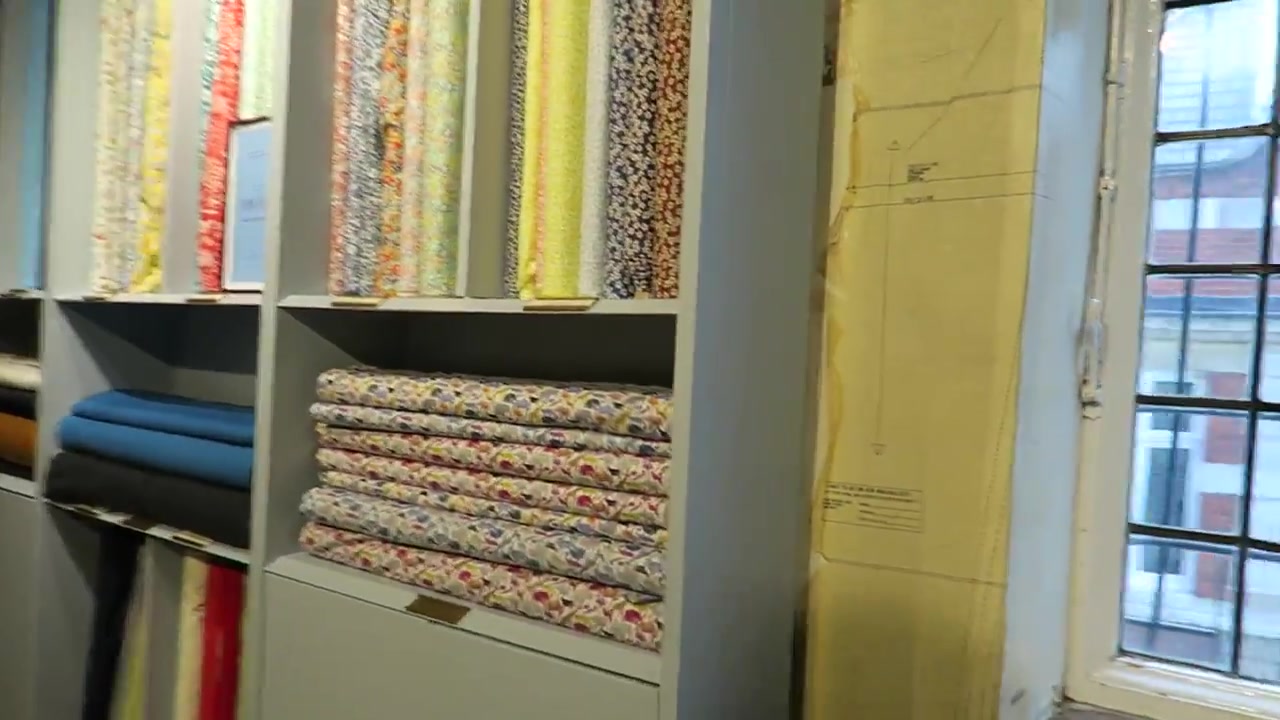
Shelves hold upright bolts and carefully folded stacks, ranging from small florals to quieter plains. Nearby displays bring together haberdashery, sewing materials, finished accessories and household textiles. The film lingers on the choice of prints rather than treating the department merely as part of a general store tour.
For anyone interested in design or making, this is the centre of the visit. The patterns have to be considered at close range: scale, colour and repeat all matter differently when a textile is intended for a real object rather than admired on a shelf.
Looking through the timber atrium
Between departments, the camera looks down through Liberty’s central atrium. Dark carved galleries frame each level, while clothing and displays introduce colour around the open centre of the store.
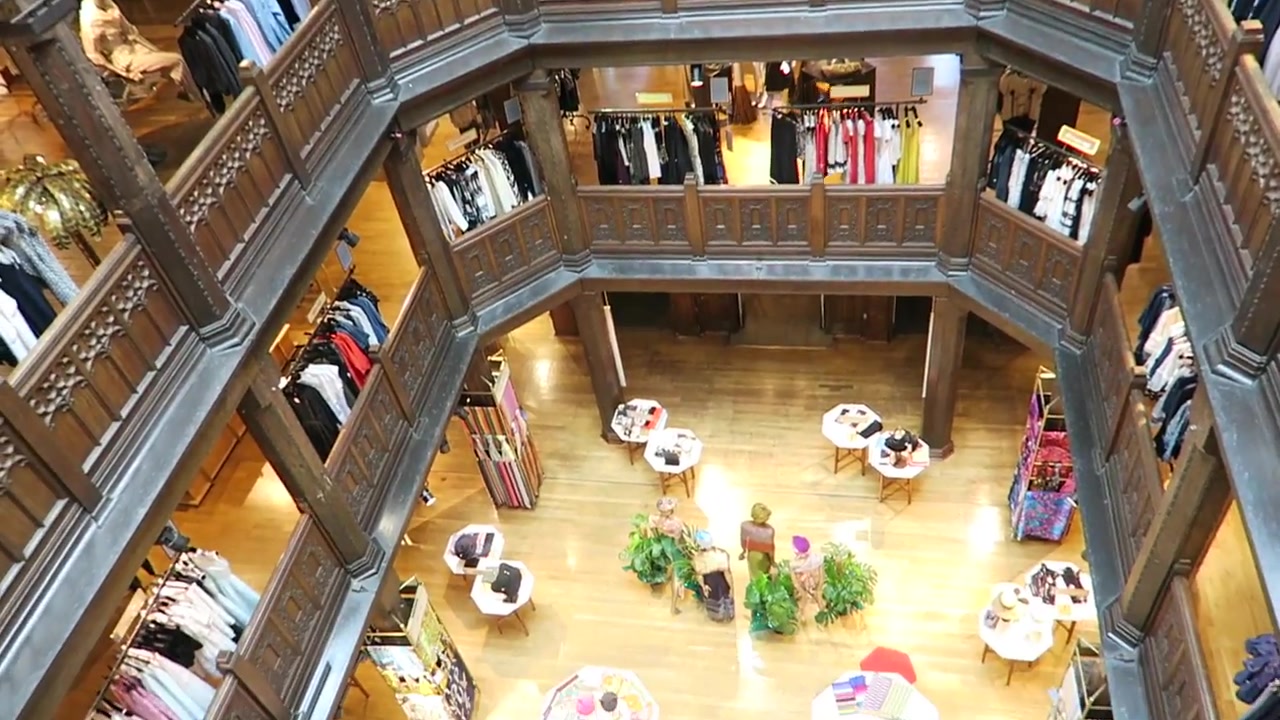
The view explains why Liberty rewards slow exploration. Its floors feel connected, but the timber rails, irregular rooms and changing sightlines prevent the building from becoming a single open retail hall. The architecture shapes the shopping experience as strongly as the merchandise.
Breakfast inside Liberty
The morning ends in the store’s restaurant. Barry looks through the 2016 breakfast menu, orders coffee and takes a window-side seat before a plate of scrambled eggs and smoked salmon arrives with leaves, tomato and lemon.
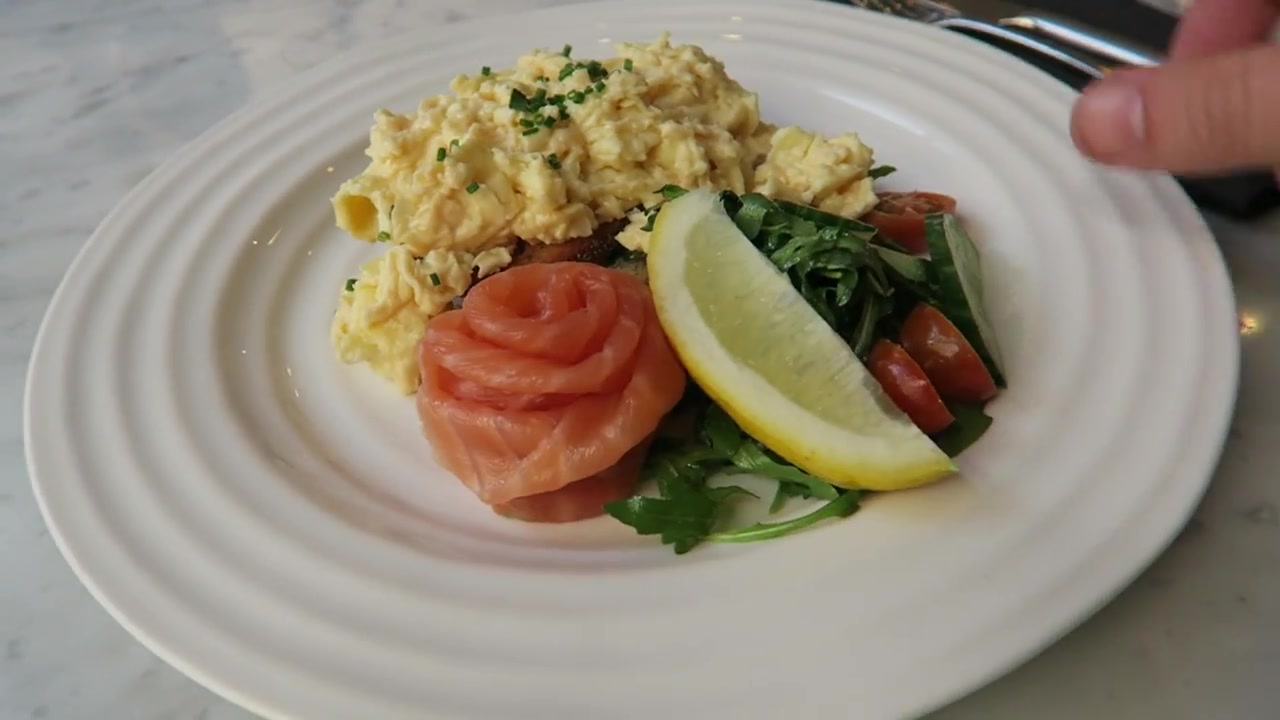
Served on a simple white plate, the breakfast is colourful without being elaborate. The soft eggs and folded salmon make a substantial final stop after walking through Soho and several floors of the store.
This 2016 film works as more than a shopping record. It connects Liberty’s architecture, textile heritage, contemporary collaborations and hospitality within one London morning. Coffee in Soho begins the route, but the real subject is the pleasure of allowing a single store to become a destination in its own right.
