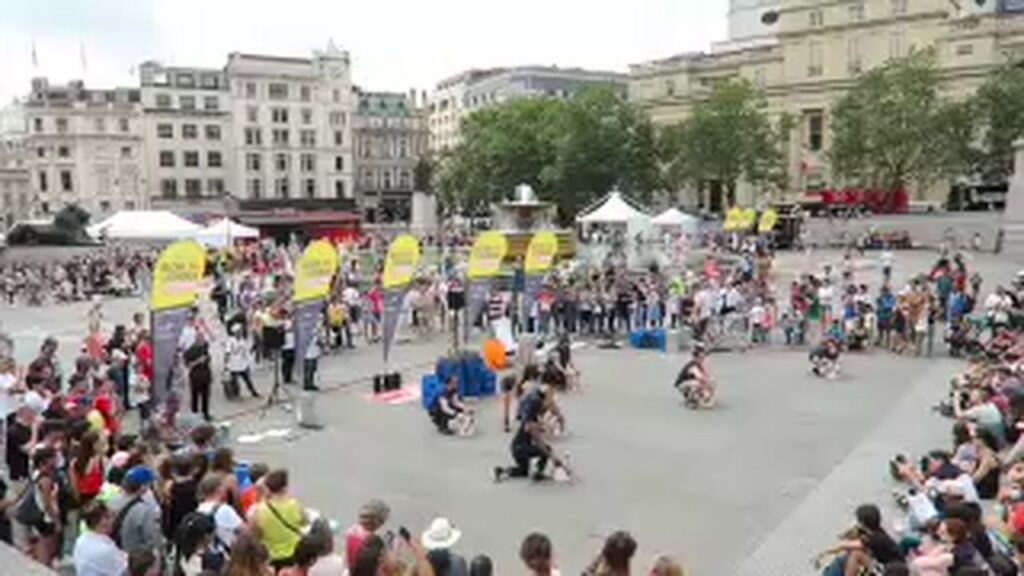
London’s street performers occupy an unusual place in the life of the city. They work in public, surrounded by passing crowds, traffic, shops and landmarks, with only a few moments to persuade someone to stop.
This Roberts London film, recorded in 2016, begins in Trafalgar Square during the Busk in London festival before moving through Covent Garden and the South Bank. It captures singers, musicians, theatrical performers and larger street shows, as well as some of the practical realities behind performing in public.
Busking in Trafalgar Square
The day begins beneath Nelson’s Column, where a temporary performance programme has brought buskers into Trafalgar Square itself.
Although performers could ordinarily be found near the National Gallery and elsewhere around the square, the festival created designated pitches within the main public space. A published schedule allowed musicians and other acts to perform before a changing audience of Londoners and visitors.
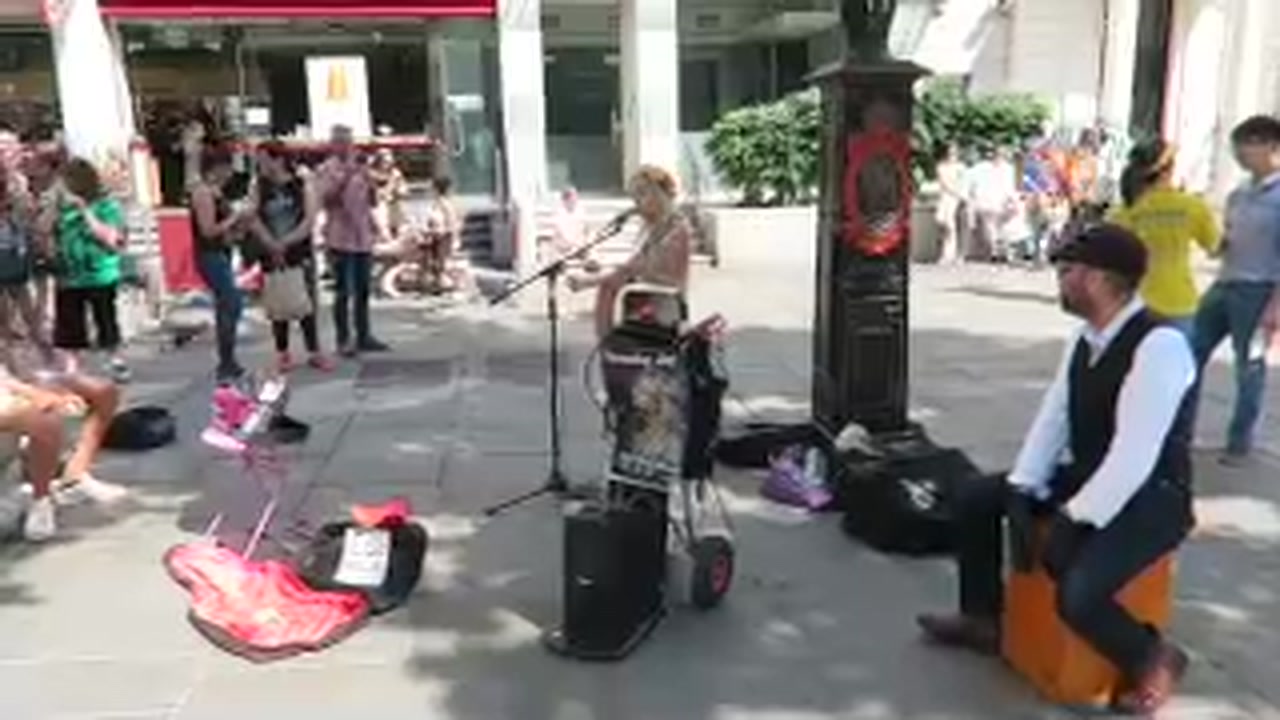
The first singer performs with a musician providing the rhythm beside her. It is a relatively simple arrangement, but one that demonstrates the immediacy of street performance: a voice, a public space and an audience assembled almost by accident.
Around the square are further pitches, a touring guitar bus and other festival activity. The event gives the ordinarily informal culture of busking a temporary structure without removing its essential unpredictability.
The performance spaces of Covent Garden
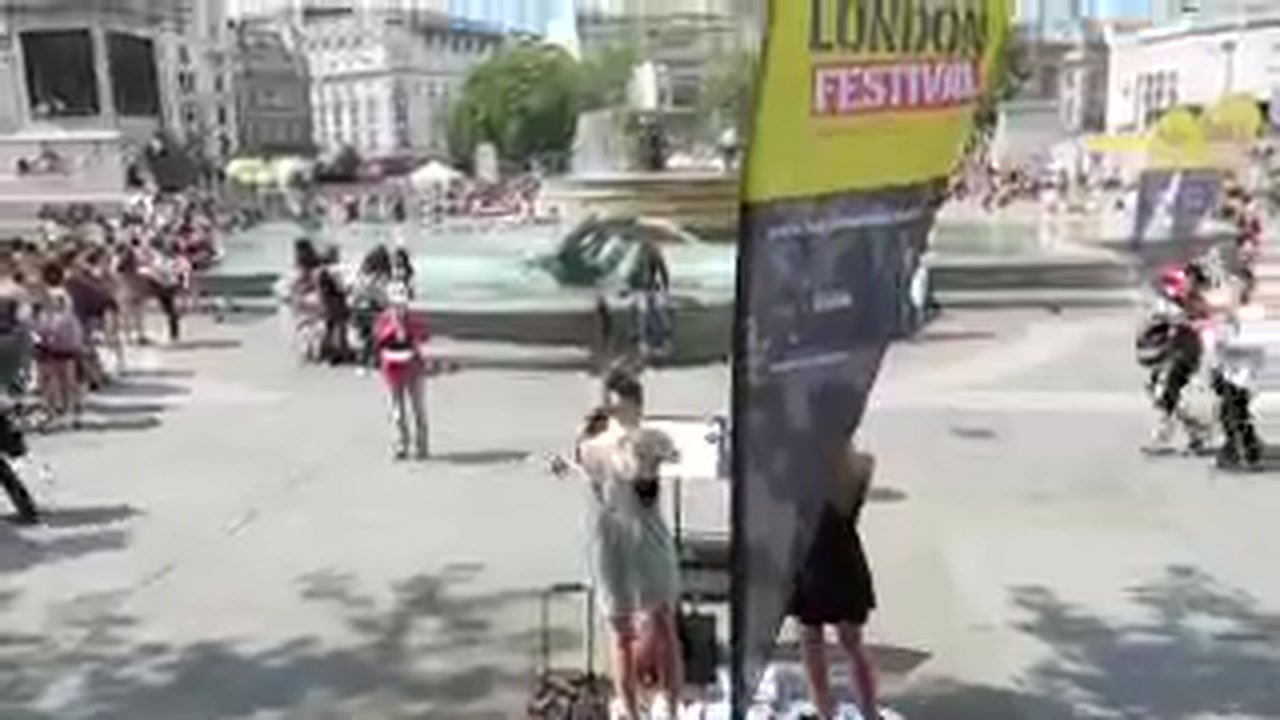
Covent Garden offers a different setting. Its established performance areas accommodate everything from individual musicians and magicians to elaborate theatrical routines.
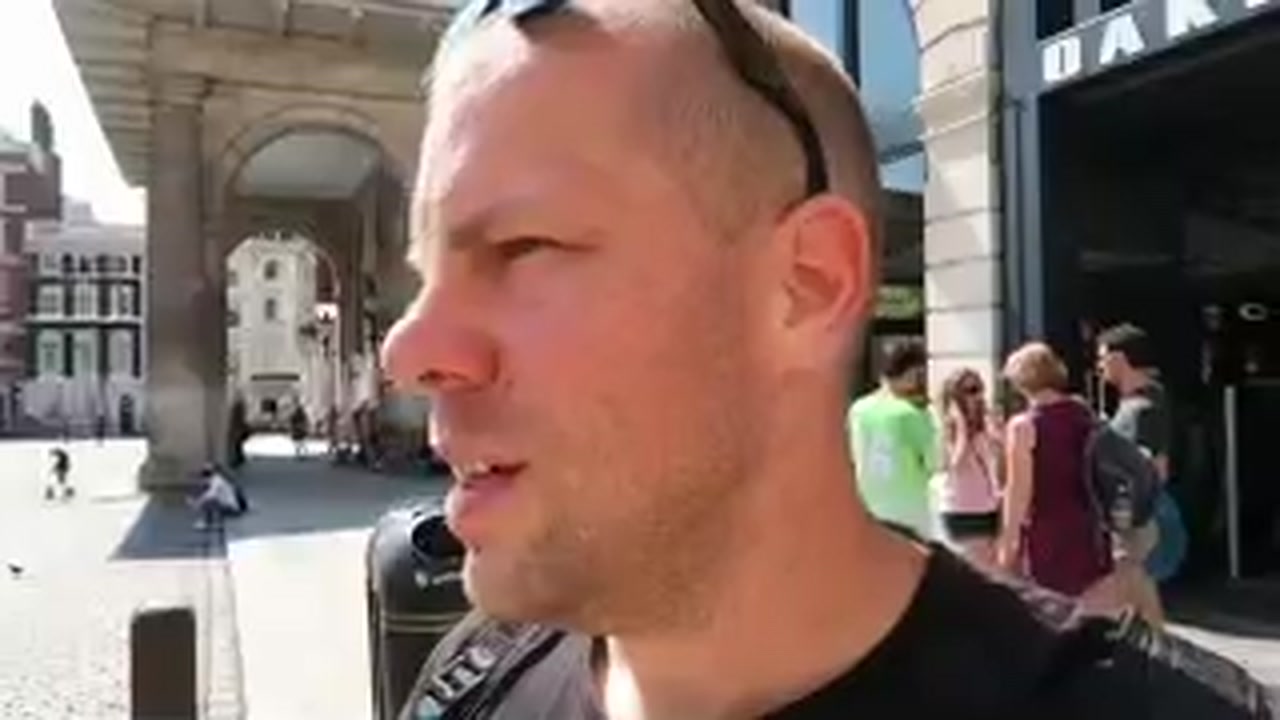
Outside St Paul’s Church, the larger shows have sufficient room to gather substantial crowds. These performances often depend upon audience participation, comedy and a carefully paced finale.
In the film, one performer recruits a visitor named Matthew from the crowd before building towards a juggling routine involving knives. The show is comic, theatrical and deliberately prolonged. Much of the performance lies not simply in the final stunt, but in the performer’s ability to hold the attention of a large and constantly changing audience.
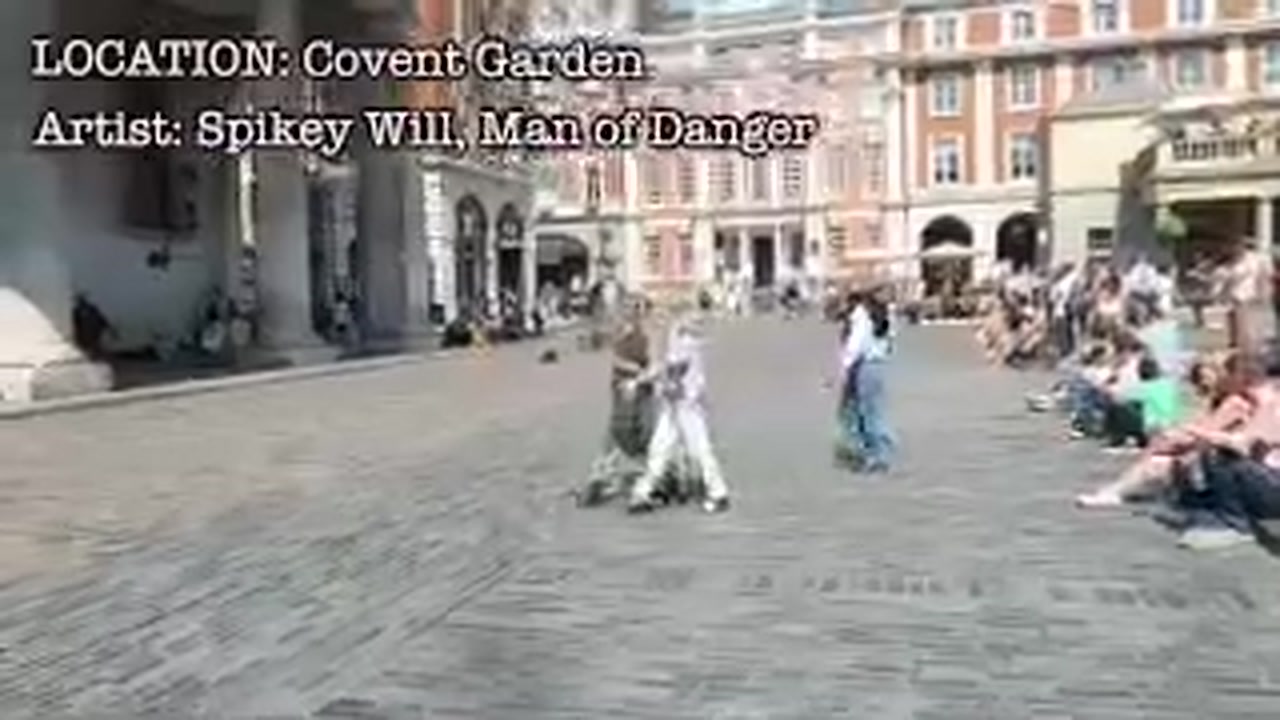
Elsewhere around the market buildings, smaller pitches support singers, musicians and magicians. Performers appear near James Street, the London Transport Museum and the restaurants surrounding the piazza.
Each corner has its own scale and atmosphere. Some acts invite people to stop for an extended show; others form part of the passing sound of Covent Garden.
Music beside the river
The South Bank provides another natural stage.
Its broad pedestrian route, river views and steady footfall have long made it a useful setting for public performance. In the film, musicians play with the London Eye and the Palace of Westminster visible across the Thames.
Unlike the formal pitches created for the Trafalgar Square festival, the South Bank feels more dispersed. Performances emerge along the route as part of a walk beside the river.
The film also records a violin duo in Trafalgar Square. Their name could not be established from the sign visible during the performance, and the original commentary deliberately leaves their identity unresolved. What remains is the performance itself and the crowd gathered to hear it.
STOMP beneath Nelson’s Column
The principal scheduled performance of the festival is an appearance by STOMP.
Introduced as a group that began in Brighton and had already performed internationally for 25 years, the company brings its familiar combination of movement, rhythm and percussion to Trafalgar Square.
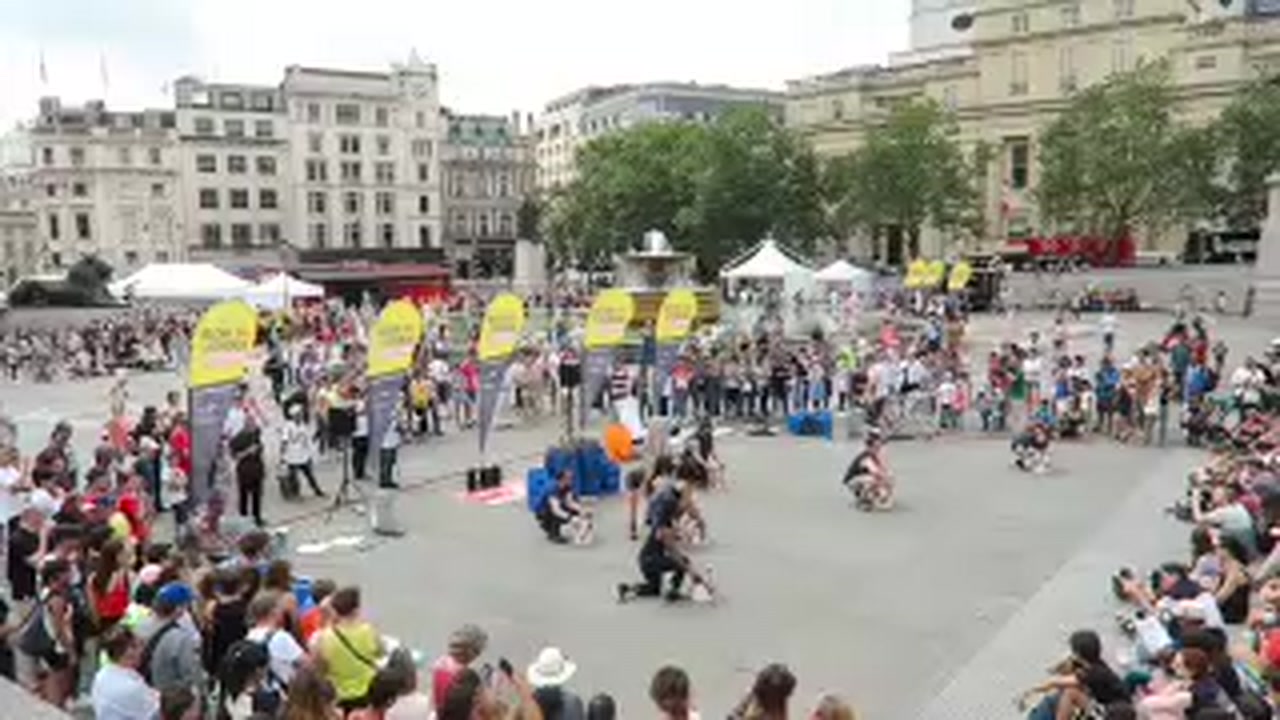
The performance uses brooms and everyday materials to create a tightly coordinated sequence of sound and movement. It changes the scale of the afternoon: what began with individual performers and small pitches becomes a substantial outdoor theatrical event.
The recording was made using a compact camera without separate audio equipment, so it cannot reproduce the full physical impact of the performance. It nevertheless preserves the unusual sight of STOMP performing in the open air beneath Nelson’s Column.
A public stage and a place of work
The film repeatedly returns to the idea that busking is not merely incidental entertainment. For many performers, the street is a place of work.
A successful performance requires practice, confidence and the ability to engage people who did not arrive expecting to become an audience. Voluntary contributions provide an immediate form of payment, while the exposure can also lead to private events, corporate work, weddings and other professional engagements.
Regular performers often return to recognisable pitches. Someone who spends enough time walking through central London begins to recognise both the performers and the particular corners they favour.
The film was made in 2016, and its references to permits, transport schemes and official busking arrangements describe the position encountered at that time. Anyone planning to perform in London today should consult the current rules for the relevant borough, station or managed public space.
Different lives on the same streets
Towards the end, the film moves beyond the festival and considers the distinction between performance, begging and homelessness.
It does not find a simple dividing line. Skilled performers may deliberately choose the street as a stage and professional platform, while other people arrive there through far more difficult circumstances. Between them are individuals whose position cannot be understood from a brief encounter.
This more complicated view sits alongside the music and theatre. London’s streets can offer spectacle and opportunity, but they also expose hardship that is easily overlooked when the city is presented only as entertainment.
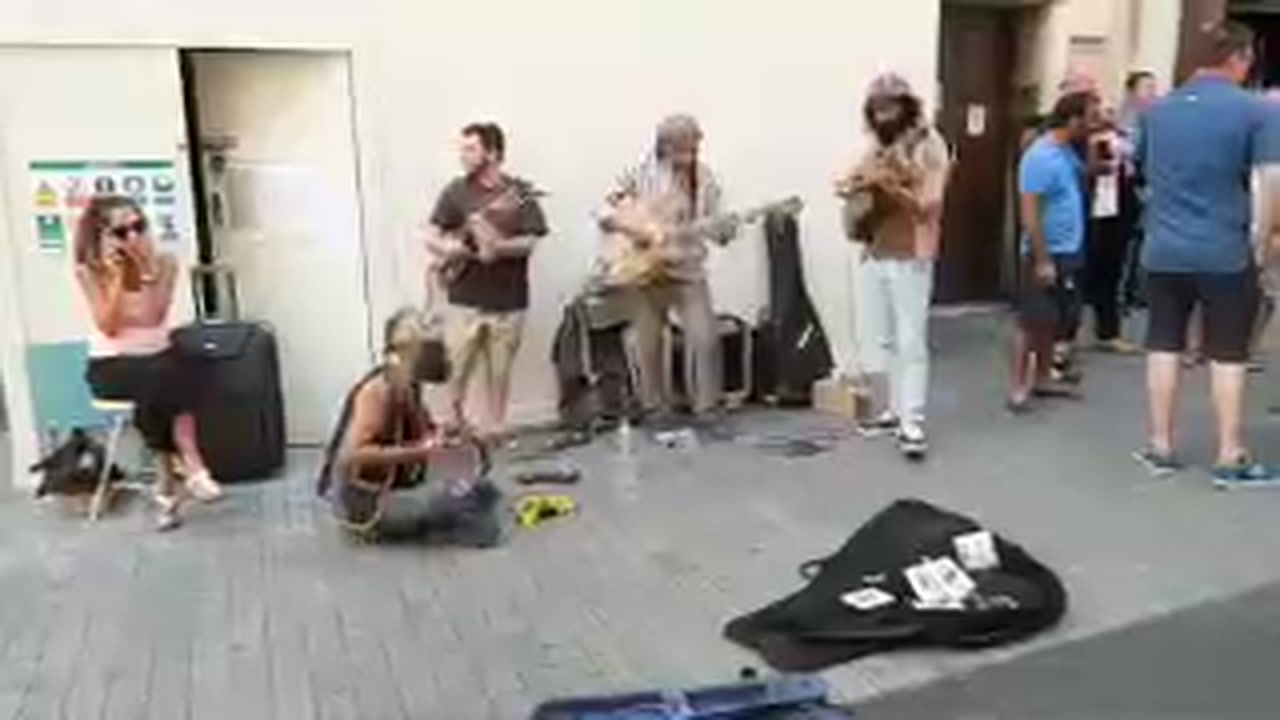
The film ends outside a pub with another live performance. It is an appropriately informal conclusion: music encountered while walking, an audience gathered on the pavement and another small part of London temporarily turned into a stage.
Adapted from the Roberts London film:
Best London Buskers Busking and Amazing Street Performers Performing at Busk in London
Roberts London, published 6 August 2016.
Watch the original film on YouTube
