Oxford Street’s Christmas lights are the destination, but this November 2015 film begins with a different kind of London light. Inspired by Charles Dickens and A Christmas Carol, I walk through St James’s Park before heading to the bright shopfronts, decorated windows and busy pavements of Oxford Street.
Originally published on 10 November 2015, the film moves between Christmas past, present and yet to come. Alongside the festive spectacle, it asks what the season of giving means for people sleeping on London’s streets.
A Christmas Carol and a London evening
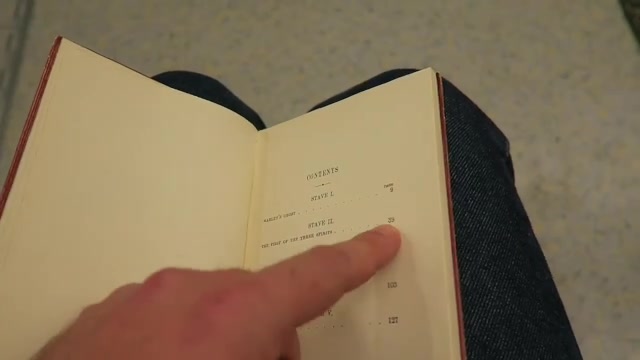
A spell of thick fog had delayed my first look at the lights. It also suggested a starting point: the dark London of Dickens’s novels, and the Christmas story I had loved as a child. Before leaving, I show a copy of A Christmas Carol and talk about Scrooge’s transformation.
For me, the story brings together Christmas, London, poverty and second chances. That gives the walk a purpose beyond recording the decorations. The changing light becomes a way of moving between the past and the present, while the final part looks towards what might change in the future.
Gas lamps in St James’s Park
I leave the Tube early to take a walk through St James’s Park. Away from the brighter roads, the lamps create a softer glow and the paths become noticeably darker. In the commentary I describe hearing footsteps and voices before being able to see the people approaching.
The camera pauses on a lamp before continuing towards the bridge across the lake. There, brighter electric lighting makes the contrast particularly clear. The film also takes in distant illuminated views of Buckingham Palace and the London Eye.
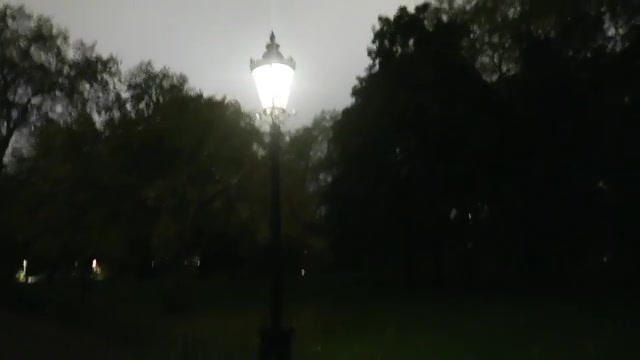
This section is an impression of the city after dark rather than a reconstruction of Victorian London. It is the atmosphere that makes the connection with Dickens: small pools of light, shadowed paths and a quieter pace before the bustle of the shopping streets. As rain begins, I decide to catch a bus to Oxford Circus.
Oxford Street Christmas lights in 2015
At Oxford Circus, the mood changes. Hanging lights stretch above the road, red buses pass through the frame and shoppers fill the pavements. The film then becomes a long visual walk through the decorations, letting the music and street scenes carry much of the middle section.
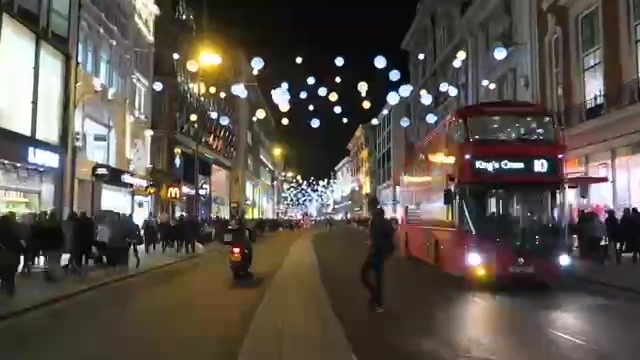
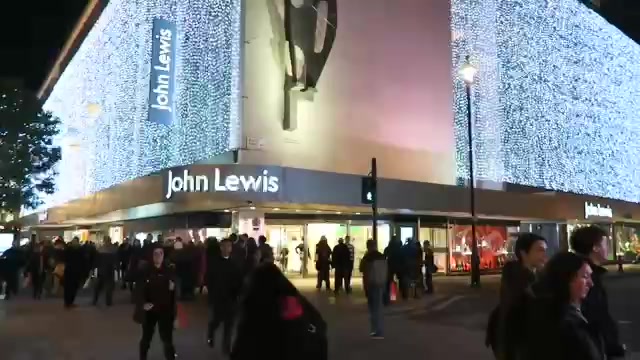
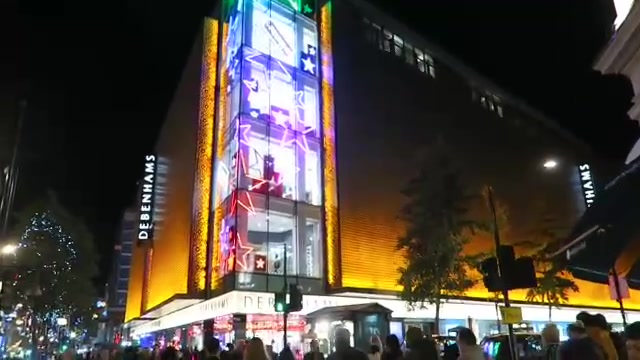
There is plenty to see above eye level as well as behind the glass. John Lewis is covered in white light, while the Debenhams frontage glows in warm colours. These are shopfronts recorded as they appeared in November 2015, making the footage a snapshot of Oxford Street at that moment.
Christmas windows and department-store displays
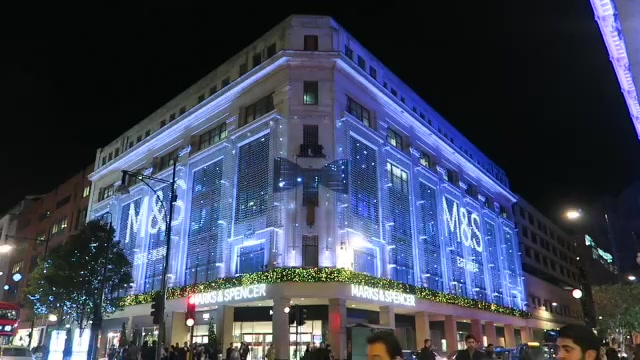
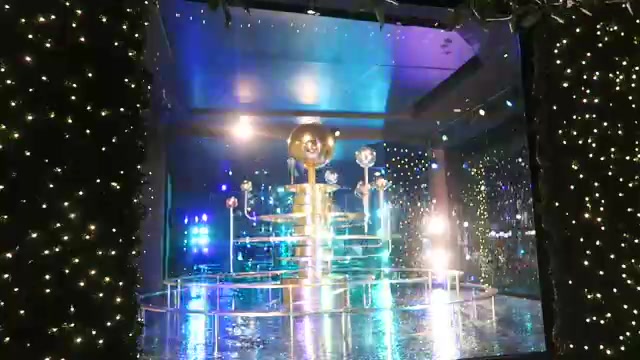
The route continues past decorated department stores and colourful window scenes. Marks & Spencer’s blue-lit exterior stands out among the changing colours, while illuminated foliage and reflective display surfaces draw the camera closer to individual windows.
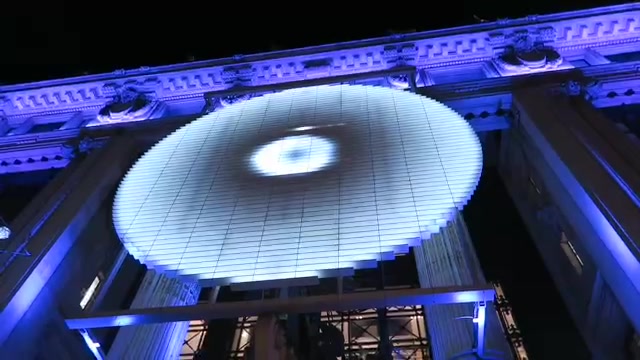
Selfridges provides another striking view, with a large circular installation above the entrance and blue light across the building. The pleasure of this part of the film is in moving between details and the wider street: a display behind glass, then the traffic, crowds and lights around it.
Christmas yet to come
The closing section returns to the question raised at the start. After the lights and shopping, I reflect on homelessness and the people who remain on the streets around these busy destinations.
Outside St Martin-in-the-Fields, I introduce its Christmas appeal and ask viewers to consider helping, or to share the film if they cannot give. That appeal belongs to the original 2015 video, but the message is central to the story: enjoying London at Christmas can sit alongside paying attention to people who need support.
For another evening among that season’s department-store displays, see my Harrods Christmas 2015 walk.
