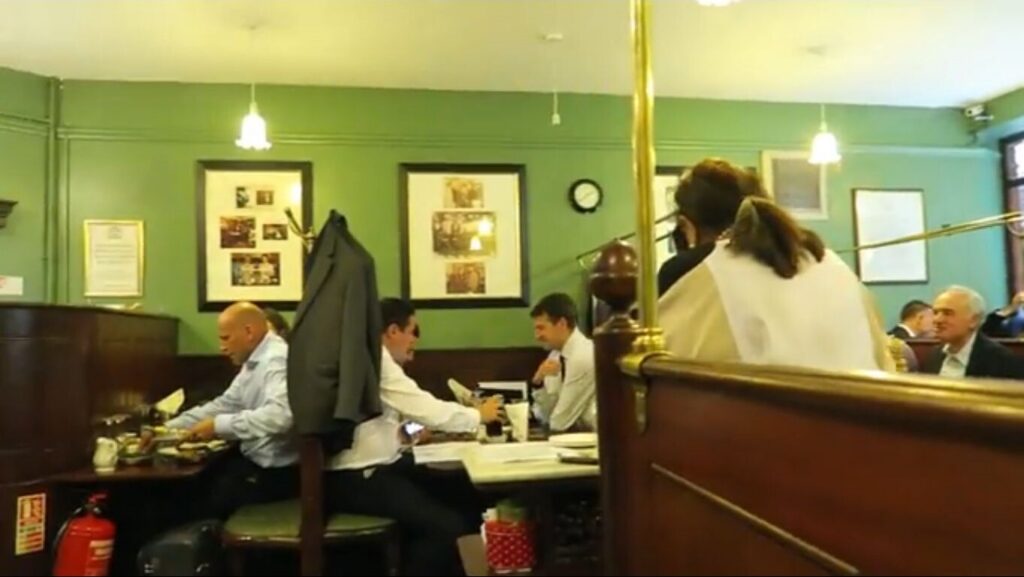
Hidden behind a narrow passage off Cornhill, Simpson’s Tavern was one of the City of London’s great lunchtime institutions. This Roberts London film records a Friday visit in October 2016: a walk through the City, a search for the almost concealed entrance at 38½ Cornhill, and a traditional roast lunch inside the tavern’s crowded dining room.
The film has acquired a second life as a record of place. Simpson’s closed in 2022, after more than two and a half centuries of association with Ball Court. The historic rooms have since returned to use under a new name, making this archive visit a view of both a vanished restaurant and a surviving London tradition.
Finding 38½ Cornhill
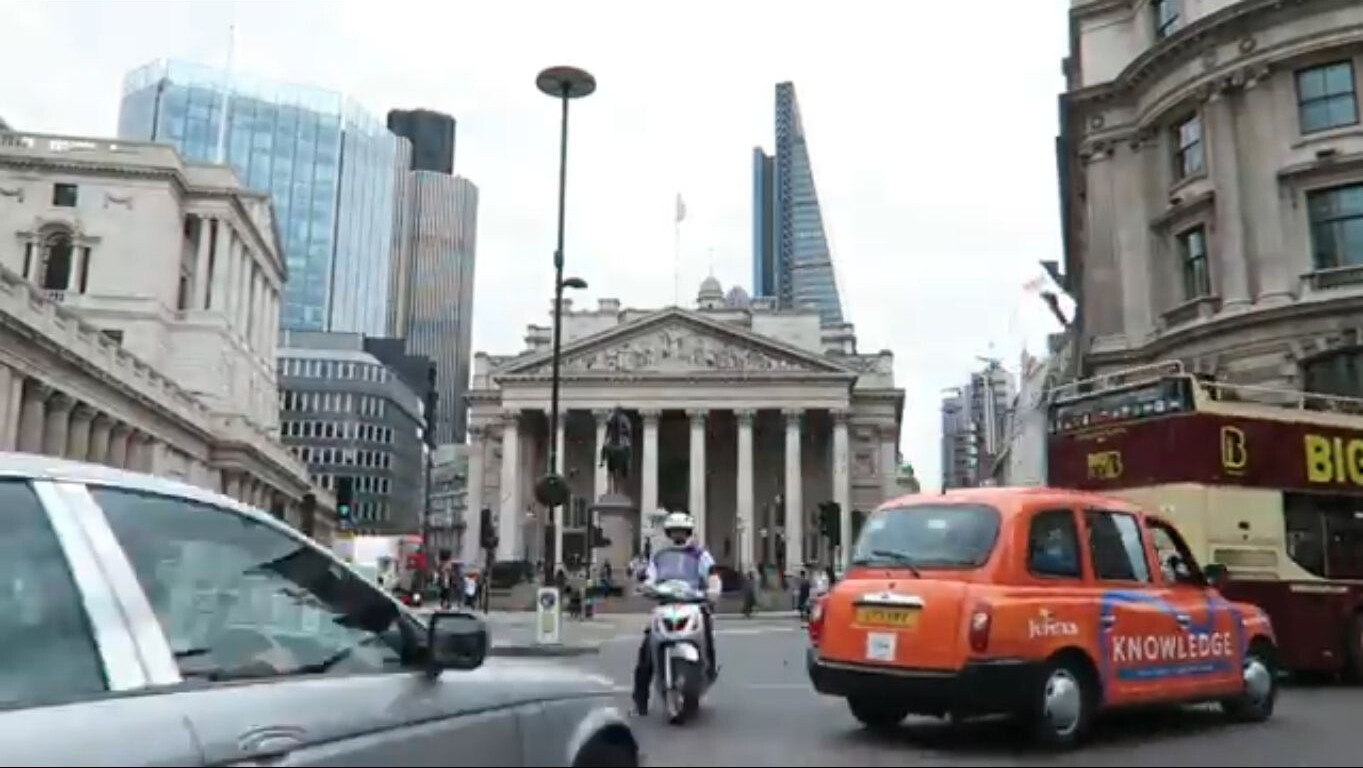
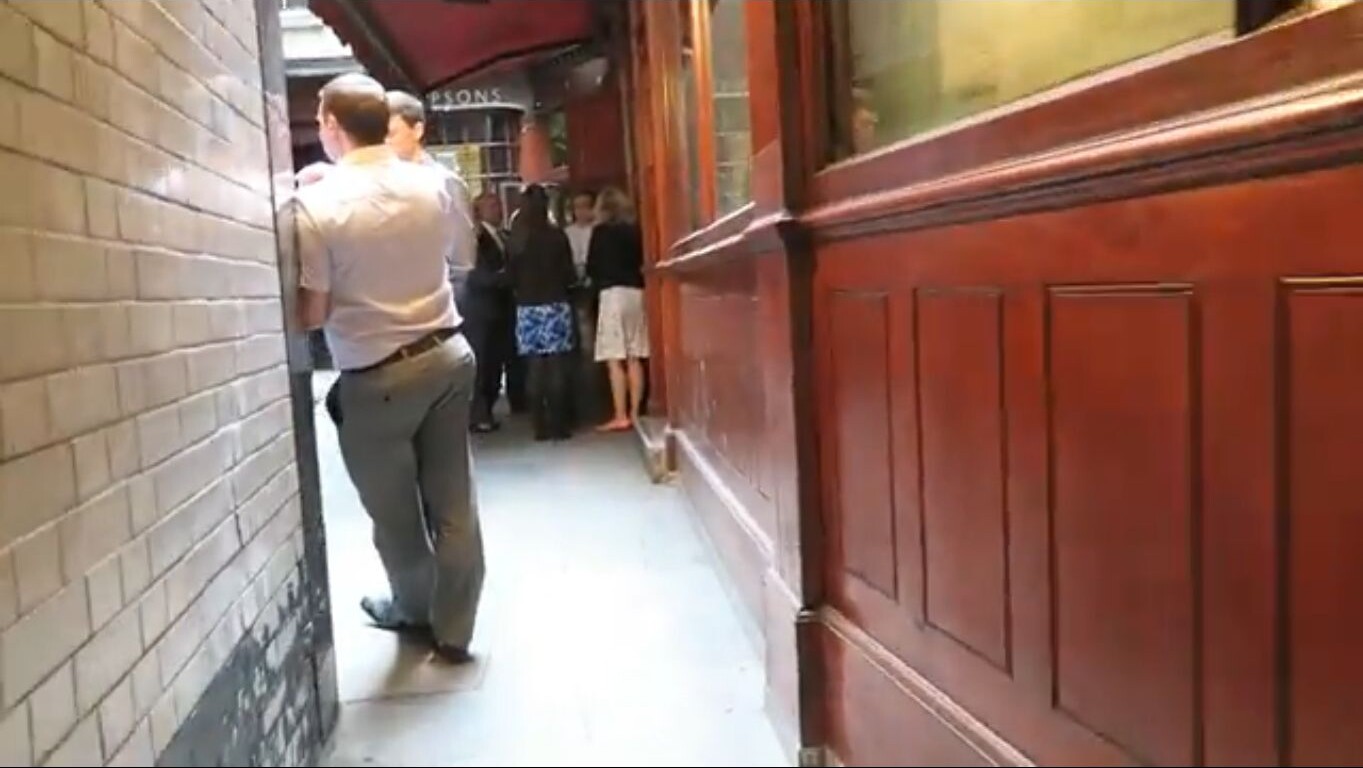
Part of the pleasure was finding it. The route in the film crosses the working City around the Royal Exchange before turning into the tight passage leading from Cornhill to Ball Court. The shift is immediate: traffic, stone façades and open streets give way to a slim corridor lined with brick and dark-red timber.
At the end, the curved Simpson’s frontage appears almost as if it belongs to a private club. That hidden approach helped make the tavern feel distinct from a conventional high-street restaurant. It was embedded in the alleys, routines and working hours of the Square Mile.
A City chophouse since 1757
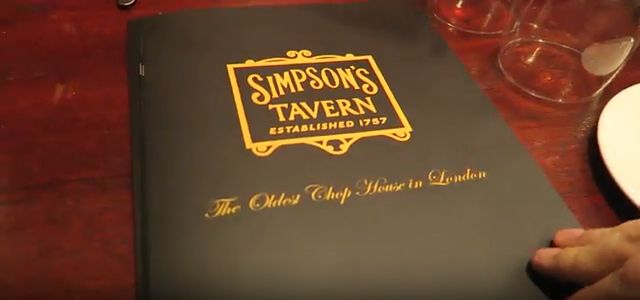
Simpson’s traced its history to 1757 and described itself as London’s oldest chophouse. Its premises form part of a Grade II-listed group recorded by Historic England, incorporating 38½ Cornhill and buildings in the adjoining court. The list entry describes early eighteenth-century, or possibly late seventeenth-century, houses with a later shopfront and a passage into Ball Court.
The interior expressed the social character of the City chophouse more clearly than any date. Diners sat close together in timber compartments, with high backs, brass rails and very little wasted space. Jackets hung beside the tables; conversation carried across the room; lunch felt communal even when each party had arrived separately.
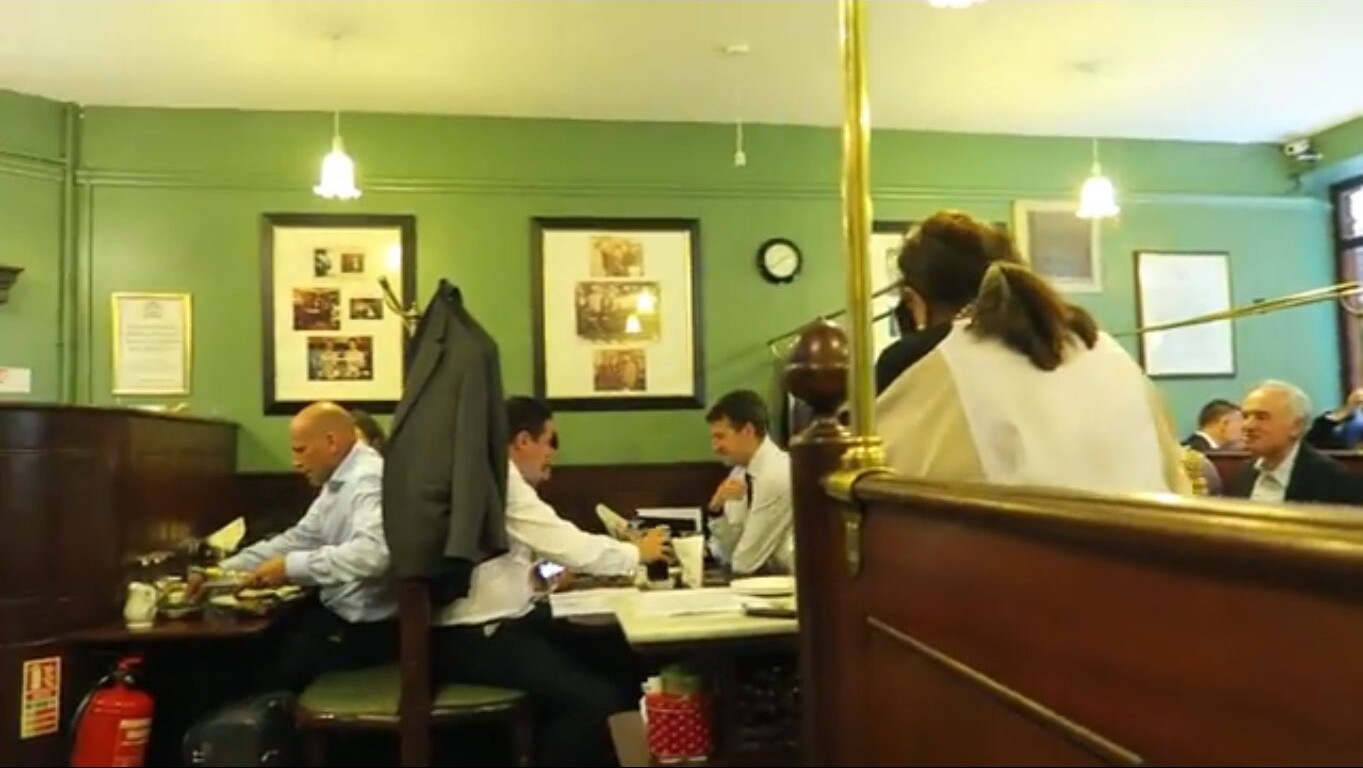
It was formal enough to belong to the City and informal enough to feel lived in. The attraction was not theatrical nostalgia. It was the sense that the room still served the purpose for which it had evolved: feeding people well during a working day.
Roast beef on a Friday
Barry arrives expecting a traditional lunch and finds what he calls a Sunday roast on a Friday. The plate is emphatically British: roast beef, gravy, potatoes and a large Yorkshire pudding, served without the fuss of a tasting menu or a carefully staged dining room.
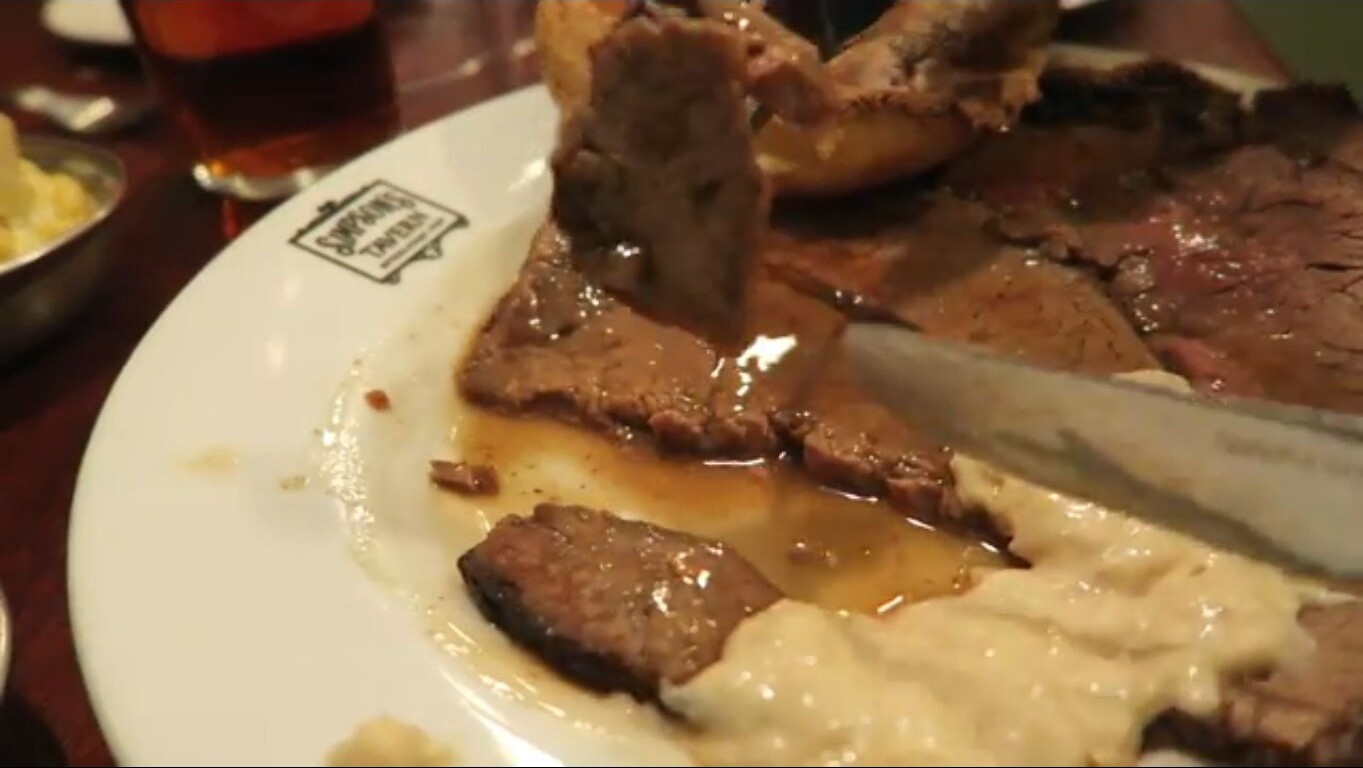
The camera stays close to the practical details—the table settings, condiments, carving and generous portions—while the busy room continues around it. That ordinary movement is what gives the film its value now. It captures Simpson’s as a functioning City restaurant rather than as an empty heritage interior.
Closure, protection and a new chapter
Simpson’s Tavern closed in October 2022 during a dispute over rent. In December that year, the City of London Corporation designated it an Asset of Community Value, recognising the importance of the restaurant and giving the community an opportunity to bid if the property were sold.
The rooms did not remain silent. Following restoration, the former tavern reopened in 2026 as Cloth Cornhill. The current restaurant occupies the same 38½ Cornhill address and retains a weekday rhythm, with separate pub and restaurant hours. The Simpson’s name has gone, but the renewed operation continues to acknowledge the site’s chophouse inheritance.
That continuity makes the 2016 film especially useful. It shows the arrangement, atmosphere and pace of the old Simpson’s before closure, while the building itself has found a viable new hospitality life. London changes most convincingly when the old fabric is not simply preserved behind glass, but returned to use.
For another Roberts London visit to a historic pub hidden down one of the capital’s passages, see Ye Olde Mitre: Hatton Garden’s Hidden Historic Pub.
Filmed and first published by Barry Roberts on 1 October 2016.

Recent Comments