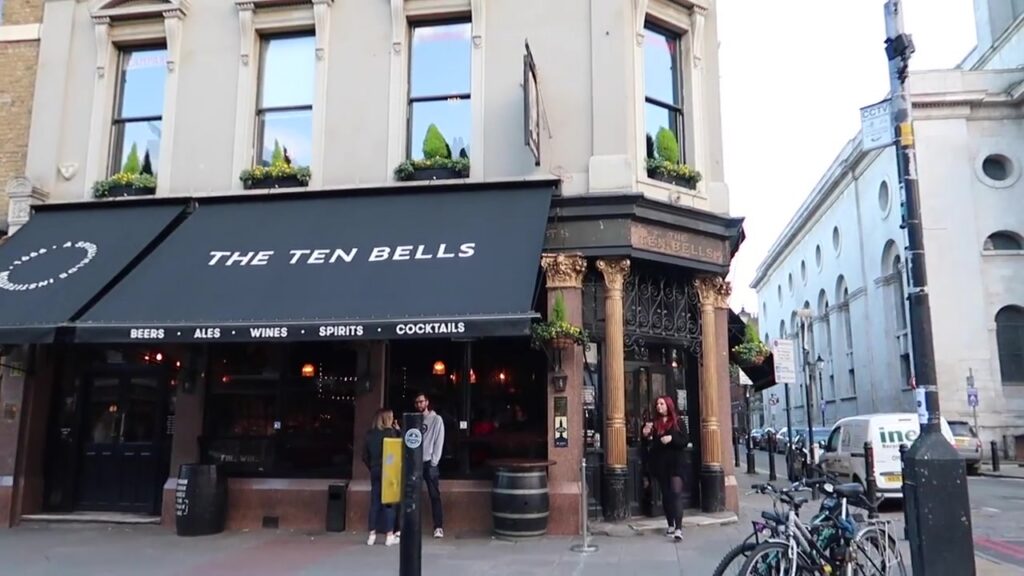
On Halloween 2017, Barry visited one of the East End’s most recognisable pubs: the Ten Bells on Commercial Street. Standing beside Christ Church Spitalfields, it occupies a corner woven into the history and mythology of Whitechapel. Its name is familiar far beyond London, partly because of its much-repeated association with the Jack the Ripper story, but the short film also reveals a handsome historic interior and a busy neighbourhood pub.
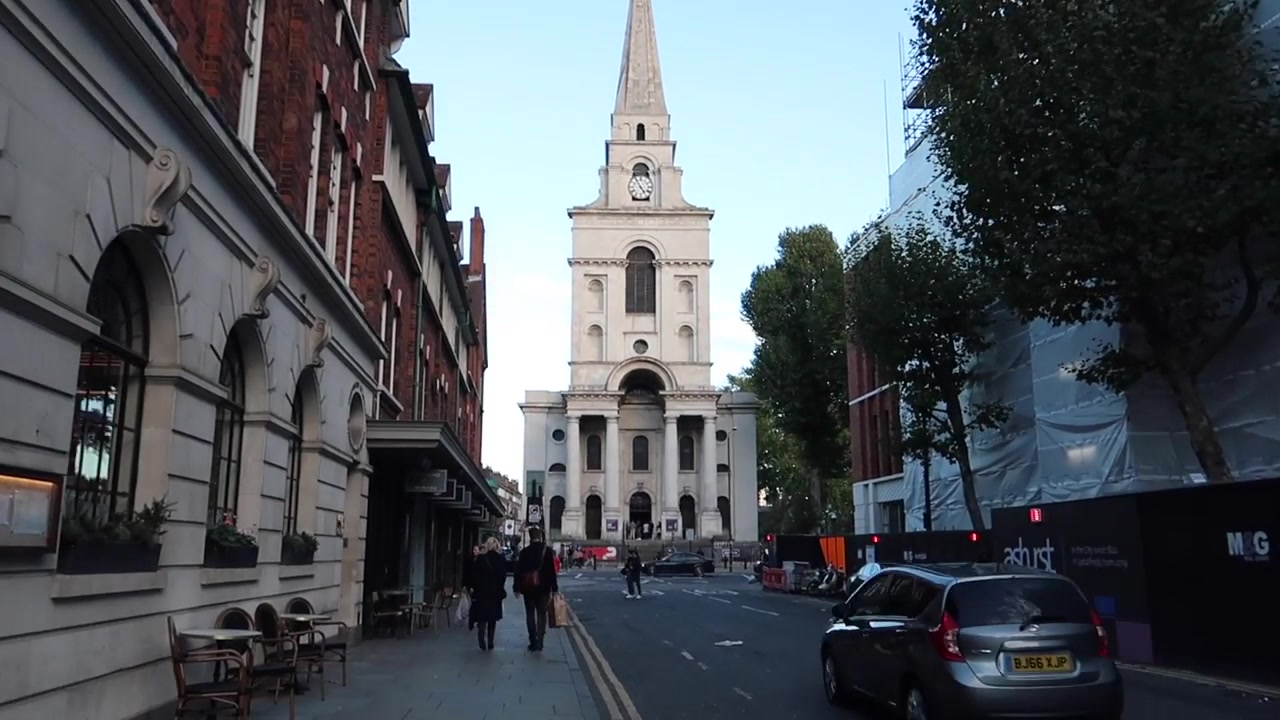
A landmark beside Christ Church
The film begins with the tower of Nicholas Hawksmoor’s Christ Church dominating the street. This is the setting that makes the Ten Bells so immediately identifiable. Commercial Street runs through an area shaped by markets, migration, worship, work and nightlife, while the pub sits directly opposite the church at the edge of Spitalfields.
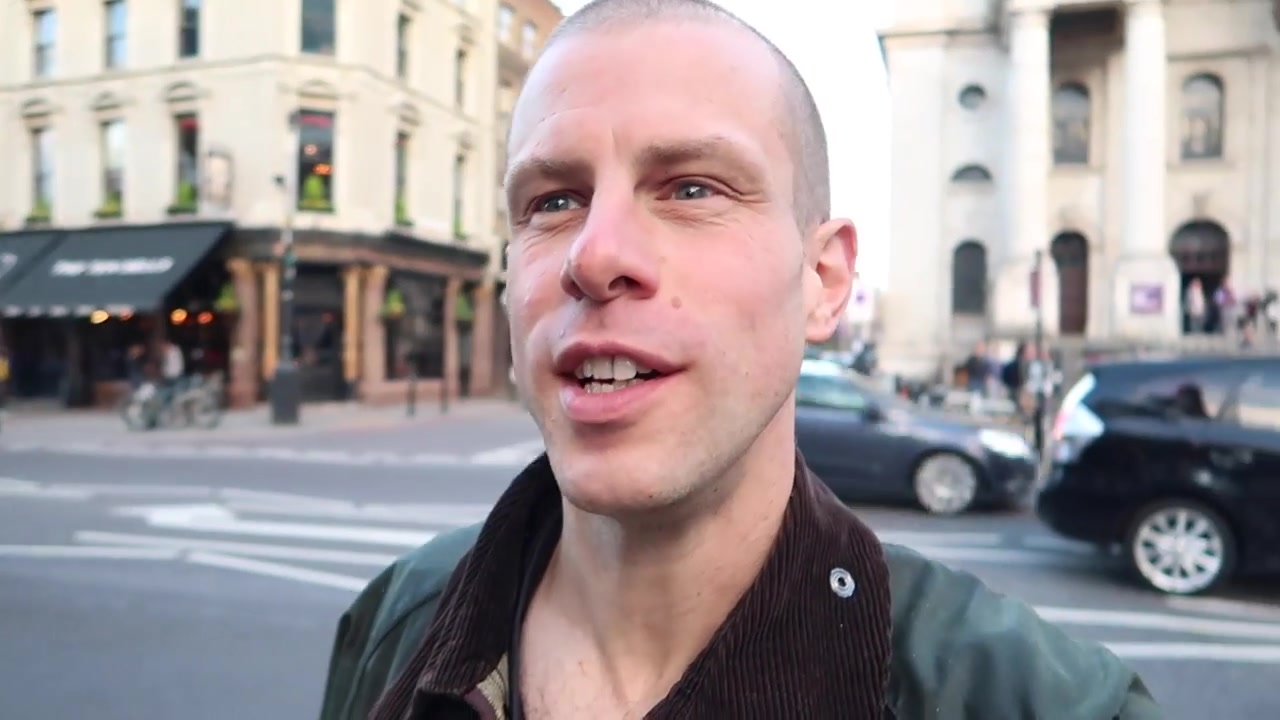
Barry approaches on foot, introducing the destination against the movement of everyday Whitechapel. Cars pass, pedestrians cross the junction and the pub’s black awnings appear behind him. It is a compact opening, but it establishes how close together the district’s landmarks are.
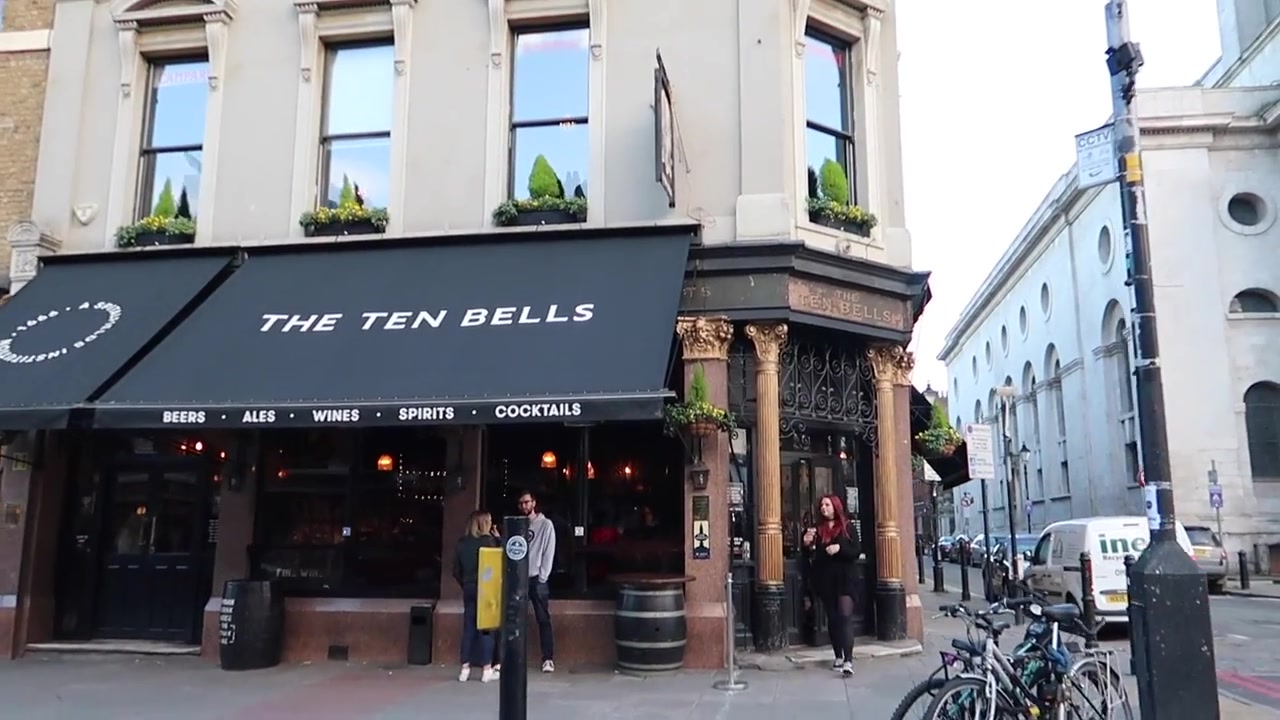
The pub traces its history to the eighteenth century, although its name and premises have changed during that long life. The present building’s corner frontage, decorative columns and large windows give it a theatrical presence beneath the pale bulk of Christ Church.
Inside the Ten Bells
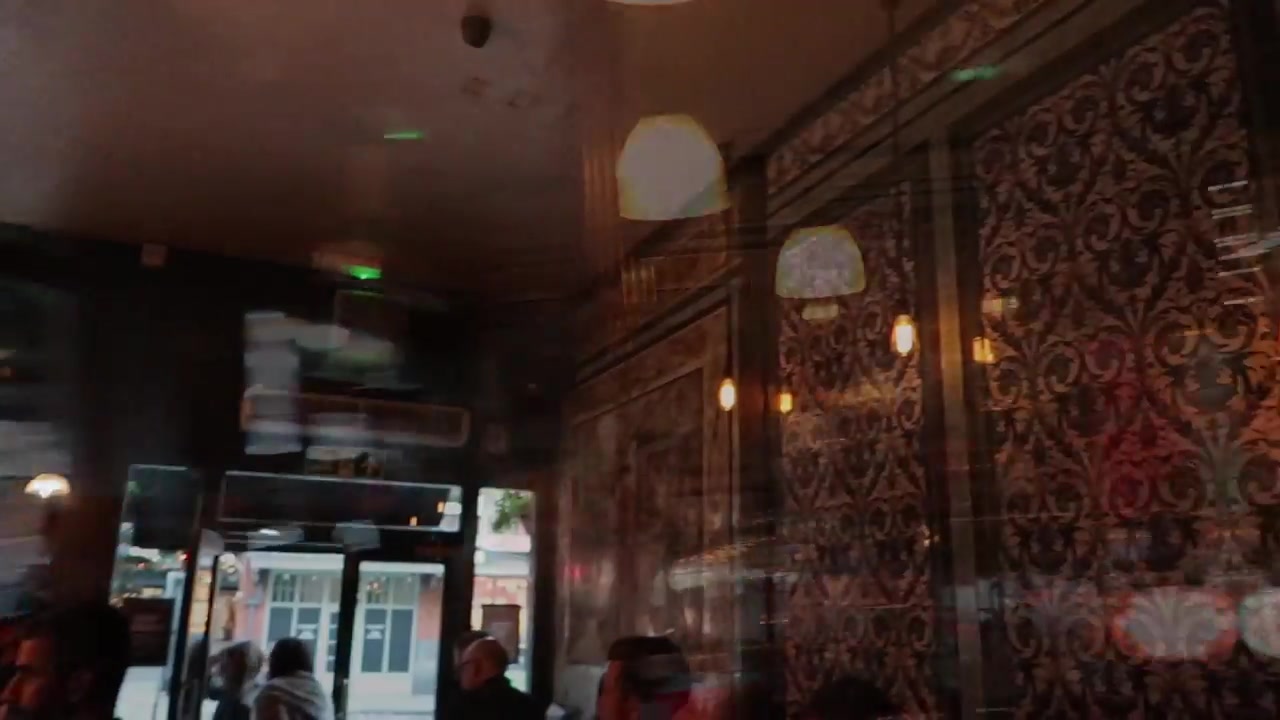
The most memorable feature inside is the richly patterned wall tiling. Dark red, cream and green details run around the room, catching reflections from the lights and windows. These late-Victorian tiles give the pub much of its character and survive as more than decoration: they connect the lively modern bar with the commercial interiors of an earlier East End.
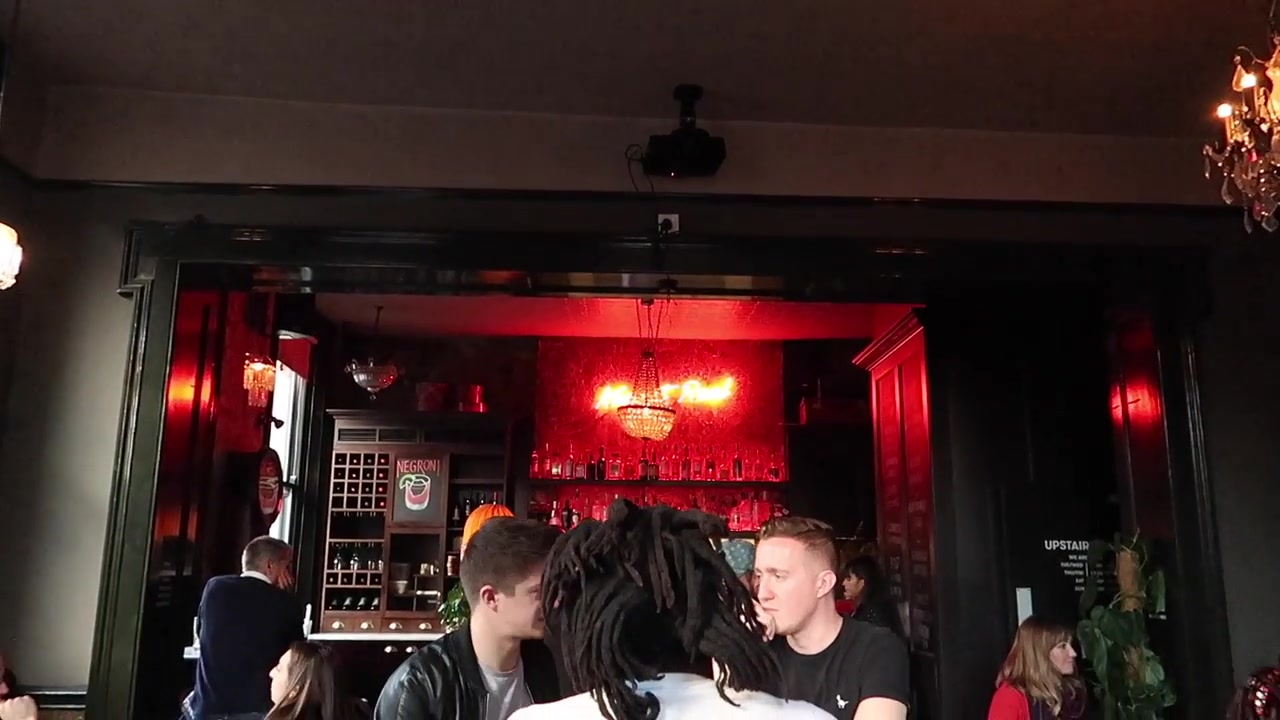
The camera then turns towards the bar. Warm red light, hanging lamps, mirrors and closely packed tables create an intimate atmosphere. This is not presented as an empty museum. Customers are talking and drinking while staff work behind the counter, and the historic fabric remains part of a functioning public house.
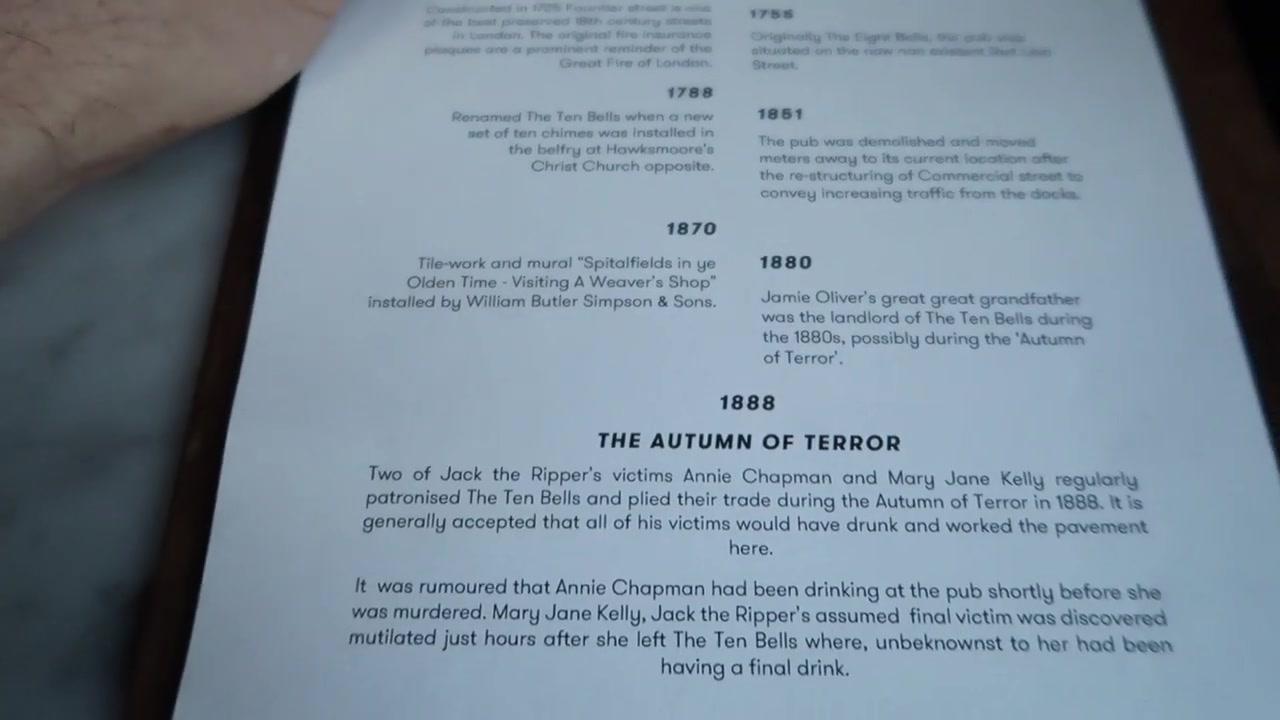
An upstairs menu and a printed history display provide Barry with a quick route through the pub’s past. The display records changes of name and alterations to the building, while also acknowledging the story for which many visitors know the Ten Bells.
The Whitechapel murders and later folklore
The Ten Bells is regularly included in accounts and walking tours of the 1888 Whitechapel murders. Two victims, Annie Chapman and Mary Jane Kelly, are often linked with the pub in popular retellings. Those associations have helped turn the building into a destination for visitors interested in the case.
It is important, though, to separate association from certainty. Much of the surviving story is built from incomplete records, later recollections and repetition. The crimes remain unsolved, and claims that specific victims regularly drank here—or that particular events happened inside—should not be treated as firmly established simply because they have become familiar.
The same caution applies to the Ten Bells’ reputation as a haunted pub. Tales of apparitions, unexplained noises and an oppressive upstairs atmosphere belong to its modern folklore. They add to the pub’s mystique, especially on Halloween, but they are stories rather than verifiable history.
A short visit with a long sense of place
At just over four minutes, Barry’s 2017 film is a brief visit rather than a full investigation. Its strength is the way it moves from the street into the pub: Hawksmoor’s church, Commercial Street, the corner façade, the tiled walls and the glowing bar all appear in quick succession.
The Ten Bells endures because it brings several versions of London together. It is an architectural survivor, a working local pub, a stop on the visitor trail and a setting onto which generations have projected stories about Victorian Whitechapel. The film preserves that mixture as it looked on 31 October 2017—atmospheric enough for Halloween, but grounded in the ordinary life of a busy East End bar.
