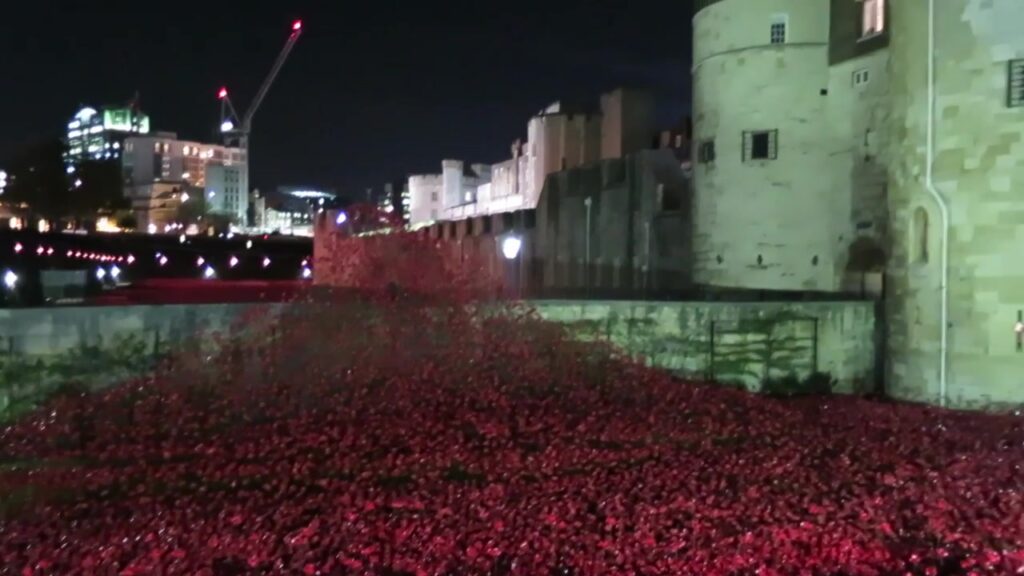
The Tower of London poppies in 2014 transformed the moat into a red field of remembrance. This Roberts London film visits after dark, when floodlit walls rise above the ceramic flowers and crowds gather along the railings.
First published on 8 November 2014, the film records Blood Swept Lands and Seas of Red nearing completion in the days before Armistice Day.
The poppy-filled moat at night
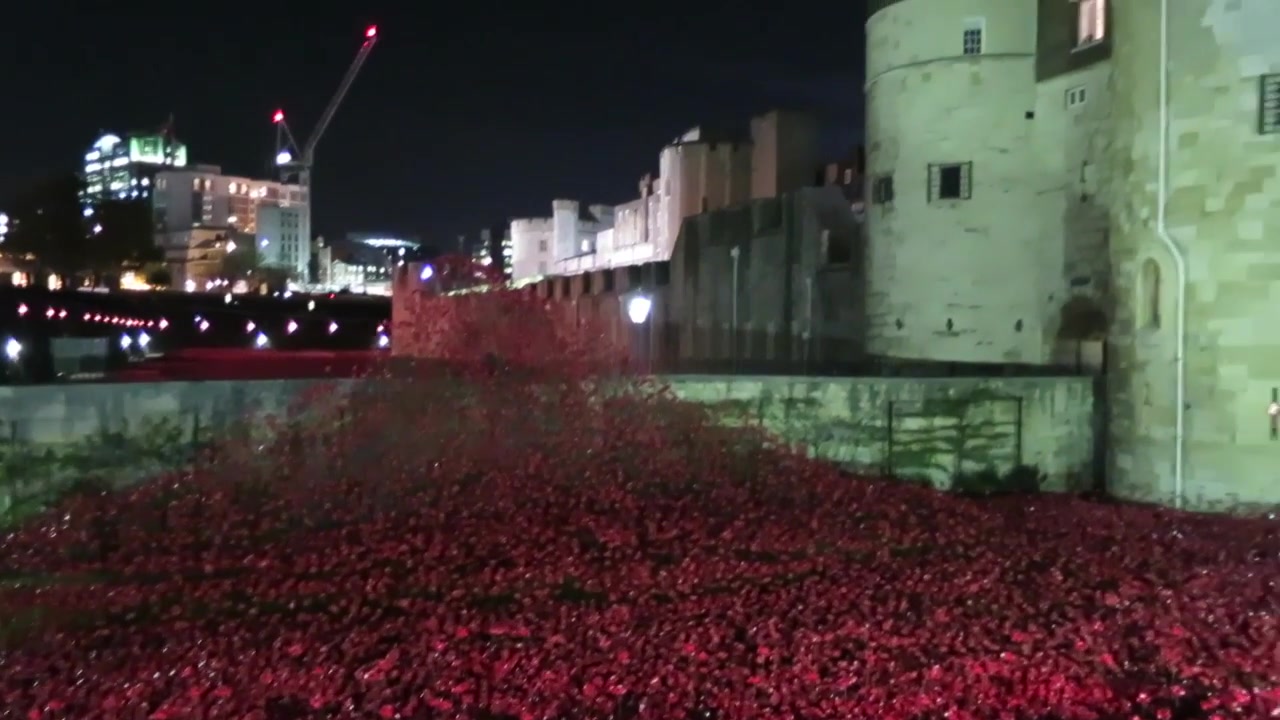
The first views look down into a moat filled with red ceramic flowers. Above them, the Tower’s stonework stands out against the black sky. The floodlights pick out both the individual poppies near the camera and the much larger field extending around the walls.
Seeing the installation after dark gives the visit its particular character. The red flowers, pale towers and deep shadows occupy different layers of the picture, while the lights of the surrounding city remain visible beyond the historic buildings.
Blood Swept Lands and Seas of Red
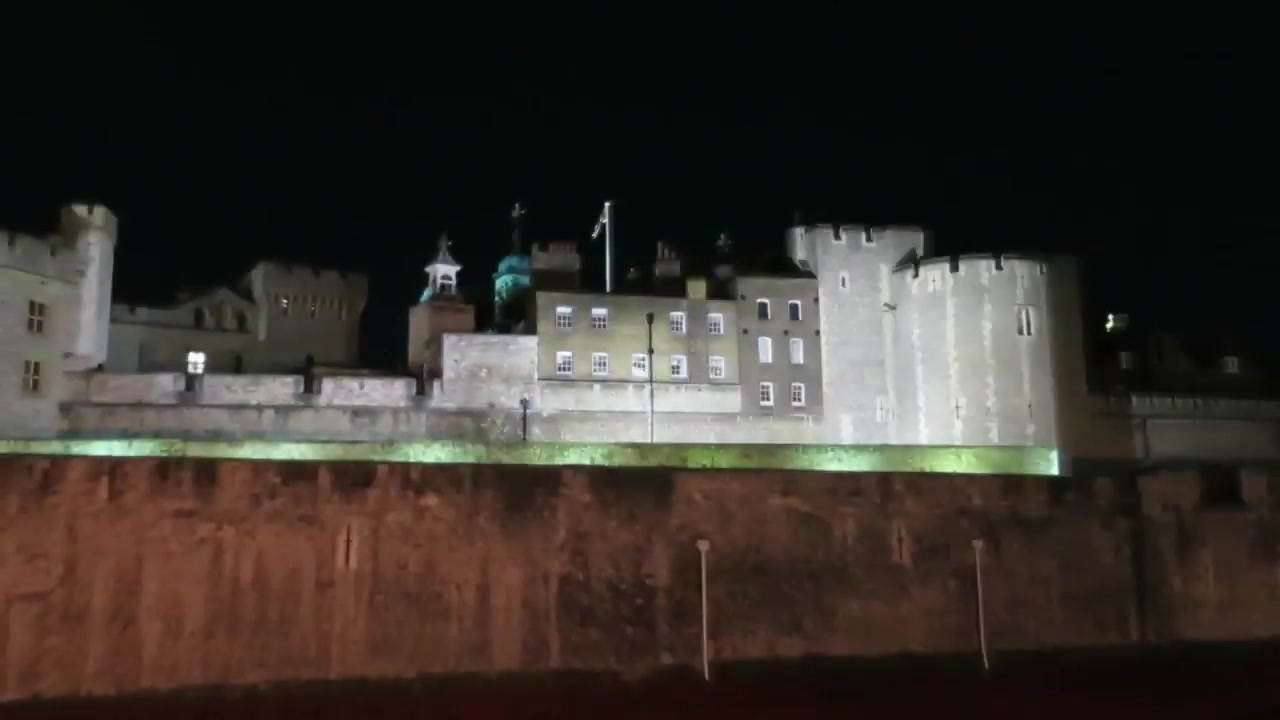
The installation was called Blood Swept Lands and Seas of Red, created by ceramic artist Paul Cummins with designer Tom Piper. It marked the centenary of the First World War, gradually filling the moat between July and November 2014.
Historic Royal Palaces records a total of 888,246 ceramic poppies, each representing a British military fatality during the war. The final poppy was planted on 11 November. This film, first published three days earlier, captures the display as it neared completion.
A red field beneath the walls
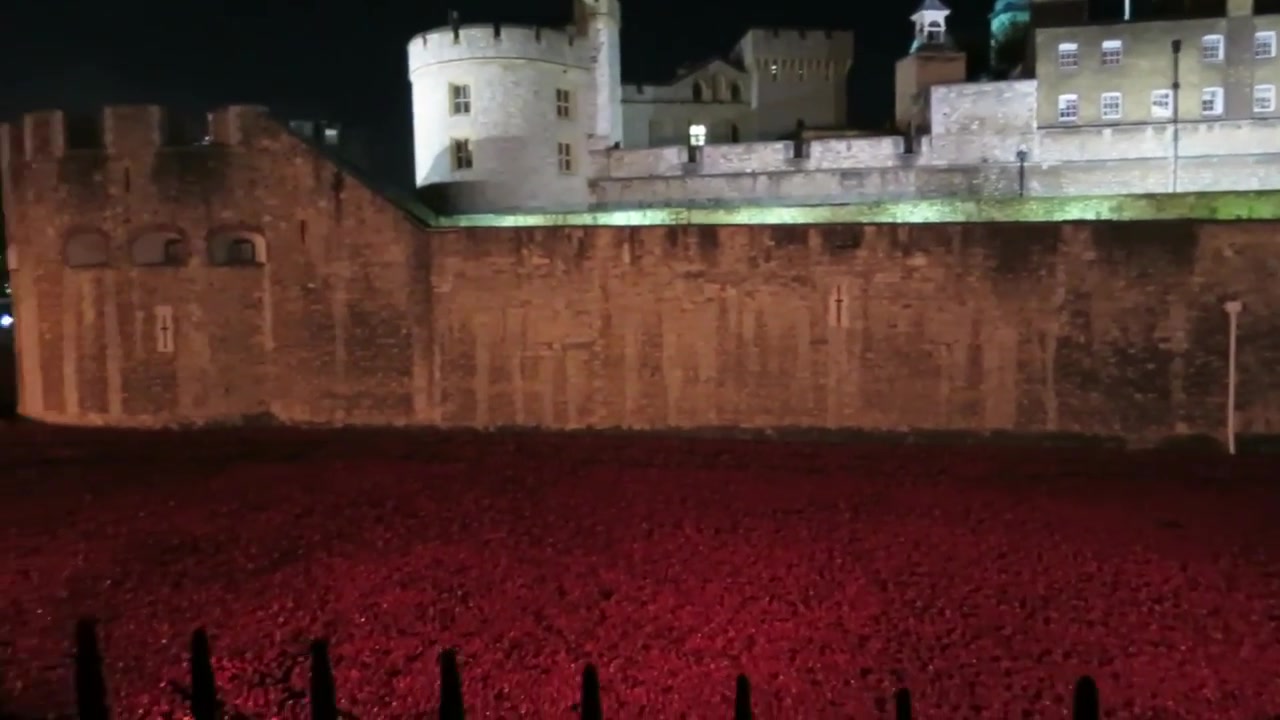
From further along the route, the flowers form a broad red field beneath the Tower. The camera moves between wide views of the buildings and shots in which the poppies occupy most of the foreground. Railings occasionally cross the bottom of the picture.
The scale is difficult to take in at once. A closer view reveals separate flowers and stems; a wider one makes them appear almost continuous. The long walls provide a fixed backdrop as the view changes around the moat.
Crowds along the railings
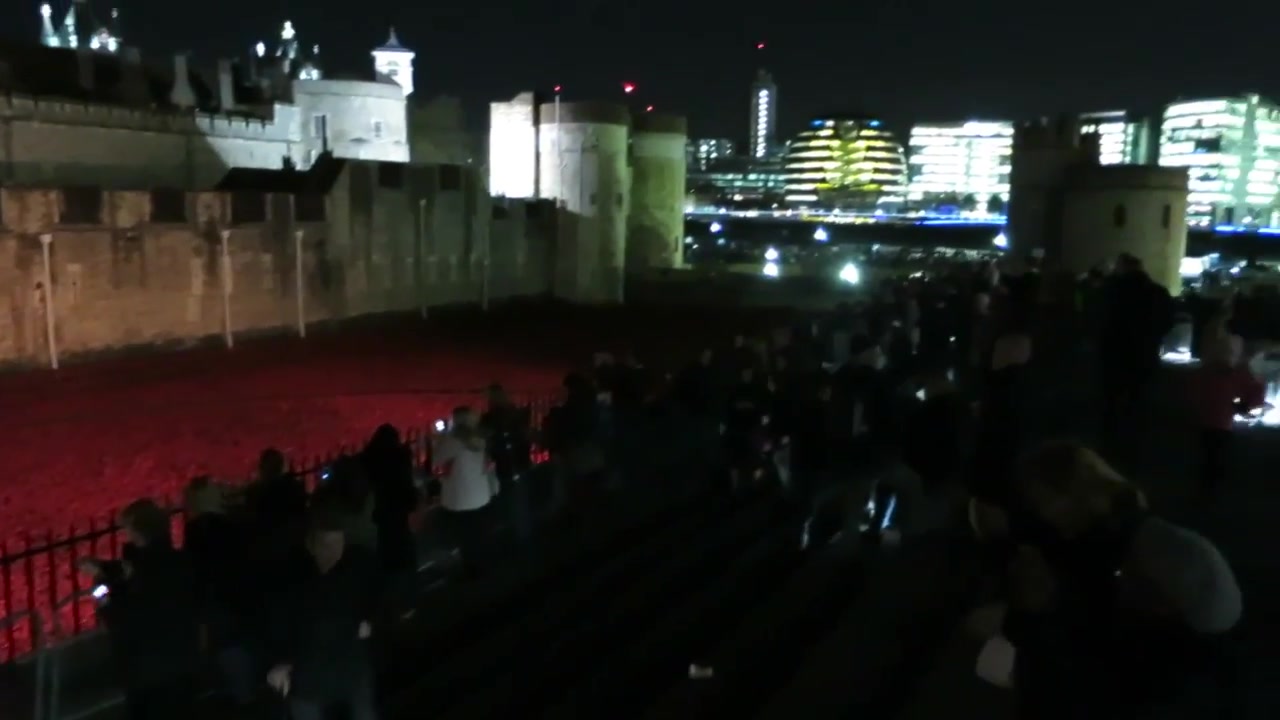
There are large crowds beside the installation. Visitors stand along the railings, with more people behind them waiting or looking for a view. The camera records the gathering as part of the evening, rather than showing an empty attraction.
In the narration I remark on how many people have come, but also on the quiet atmosphere around the display. The visit prompts reflection on the losses represented by the poppies. That thought sits alongside the practical business of making a way around the crowd.
Floodlit towers above the flowers
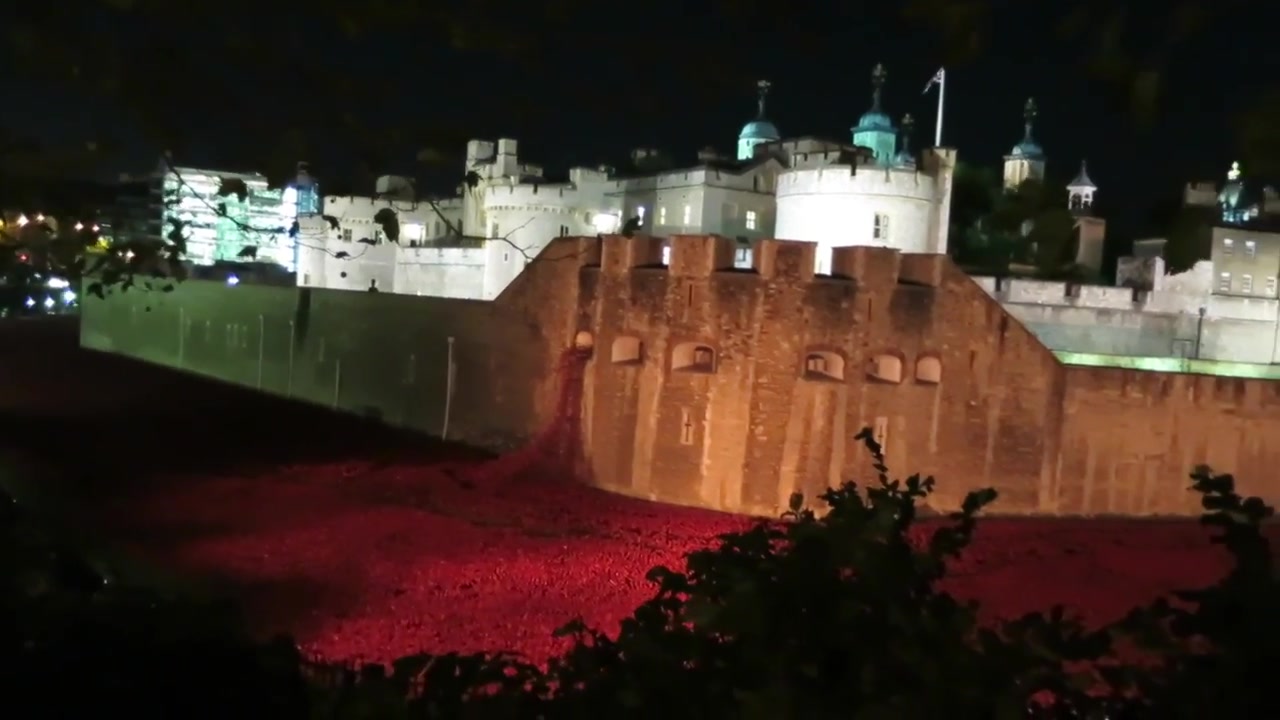
Some of the strongest views place the illuminated towers above the red moat. Different parts of the stonework catch white and warmer light, while dark branches and patches of shadow break up the foreground. The buildings remain recognisable even in the night setting.
The film pauses on these views rather than rushing straight past them. After the introduction and commentary, longer sequences allow the scene to carry the story, with music accompanying the changing angles around the walls.
Walking around the installation
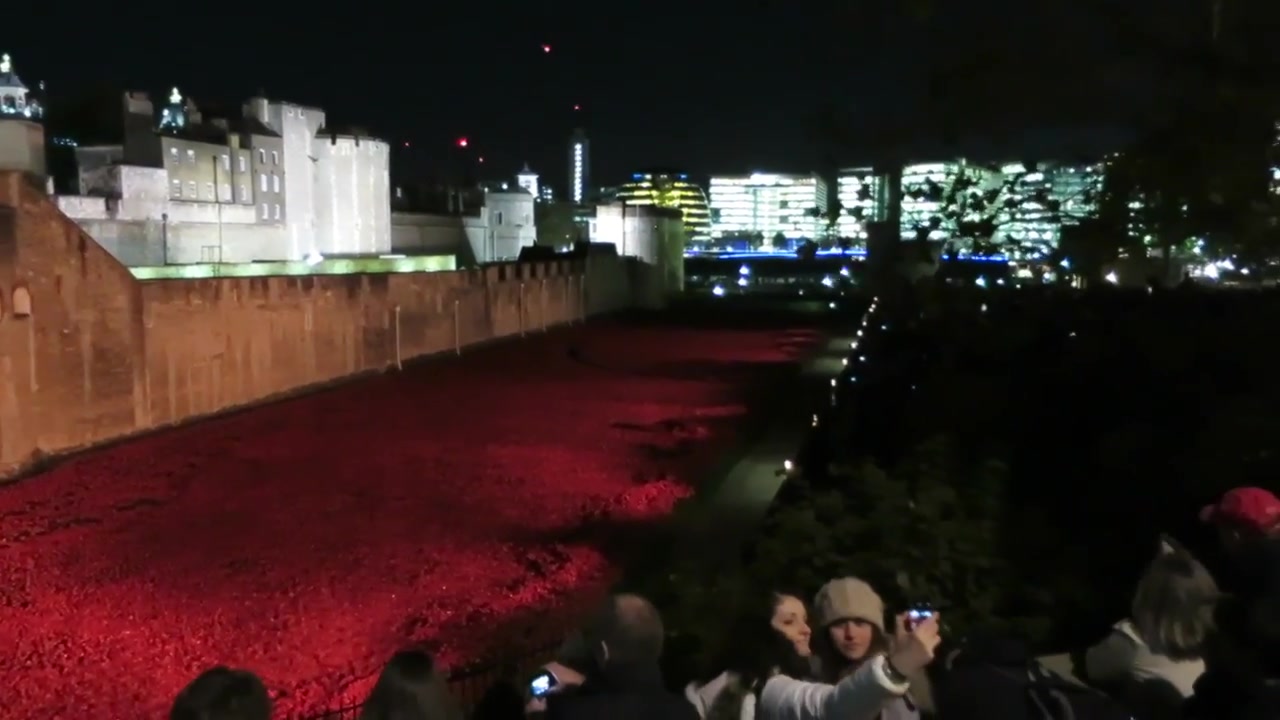
I explain that I will continue walking around as far as the crowds permit. The later footage follows that idea: looking down from one position, moving on, then finding another view along the moat. Phones and cameras appear among the people at the edge.
The surrounding offices provide a striking background in several shots. Their bright windows sit beyond the old walls and the dark line of spectators, placing this act of remembrance within the working city around the Tower.
A closer look at the ceramic poppies
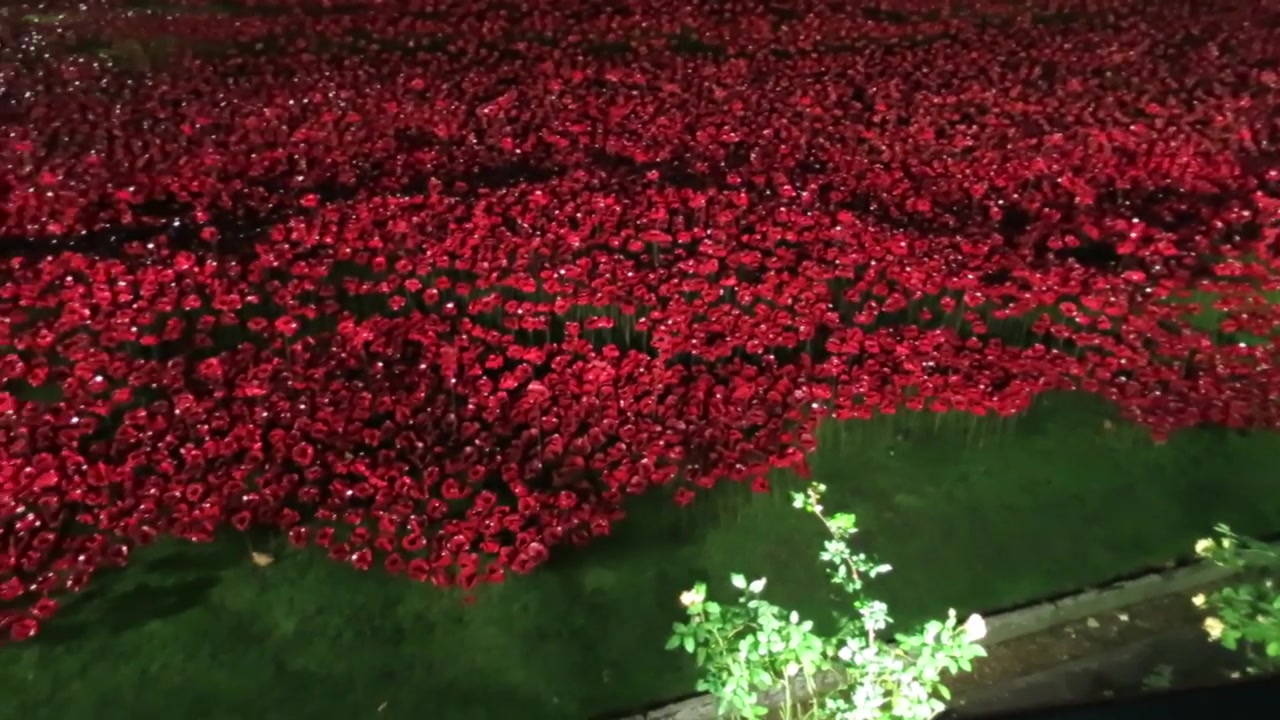
Towards the end, the camera looks more closely at the flowers. Individual red heads and slender stems become easier to distinguish, with green ground visible between the edges of the planted areas. Light catches some flowers more strongly than others.
These details give another sense of the installation’s construction. What reads as a red expanse in the wider shots is made from many separate objects, repeated across the moat. The close view brings the individual poppy back into focus.
Remembering the 2014 display
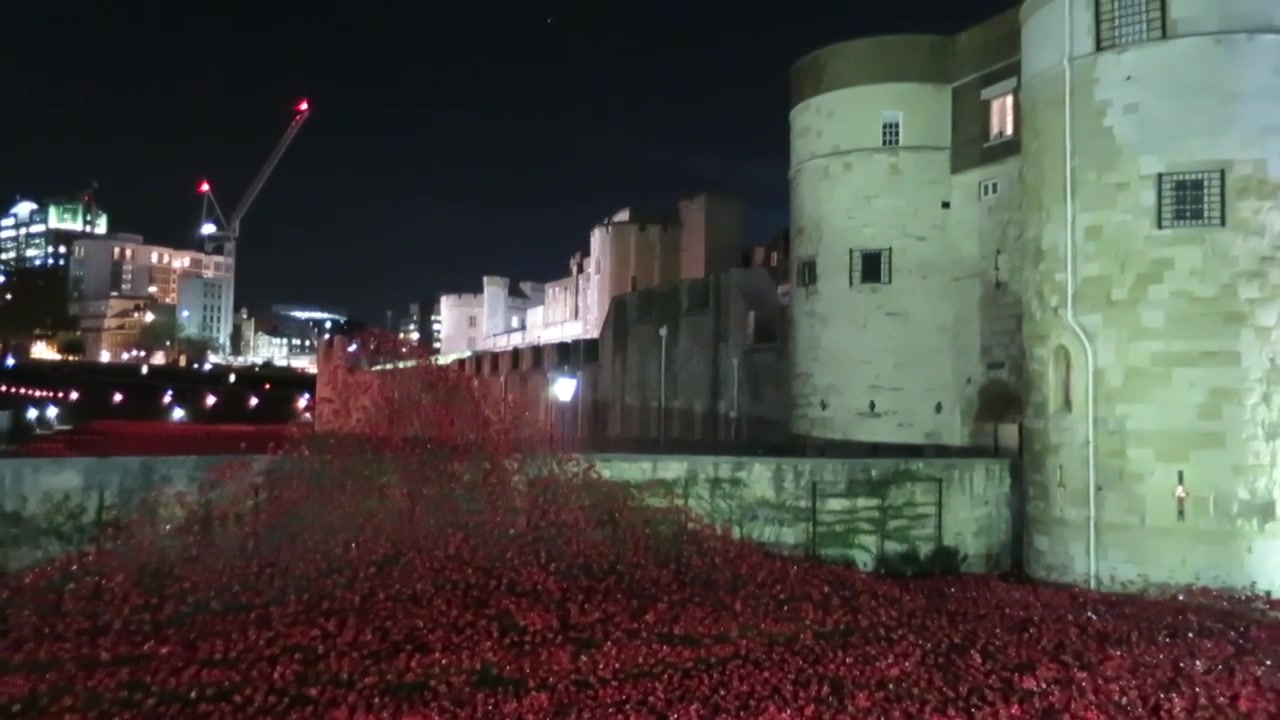
The closing views return to the walls and the densely planted moat, extending the night visit beyond the spoken introduction. The film preserves both the installation and the people who came to see it in its final days before Armistice Day.
This article accompanies a historical visit, first published on 8 November 2014. For the official account of the installation and its commemorative purpose, see Historic Royal Palaces: Tower of London Remembers.

Recent Comments