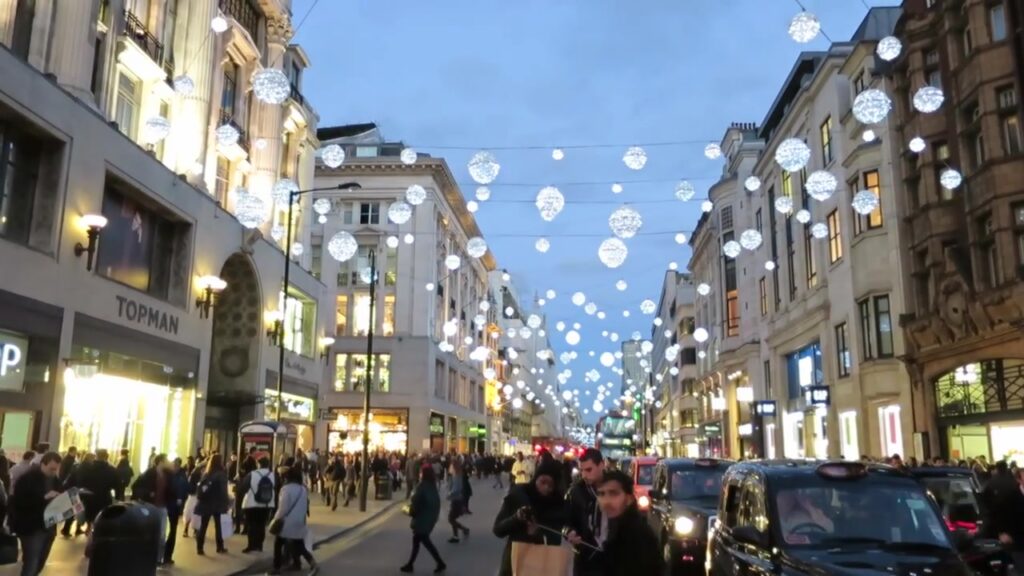
An evening walk along Oxford Street two days after the 2014 Christmas lights were switched on, recording the illuminated West End, seasonal shopfronts and department stores that have since changed or disappeared.
Oxford Street has always looked different once darkness arrives in the weeks before Christmas. The traffic remains heavy and the pavements are still crowded, but the lights suspended above the road create a second, brighter ceiling over the West End.
This Roberts London film was published on 8 November 2014, two days after that year’s Oxford Street display was switched on. It records the street at the beginning of the festive season, when the shop windows were newly dressed and the illuminated façades were competing for attention with the decorations overhead.
Oxford Street beneath the globe lights
The film begins around Oxford Circus while a little daylight remains in the sky. Hundreds of white globes appear to float between the buildings, becoming progressively brighter as evening settles over the street.
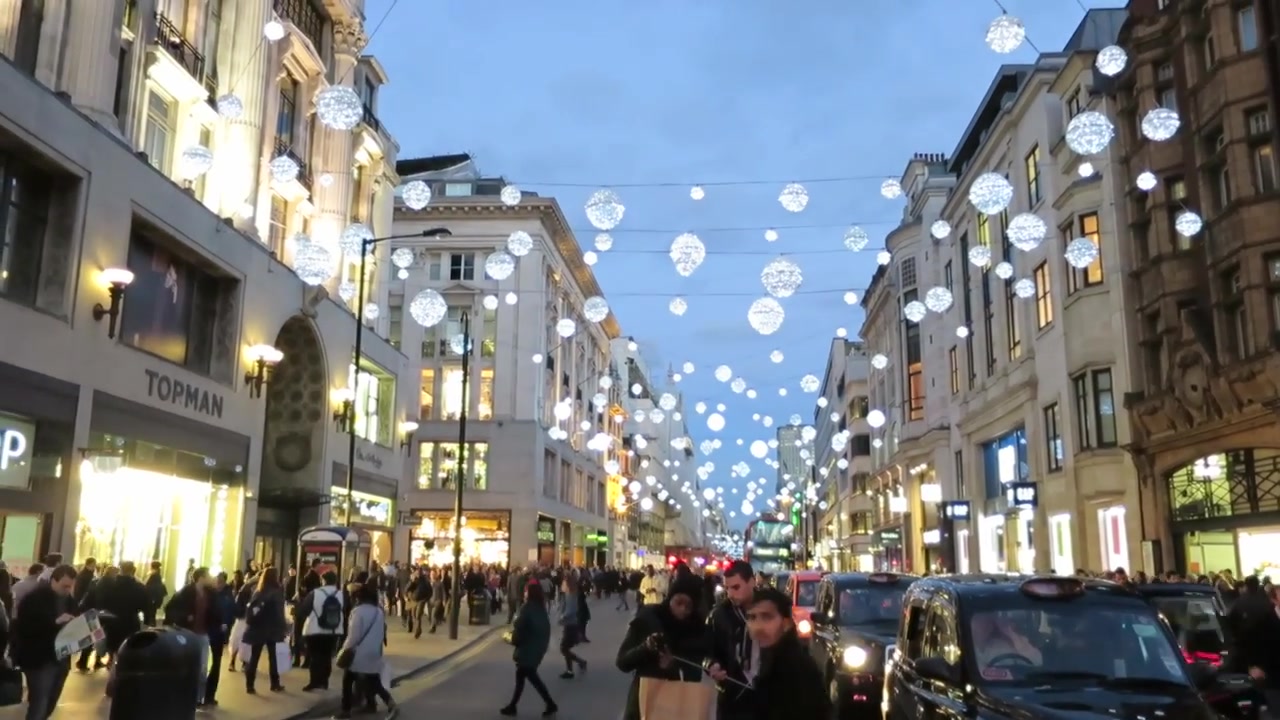
The 2014 installation used the familiar arrangement of suspended spheres that had become closely associated with Oxford Street. Contemporary reports described approximately 1,700 illuminated baubles and 750,000 energy-efficient LED bulbs stretching along the shopping street.
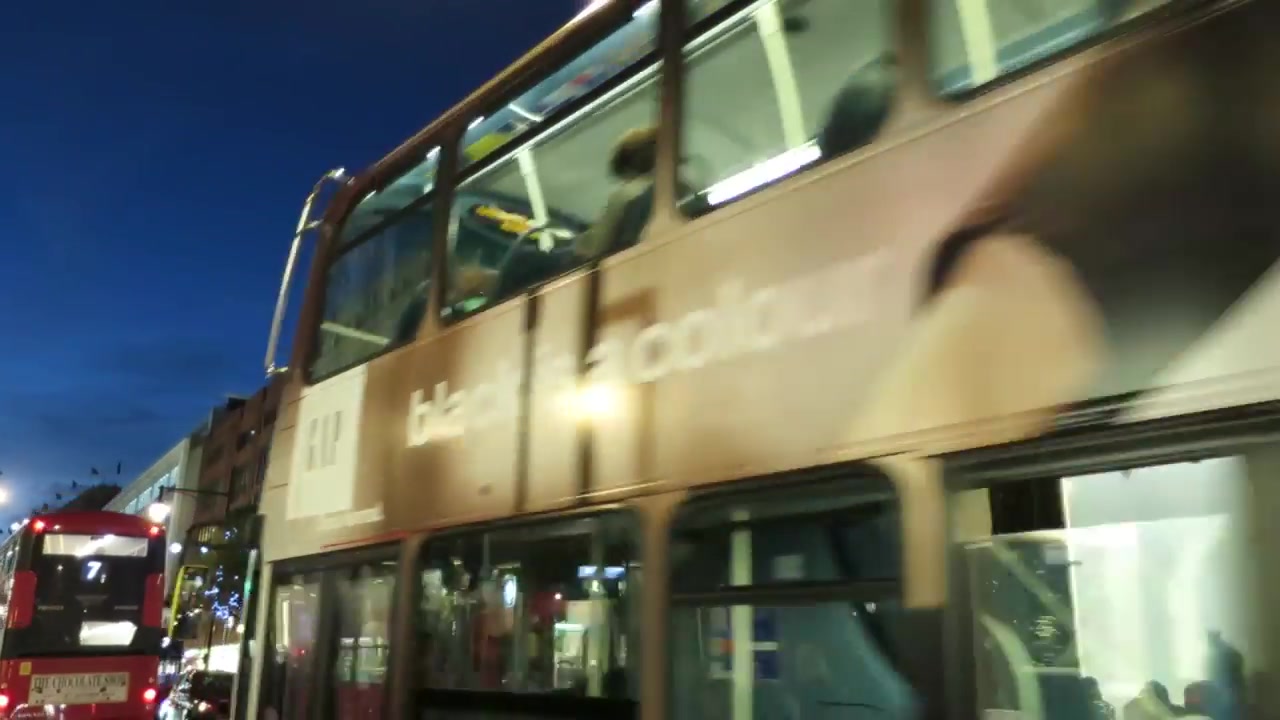
From pavement level, the display is seen through the ordinary movement of London: red buses, black cabs, delivery vehicles and dense streams of shoppers. The decorations are not presented as a separate spectacle. They form part of Oxford Street’s traffic, architecture and commercial life.
The department stores as landmarks
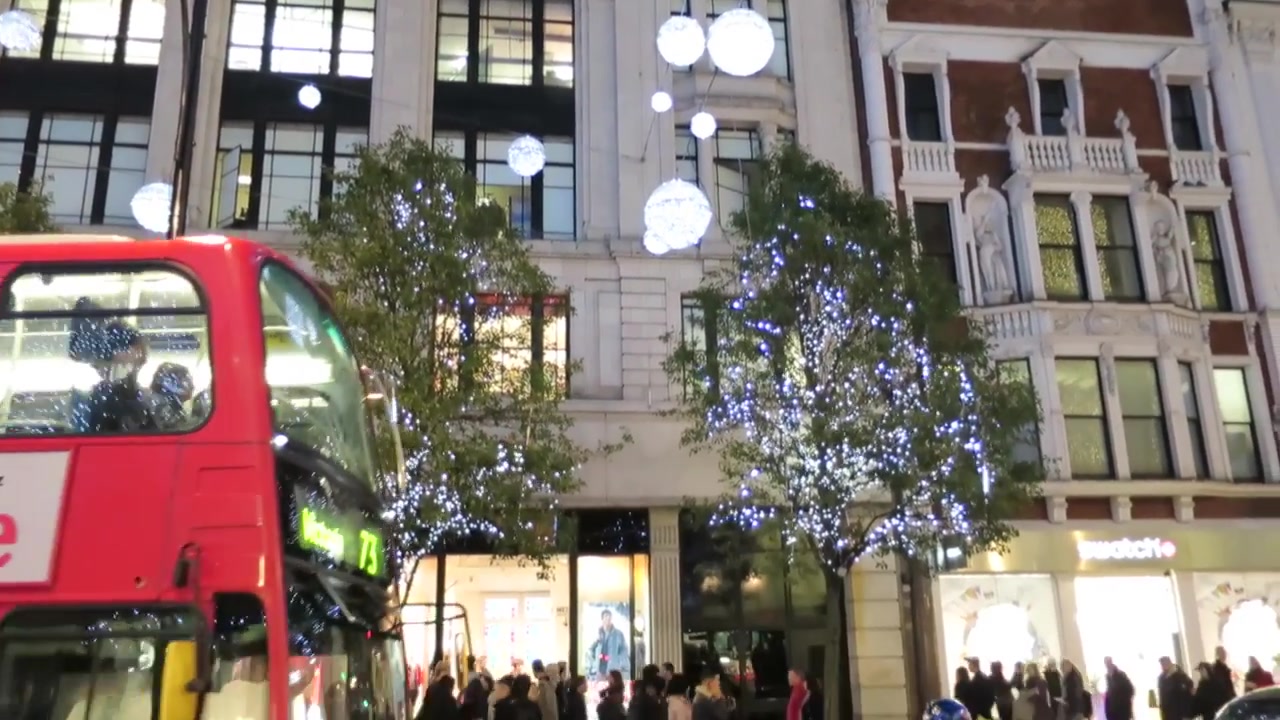
Much of the route is organised by the major department stores. Their façades act as landmarks along a street where individual shopfronts can otherwise merge into one continuous run of illuminated retail.
House of Fraser is wrapped in dense white lights around its classical frontage. Debenhams offers a sharper contrast, combining a bright entrance canopy with coloured lighting and animated panels above the pavement. Marks & Spencer uses the scale of its building as a screen, filling the Oxford Street elevation with changing colour and seasonal messages.
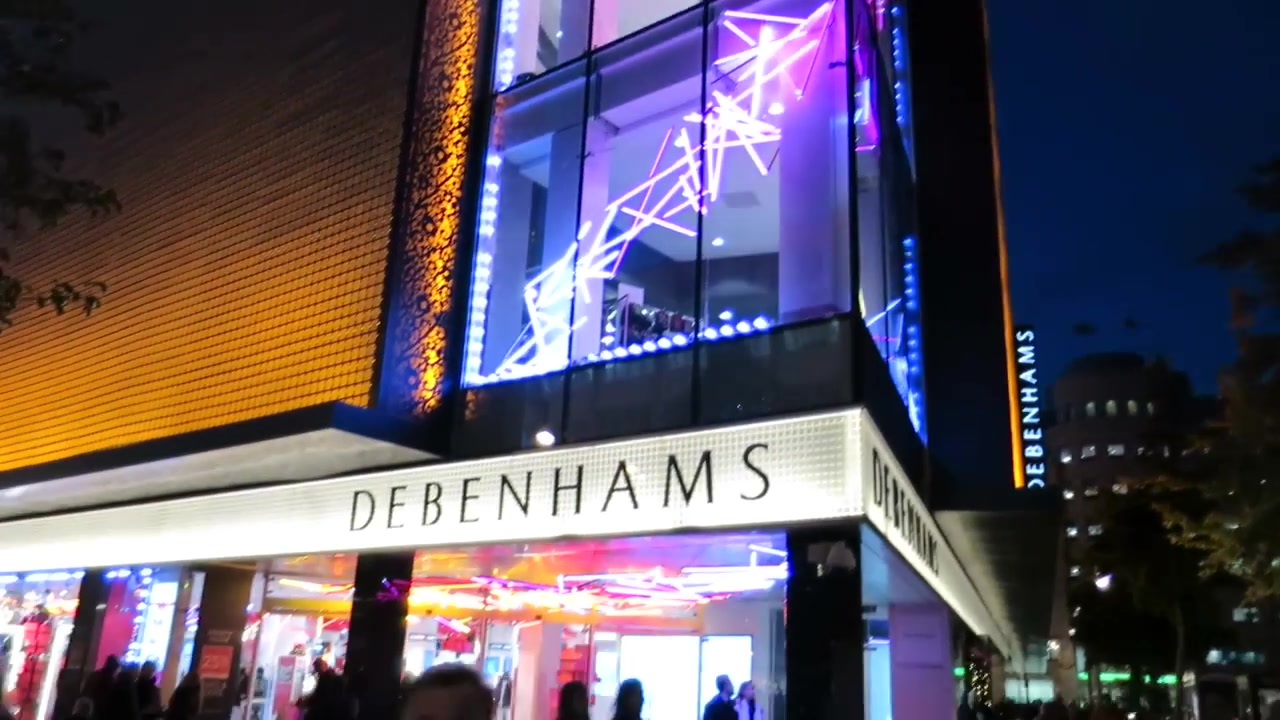
These buildings help date the film. Debenhams’ Oxford Street flagship did not reopen after the 2020 lockdown and closed permanently in 2021. House of Fraser’s Oxford Street store followed in January 2022. Their illuminated names therefore belong to a retail landscape that no longer exists in the same form.
Windows, façades and moving displays
The film is concerned as much with the buildings as the lights above the road. Cameras linger on entrances, upper storeys, display panels and the edges of shop windows rather than attempting to catalogue every seasonal scene.
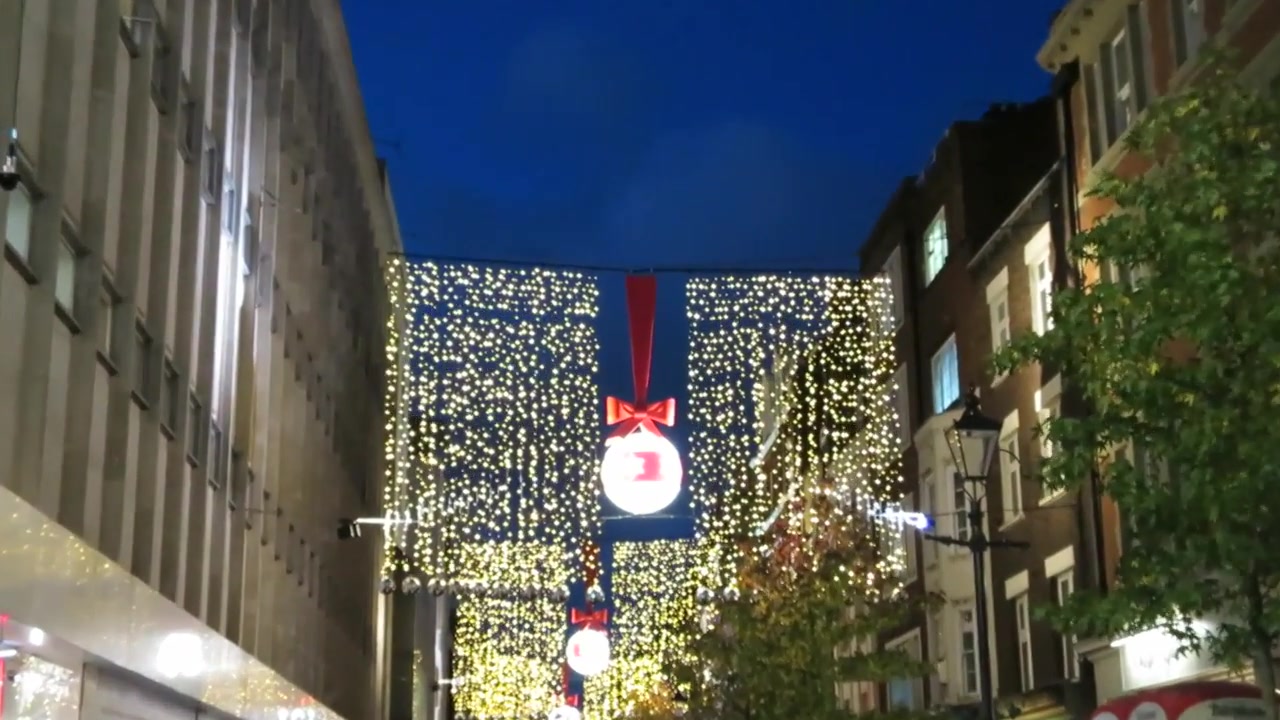
That approach captures how Christmas retail worked across different scales. A single window might hold a carefully arranged product display, while an entire department-store façade could become an animated advertisement visible from the other side of the street.
The movement of the displays also matters. Messages and colours change while buses pass in front of them, producing combinations that existed only for a few seconds. Even in a short film, Oxford Street appears less like a fixed decorative scheme and more like a continuous sequence of light, traffic and commercial theatre.
A newly switched-on West End
The official 2014 switch-on had taken place on 6 November. The public event included performances and a ceremonial countdown, but this film records the quieter aftermath rather than the stage programme itself.
Two days later, Oxford Street had returned to its usual rhythm. There were no barriers around a switch-on ceremony and no single performance to watch. The attraction was the completed street: shoppers moving beneath the lights, buses travelling through Oxford Circus and department stores presenting their Christmas campaigns to passing crowds.
That distinction gives the recording its value. It shows how the decorations were actually encountered during an ordinary evening, rather than only how they appeared at the moment of launch.
Oxford Street as an archive of change
Seasonal films can initially seem temporary. The lights are removed in January, the window displays are dismantled and the same street is prepared for another campaign the following year.
With time, however, the incidental details become as important as the decorations. Shop names change, familiar branches close and buildings are redeveloped. The buses, clothing and advertising begin to place the scene within a particular period.
The 2014 film now records a transitional Oxford Street. The suspended baubles belong to an earlier generation of Christmas lighting, while several prominent retail names were approaching the final years of their West End flagships.
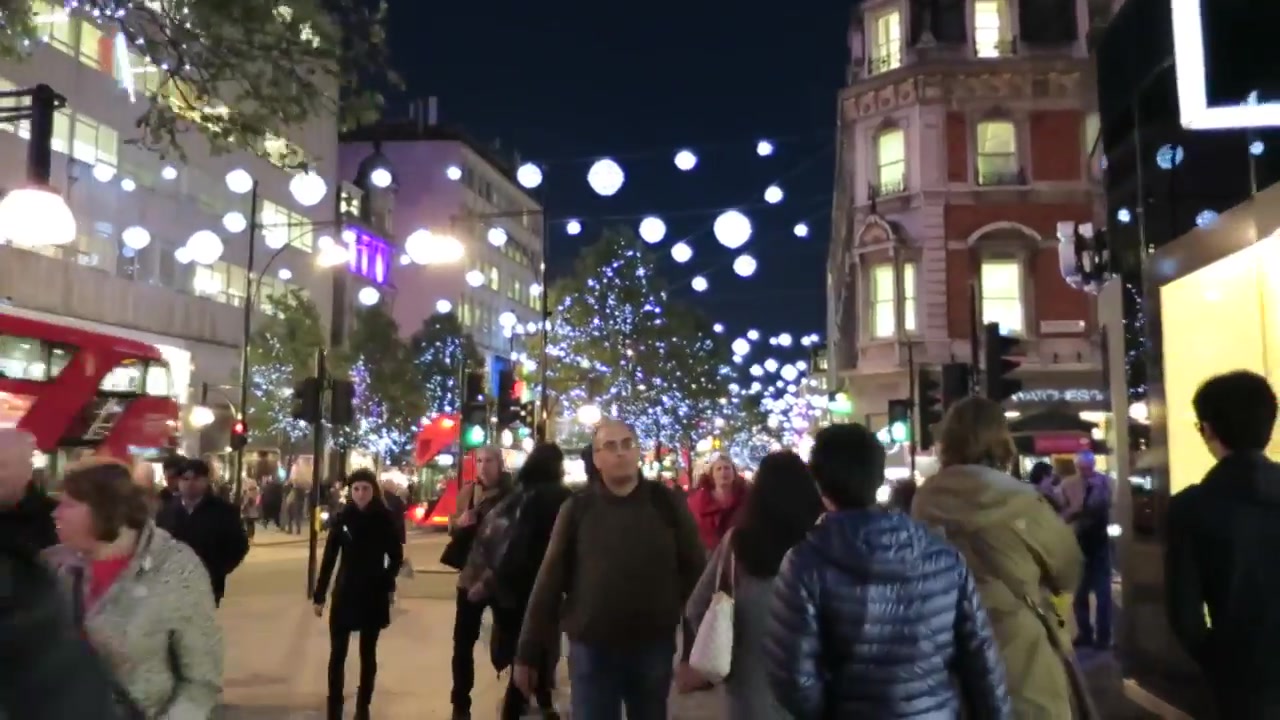
The closing scenes return to the crowded pavement beneath the white globes. There is no grand finale—only people continuing along the street while traffic moves beside them. It is an appropriate conclusion to an archive film about Christmas in central London: the spectacle is present, but everyday city life never stops around it.
