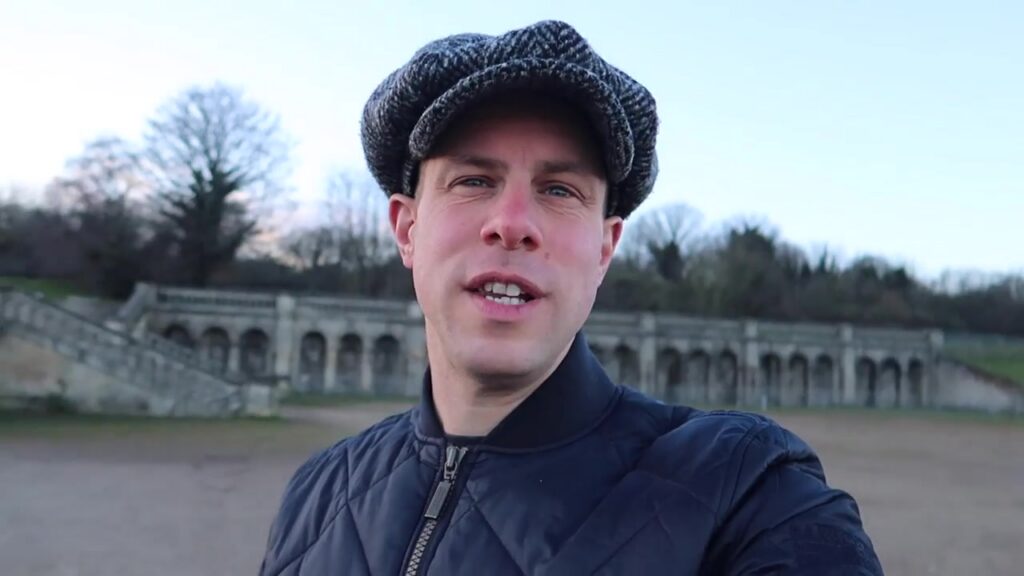
In February 2018, Roberts London followed a winter route through the city: from the Sunday flower market at Columbia Road to Lunar New Year in Chinatown, then south to Crystal Palace Park. Between the walks came a slow-cooked beef stew and, finally, a visit to the pub.
A cold Sunday at Columbia Road Flower Market
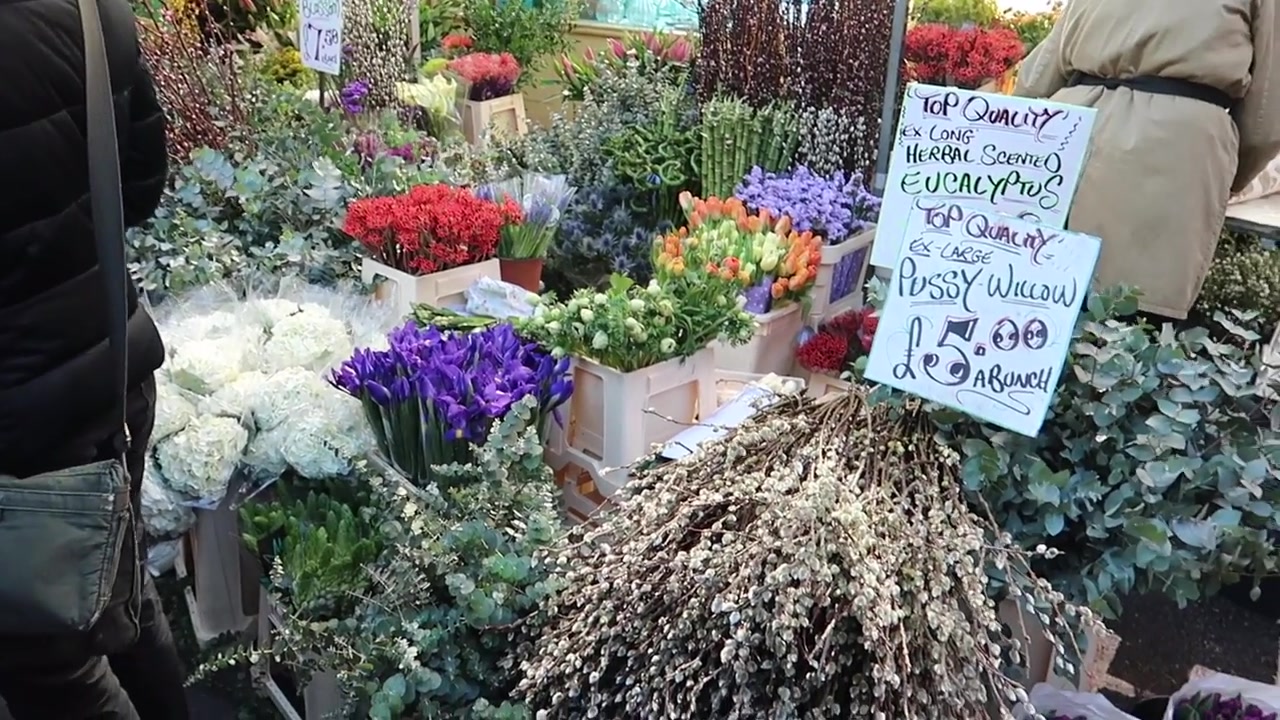
The film begins at Bethnal Green on a properly wintry London morning. Columbia Road is the first destination: flowers for Valentine’s Day, but also the market’s independent shops, cafés and pubs. The 2018 visit records the market as a Sunday institution, with traders filling the narrow East London street and the surrounding shops making the journey worthwhile beyond the flower stalls themselves.
Roberts London also looks back at the site’s layered history. In the nineteenth century, philanthropist Angela Burdett-Coutts established the grand Columbia Market nearby. The building did not become the commercial rival to Spitalfields, Covent Garden and Billingsgate that had been hoped for, but street trading endured. The film connects the later Sunday market with East London’s Jewish community and with flower traders selling stock left after Saturday markets elsewhere in the city.
Lunar New Year in London’s Chinatown
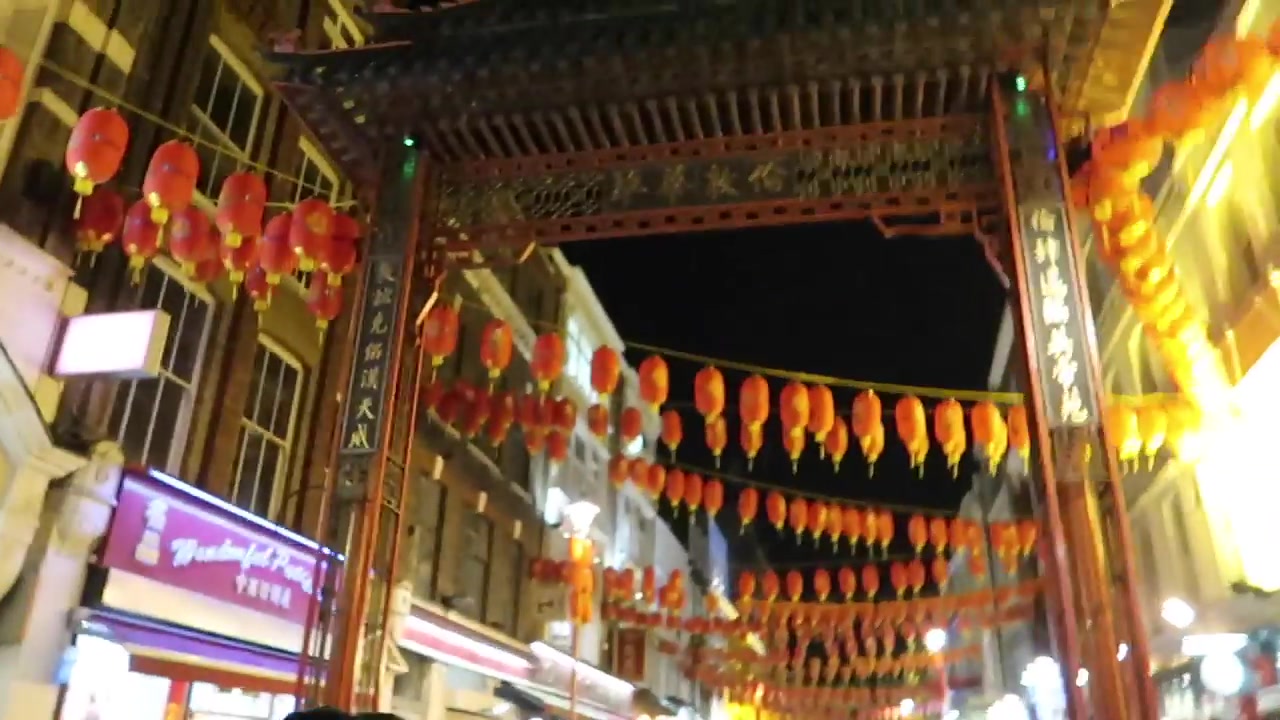
The route then moves west to Chinatown during Lunar New Year. Filmed in February 2018, the streets are dressed with red lanterns and the restaurants and bakeries are busy for the arrival of the Year of the Dog. Starting near Leicester Square station, the walk passes through Little Newport Street and into the heart of Chinatown before continuing towards Trafalgar Square, where the main celebration stage was being prepared.
This is very much an archive view of a particular evening: queues outside restaurants, the smell of food in the streets and buns collected from the Golden Gate Cake Shop. It captures the contrast between the ceremonial scale of Trafalgar Square and the close-packed energy of Gerrard Street and the surrounding lanes.
Beef stew for a London winter
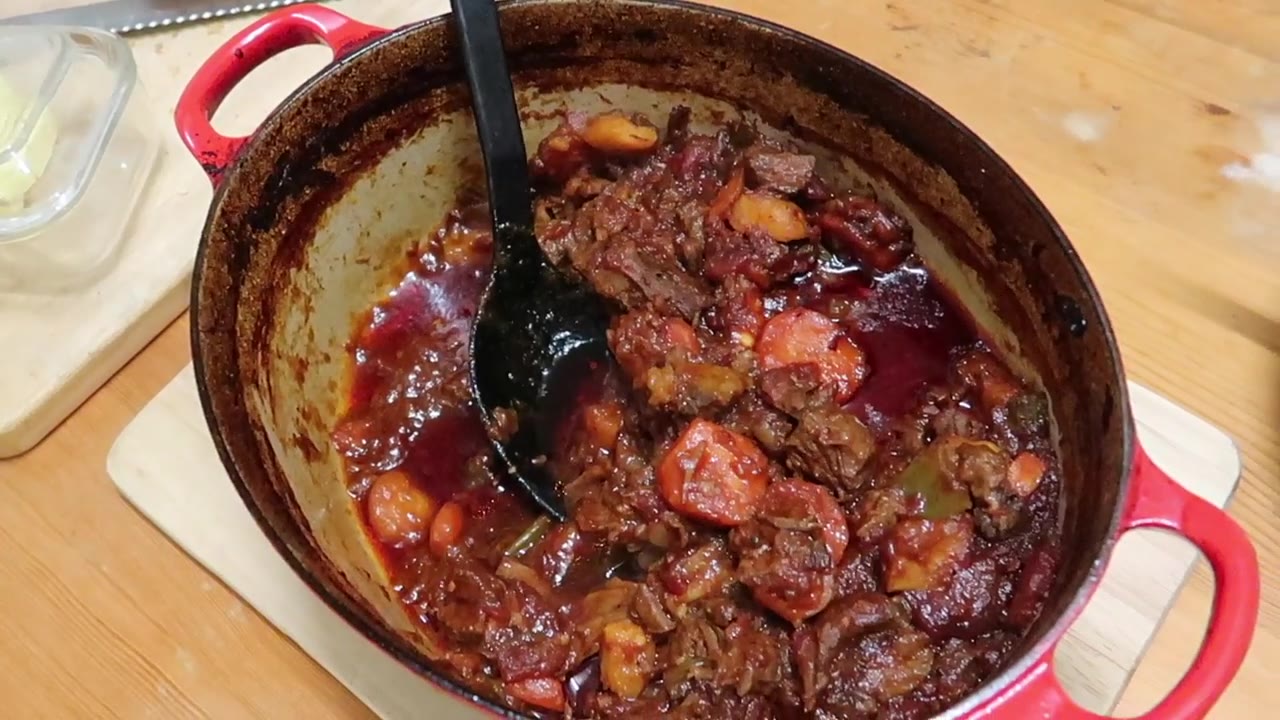
Back at home, the film changes pace. A beef stew is prepared before the final walk: onion, garlic, topside beef, Guinness, root vegetables and stock, cooked slowly so that something warming is waiting after several hours outdoors. It is less a formal recipe than part of the rhythm of the day—a practical answer to cold, grey weather and a long Sunday walk.
Crystal Palace Park and the remains of the Palace
The last journey heads to south-east London and Crystal Palace Park. The film explores the landscape left by the Crystal Palace, the immense glass and iron exhibition building moved from Hyde Park after the Great Exhibition of 1851 and destroyed by fire in 1936. Terraces, steps and fragments of the former structure still shape the park, while the famous nineteenth-century dinosaur sculptures make it one of London’s most distinctive historic landscapes.
What ties the film together is not a conventional attractions checklist, but a winter day assembled from London habits: a Sunday market, a festival in the West End, something slow-cooking at home, a park with visible layers of history and a final drink at the pub. The result is a useful archive of the city in February 2018 and a reminder that London in winter rewards routes that move between neighbourhoods rather than staying with a single landmark.
Filmed in London and first published on 1 March 2018. Market times, businesses and event arrangements shown in the film reflect that visit and may have changed.

Recent Comments