London is often transformed by snow before the city has time to clear it. Familiar streets become quieter, traffic slows and landmarks that ordinarily compete with crowds and movement briefly stand apart.
This Roberts London film was recorded during the severe cold and snow of early March 2018, widely known as the Beast from the East. It begins around the royal parks and Buckingham Palace before returning to central London after dark, when the remaining snow, wet streets and artificial light give the city an entirely different character.
The Met Office records the Beast from the East as the result of cold continental air being drawn towards Britain on easterly winds. In late February and early March 2018, that weather brought snow and low temperatures across the United Kingdom. The film preserves what one part of London looked like while the event was still unfolding.
Snow around St James’s Park
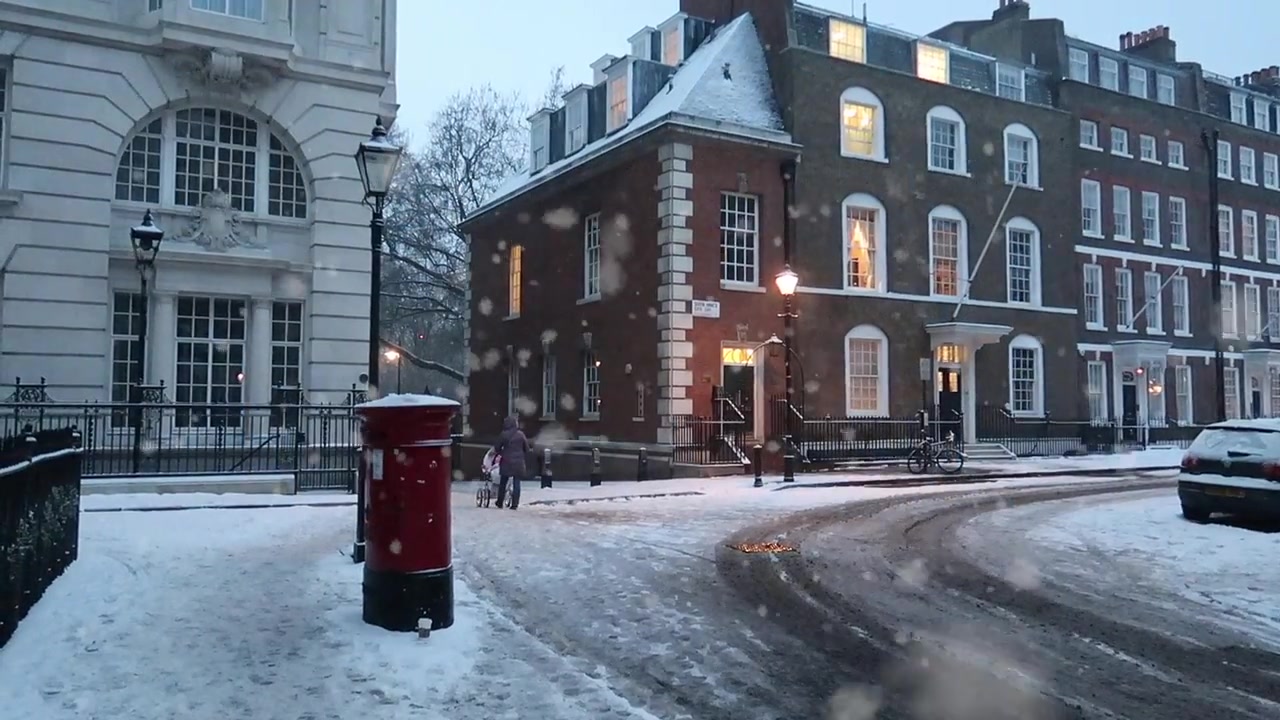
The opening sequence follows streets and paths near St James’s Park. Snow lies across pavements, trees and the edges of the road, while the red of a London postbox remains conspicuous against the muted surroundings.
Within the park, the usual greens and browns have almost disappeared. The lake is partly frozen and the trees stand dark against the pale ground. Even where routes remain passable, compacted snow changes the pace of walking and reduces the ordinary movement through the landscape.
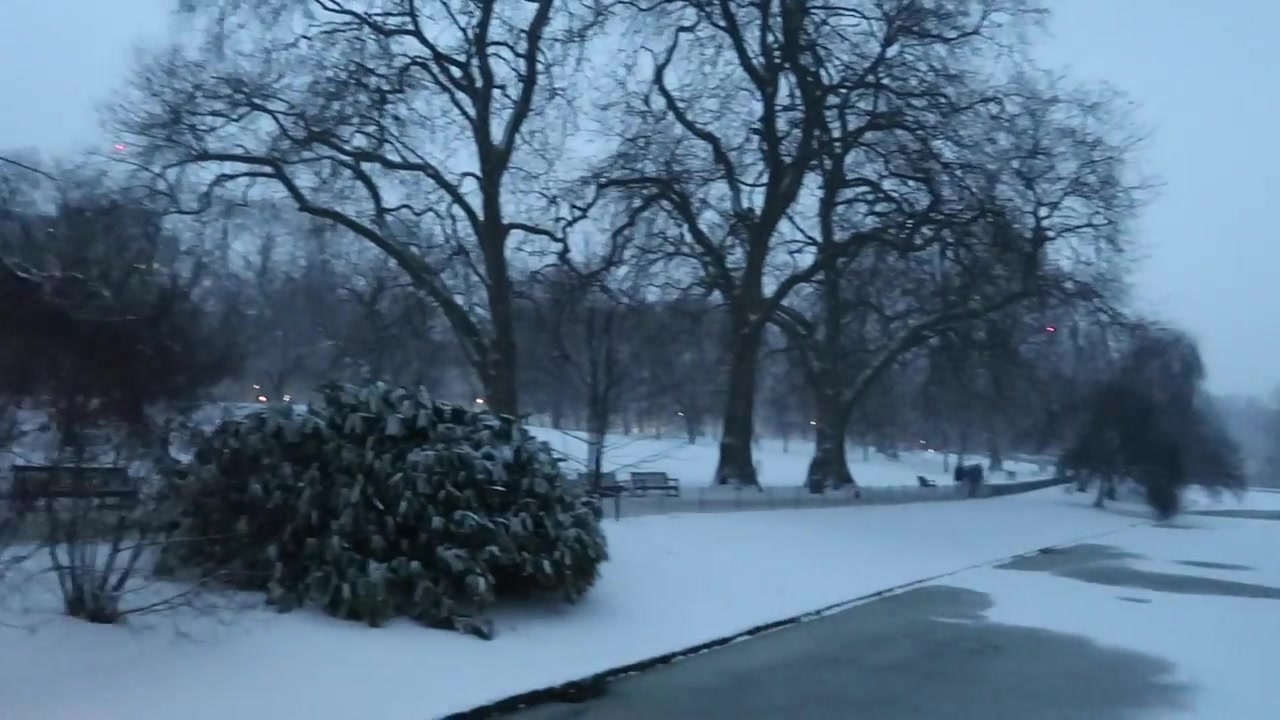
St James’s Park is normally one of central London’s busiest and most ceremonial green spaces, positioned between Buckingham Palace, Horse Guards and the wider government district. Under snow, it feels unexpectedly removed from the city around it.
Buckingham Palace in winter
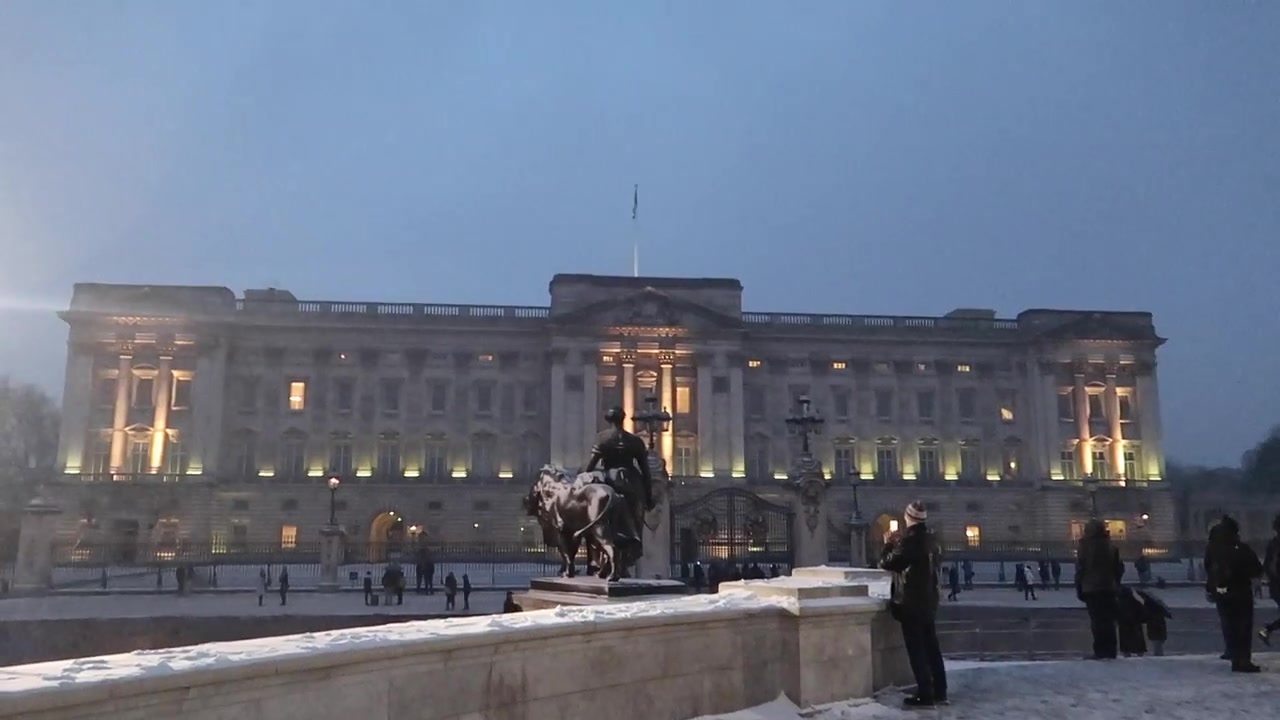
The route reaches the Victoria Memorial and Buckingham Palace. The palace is lit against a grey-blue sky, with snow covering the foreground and the steps around the memorial.
The scene is recognisable immediately, but the weather alters its scale. The open space appears broader and quieter, and the small number of people crossing it emphasises the unusual conditions.
This is one of the strengths of archive walking films. Their value does not depend upon a rare building or a formal event. A familiar place seen under temporary conditions can become a record that cannot be reconstructed later.
Central London after dark
The second part of the film moves into central London at night. Much of the snow on the busiest roads has turned to water or slush, creating reflections from headlights, streetlamps and illuminated buildings.
London is no longer silent, but it still looks unsettled. Traffic continues through the West End while snow remains on pavements, benches and open spaces. The contrast between the cold ground and the city’s electric light becomes the defining visual character of the later journey.
Trafalgar Square in the snow
Trafalgar Square appears with its fountains illuminated in colour. Snow survives around the square while the wet stone reflects the surrounding lights.
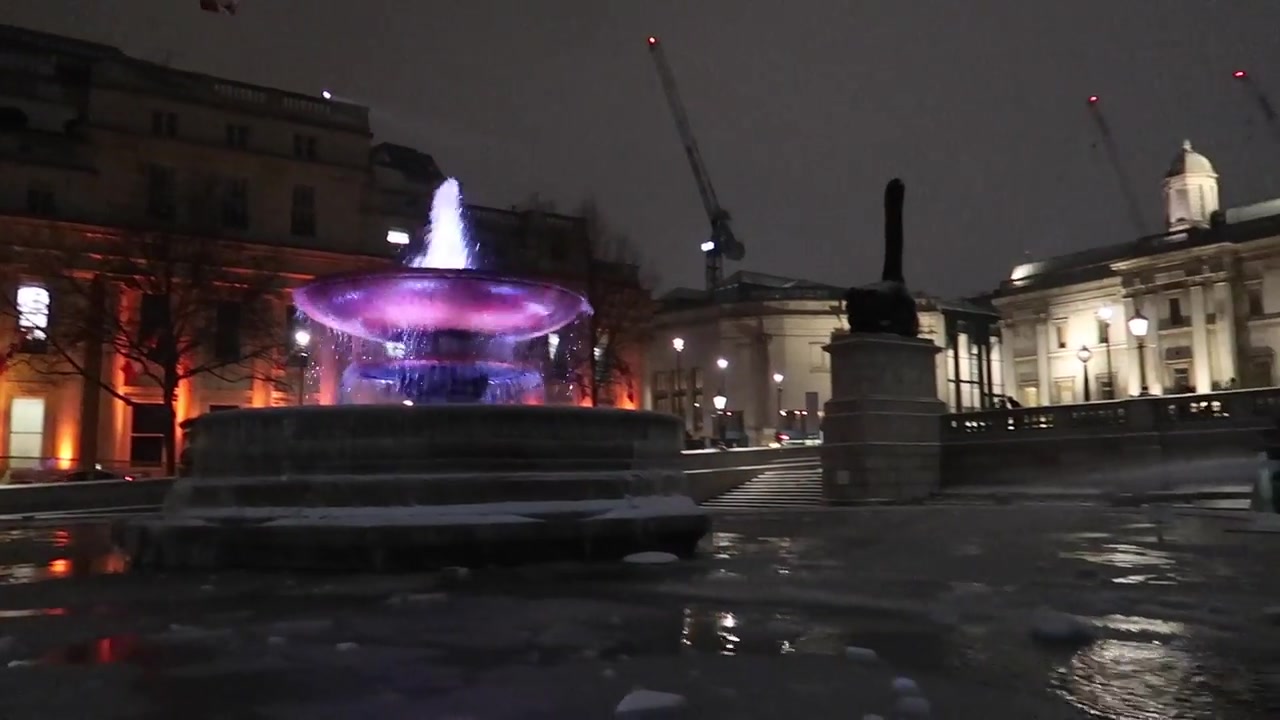
Nelson’s Column, the National Gallery and St Martin-in-the-Fields remain visible through the darkness. These landmarks usually form the background to crowds, demonstrations, celebrations and everyday crossings. In the film, the weather becomes the event.
The square also provides a useful point of comparison with the earlier Buckingham Palace scenes. The royal park landscape holds broad areas of undisturbed snow; Trafalgar Square shows how the busiest parts of the city absorb and break it down.
Snow figures beside the London Eye
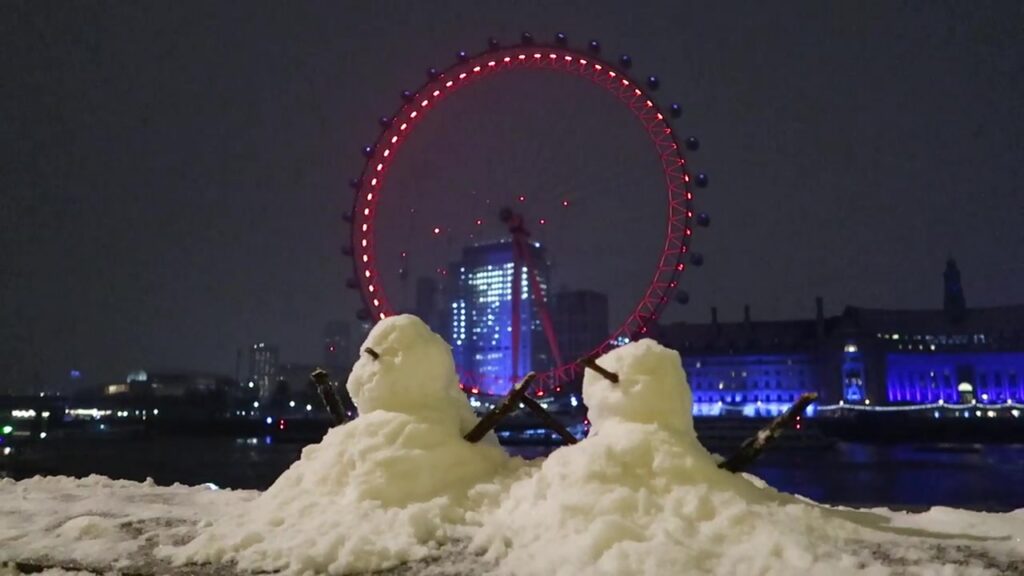
One of the most distinctive moments looks towards the London Eye. Two small figures have been shaped from snow on the riverside wall, facing the illuminated wheel across the Thames.
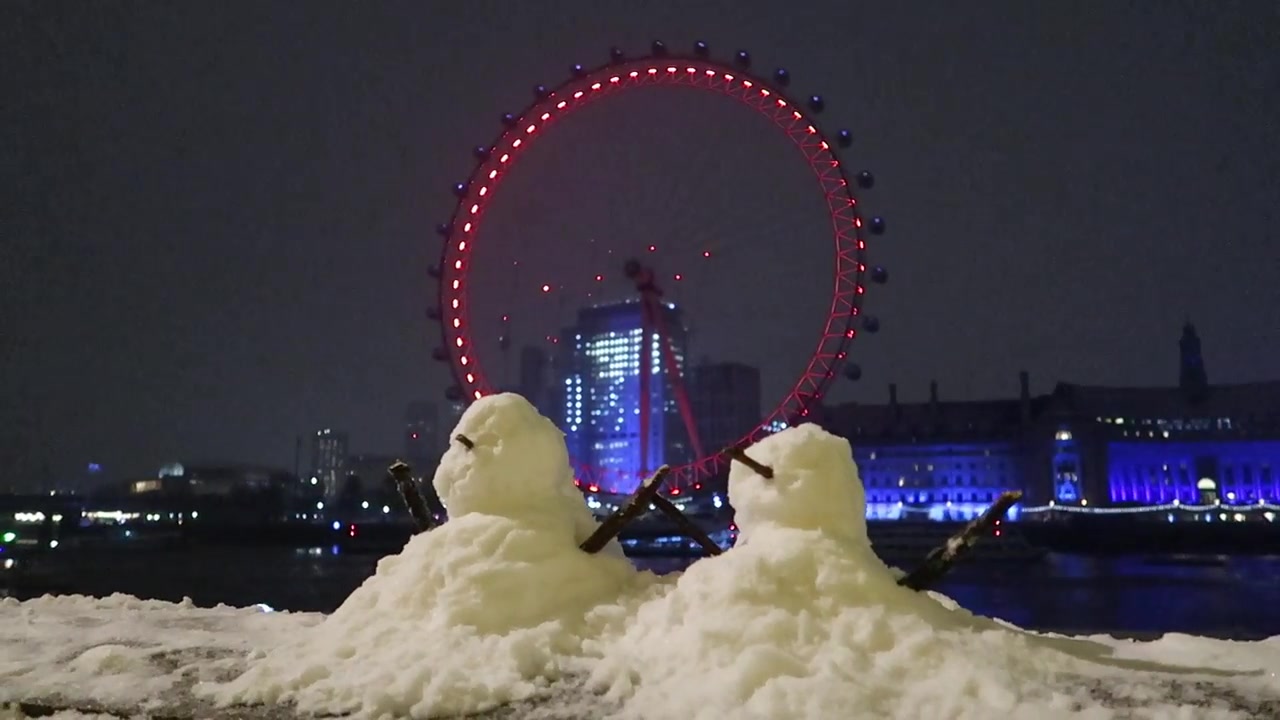
It is a temporary piece of street humour, unlikely to have lasted long once temperatures rose. The image gives the film a human scale: severe weather can interrupt London, but it also produces spontaneous details that belong only to that particular day.
Nearby, snow covers benches and the riverside walkway. The familiar view along the Thames becomes quieter and more graphic, reduced to dark water, pale ground and lines of light.
Buses and lights in the West End
The later journey reaches the brighter commercial streets around Piccadilly Circus and Regent Street. Red buses move through wet roads while illuminated façades and advertising screens reflect across the surface.
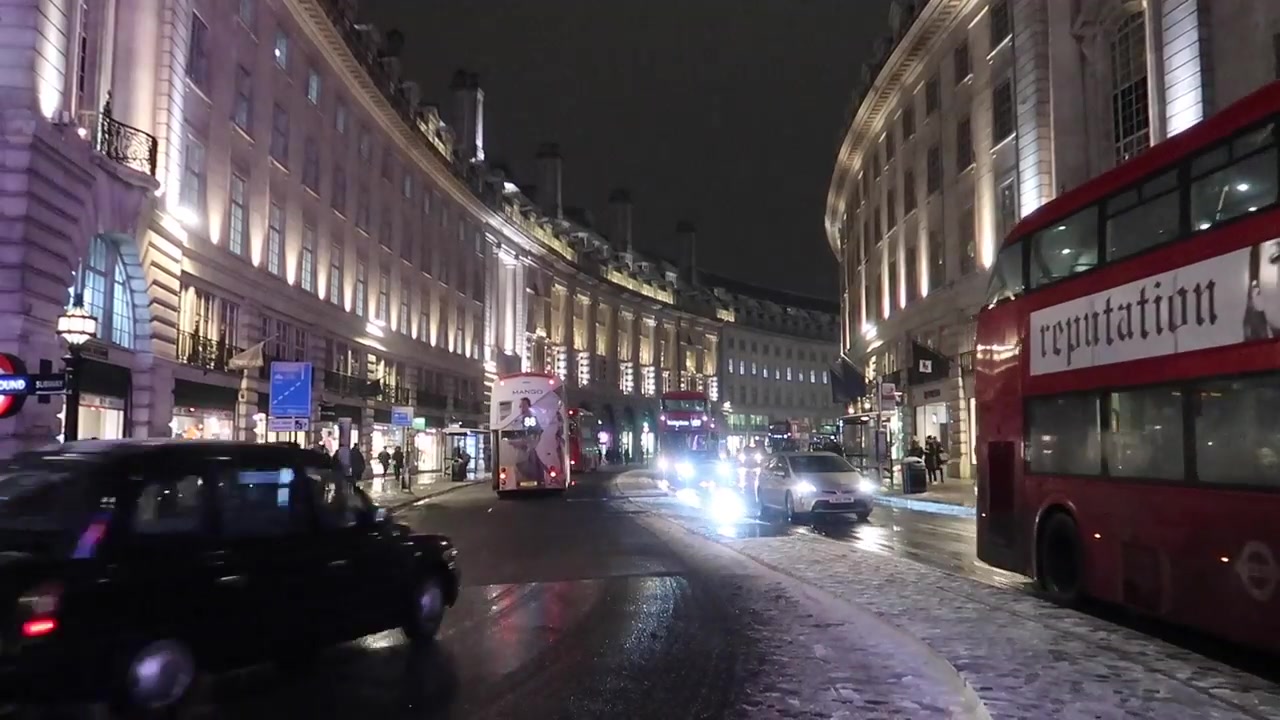
Here the city’s normal energy has largely returned, but the snow remains visible at the edges. The sequence completes the progression from the near-stillness of St James’s Park to a West End continuing through difficult winter conditions.
An archive of a temporary London
The Beast from the East was a national weather event, but this film records it at street level. It does not attempt to summarise the disruption across Britain. Instead, it preserves a short journey through one snow-covered part of the capital.
Viewed now, its strongest moments are simple: a frozen park lake, Buckingham Palace behind the snow, coloured fountains in Trafalgar Square, two figures facing the London Eye and red buses moving through the wet West End.
London returned quickly to its usual appearance. The value of the film is that, for six minutes, it did not.
