Brick Lane on a Sunday has never been a place for a rigid itinerary. The best approach is to arrive hungry, follow the crowd and allow the street to decide what happens next. In this film from 15 May 2016, Barry takes that approach on a busy walk through one of East London’s best-known market districts.
The title promises a street-food contest between the Rib Man and poutine, but the day becomes a broader record of Brick Lane at the height of its weekend bustle. There are shopfronts, street art, vintage clothes, tightly packed market lanes and, finally, a cardboard box loaded with chips, cheese curds, gravy and rib meat.
Into the Sunday crowd
The film begins on Brick Lane itself, where the pavements are already crowded. Barry moves north through the familiar mix of curry houses, independent shops and market entrances. The camera is handheld and close to the action, giving the film the feel of joining the stream of Sunday visitors rather than observing it from a distance.
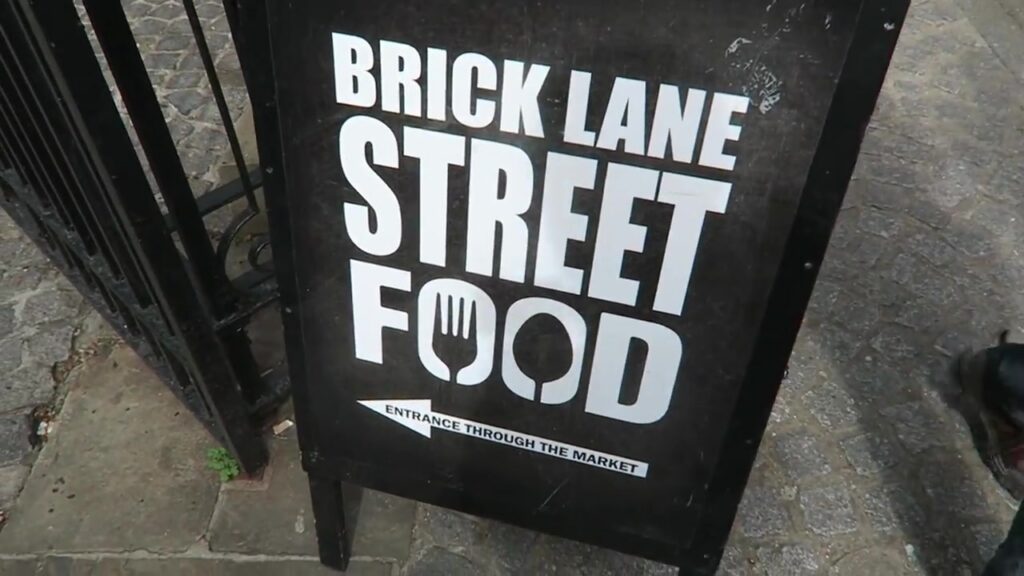
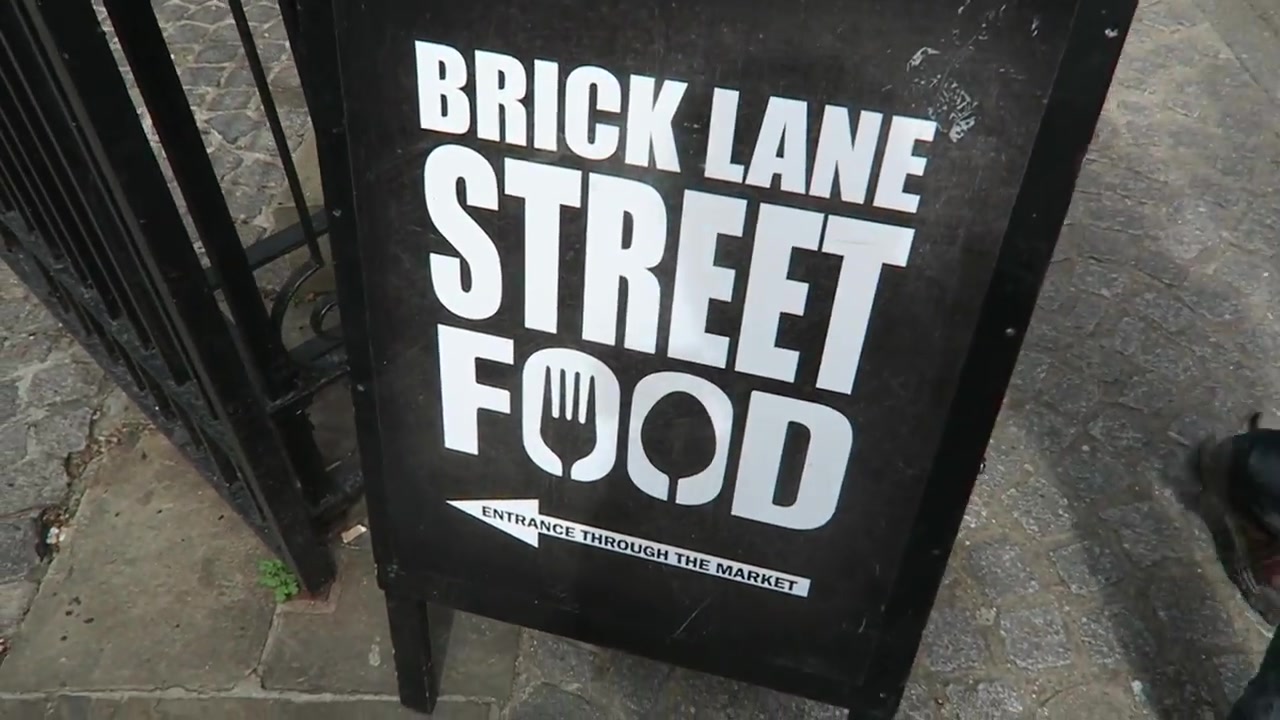
The old brewery buildings provide the backdrop as people queue, browse and squeeze past one another. A sign for Brick Lane Street Food points into the market, promising another busy world away from the main road.
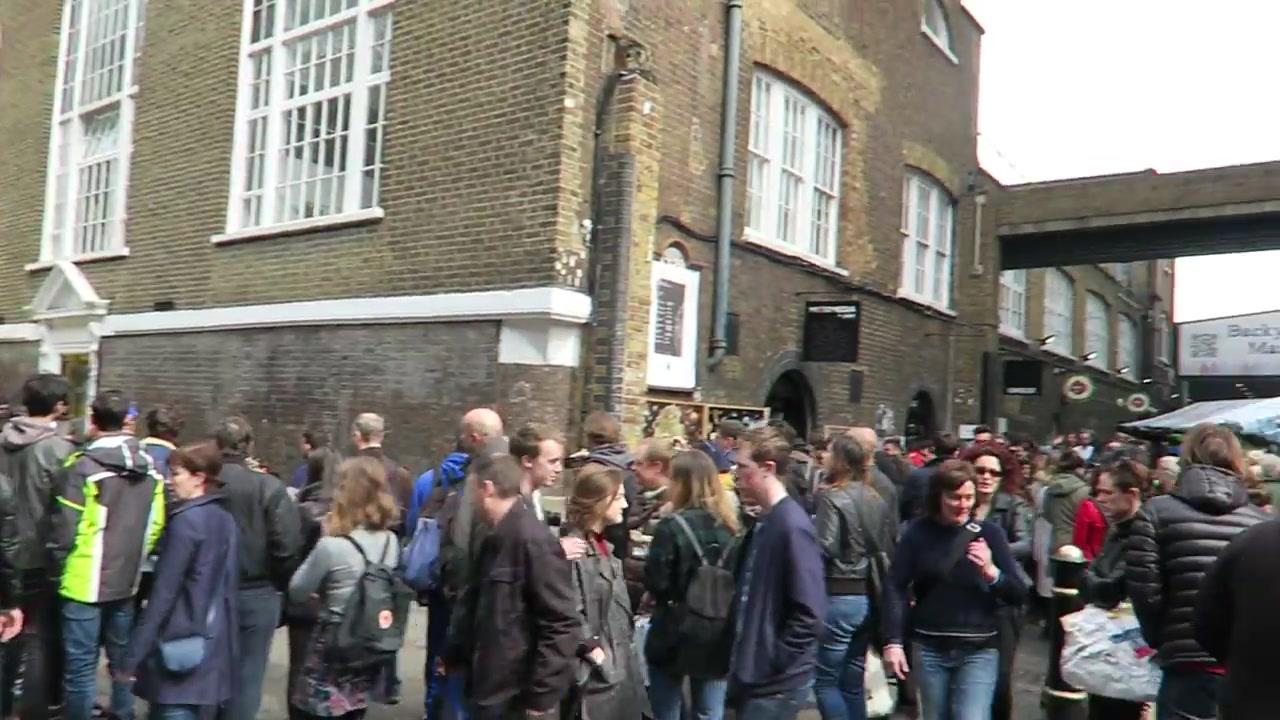
What stands out in this 2016 view is the sheer variety compressed into a small part of East London. Food stalls sit beside second-hand clothes and small traders. A few steps can take the visitor from a packed courtyard to a quiet side passage, then back into the noise of Brick Lane.
Art in the side streets
Brick Lane’s street art is part of the route rather than a separate attraction. Murals and painted shutters appear between the stalls, while narrow passages reveal works that can easily be missed in the main crowd. One large painted face fills a brick wall beside a market lane, turning an ordinary shortcut into one of the film’s most memorable scenes.
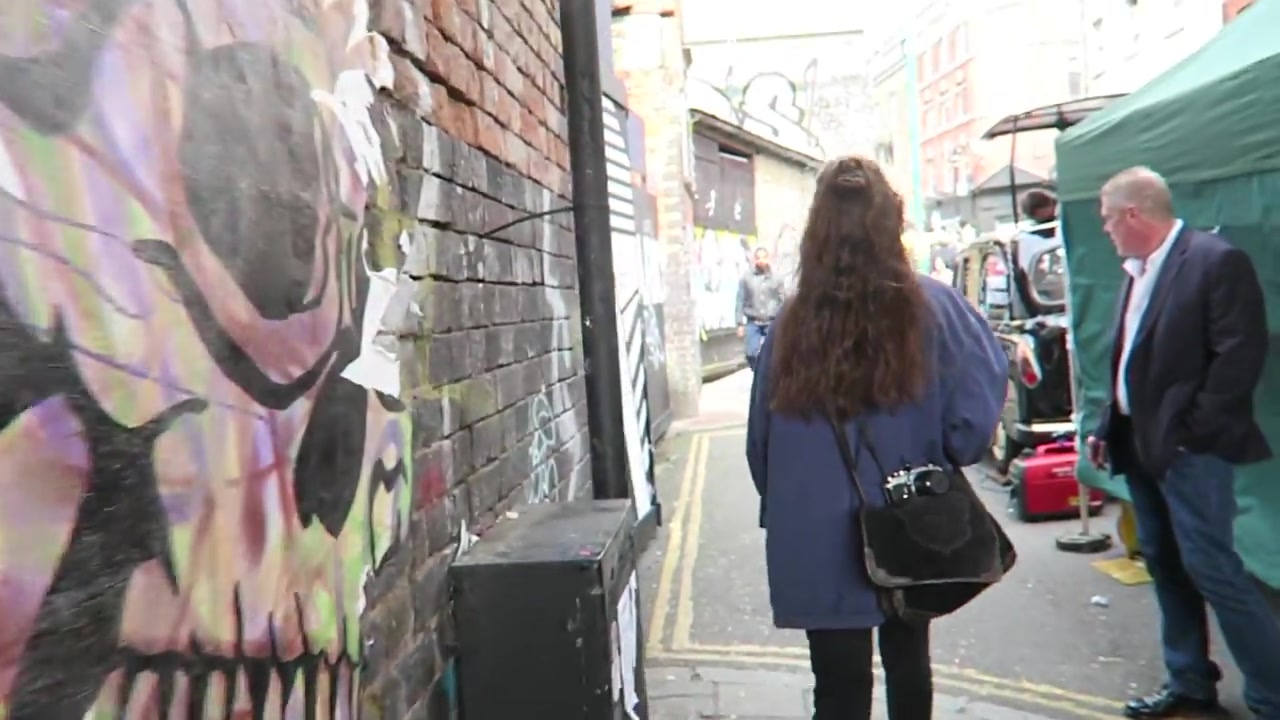
The temporary nature of this art matters. Walls are repainted, shops change hands and new work covers the old. These brief shots therefore preserve more than decoration: they capture the appearance of the neighbourhood on a particular Sunday in 2016.
Vintage rails and market browsing
Further along, the emphasis shifts from the street to the stalls. Rails of jackets, shirts and denim stand beneath temporary awnings, with boots and accessories arranged wherever space permits. It is the kind of market where browsing is part of the entertainment, even when nothing is bought.
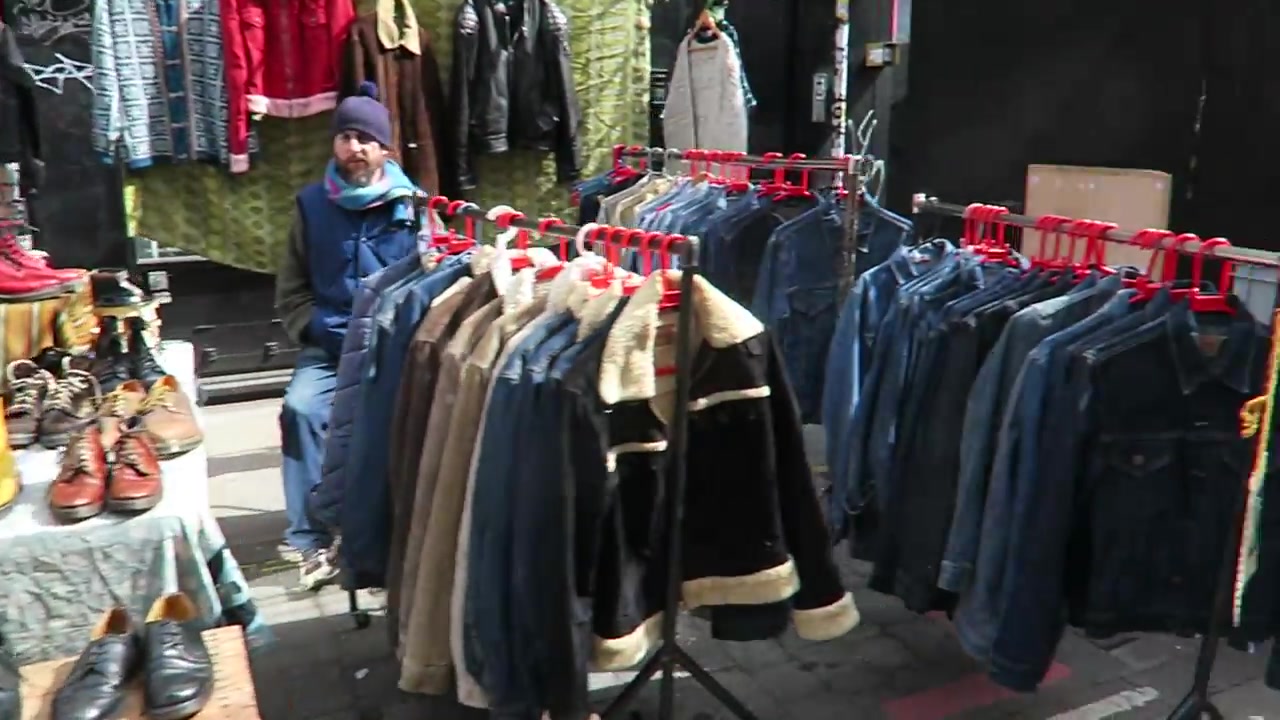
Barry keeps moving through the crowd, looking at the choices and considering lunch. The range is almost overwhelming. Traders serve food from different cuisines, and the queues make their own recommendation about which stalls have attracted attention.
The Rib Man meets the Poutinerie
The film’s food challenge comes together at the Poutinerie. The menu offers the Canadian combination of chips, cheese curds and gravy, with the option of adding rib meat. That addition brings the two subjects of the video title into a single serving rather than forcing a choice between them.
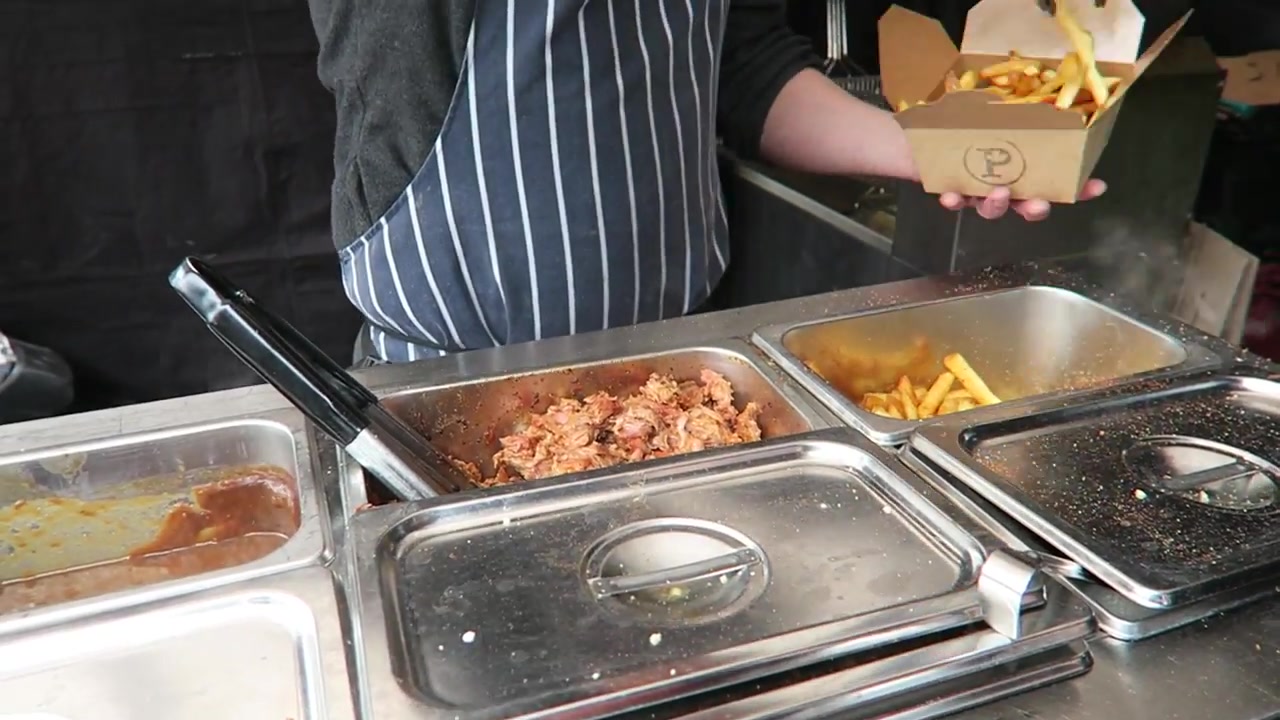
The preparation is shown in satisfying detail. Chips go into the box first, followed by the curds, gravy and a generous layer of shredded rib meat. The stall’s counter, metal food trays and striped apron give the sequence an unpolished market character: this is food assembled quickly in front of a waiting queue.
The finished dish is substantial. Golden chips are almost hidden beneath meat and sauce, served in a folding cardboard carton with a wooden fork. Barry finds space away from the counter to taste it while the market continues around him.
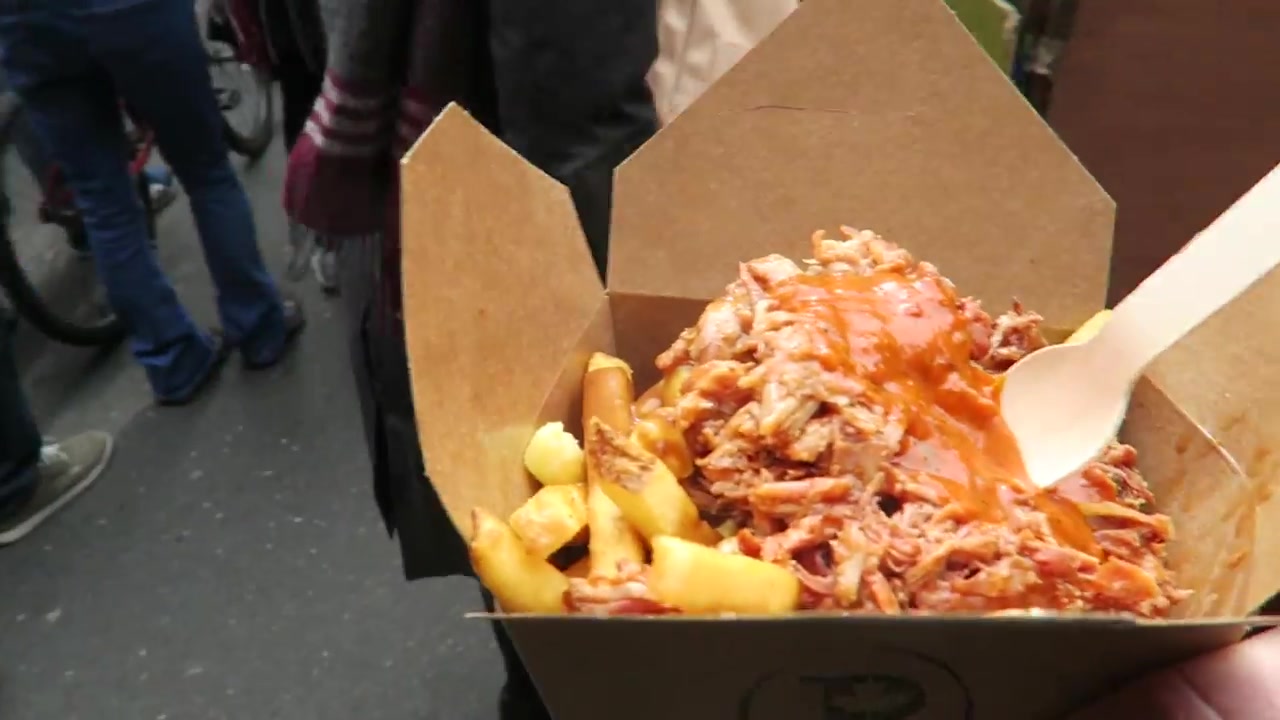
The verdict belongs to that day rather than to a timeless restaurant review. Menus, prices and traders can change, but the film preserves the experience of ordering an indulgent market lunch in 2016: seeing it prepared, carrying it through the crowd and eating it on the move.
From Brick Lane to Spitalfields
After lunch, the walk continues through the surrounding streets towards Old Spitalfields Market. The change of setting is immediate. Brick Lane’s improvised stalls and painted walls give way to the market’s covered structure, shops and open central space.
It is a natural ending to the route. Brick Lane and Spitalfields are close enough to explore together, yet each has its own atmosphere. The film moves between them without turning the day into a checklist, recording instead the small decisions that make a London wander memorable: which lane to follow, which rail to browse and what to eat when the market finally wins.
Seen now, the video is also a compact archive of an East London Sunday in spring 2016. Its crowds, traders and artwork may have changed, but the energy of the route remains unmistakable.
