Liberty’s Christmas windows were still hidden when Barry arrived on Great Marlborough Street on 16 November 2014. A long wall of patterned fabric covered the shopfront, handwritten-style notices announced the midday unveiling and a crowd gathered opposite the Tudor-revival building. This short Roberts London archive film records the final wait, a performance by the London Community Gospel Choir and the first close look at the newly revealed displays.
The event belonged to an older rhythm of Christmas shopping in central London. Seasonal windows were not merely changed overnight and discovered by commuters the following morning. Liberty turned the unveiling into a small public occasion, using music, anticipation and the store’s distinctive printed fabric to hold back the view until the chosen moment.
Liberty under wraps
Before the performance begins, the covered frontage is already a spectacle. The fabric stretches across the windows beneath Liberty’s black-and-white timbered upper floors, turning the whole side of the building into one enormous wrapped present. Blue notices interrupt the repeating floral pattern and explain that the covering will drop at noon.
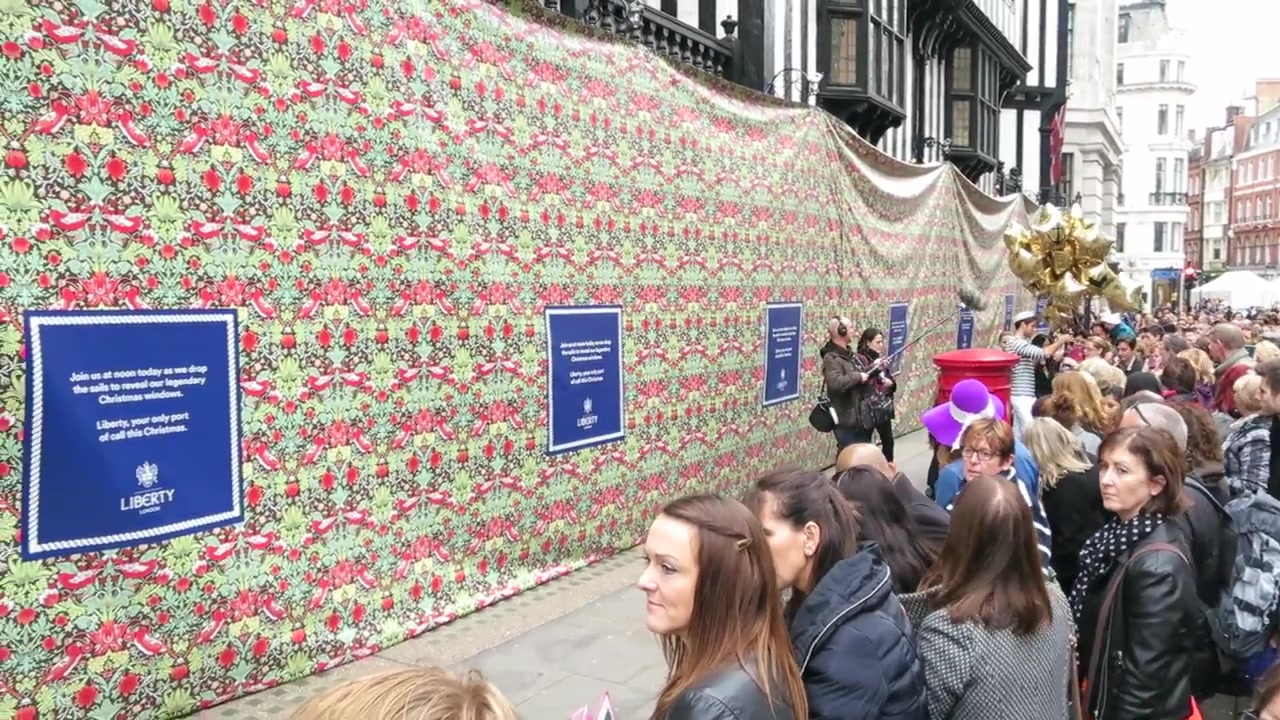
The temporary surface also makes the setting unmistakably Liberty. Rather than hiding the work behind plain boards, the store uses pattern as part of the event. Shoppers stop to read the notices, people gather along the pavement and the audience gradually thickens around the entrance.
A gospel choir on Great Marlborough Street
The London Community Gospel Choir performs beside Liberty’s entrance while the windows remain concealed. Singers stand in a line beneath the dark timber canopy, with microphones and a keyboard arranged close to the crowd. The performance brings warmth and movement to an otherwise grey November street.
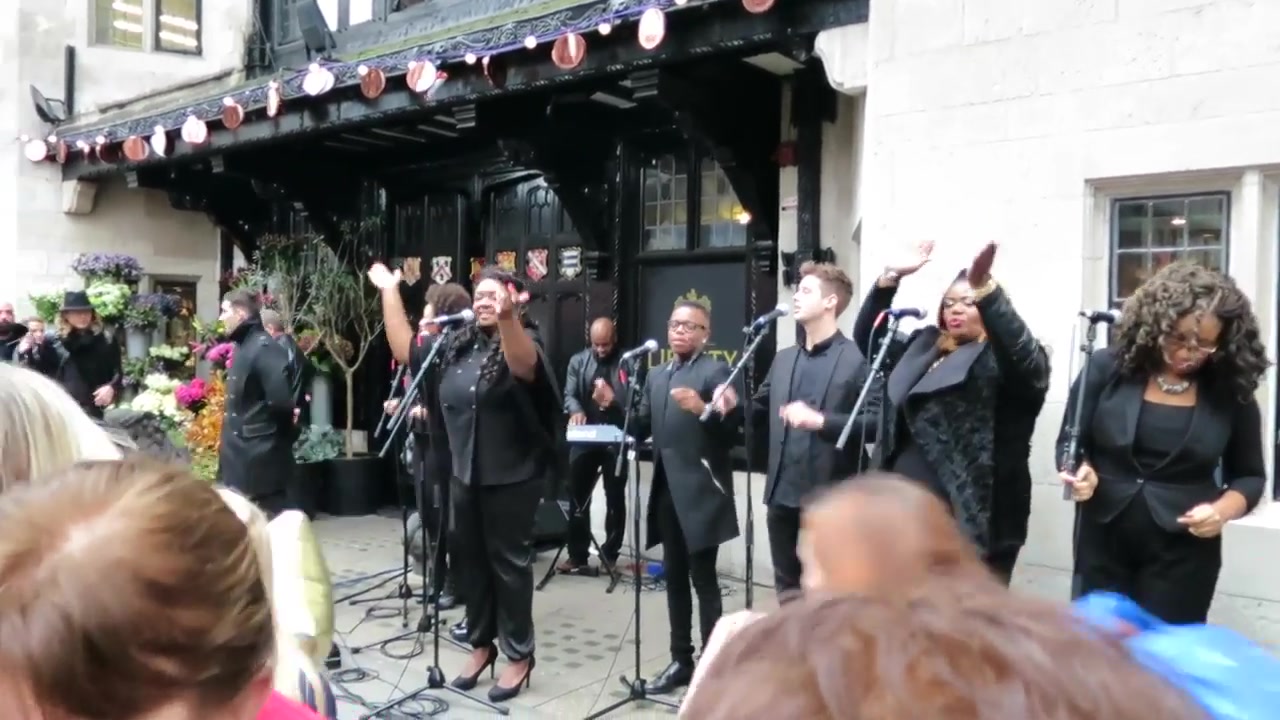
Barry’s camera stays at street level, moving between the choir and the waiting frontage. The film is less a polished record of a retail launch than a view from within the audience: heads cross the frame, phones are lifted and passers-by squeeze along the remaining pavement. That informality preserves the scale of the occasion better than an empty promotional photograph could.
The choir continues as the moment approaches. Some people have come deliberately for the unveiling, while others appear to have encountered the performance during a Sunday walk through Soho. Liberty’s location makes those two audiences difficult to separate. Great Marlborough Street is both a destination and a route between Regent Street, Carnaby and the surrounding West End.
The 2014 windows are revealed
When the coverings finally come down, the crowd immediately moves closer. The dark carved frames of Liberty’s shopfront reappear and the windows glow with gold, colour and reflected street light. For a few moments the display is difficult to see through the people pressing towards the glass, but that reaction is part of the story: the windows have become the event everyone was waiting to inspect.
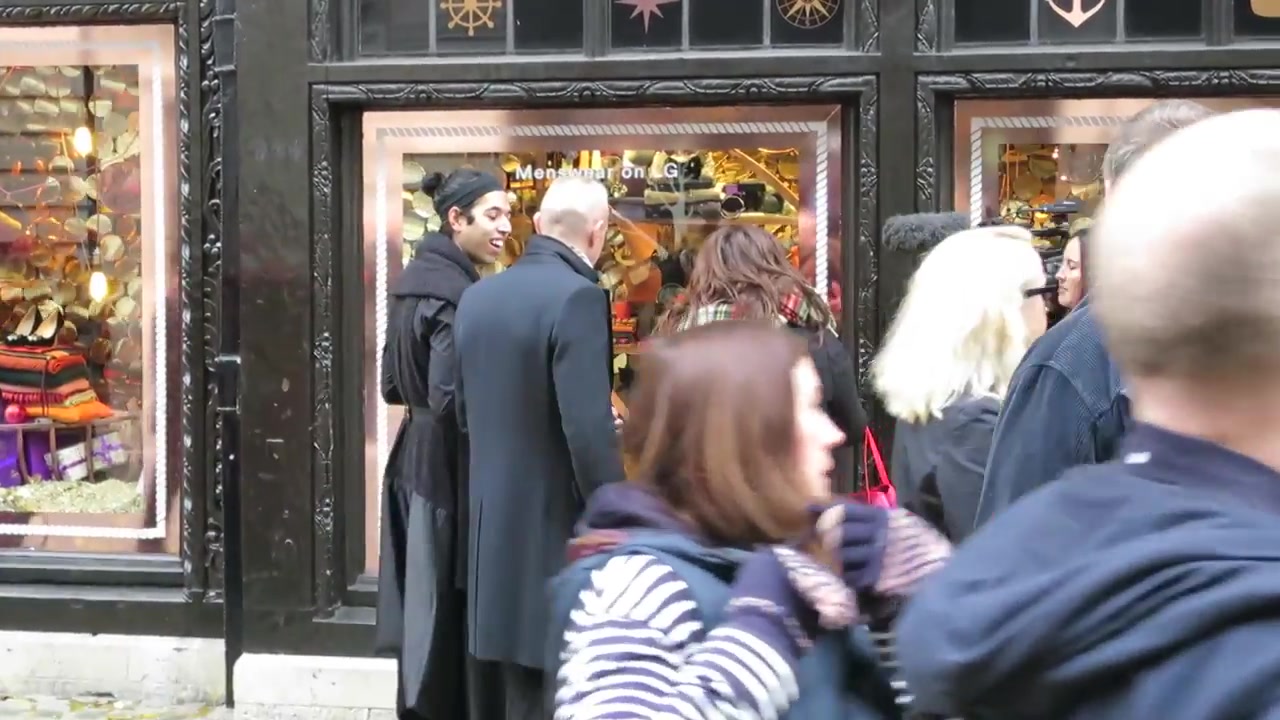
The film then changes pace. With the performance behind him, Barry walks along the frontage and studies the separate arrangements. Each window uses the same broad festive language—metallic gold surfaces, wrapped parcels and abundant objects—but the individual displays have different emphases.
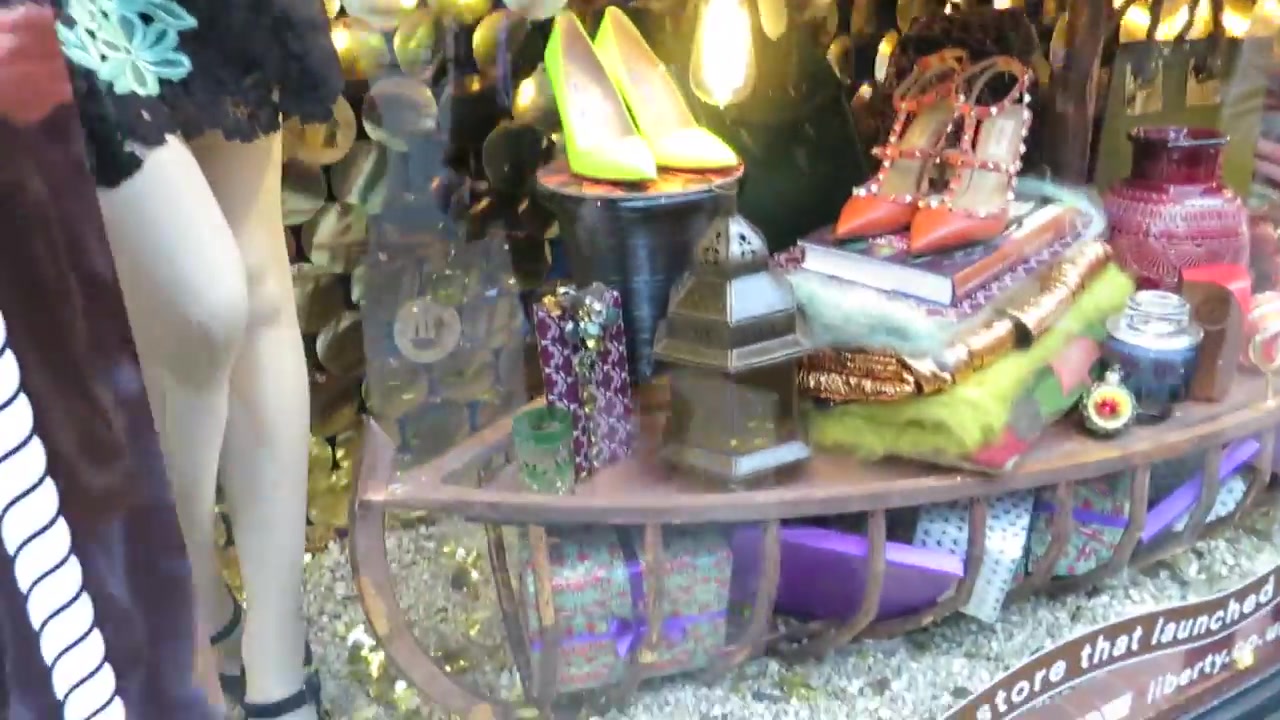
One window places brightly coloured shoes and accessories above stacked boxes and small gift objects. Gold discs cover the background and catch the light, creating a dense, almost theatrical surface behind the merchandise.
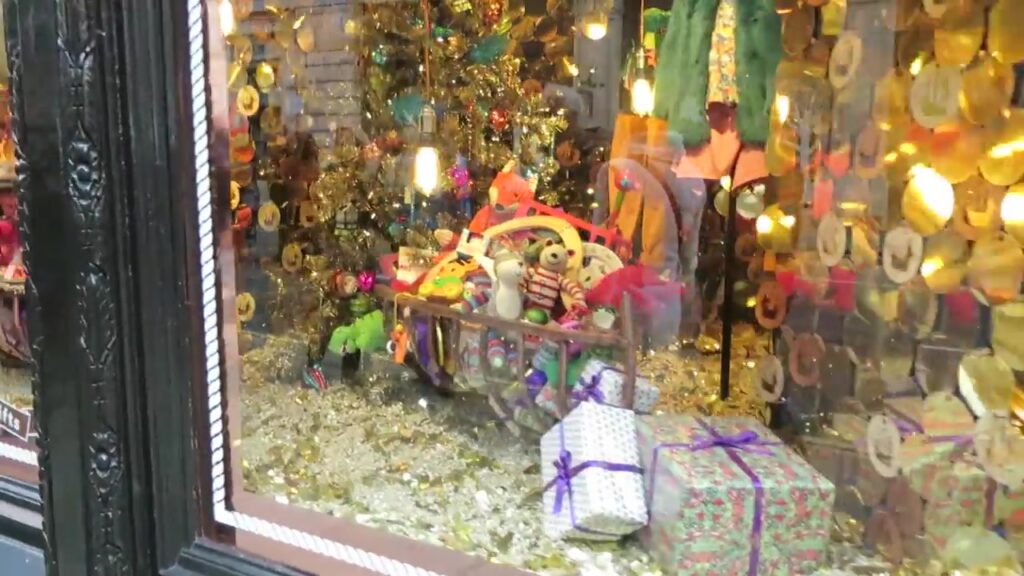
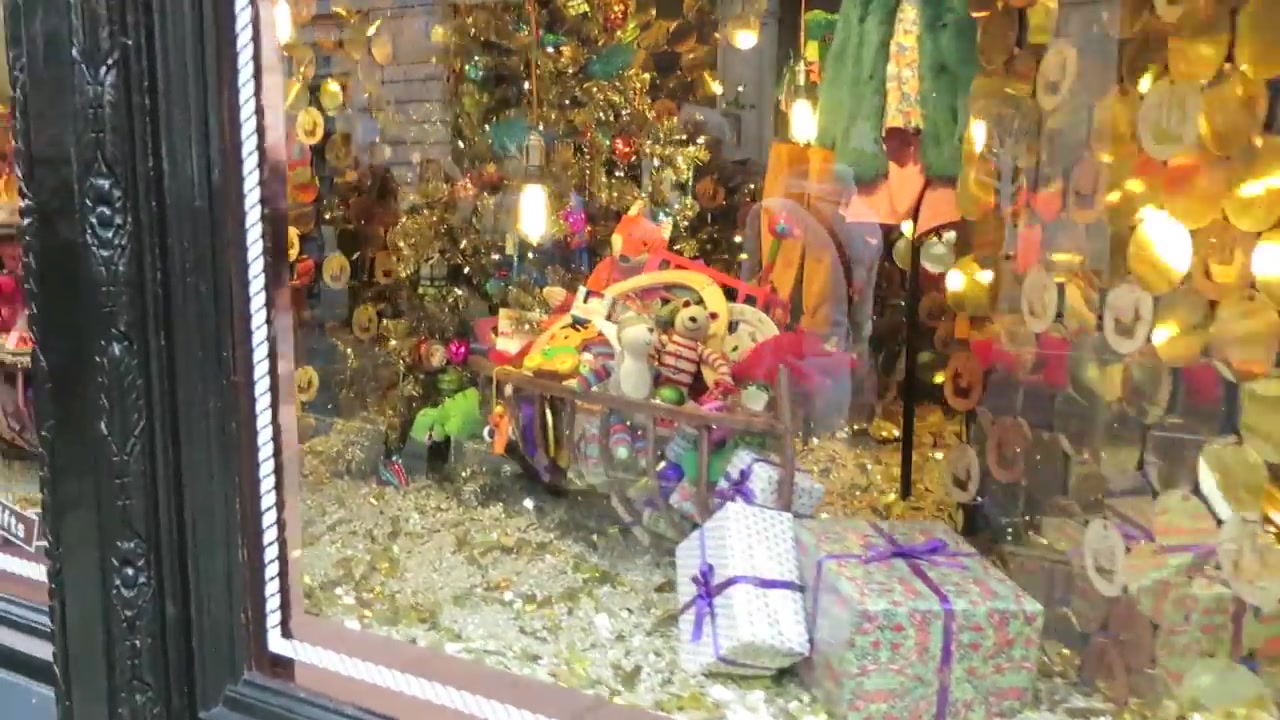
Another window is built around a basket-like display filled with toys, colourful pieces and presents. Parcels tied with purple ribbon sit in the foreground, while small lights and reflective gold details give the scene the appearance of a treasure store discovered at Christmas.
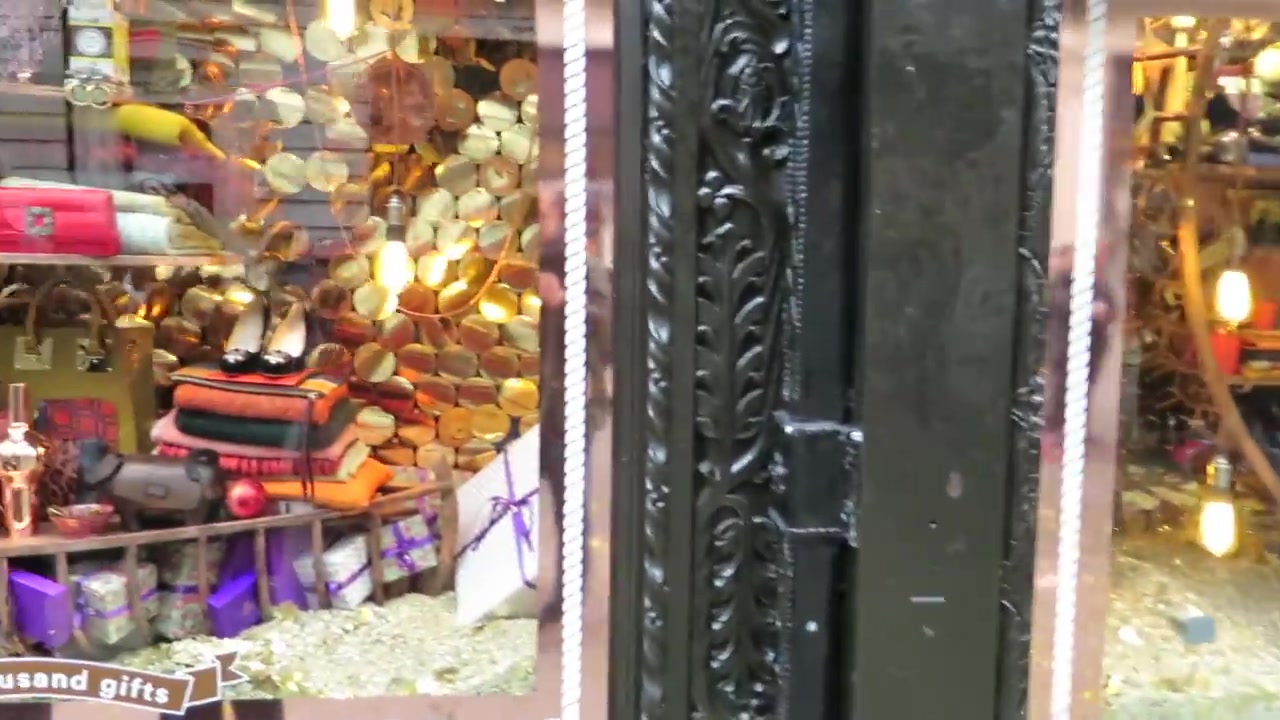
The final views continue the idea across accessories, cases, bottles and decorative objects. The displays are crowded rather than minimal, encouraging the eye to move from one small discovery to the next. Seen together, the windows present Liberty as a place of eclectic gifts rather than a conventional department store organised into neat product groups.
A London Christmas archive
The film lasts only seven minutes, but it captures the complete shape of the occasion: an expectant crowd, live music, the concealed façade and the sudden shift from patterned fabric to illuminated windows. It also records Liberty at a moment when a Christmas-window unveiling could briefly turn a central London pavement into a shared public space.
Viewed from the present, the details are unmistakably those of 2014—the filming style, the products in the windows and the behaviour of the crowd—but the attraction remains familiar. London’s Christmas displays still matter because they temporarily change streets people think they already know. On this November Sunday, Liberty made that transformation visible by asking everyone to wait and watch it happen.
