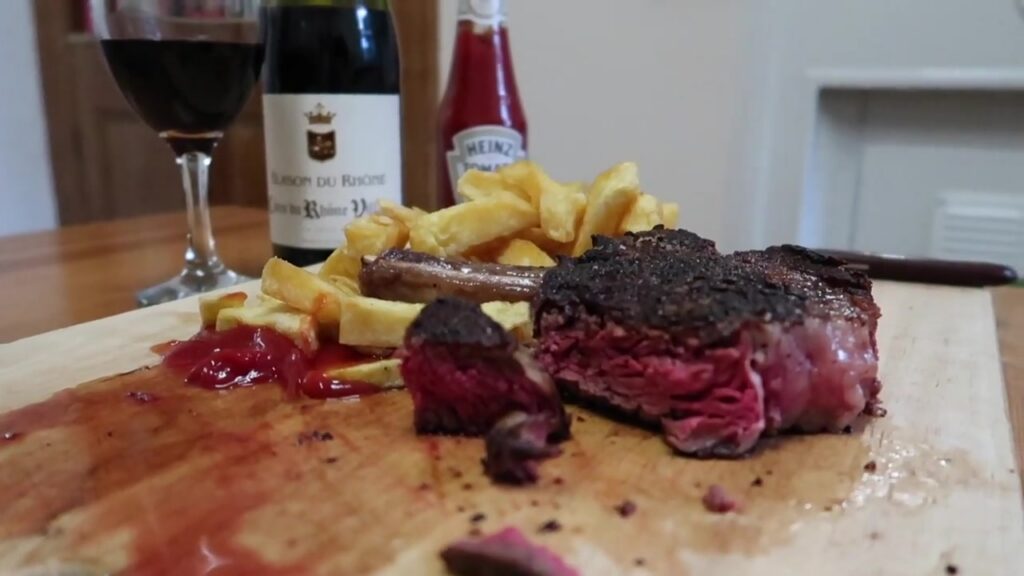
A good steak at home is less about restaurant theatre than control: the right cut, a properly heated pan, confident seasoning and enough patience to let the meat rest. This Roberts London film from August 2018 tests that idea using advice associated with Hawksmoor, the London steakhouse founded in 2006.
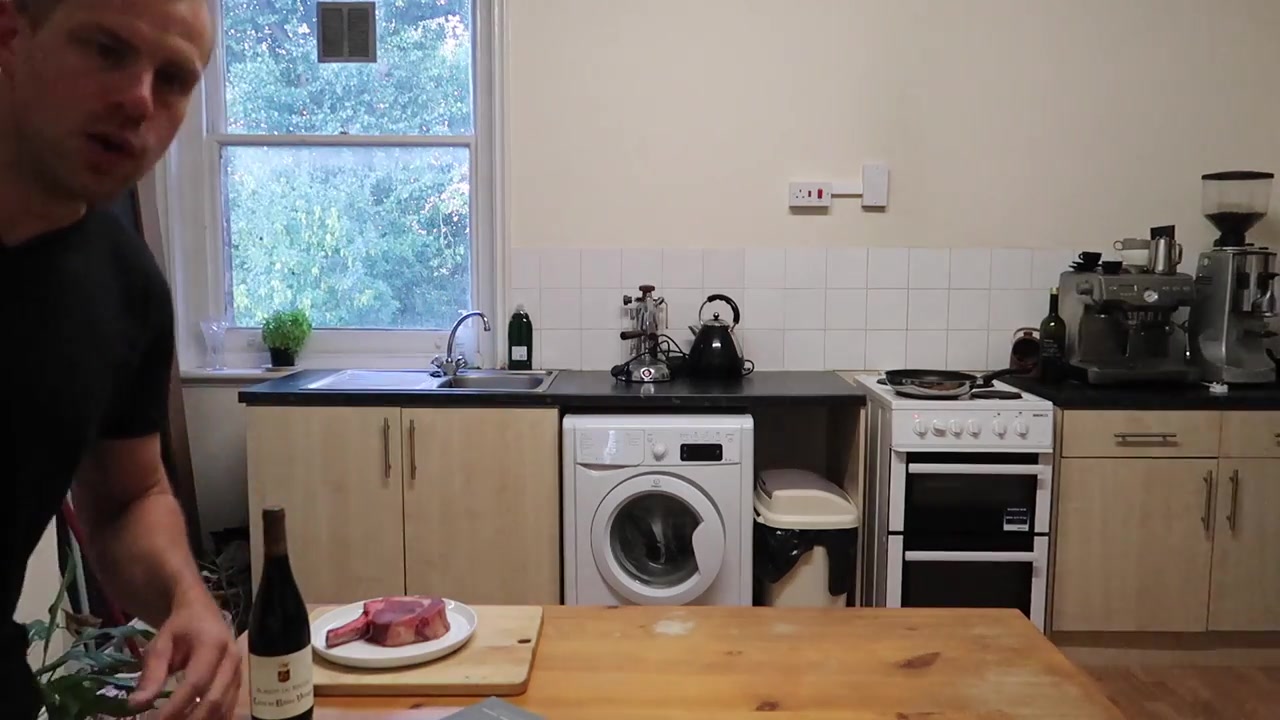
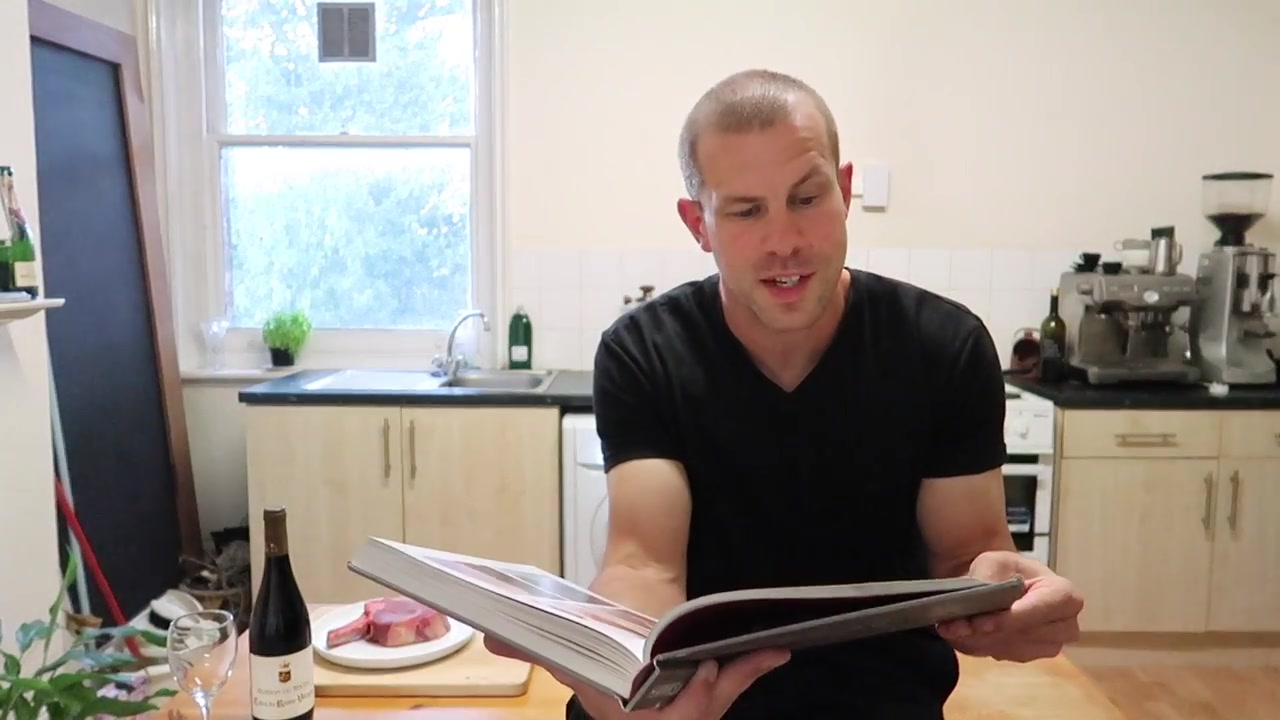
The video is not a claim to reproduce a restaurant kitchen. It records a home cook working through the principles found in Hawksmoor’s published guidance and judging the result honestly. The method begins before the pan is switched on, with the choice of steak itself.
From a London steakhouse to the home kitchen
Hawksmoor began in London and became known for British beef, generous cuts and a direct approach to cooking over intense heat. Its Spitalfields restaurant established the name in east London, while Seven Dials placed it in a former brewery building in Covent Garden. By 2018, the restaurants and their books had made the house method accessible well beyond the dining room.
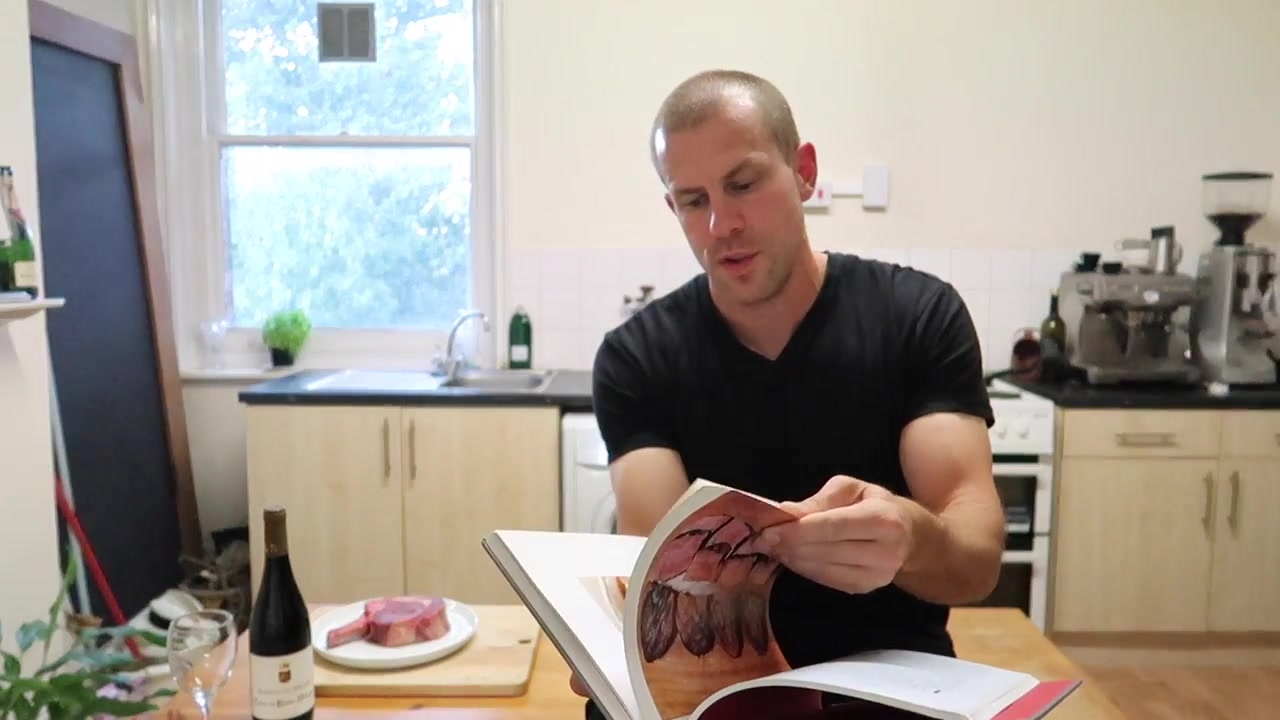
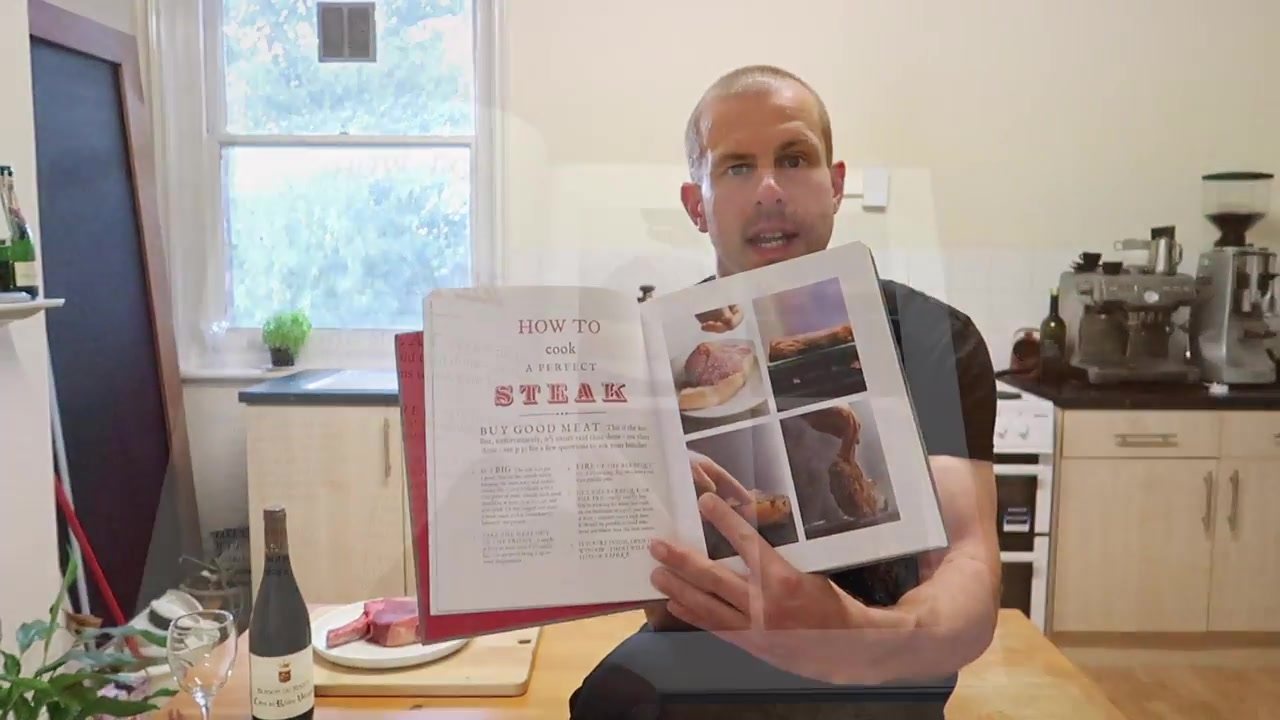
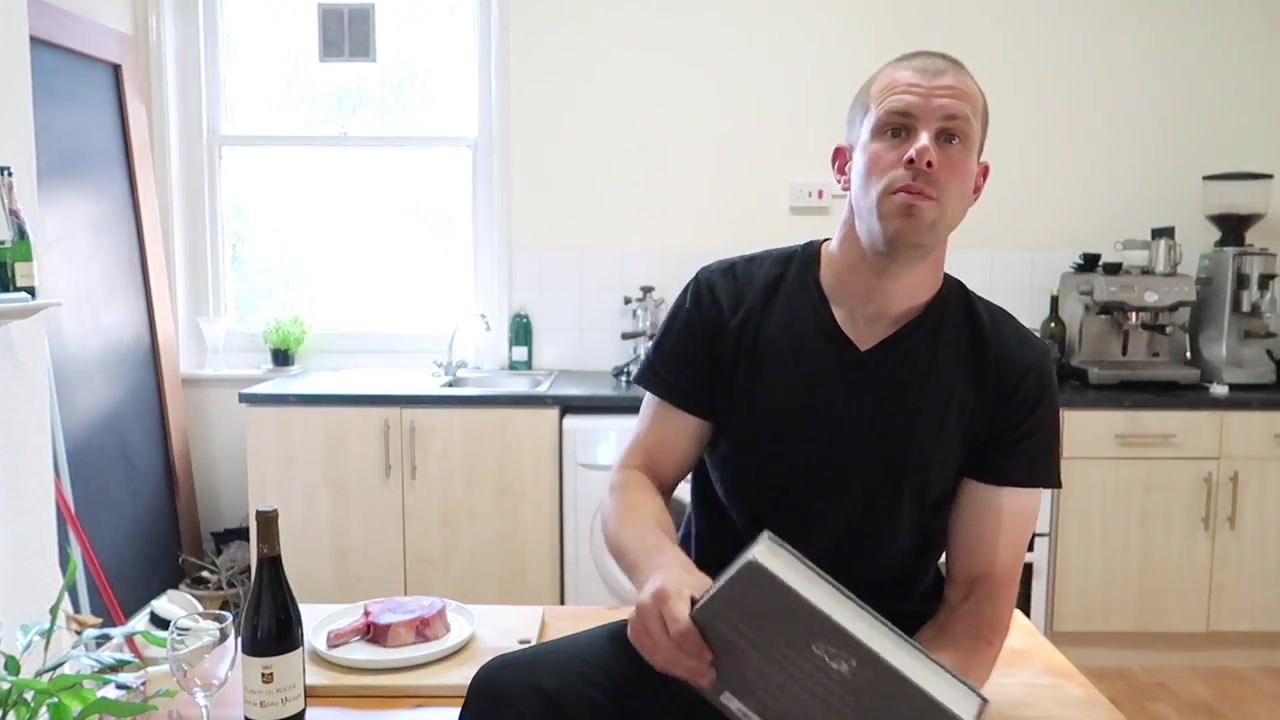
Hawksmoor at Home, written by Huw Gott and Will Beckett and first published in 2011, is more than a collection of restaurant recipes. It explains ingredients, techniques and the thinking behind the food and drink. For this film, those pages provide a practical framework rather than an exact formula.
Choosing a substantial steak
The central ingredient is a thick, bone-in rib steak. A substantial cut gives the cook time to build a brown crust without pushing the centre too quickly beyond medium-rare. Hawksmoor’s wider advice favours good British beef, traditionally bred, grass-fed and properly dry-aged. Those details affect flavour and texture long before the meat reaches the pan.
The steak is allowed to lose some of its refrigerator chill and its surface is dried. Removing surface moisture matters because water must evaporate before browning can begin. A dry exterior therefore gives the crust a better start.
Seasoning and heating the pan
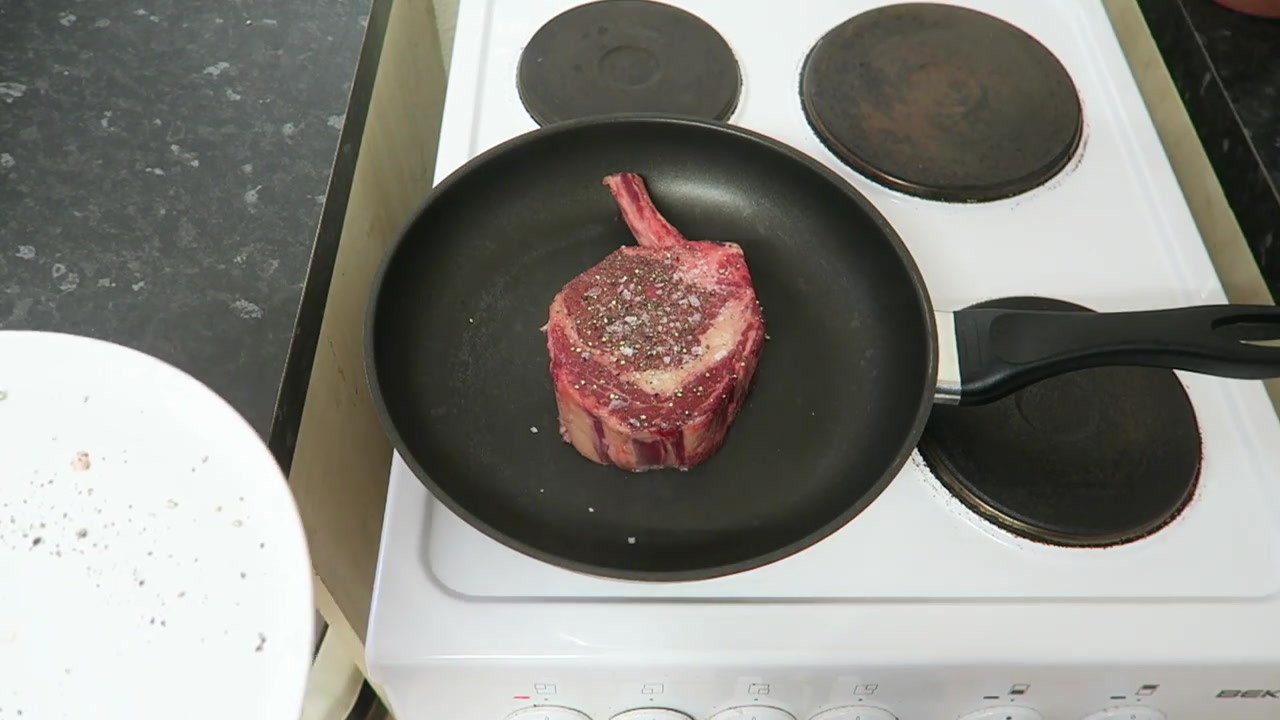
Salt is applied generously immediately before cooking. The aim is to season the meat itself, not merely decorate the finished plate. Pepper can scorch in an exceptionally hot pan, so the film keeps the early preparation simple.
The pan is heated until seriously hot. A heavy cast-iron pan or griddle is ideal because it stores heat and recovers quickly when the cool meat is added. In the Hawksmoor steak method, the pan is kept dry rather than filled with oil. The steak’s own fat begins to render as it cooks, helping the surface colour and flavour develop.
Turning, checking and resting
Rather than placing the steak in the pan and leaving it untouched for a long interval, the film turns it regularly. This encourages even cooking and lets Barry monitor the developing crust. The fatty edge is also exposed to the heat so that it can render and colour instead of remaining pale.
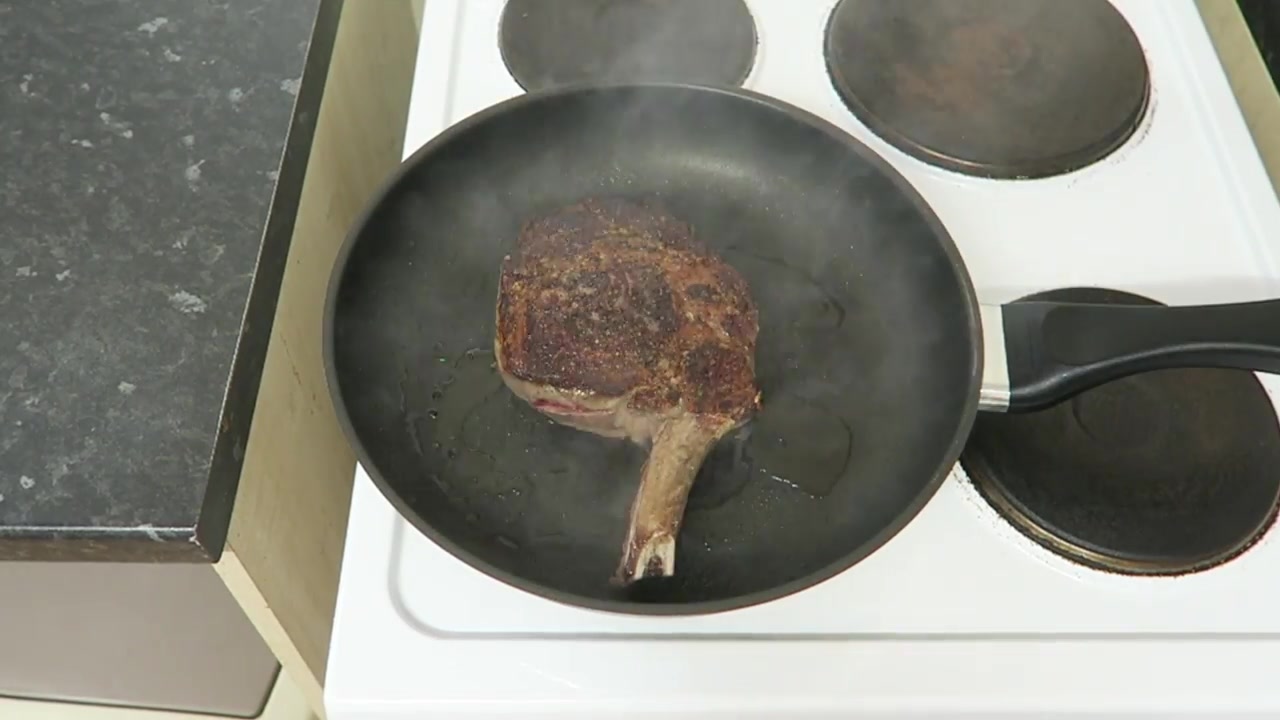
Timing alone cannot account for every steak. Thickness, starting temperature, pan, hob and desired doneness all change the result. Touch, experience and a meat thermometer can all help. The important point is to stop before the centre has gone further than intended, remembering that the meat will continue to warm slightly after leaving the heat.
Resting is not an optional pause. It allows the temperature to settle and the juices to redistribute before the steak is cut. In the film, chips are prepared as the straightforward accompaniment, keeping attention on the beef rather than a complicated sauce.
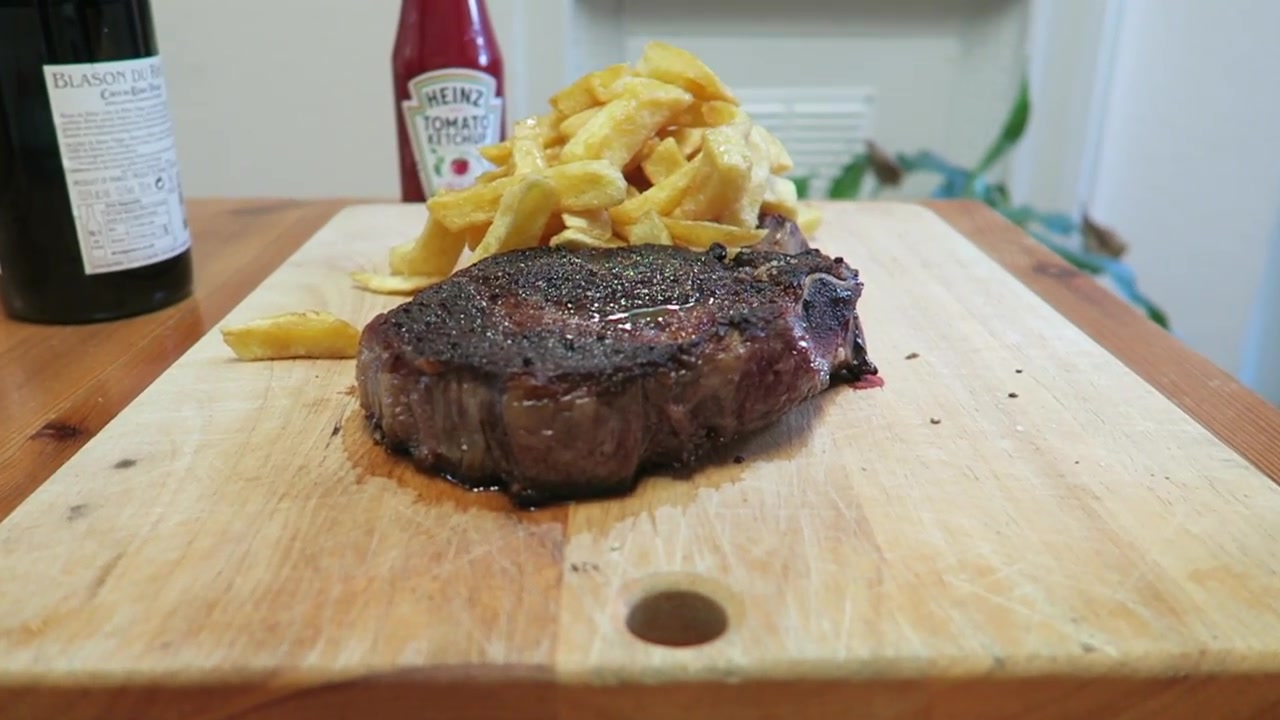
The medium-rare result
Only slicing reveals the final result. The browned exterior gives way to a warm pink centre: recognisably medium-rare, with the rib’s fat and bone contributing richness. Cutting across the grain makes each piece easier to eat, while serving the steak in slices also makes the doneness visible.
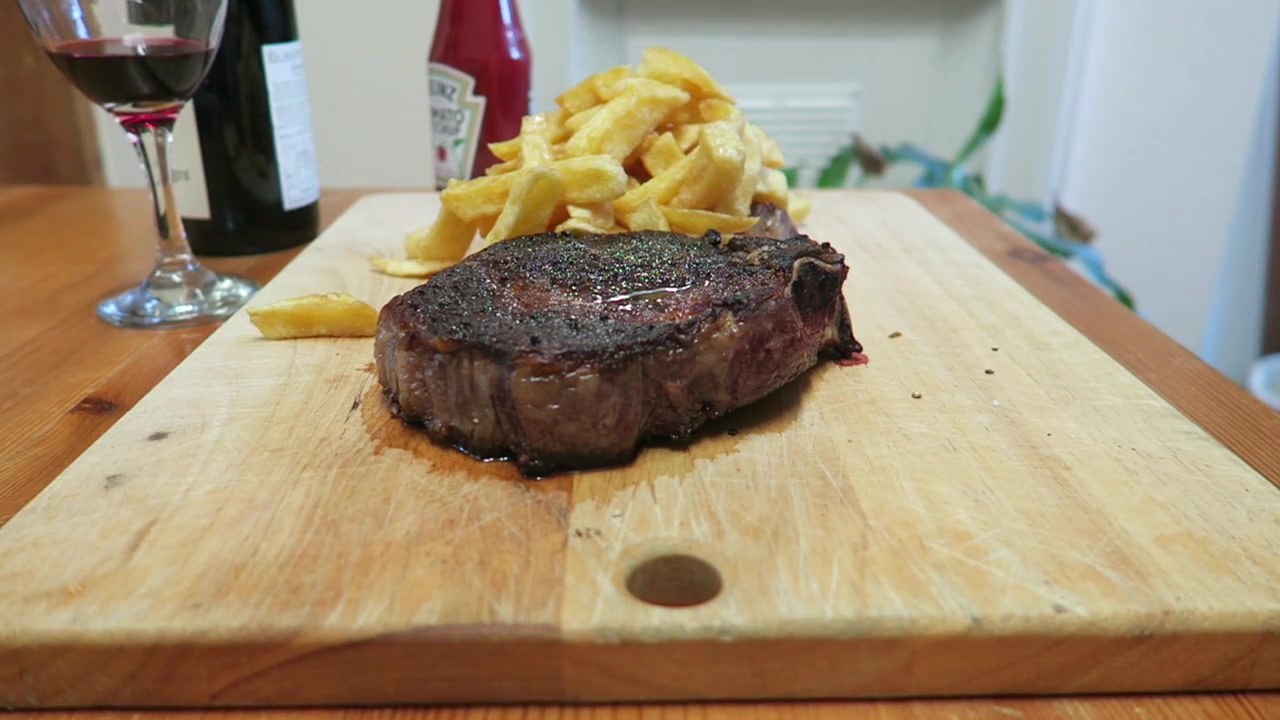
Barry’s assessment is enthusiastic but personal. The film succeeds because it shows the entire process, including the uncertainty that accompanies cooking an expensive cut at home. Its useful lesson is not that one fixed number of minutes guarantees perfection. It is that careful preparation, strong heat, regular attention and a proper rest make the outcome far more predictable.
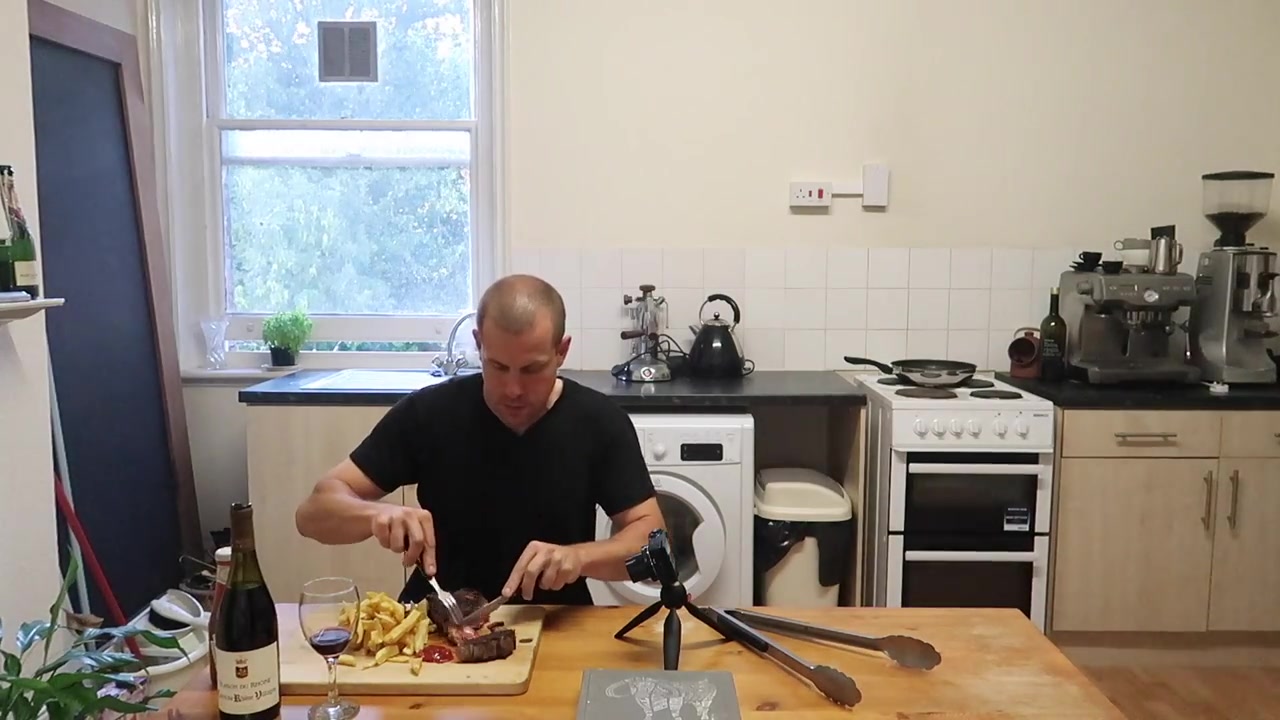
Watch the original 2018 film
Recorded for Roberts London and published on 11 August 2018, the film preserves a practical home interpretation of the Hawksmoor steak method, from the first look through the cookbooks to the final taste.

Recent Comments