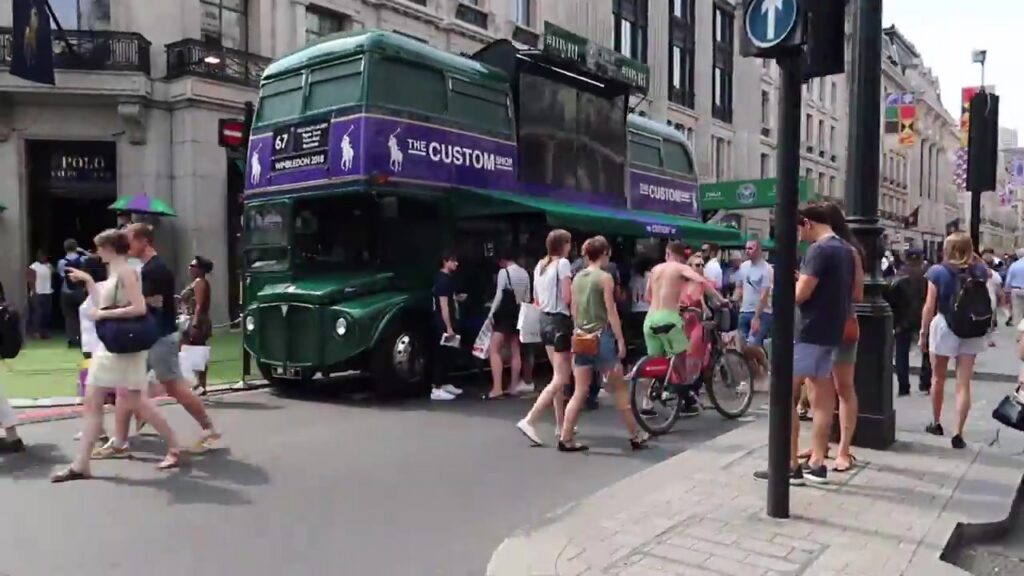
For four Sundays in July 2018, Regent Street exchanged vehicles for pedestrians. Temporary installations and summer activities filled the road. This Roberts London film records one of those unusual traffic-free days. It begins at Trafalgar Square and walks north through the West End.
A walk from Trafalgar Square
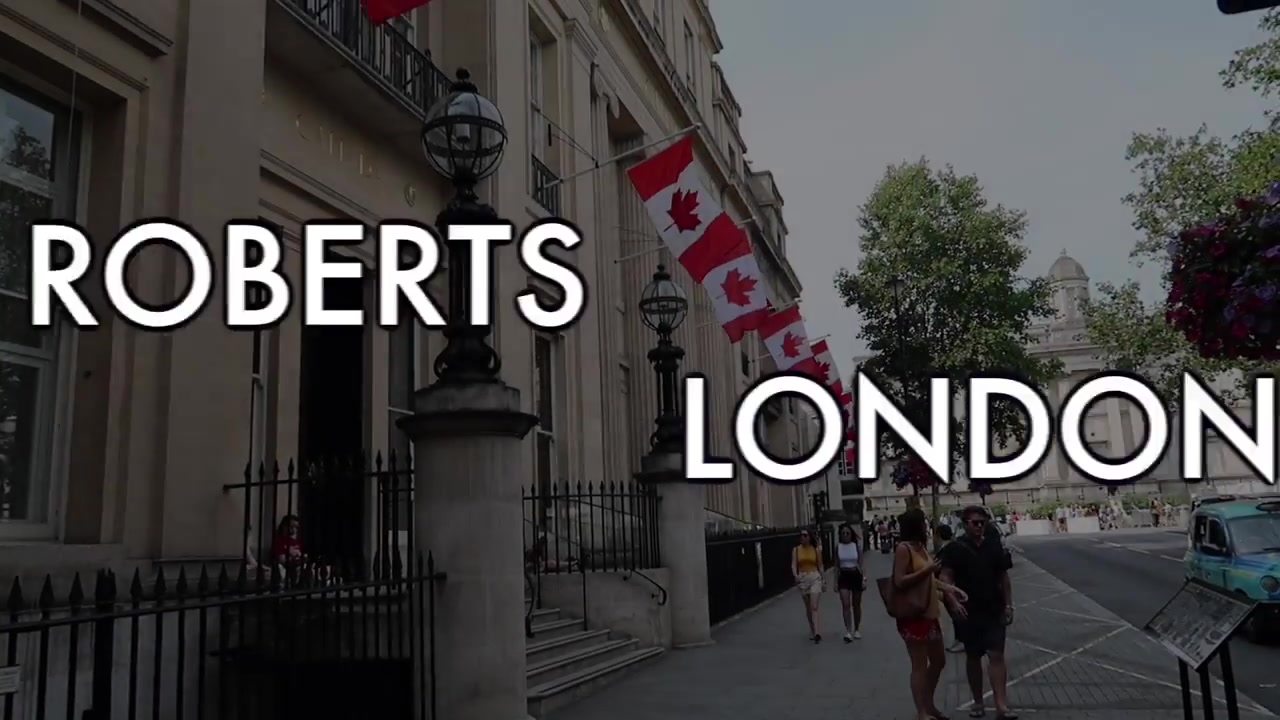
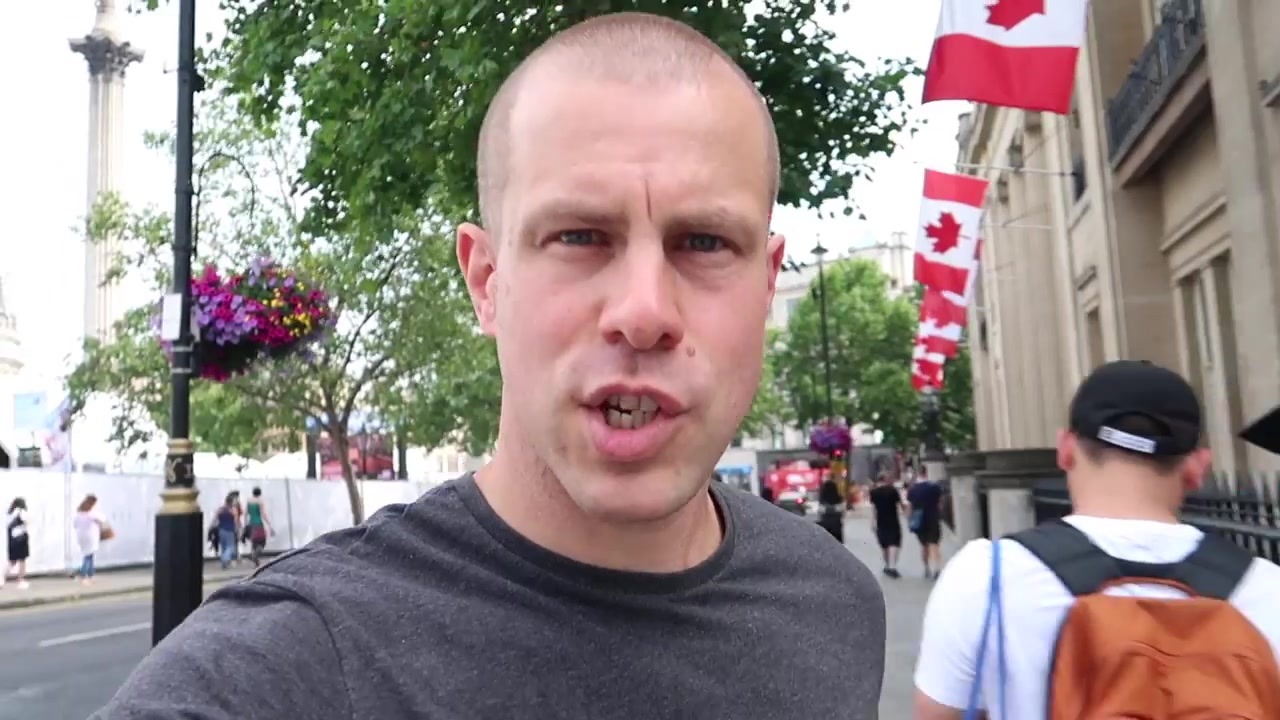
First, the film opens in Trafalgar Square rather than on Regent Street itself. That approach gives the film value as a London record. It places the event within an ordinary walk through the city rather than treating it as an isolated attraction. From the square, the route heads towards Waterloo Place and Piccadilly Circus.
By 2018, Summer Streets was already in its sixth year in 2018. Regent Street became a pedestrian-only zone on Sundays from 1 to 22 July, with the programme running from noon until 6pm. Shops, restaurants and other businesses extended the experience beyond their usual interiors through activities, demonstrations, pop-ups, food and entertainment.
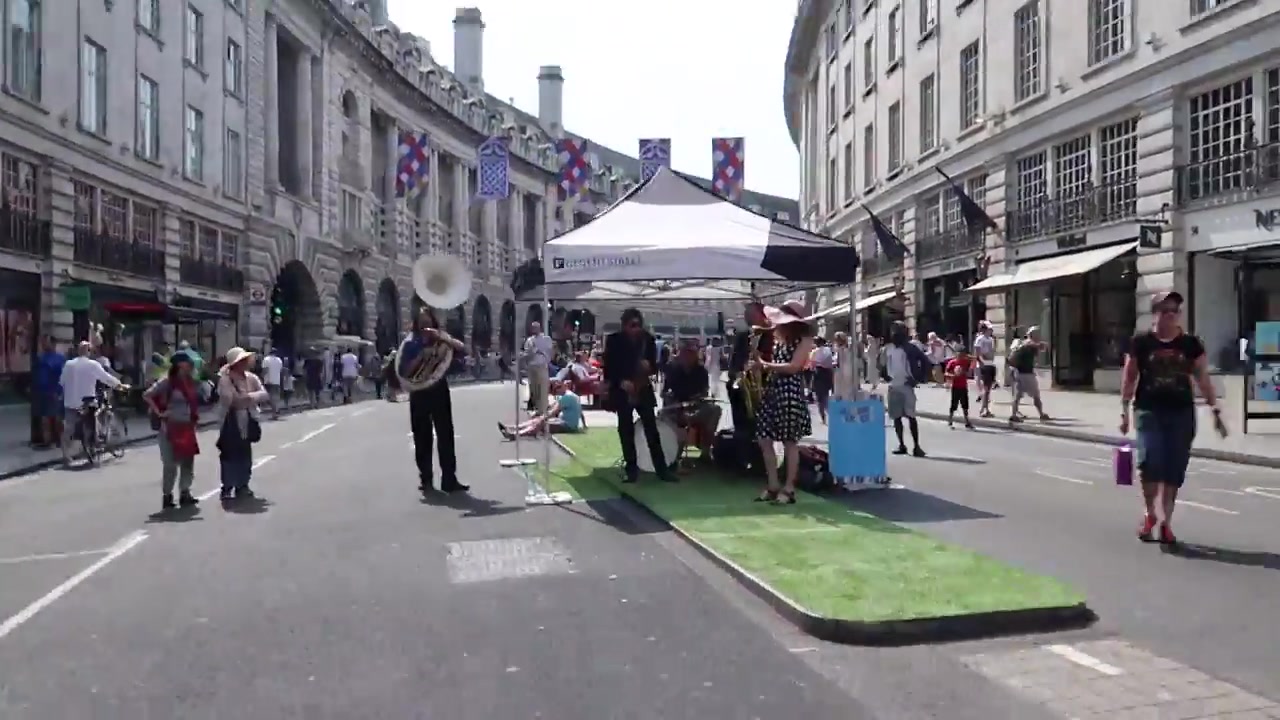
Regent Street without the traffic
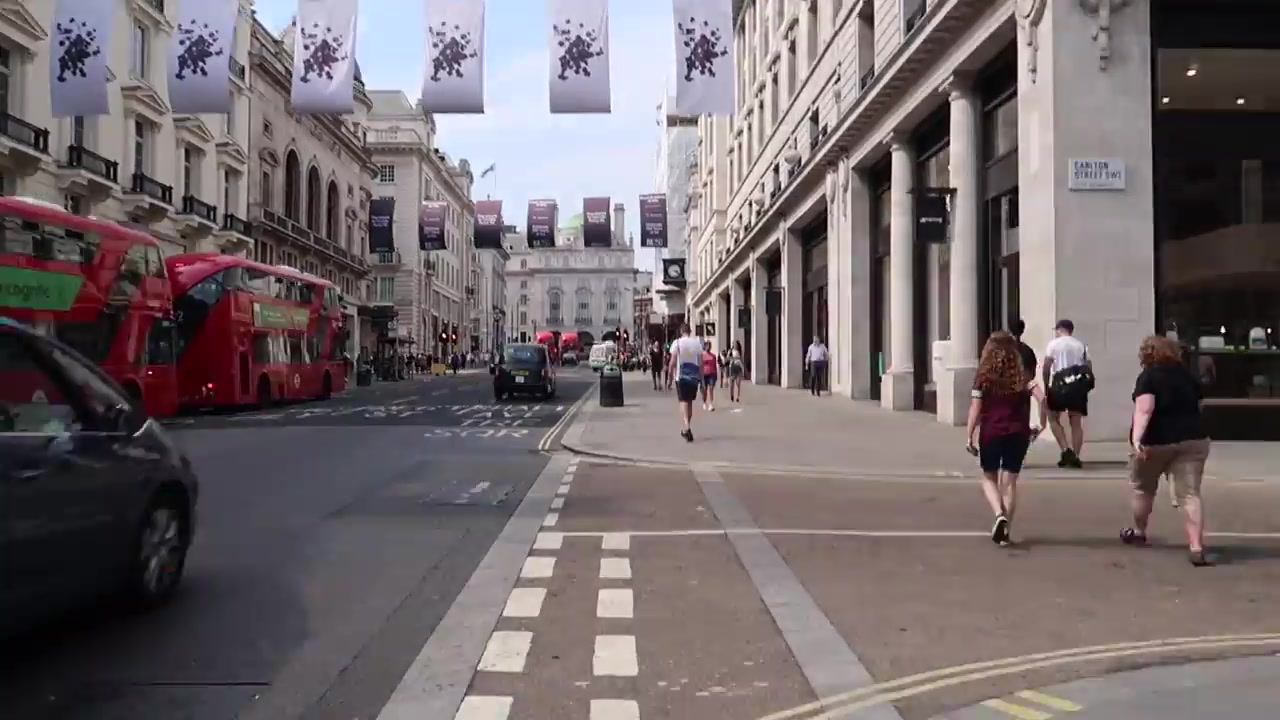
Most of all, the most striking change is also the simplest: the road belongs to people. Regent Street’s curve and Portland-stone façades are familiar London images. Removing the continuous stream of vehicles changes the experience of its architecture. Visitors walk down the centre of the roadway, stop to look around and cross without waiting for the lights.
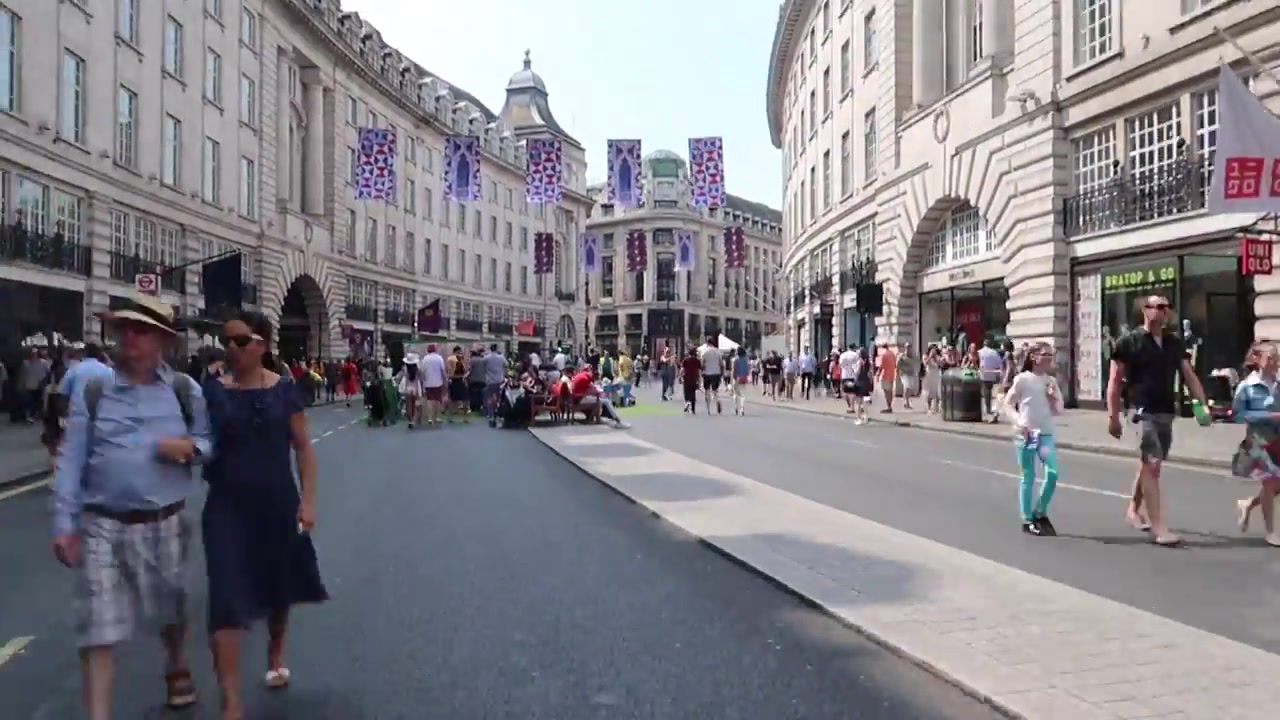
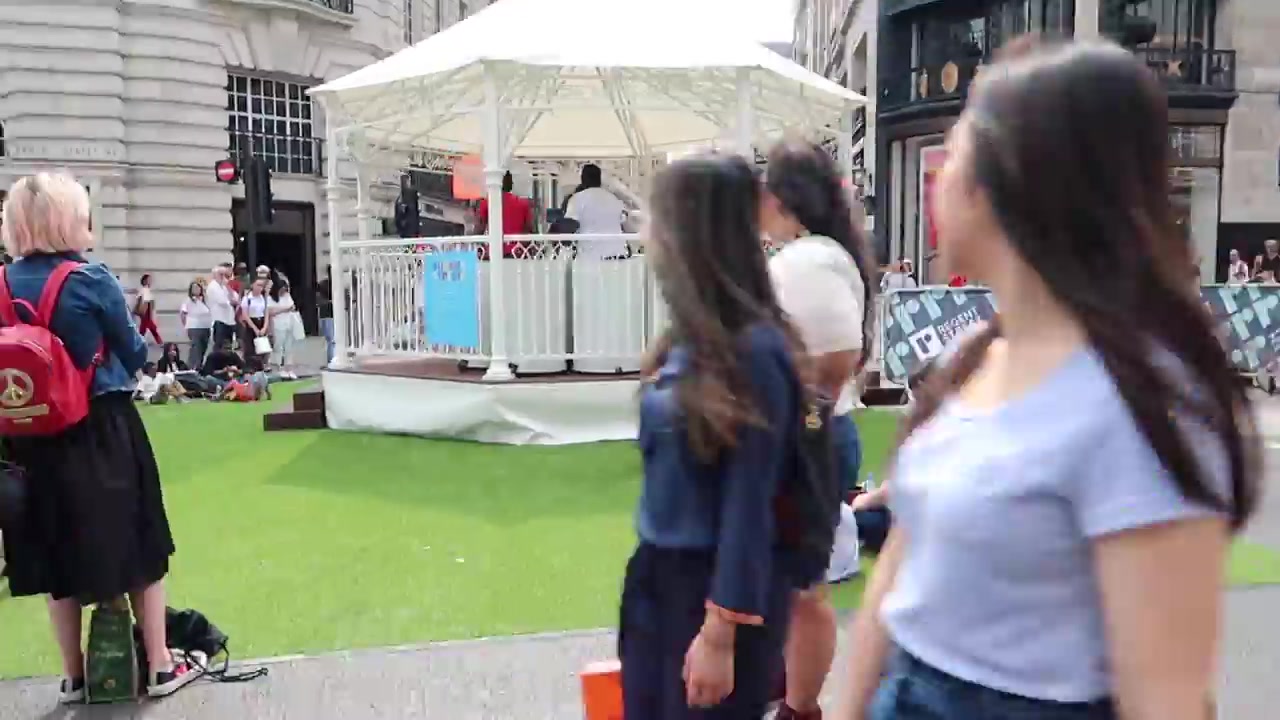
In addition, the film captures the temporary character of the day. Artificial grass, public seating and a tennis activity create small pauses within the shopping street. The Wimbledon Championships had taken place earlier that month, and the court gives the event an unmistakably London summer reference.
A shopping street becomes public space
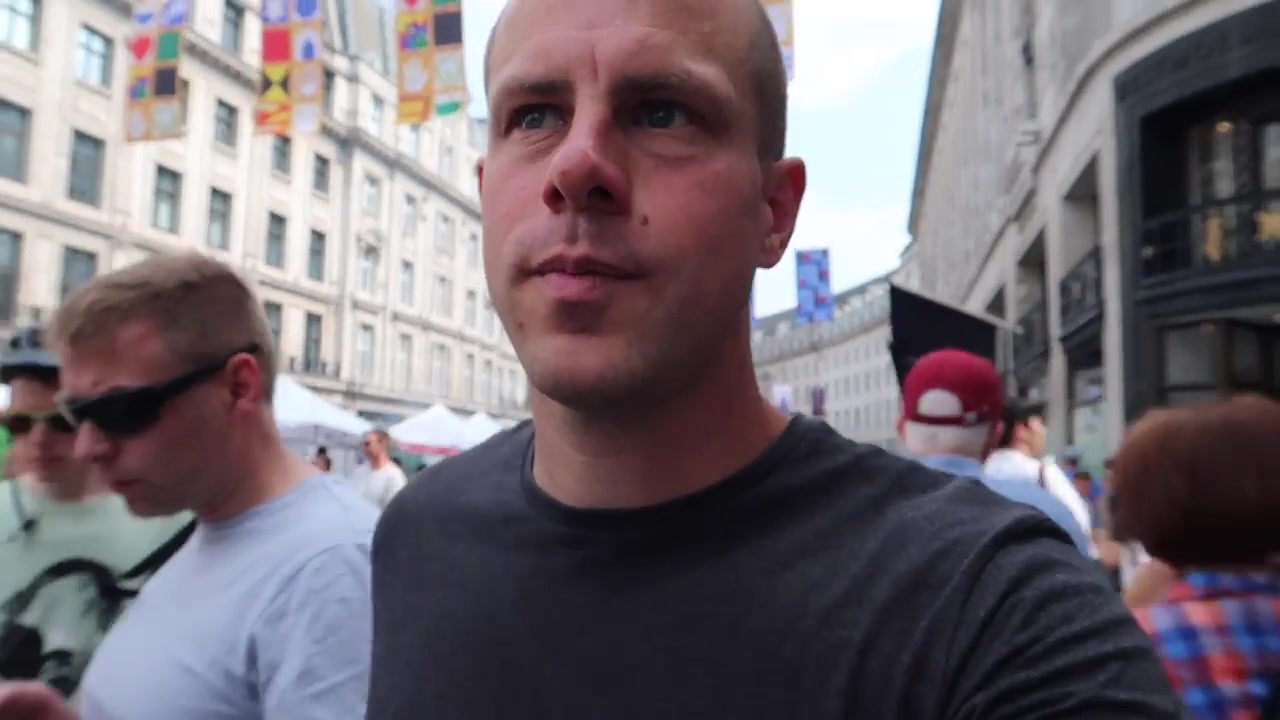
At the same time, Summer Streets remained closely connected to Regent Street’s commercial identity. The organisers did not transplant a conventional street festival into the West End. Instead, Regent Street’s shops and restaurants shaped the programme. Yet the absence of traffic allowed the street to work differently for a few hours. People could linger where they would normally hurry along the pavement, while food stands and activities helped break up the walk.
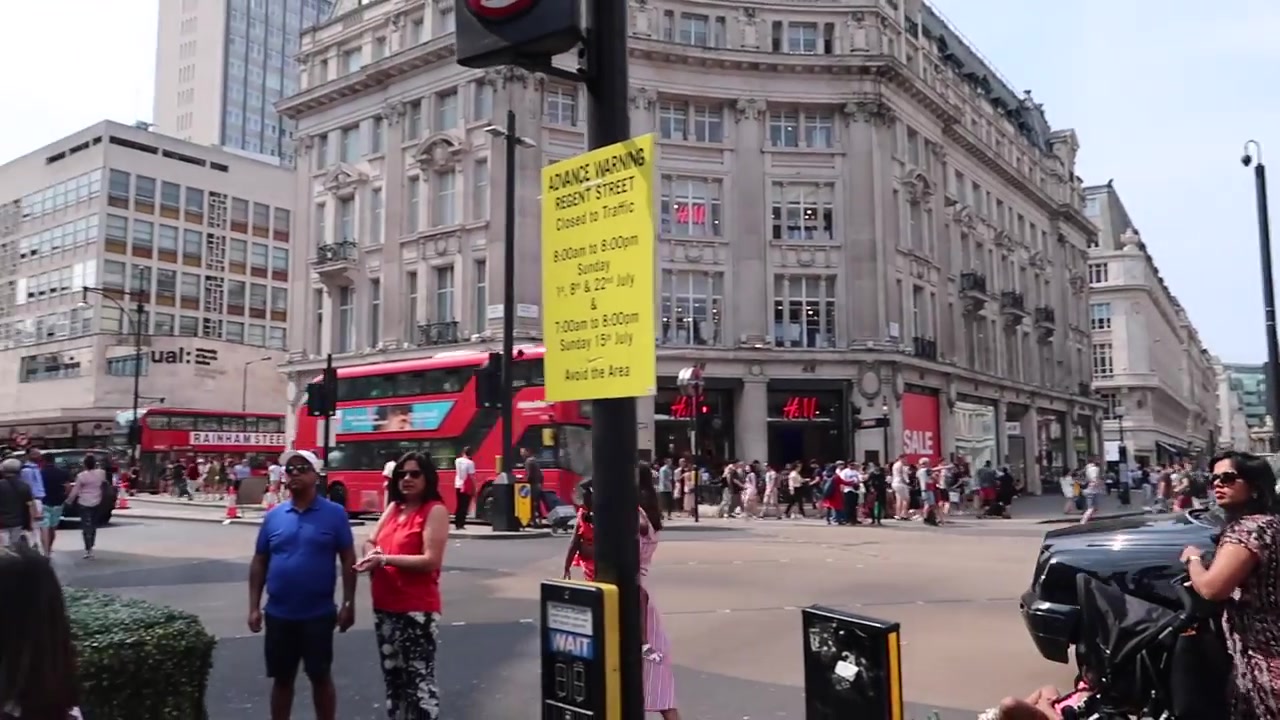
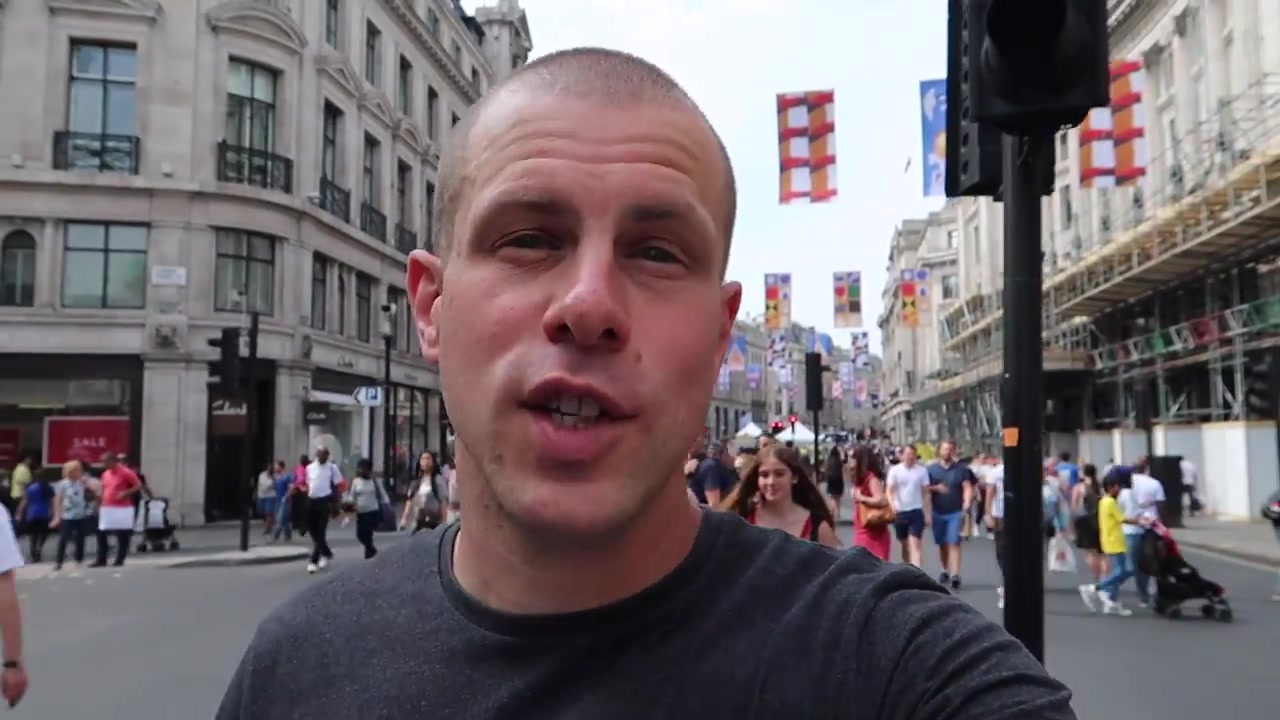
As a result, the film forms a useful archive of Regent Street in summer 2018. The famous shopping street appears temporarily quieter, slower and more open. The film finishes near Piccadilly Circus. It completes a walk that begins with ordinary traffic and ends on a road reserved for pedestrians.
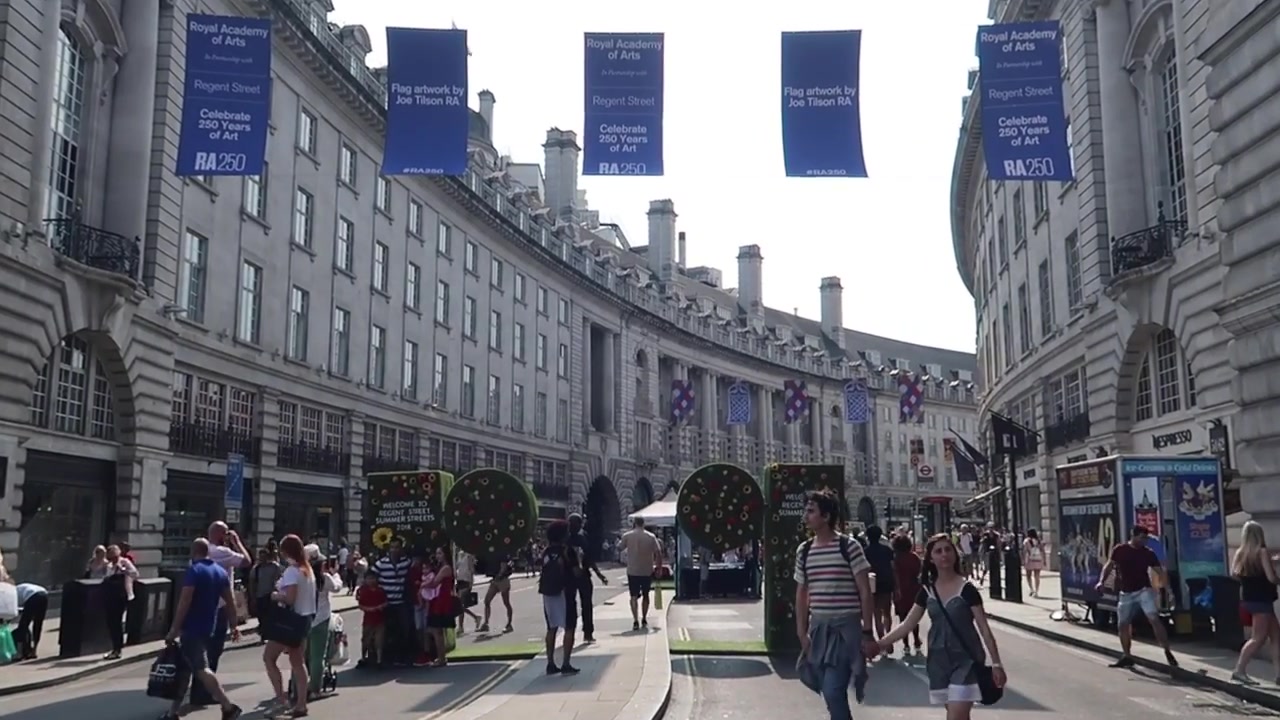
In practical terms, for most of the year, Regent Street is defined as much by movement as by architecture. The pavements are busy, but the central space remains a transport route. Summer Streets briefly reversed that balance. Once barriers closed the road, visitors occupied its full width. A major London street quickly began to resemble a broad public promenade.
Moreover, there is a modest documentary quality to the shopfronts, event boards and street furniture caught in passing. Retail names change, temporary programmes disappear and traffic returns. However, these details preserve a recognisable West End moment before the following decade brought larger changes. Rather than presenting a polished official summary, the camera records the day at walking pace: arriving, looking, joining the crowd and continuing through the street.
Regent Street Summer Streets 2018
Finally, the 2018 programme ran on four consecutive Sundays, from 1 to 22 July, between 12pm and 6pm. Roberts London published this film on 28 July 2018. It preserves the event’s atmosphere within the Roberts London video archive.

Recent Comments