Regent Street Summer Streets 2016 gave London’s transport history an unusually grand outdoor setting. I went along to explore the Transported by Design festival, where heritage buses, transport displays and street entertainment filled the road between Piccadilly Circus and Oxford Circus. The event took place on Sunday 3 July; this film was first published on 10 July 2016.
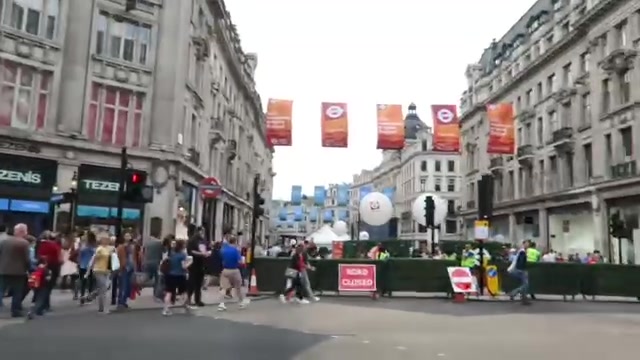
A different view of Regent Street
The walk takes in familiar West End landmarks before settling into the festival. Around Piccadilly Circus, the usual backdrop of shopfronts and large advertising screens remains, but the transport displays change the view along Regent Street. Visitors gather around vehicles that would normally be seen on the move or in a museum.
With the festival section closed to through traffic, there is room to stand in the road and look back along the curve of the buildings. The film moves between broad street views and closer looks at individual exhibits. It is as much a record of the people enjoying a London Sunday as it is a tour of the vehicles.
Horse buses and red double-deckers
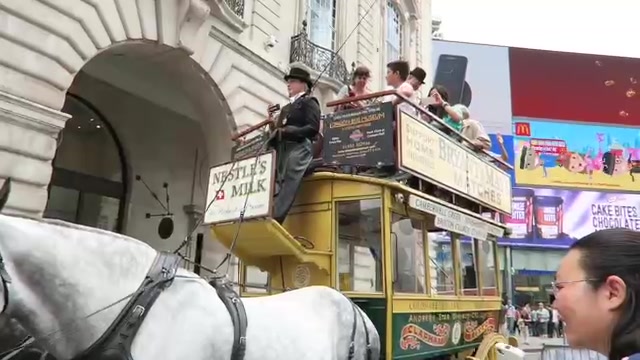
The horse bus is one of the most striking sights. Horses stand beside a tall vehicle with an open upper deck, while advertising panels and destination lettering cover its sides. People gather around it and sit above street level, bringing a very different scale and pace of travel into the middle of the West End.
Nearby, a red bus carrying GENERAL lettering offers another view of London’s transport past. More red buses follow along the route, with visitors taking the opportunity to peer inside and photograph the details. The camera lingers on fronts, platforms, windows and interiors rather than treating the vehicles as a distant line-up.
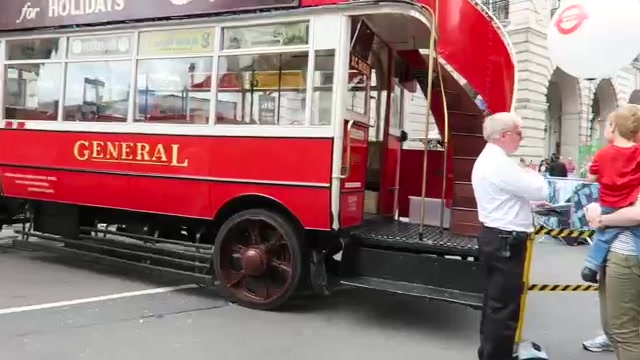
These close views are part of the appeal of the film. They show how much character sits in the everyday parts of a vehicle: its lettering, seating, rails and windows. Seen at walking pace, familiar London transport becomes something to stop and study.
Transport design beyond the vehicles
The displays also turn attention towards the patterns and symbols of the network. A colourful roundel appears against a leafy backdrop, while another display brings together fabric designs. Those small details provide a different kind of transport history from the buses themselves.
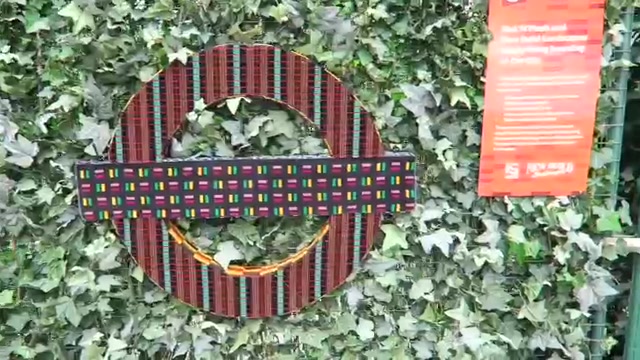
TfL’s original festival announcement described three zones covering the past, present and future. Presented with London Transport Museum, the event formed part of that July’s Summer Streets programme. This visit captures the atmosphere on the street rather than attempting to catalogue every exhibit.
Music and space to linger at Summer Streets 2016
Between the transport displays, there are musicians, activity stands and places to pause. A singer with a guitar performs beside a microphone, while people sit on temporary seating set on bright green turf. Elsewhere, visitors stop around cycle displays and browse the stalls.
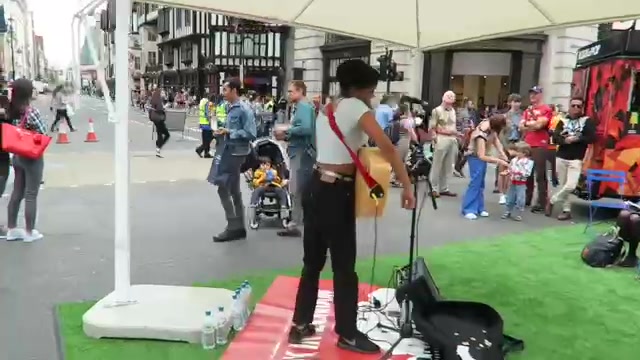
The changing pace makes the walk feel informal. Some stretches are busy with people looking at exhibits; others leave space to step back and take in the whole street. The shops and side streets remain part of the scene, so the festival sits within the wider West End rather than feeling separated from it.
Oxford Circus, All Souls and the BBC
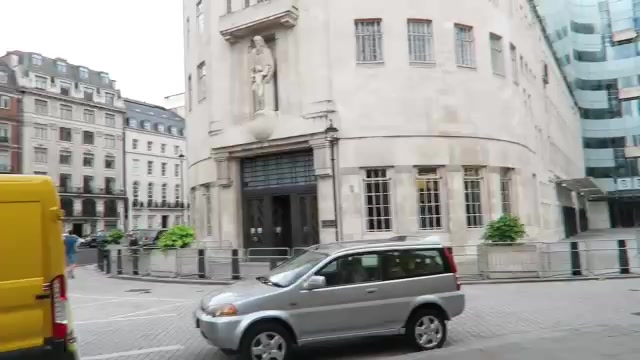
The route continues towards Oxford Circus and then beyond the main festival area. All Souls Church comes into view, its narrow spire rising above the rounded portico. The camera also turns towards BBC Broadcasting House, adding another familiar London landmark to the walk.
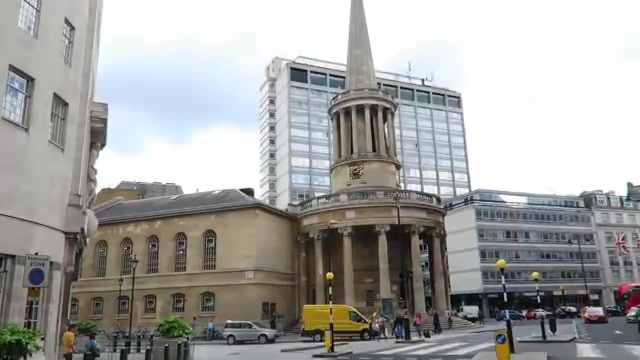
These later views give the film a broader setting. After the crowded transport displays, the surrounding streets, buildings and passing traffic return to the foreground. Together, they make this a record of Regent Street and its neighbourhood in the summer of 2016.
For another day from the same season, see my Regent Street Garden Party visit. Both films preserve the events and street scenes as I encountered them at the time.
