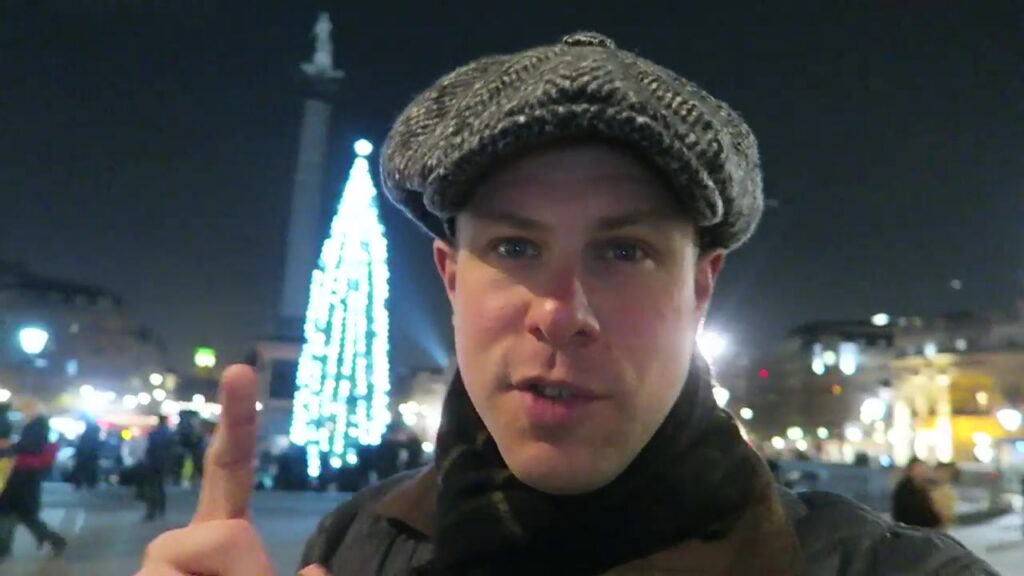
London in December is less a single destination than a chain of illuminated streets, temporary markets, winter food stalls and familiar landmarks altered by the season. This Roberts London film, published on 21 December 2016, records that chain as it looked during the final days before Christmas.
Christmas lights across the West End
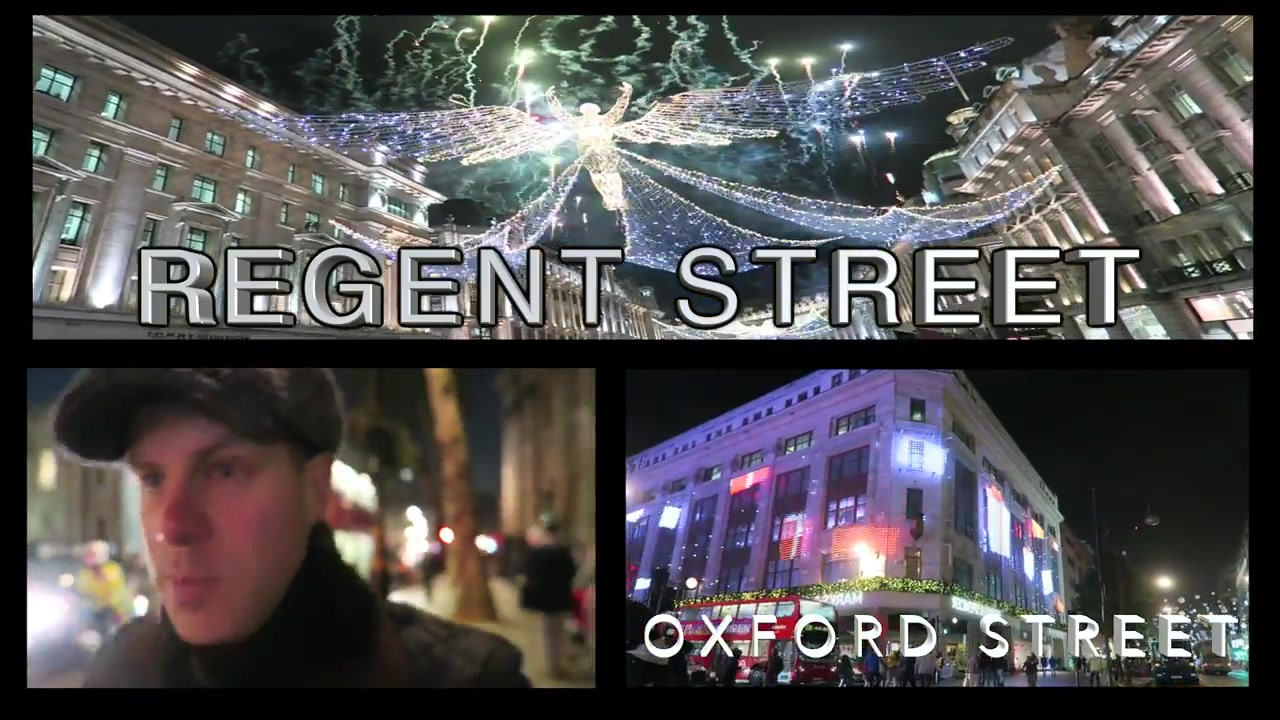
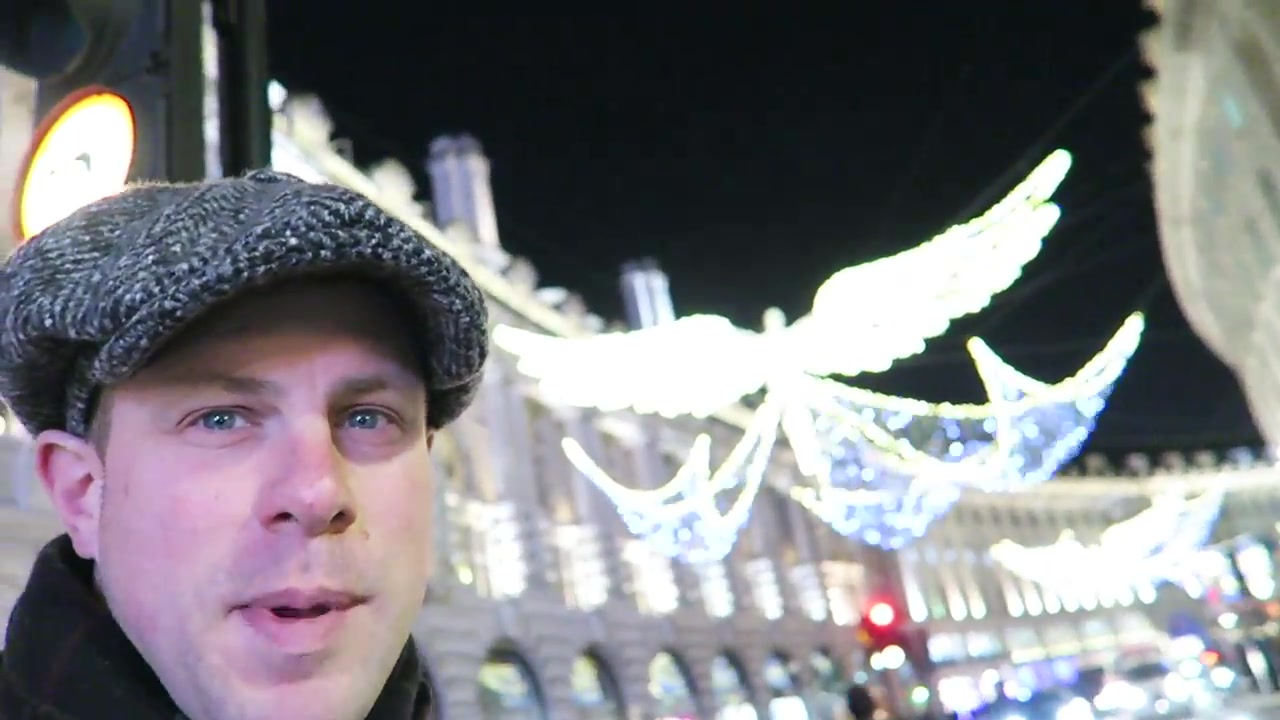
The walk begins in central London, where the Trafalgar Square tree supplies a fixed point before the film turns towards the shopping streets. Regent Street’s illuminated angels were still new in 2016, while Oxford Street carried its own canopy of light above the buses, taxis and late-season crowds.
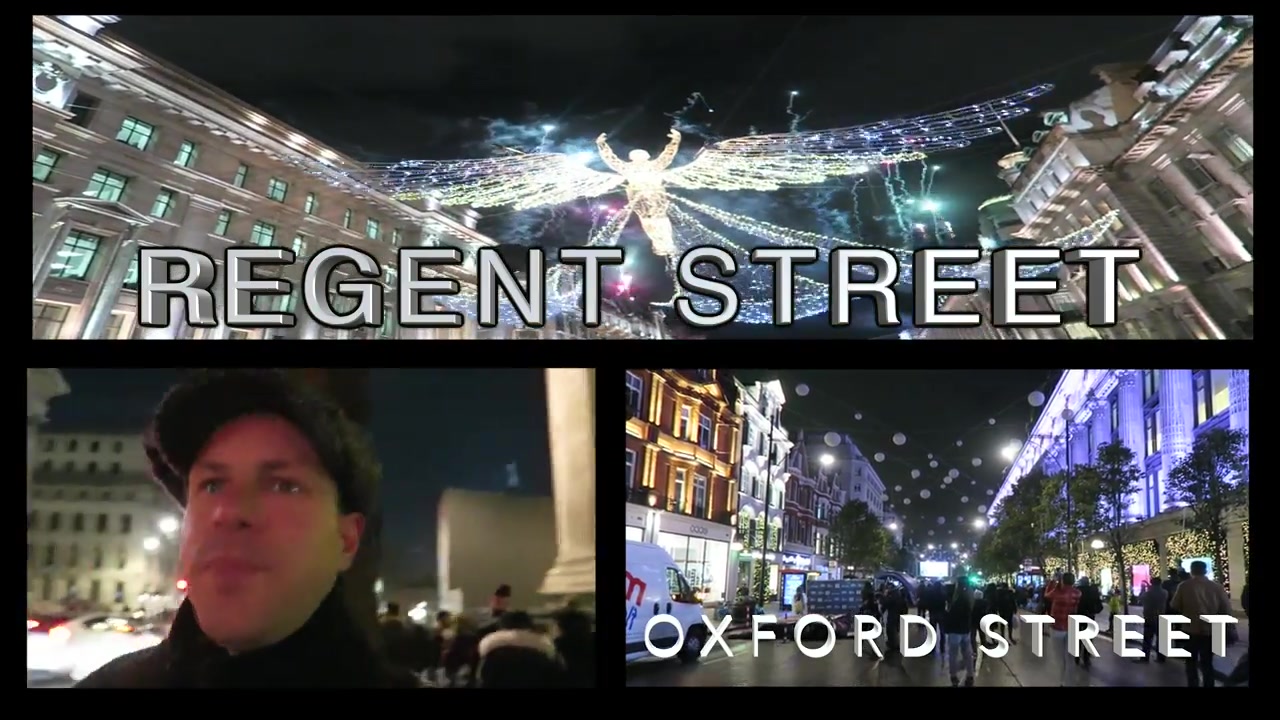
The lights do more than decorate the route. They connect streets that can feel separate during the day, turning the West End into one continuous evening walk. The camera moves between signs, traffic, shopfronts and people rather than treating the displays as isolated spectacles.
Markets, food and temporary winter rooms
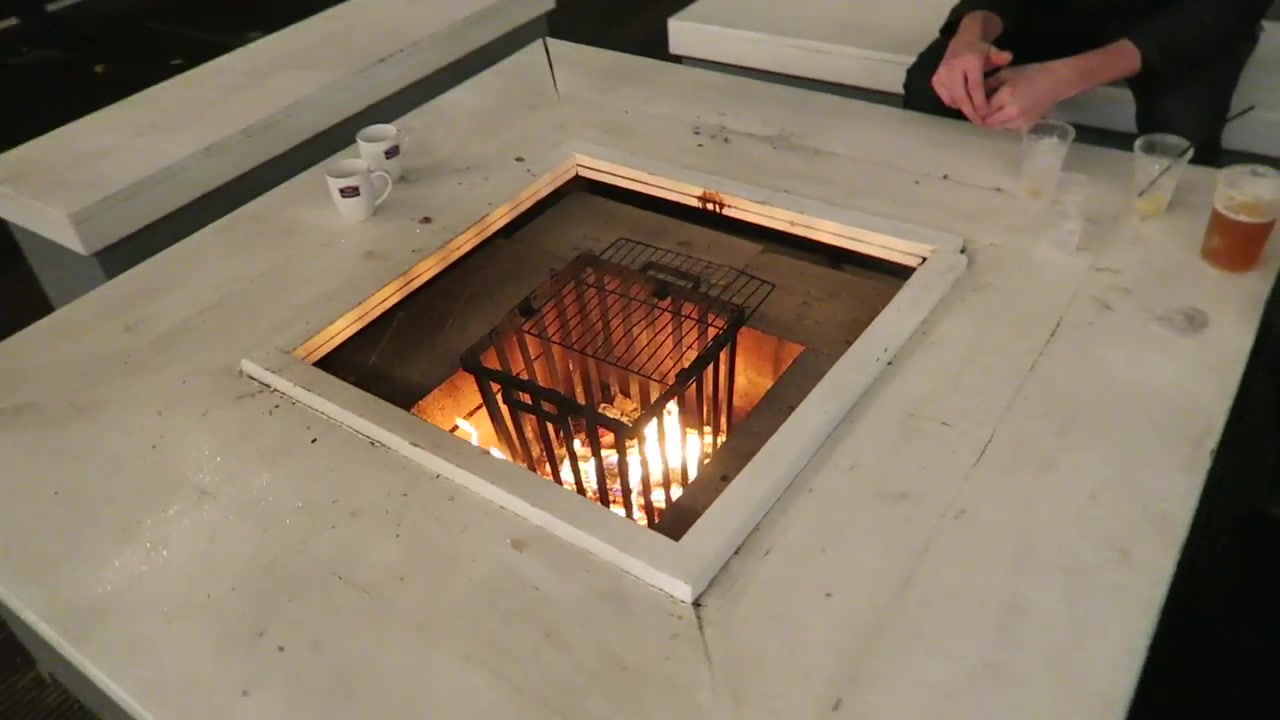
Christmas London also depends on structures that disappear again in January. Wooden huts, covered terraces and branded pop-ups create temporary rooms in public space. On the South Bank, the film passes market stalls and pauses inside a seasonal venue where an open fire offers relief from the cold.
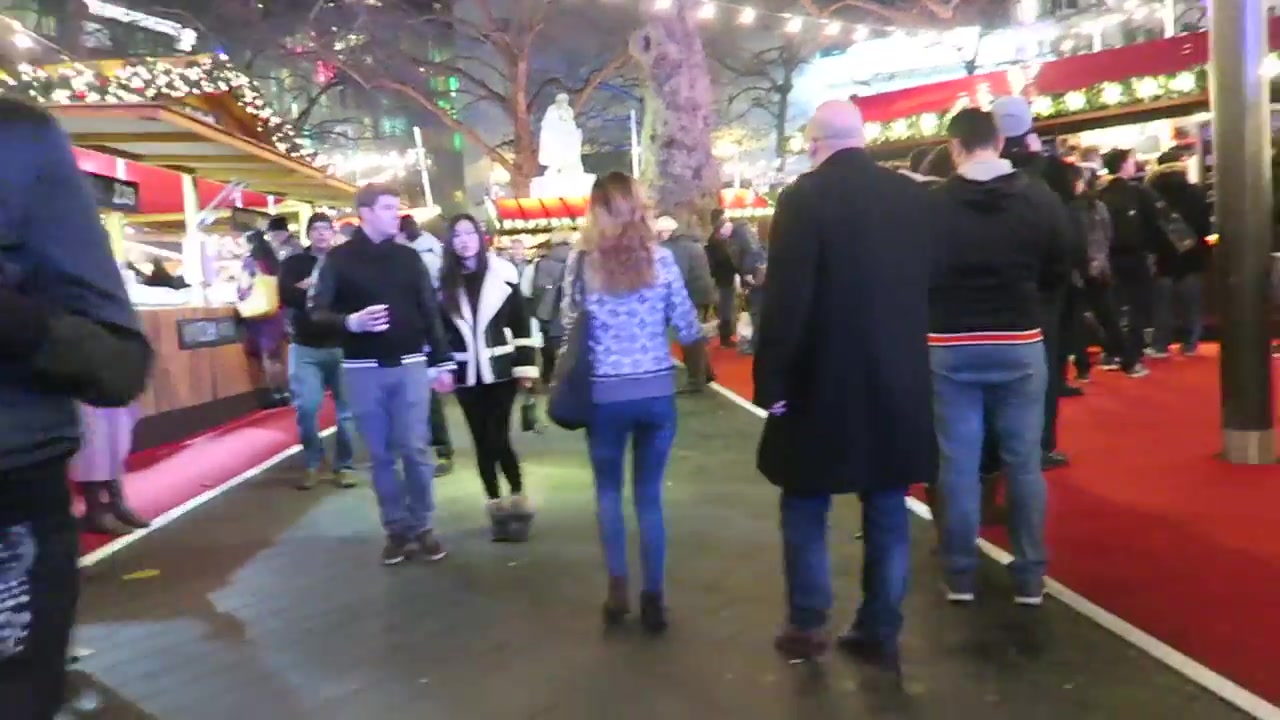
The attraction is partly the food, but also the atmosphere of eating and drinking outdoors in winter: hot plates, smoke, strings of bulbs and crowded tables. These scenes preserve the texture of the 2016 season more accurately than a list of recommendations could.
Leicester Square and the West End crowds
Back in the West End, Christmas in Leicester Square adds another cluster of stalls and entertainment to the route. The film records it as part of a busy night rather than as a separate excursion: people moving between theatres, shops, markets and illuminated streets.
From there, the walk continues beneath the lights. The repeated views of angels, traffic and shopfronts make the film a useful record of how central London looked before later schemes, refurbishments and changes to the retail landscape.
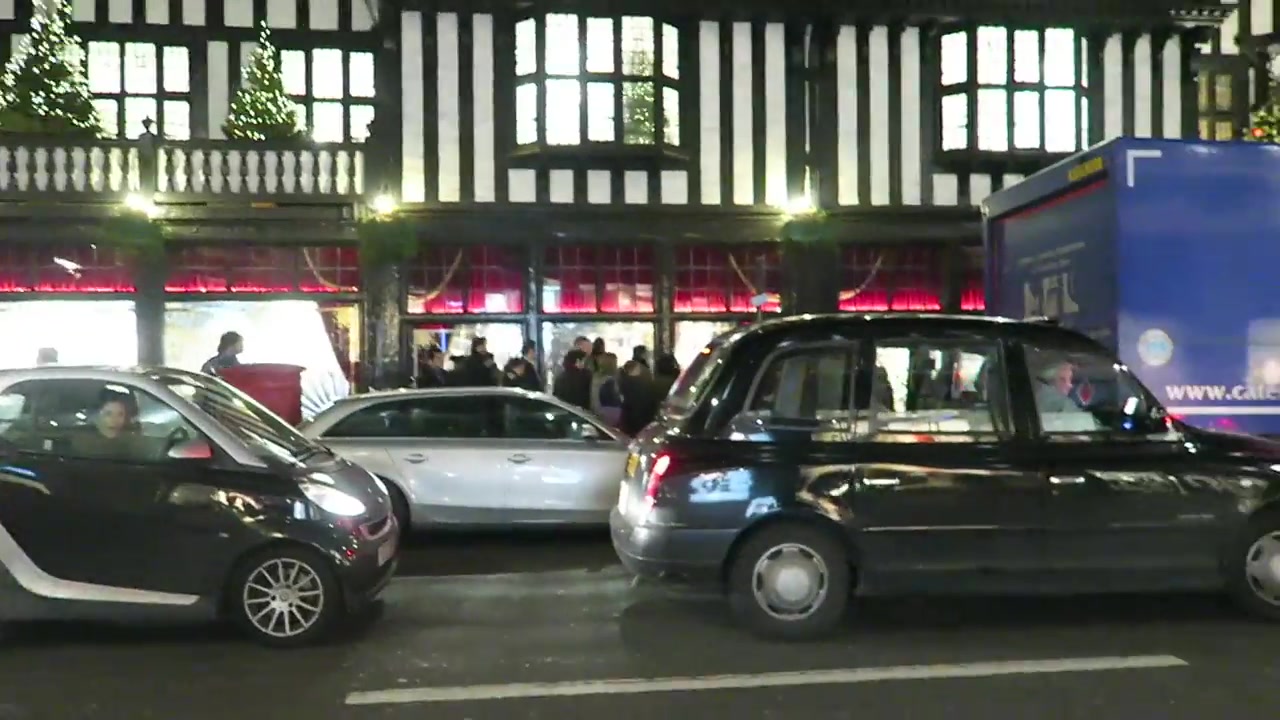
Liberty’s Tudor Revival façade provides a darker, more architectural contrast to the overhead installations. Lit windows and passing black cabs place the department store firmly within the night-time street rather than presenting it as a polished retail image.
Skating at Somerset House
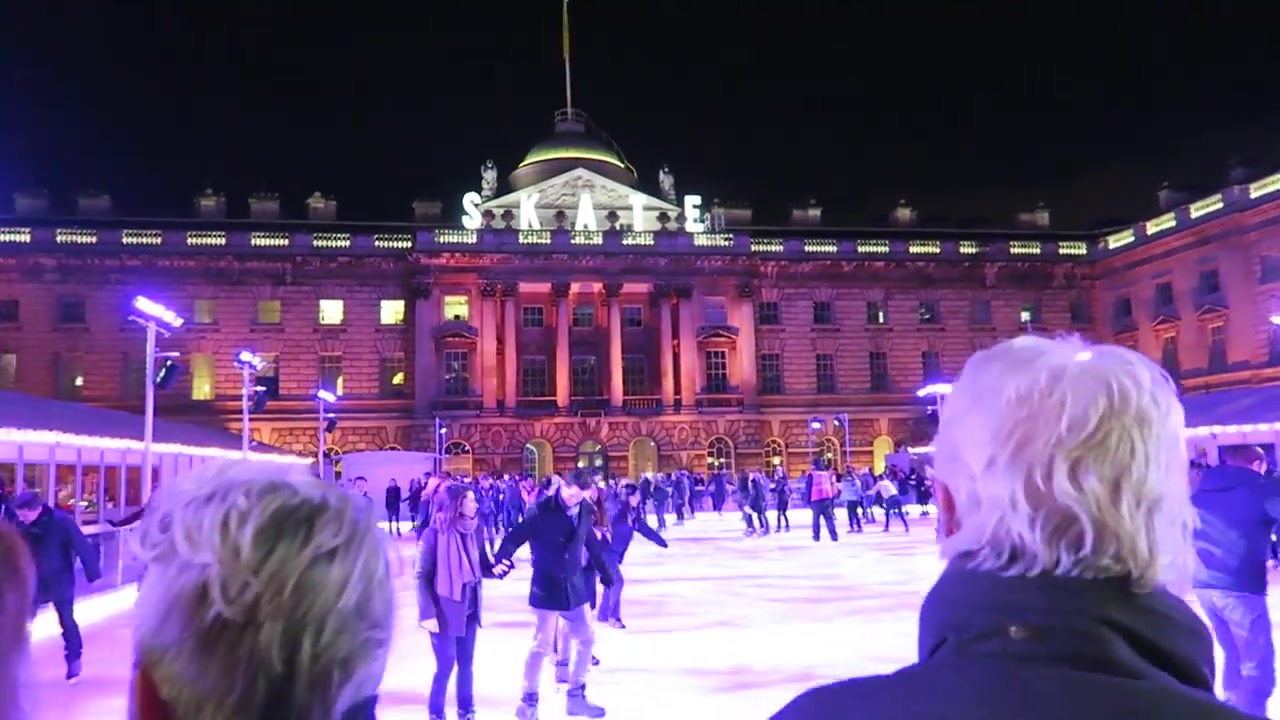
Somerset House changes the pace of the film. Its neoclassical courtyard becomes a contained winter scene, with skaters crossing the ice beneath coloured light and spectators gathering around the edge. The setting gives seasonal skating a sense of ceremony that would be difficult to reproduce in an ordinary rink.
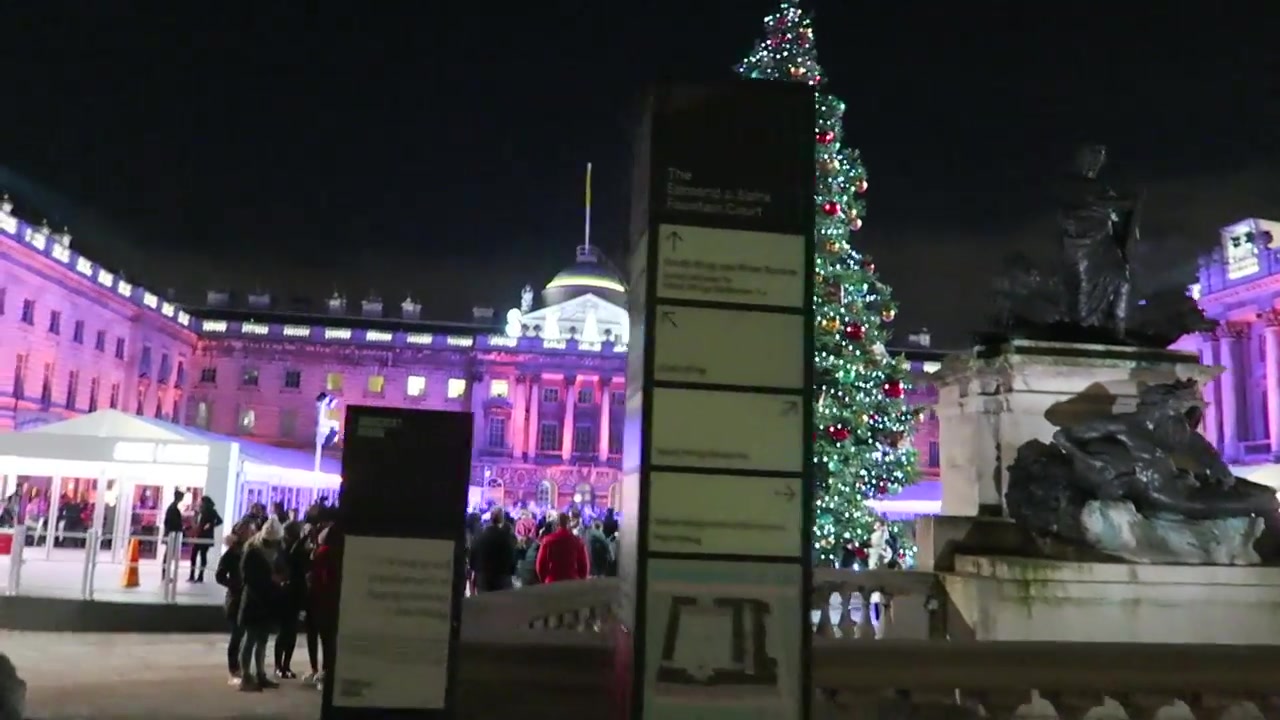
A large decorated tree stands alongside the rink. Framed by the courtyard façades, it belongs to the architecture as much as to the event, and the camera lingers long enough to show the relationship between the tree, ice and surrounding crowd.
Winter Wonderland after dark
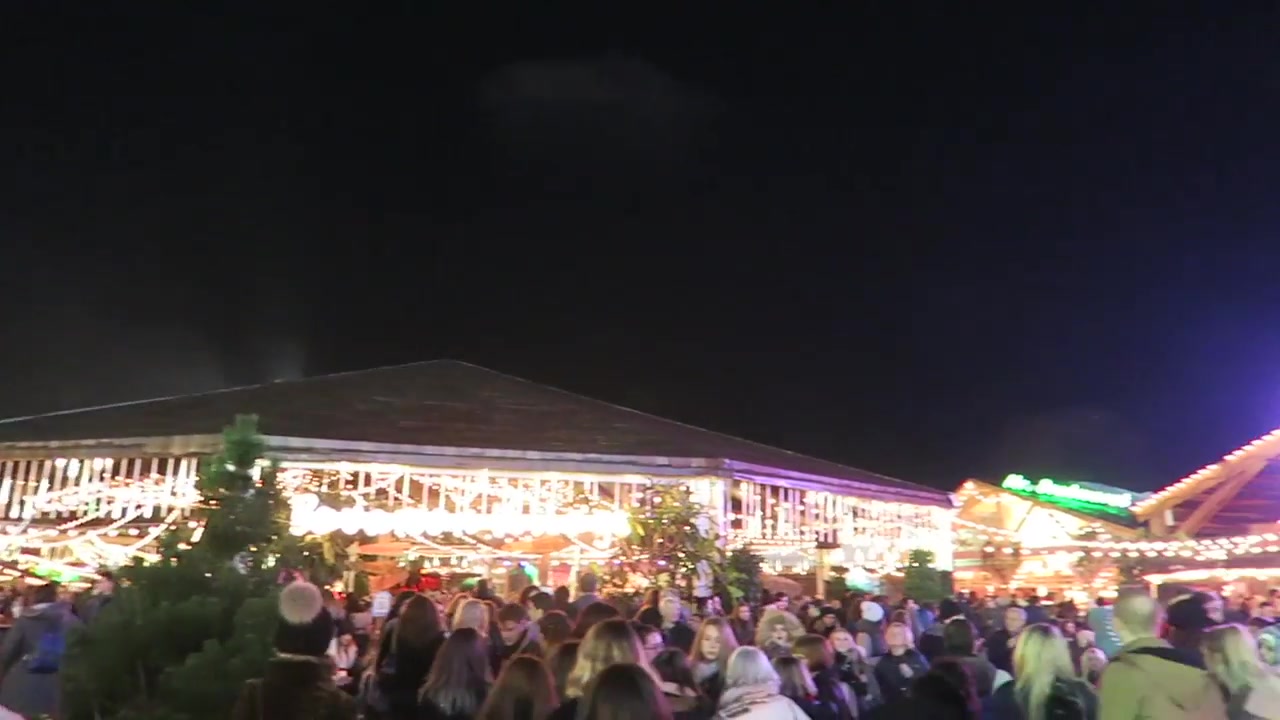
The final section moves to Hyde Park Winter Wonderland. Here the scale becomes larger and less restrained: fairground rides, food stands, music, dense crowds and competing lights. It is the most overtly theatrical part of the route and a fitting end to a film built around London’s different versions of Christmas.
Seen from the archive, the film is not simply a guide to attractions. It records how Londoners and visitors assembled a festive evening in 2016: one landmark, street, market, drink, ice rink and fairground at a time.

Recent Comments