In December 2016, the stretch of the Thames between Tate Modern and the Southbank Christmas Market offered two very different versions of winter in London. One was architectural and cultural: the former Bankside Power Station, newly enlarged by Tate Modern’s Switch House extension. The other was temporary and theatrical, with wooden chalets, festive decorations, hot drinks and street food glowing beside the river.
A winter walk beside Tate Modern
The film begins on London’s South Bank after dark. Tate Modern stands beside the river, still recognisable as Sir Giles Gilbert Scott’s Bankside Power Station but changed by the major extension that opened earlier in 2016. Designed by Herzog & de Meuron, the same architects responsible for the original gallery conversion, the new Switch House added a twisting brick tower behind the older industrial building.
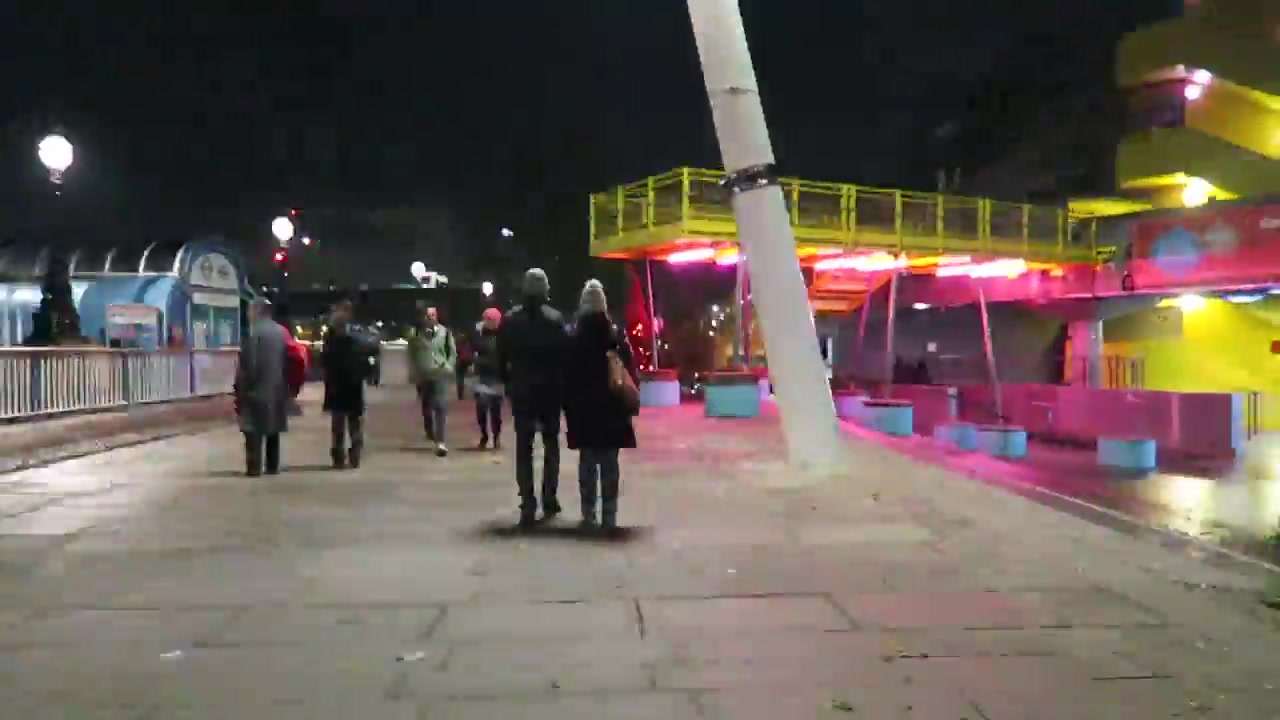
At the time of this recording, the extension was only six months old. It increased Tate Modern’s display space substantially and introduced new galleries, performance spaces and high-level views across London. The film is not a formal gallery tour; instead, it records the building as part of the wider life of the riverside, with visitors moving between art, architecture, bridges and the seasonal market.
St Paul’s across the Thames
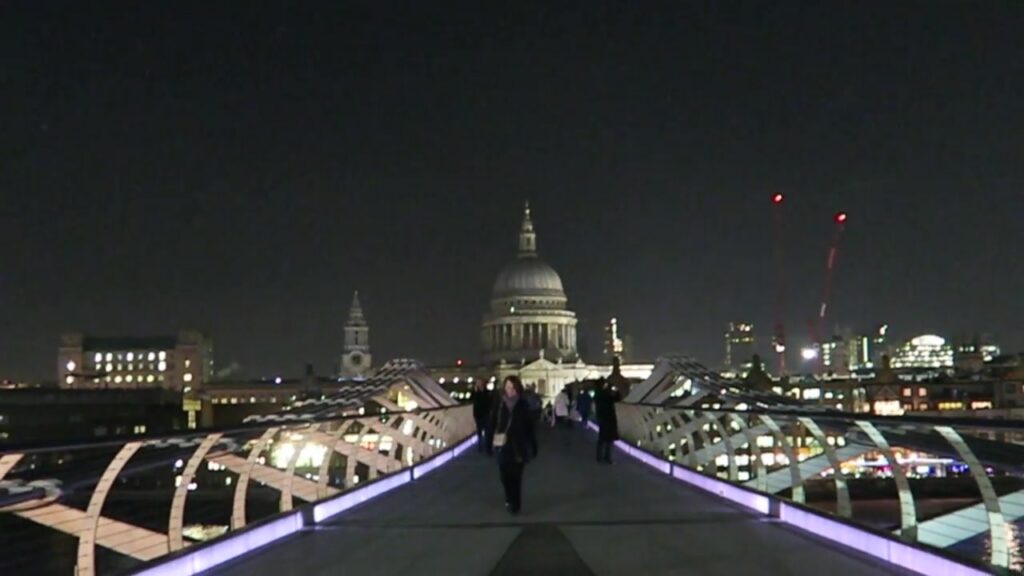
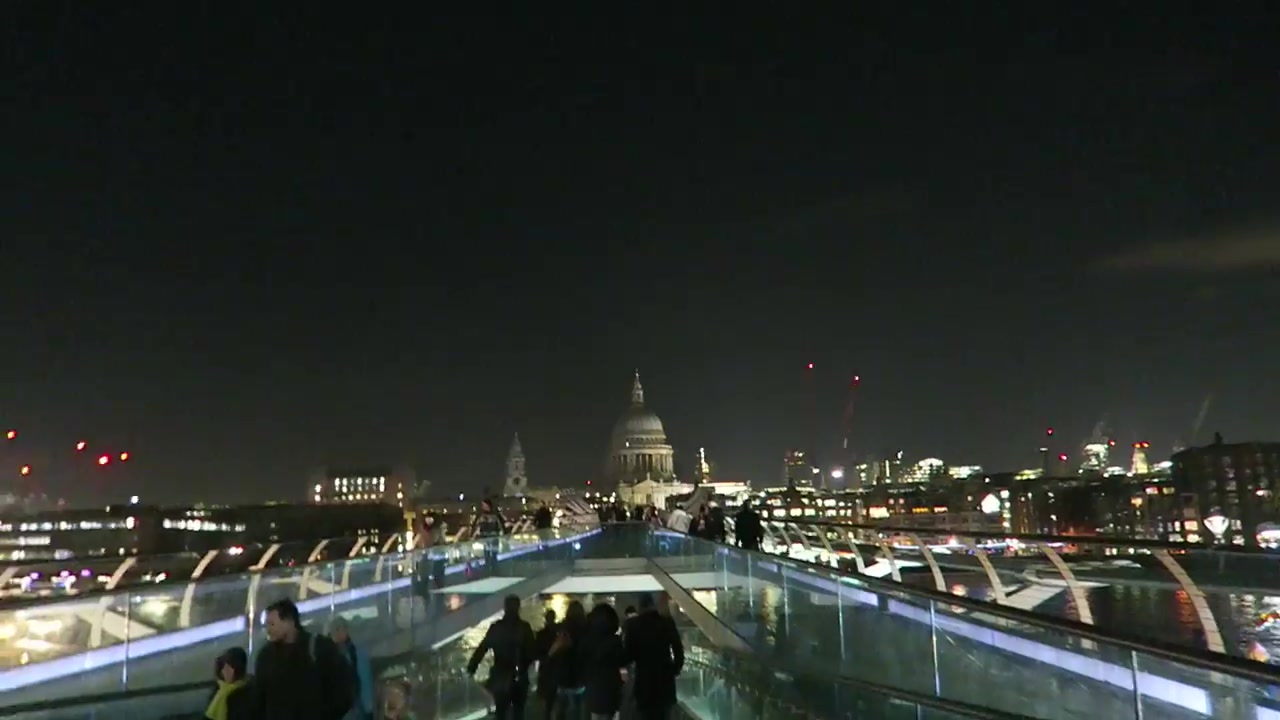
The Millennium Bridge provides the visual link between Bankside and the City. Looking north, its illuminated deck leads directly towards St Paul’s Cathedral. The view is one of the clearest examples of old and new London occupying the same frame: Wren’s dome beyond a late-twentieth-century pedestrian bridge, seen from a riverside dominated by a converted power station and a new brick gallery tower.
From here the walk turns west towards the Christmas market. The river remains close throughout, with the lights of the City and the bridges forming a backdrop to the temporary line of stalls.
The Southbank Christmas Market in 2016
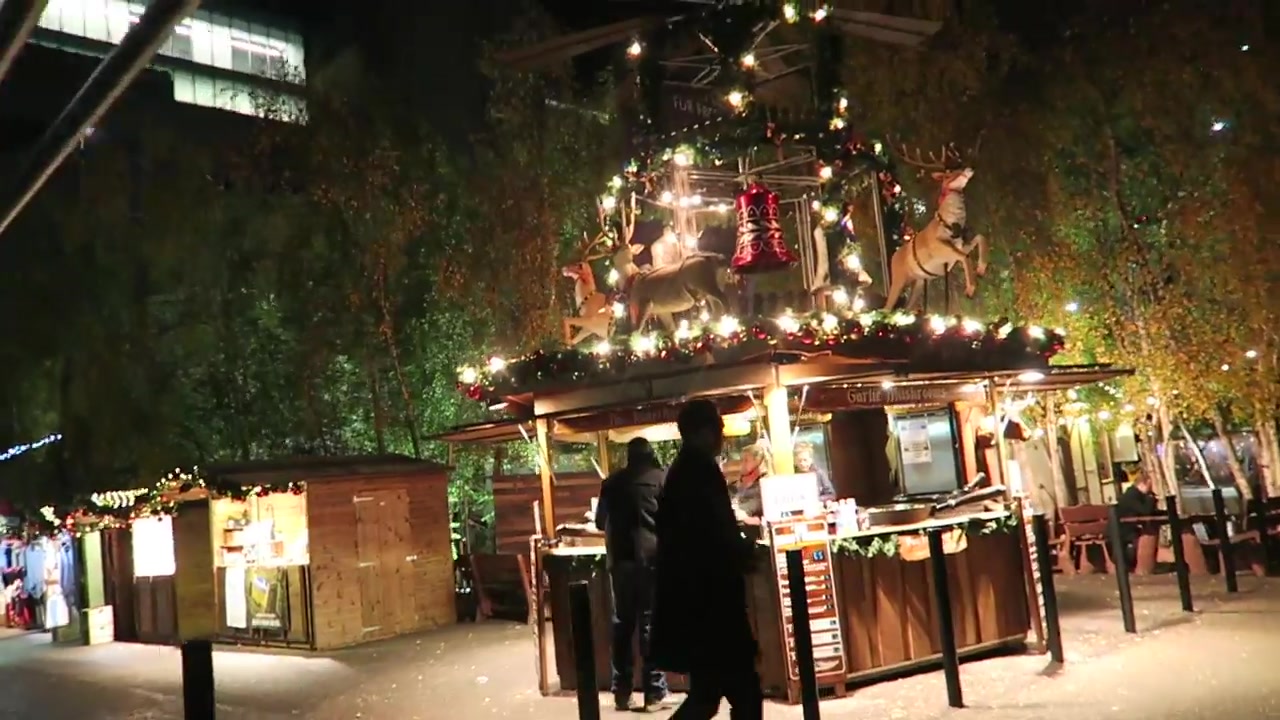
The Southbank Christmas Market followed the familiar European-inspired format of timber chalets set along the Queen’s Walk. In the film, the stalls sell decorations, gifts, drinks and the kind of rich street food associated with cold evenings outdoors. It feels less like a single destination than a festive layer added to one of London’s busiest pedestrian routes.

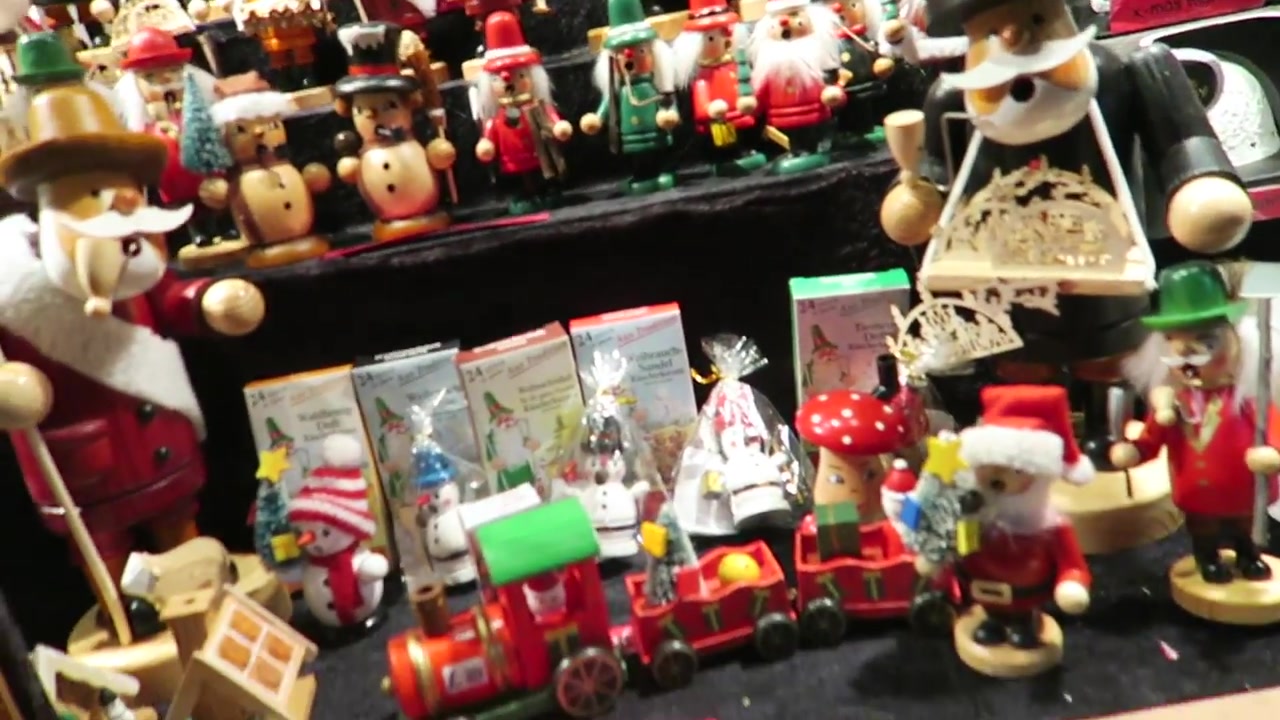
The most traditional displays include hanging ornaments and rows of painted wooden nutcrackers. Elsewhere, the visual language is more playful: oversized decorations, bright signs and garlands make each chalet compete for attention. The market depends as much on atmosphere as shopping, particularly after dark when the timber fronts and strings of lights stand out against the river.
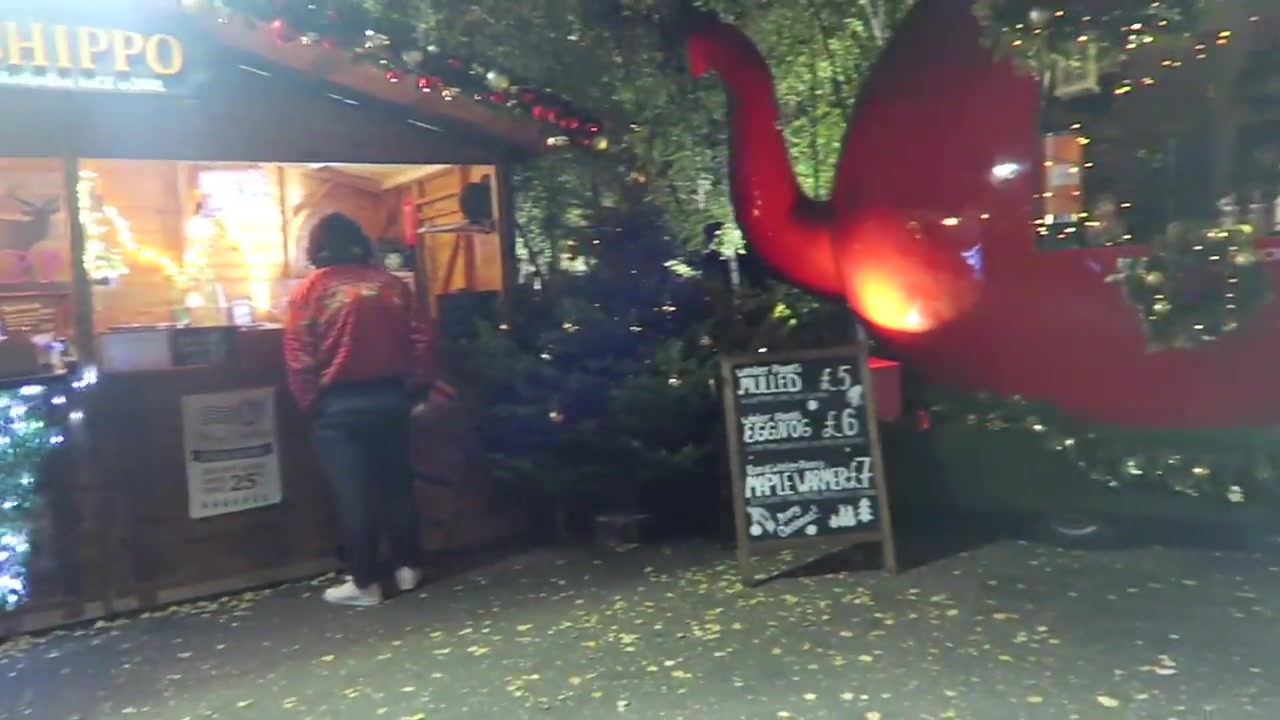
German flavours beside the Thames
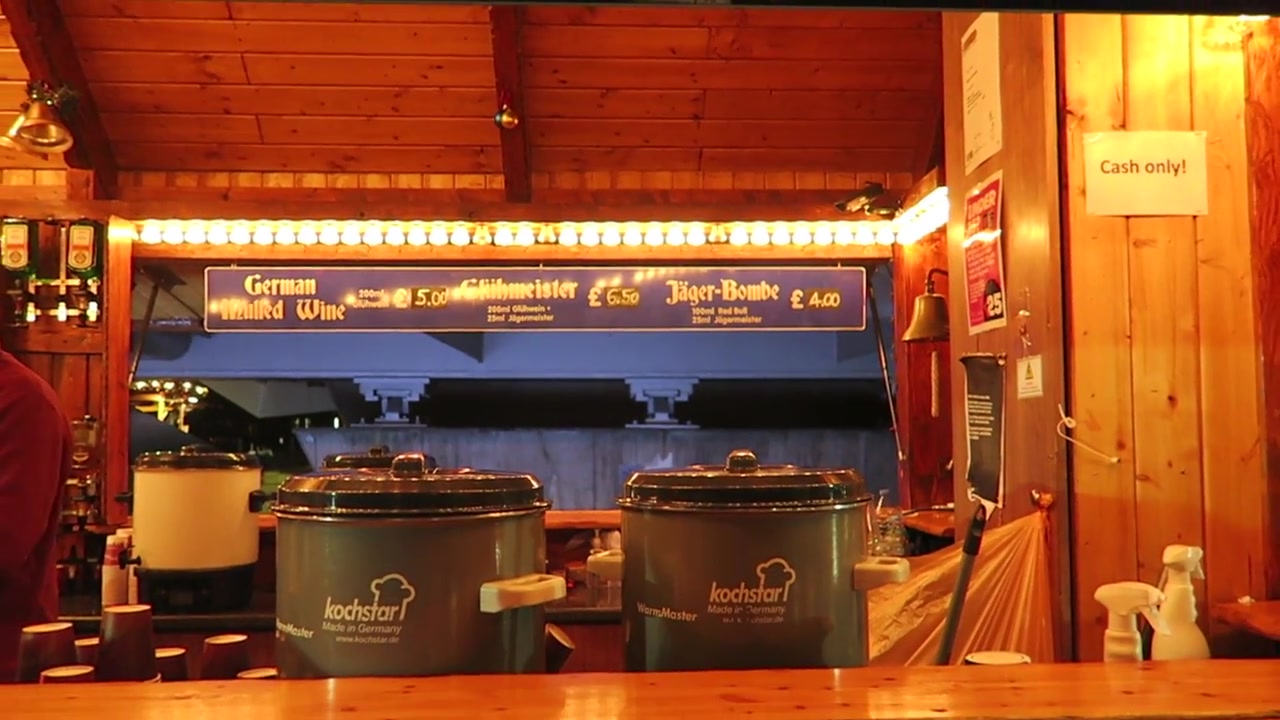
Food occupies much of the second half of the film. German-style beer and hot-drinks counters sit beside stalls offering grilled sausages and other winter dishes. This was part of the appeal of London’s Christmas markets in the mid-2010s: they borrowed the chalet format and familiar flavours of continental festive markets, then placed them within an unmistakably London setting.
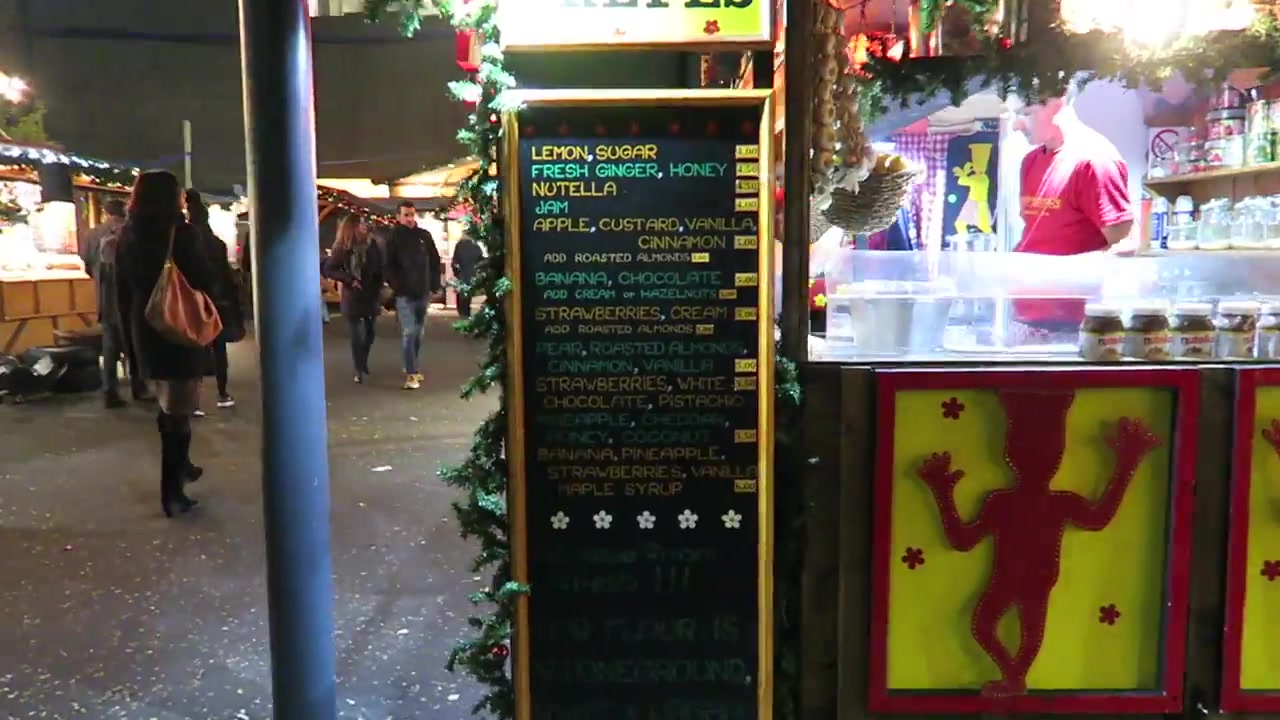
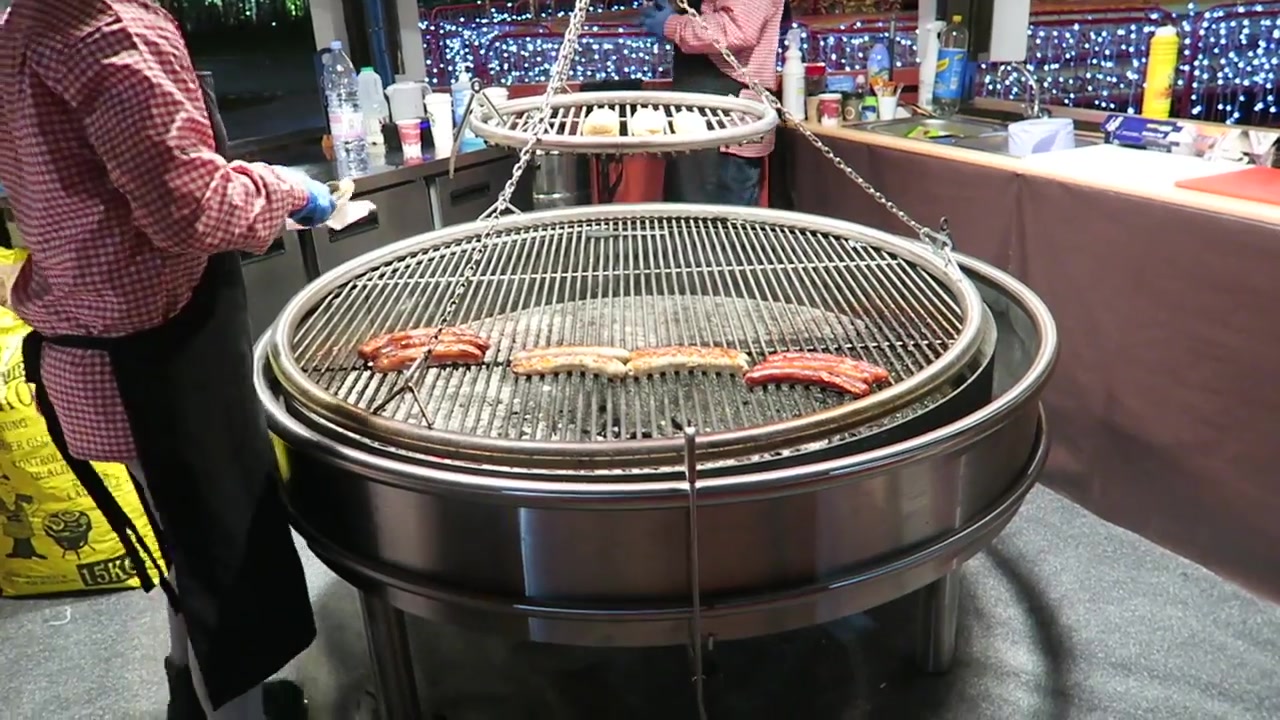
The bratwurst grill provides the film’s most direct food sequence. Sausages cook over the circular grill before one is served in a bread roll with mustard. It is simple market food, recorded without ceremony, but it captures the practical attraction of the South Bank in December: a walk through central London can become an informal evening of art, river views and something hot to eat.

A Roberts London record from December 2016
Viewed now, the film preserves more than a seasonal market visit. It records Tate Modern during the first year of its expanded form, the Millennium Bridge and St Paul’s after dark, and the South Bank before another decade of redevelopment and changing food trends. The temporary stalls have long since disappeared, but the route connecting art, architecture, the river and street life remains one of London’s most rewarding winter walks.

Recent Comments