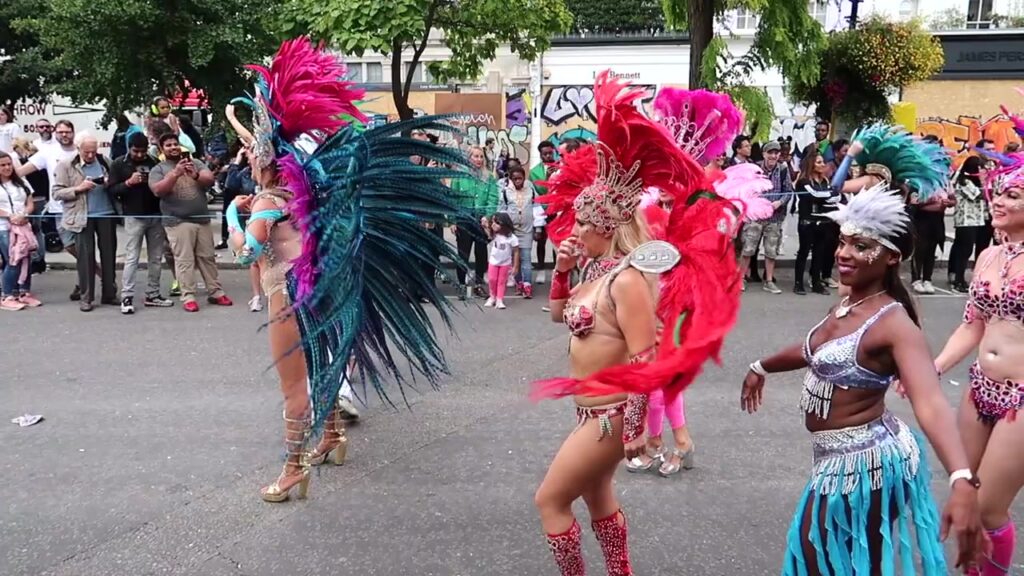
Filmed during the adult parade on Monday 27 August 2018, this Roberts London visit records Notting Hill Carnival through its masquerade, crowded streets, music, food and distinctive occupation of west London.
Notting Hill Carnival changes the scale and rhythm of west London. Roads that ordinarily carry buses and local traffic become parade routes, pavements merge into crowds and music moves through streets built for an entirely different purpose.
This Roberts London film was recorded on Monday 27 August 2018, the second and traditionally larger day of that year’s Carnival. Published the following day, it follows Barry through the crowds as costumed performers, sound systems, food stalls, stewards and spectators fill the neighbourhood.
Entering Carnival
The film begins inside the event rather than at a formal entrance. People are already moving in several directions, trying to locate friends, find a place beside the route or follow the sound of a nearby system.
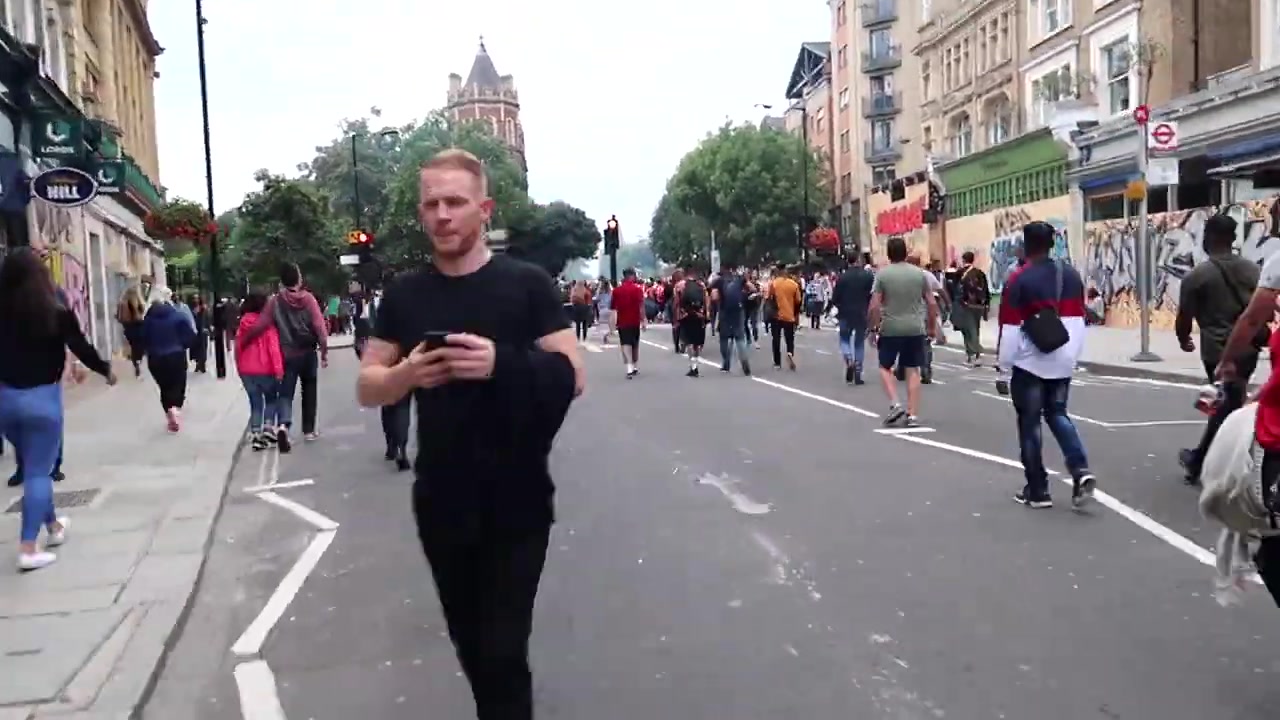
That lack of a single front door is central to the experience. Carnival occupies a network of streets across Notting Hill, Ladbroke Grove and the surrounding area. A visitor does not simply arrive at a venue; the neighbourhood itself becomes the venue.
The scale is immediately apparent. Long residential terraces frame dense crowds, while the route remains just open enough for performers and organised groups to pass.
Masquerade on the parade route
The most visually distinctive moments come from the masquerade performers.
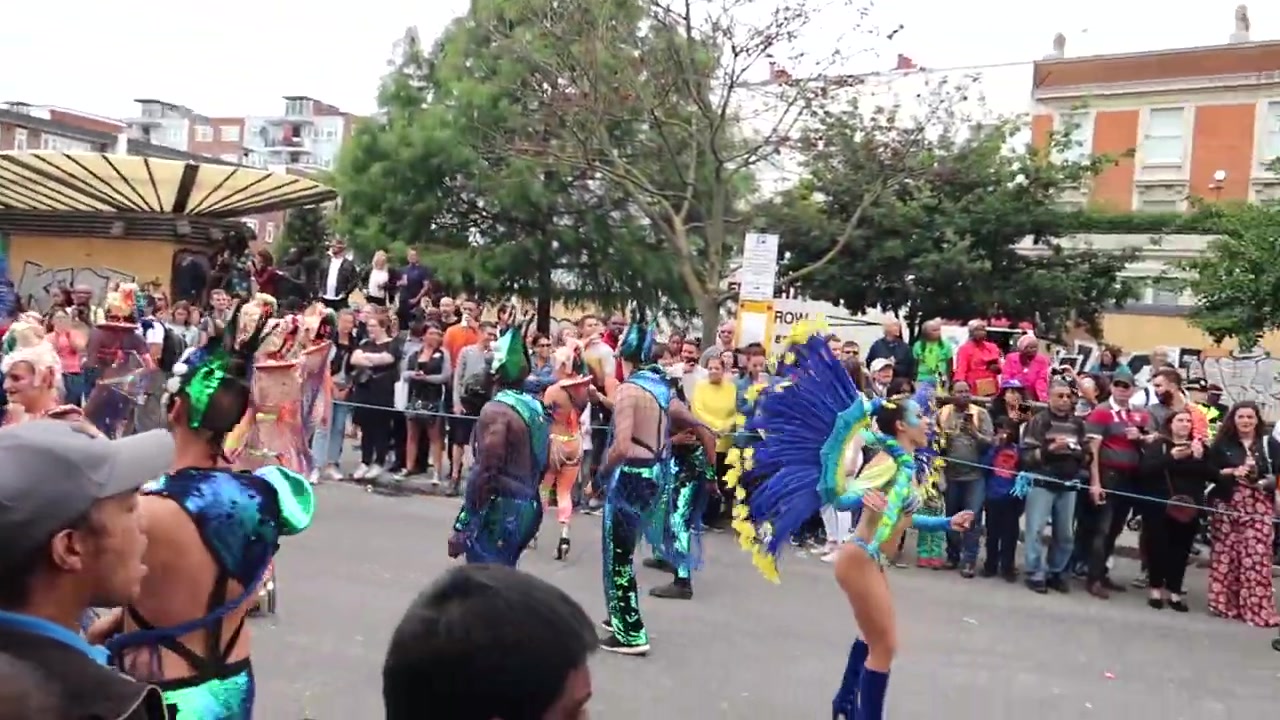
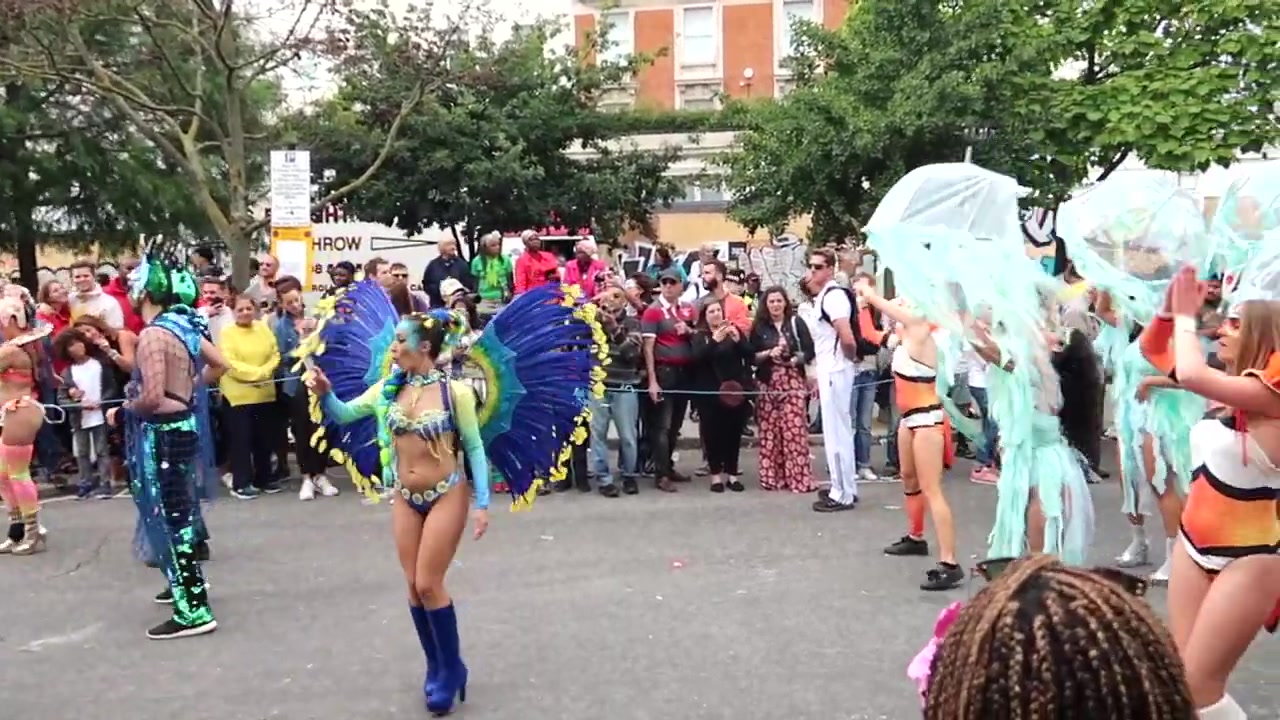
Feathers, bright colours, metallic surfaces and carefully constructed costumes move against the pale façades of west London. Some performers dance directly along the route; others pause and respond to spectators gathered only a few feet away.
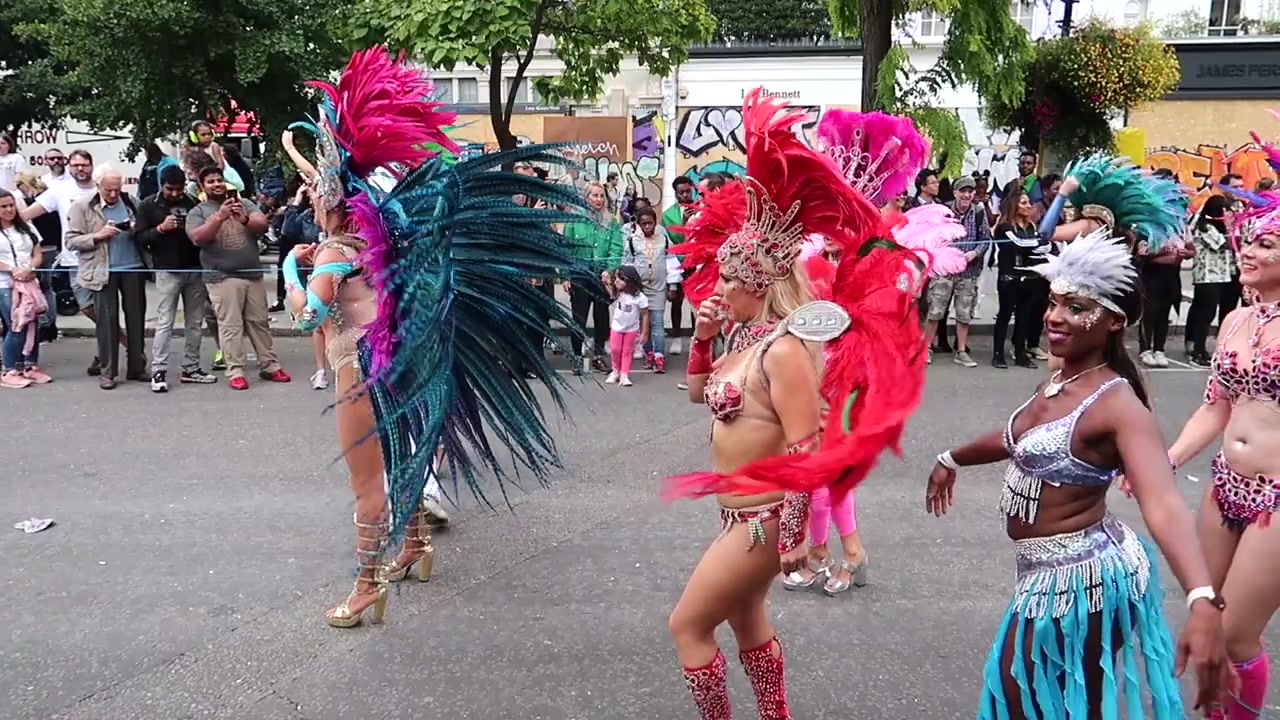
The closeness matters. Unlike a performance separated from its audience by a conventional stage, Carnival continually brings participants and spectators into the same field of view. Phones rise above heads, children are lifted for a better look and the crowd shifts whenever a new group approaches.
The film cannot provide a complete survey of the parade. Instead, it preserves a visitor’s view: brief openings in the crowd, sudden colour and music, then another movement further along the street.
Music in the streets
Music is not confined to the moving parade. Static sound systems have been part of Notting Hill Carnival since the 1970s, bringing Jamaican sound-system culture into particular streets and junctions.
Their presence changes how people navigate the event. A street can become a destination because of the music playing there, while another route offers a quieter passage towards the parade.
Crowds, stewards and the working event
Carnival’s atmosphere depends upon an extensive temporary infrastructure. The film shows stewards, police vehicles and controlled junctions alongside the celebration.
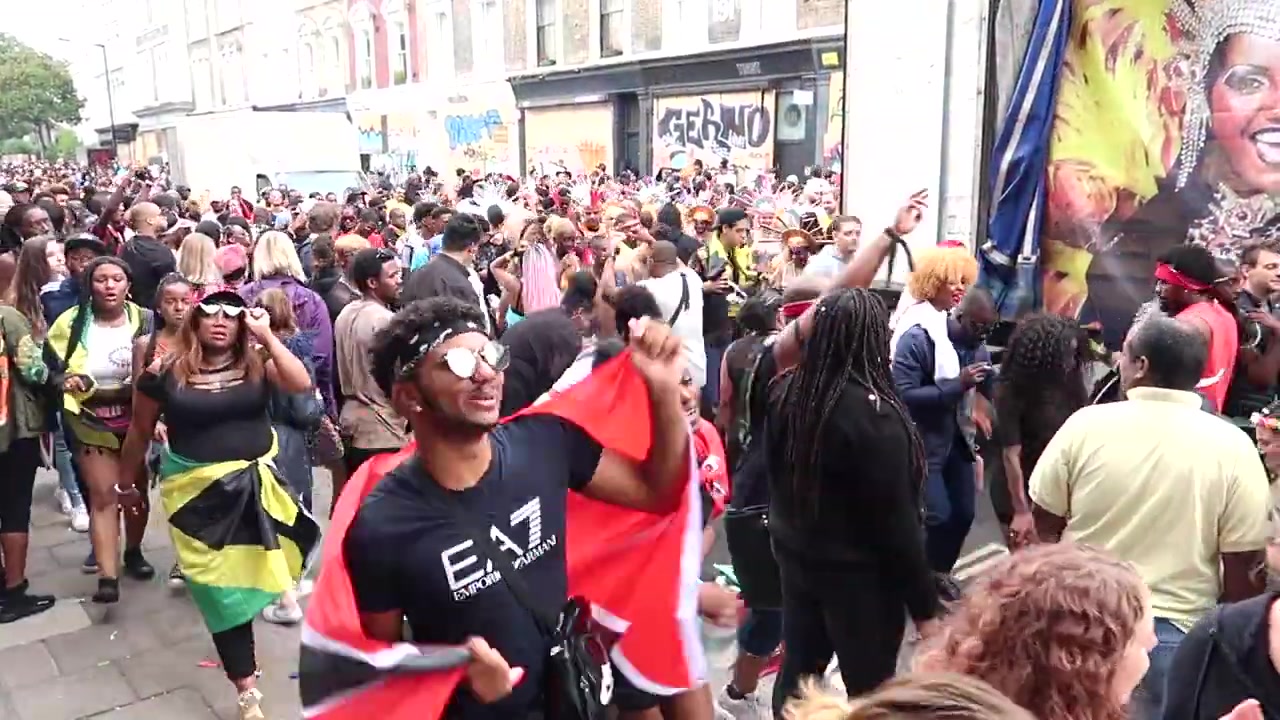
These elements are easy to overlook in photographs dominated by costume and colour, but they reveal the organisation required to place a major event within residential streets. Crowd movement, emergency access and the separation of parade space from spectators all have to be managed while the event continues around them.
In 2018, official estimates described Carnival as attracting around one million people across the weekend. At street level, that scale is experienced less as a statistic than as constant human movement.
Food as part of Carnival
The smell and visibility of cooking form another layer of the event.
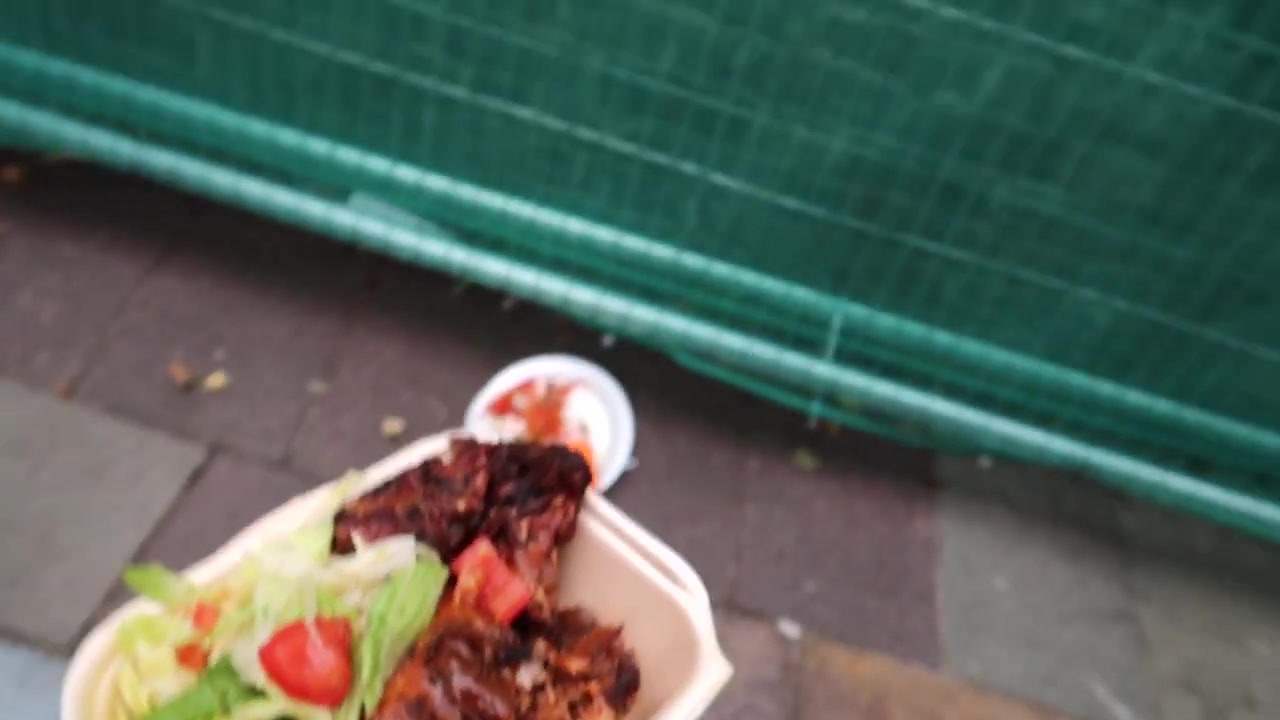
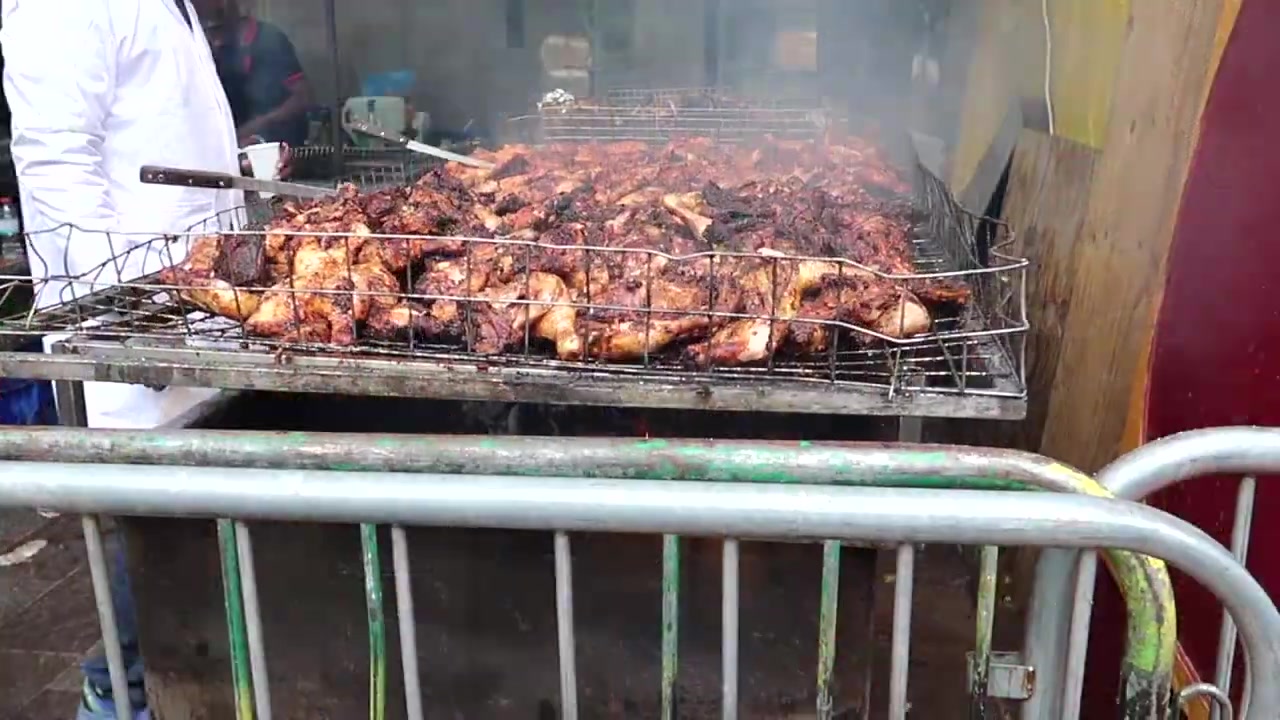
The film pauses for a plate of food served beside the route: grilled meat, rice, salad and fried plantain. It is a practical break from walking, but also part of Carnival’s wider expression of Caribbean culture.
Food stalls turn side streets and shopfronts into temporary kitchens. Smoke from grills moves across the crowd, while queues form independently of the parade. Eating becomes another way of participating in the day rather than a diversion from it.
A London neighbourhood transformed
Notting Hill Carnival grew from community initiatives in the 1960s shaped by Caribbean culture, local activism and the need to answer racial hostility with public celebration. Its history is more complex than a single founding moment, but the outdoor street festival associated with Rhaune Laslett in 1966 remains an important part of the account.
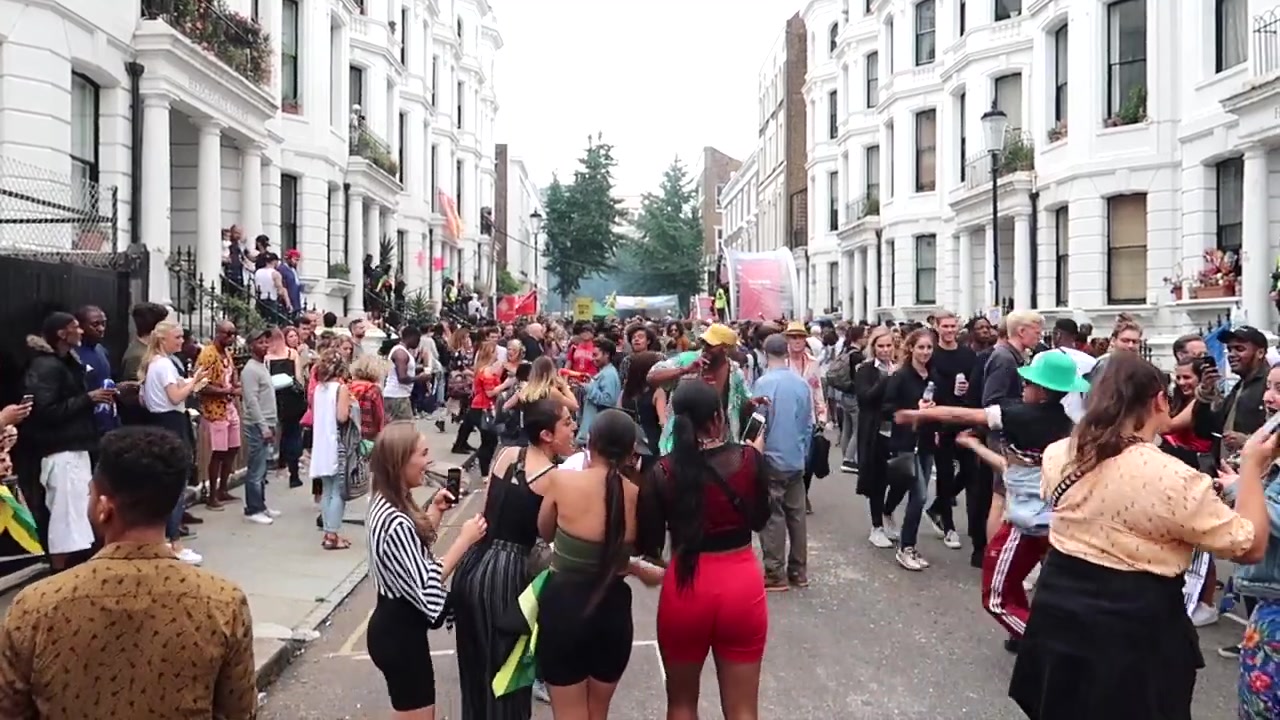
By 2018, Carnival was firmly established as one of London’s largest public events. Yet its character still depended on a particular place: terraces, junctions, shops, churches and residential streets temporarily repurposed by music and movement.
The Roberts London film does not try to stand outside that experience. It moves with the crowd and accepts the partial view. That makes it useful as an archive record. It shows what a visitor encountered on the Monday of Carnival in 2018: moments of masquerade, food eaten near the route, police and stewards working among the crowds, and west London operating according to a different rhythm for one bank-holiday afternoon.
Notting Hill Carnival 2018: the clean remix edit
I also published an alternate music edit of this Carnival visit on 1 September 2018. It revisits the same parade, crowded streets and food stop, with a clean remix soundtrack based on Damian Marley’s “Living It Up”.
The short film moves from feathered costumes and dancing to the barbecue beside the route. Then it pauses over chicken, rice, salad and plantain before returning to the streets. Watch this version below for another look at the afternoon.
Adapted from the Roberts London film “Notting Hill Carnival 2018 London Street Party Monday”, first published on 28 August 2018.
