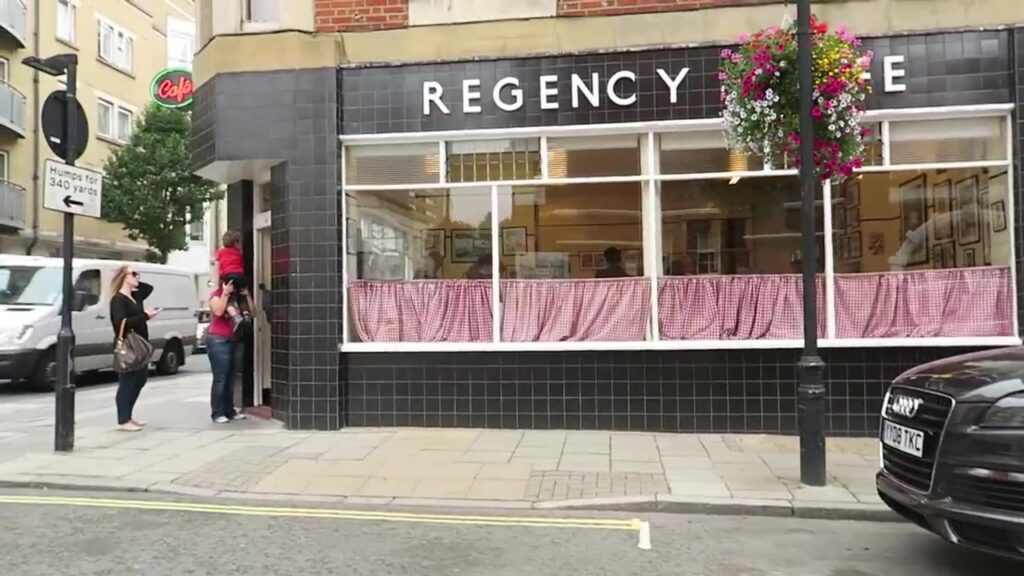
A 2016 Roberts London film records the walk through Westminster, the ritual of the queue and a full English breakfast inside one of London’s most recognisable caffs. Ten years later, the room survives—and the archive reveals what has changed around it.
Archive note, updated August 2026: This film was recorded and first published on 24 September 2016. Prices, ownership and some practical details have changed since then. The historical figures below describe what was shown on the day; current visitor information appears near the end of the article.
A Saturday walk through Westminster
The film begins on a grey Saturday morning beside the security-service buildings close to the Thames. MI5 sits behind the camera; across the river, MI6 occupies its more theatrical riverside headquarters. From there the route runs towards Victoria through the quieter grid of streets behind Millbank.
This is central London without the ceremonial framing. Government offices, blocks of flats and red-brick side streets replace the postcard landmarks. The Regency Café appears at the corner of Regency Street and Page Street, close enough to Westminster Abbey and the Houses of Parliament to attract visitors, yet tucked sufficiently far into the back streets to retain the feeling of a local room.
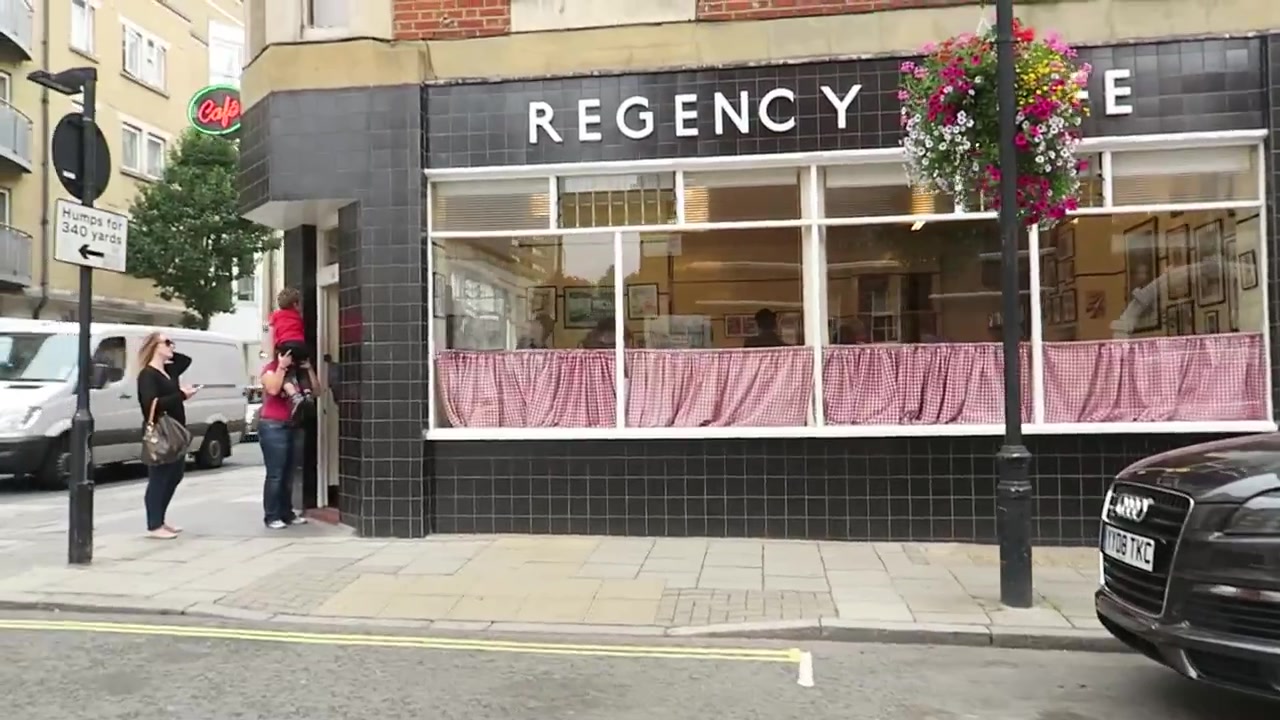
Its exterior is immediately legible: coal-black tiles, widely spaced white letters, a projecting neon café sign and red gingham half-curtains. The room opened in 1946 and its post-war character is not a decorative reconstruction. It is the reason the café has become both a working breakfast room and an unusually convincing screen location.
What makes a full English breakfast?
The walk gives the question time to develop. There is no universally agreed full English. Sausage, bacon and eggs form the dependable centre, but nearly every other detail provokes an argument: fried or grilled; beans or tomatoes; toast, bread and butter or fried bread; mushrooms, black pudding, white pudding, hash browns, bubble and squeak or chips.
Regional breakfasts complicate the picture further. Scotland, Wales and Ireland each have their own additions and traditions. Even the tea has a type: strong, hot and softened with enough milk to become what is usually called builder’s tea.
The important distinction in the film is not a rigid ingredient list but the setting. A proper caff works quickly. The menu is direct, the choices are visible on boards, the order is called across the room and the table is needed again as soon as breakfast is finished.
The queue is part of the system
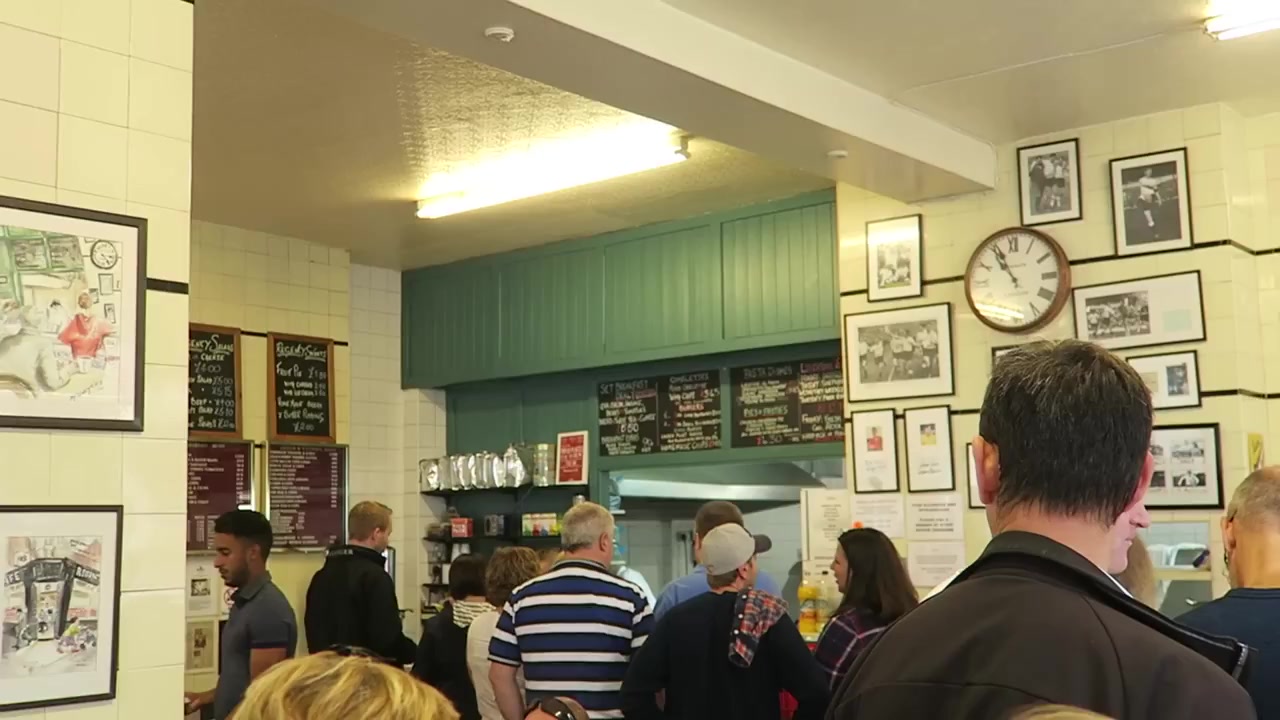
In 2016 the queue looked forbidding but moved with unusual efficiency. Customers ordered and paid at the counter, then listened for their name or number as different parts of the breakfast became ready. Toast arrived first; the main plate followed.
That movement explains the room. It was not arranged for laptops and an entire morning over one coffee. The café depended upon quick service, quick eating and a steady turnover of tables. In the film, a queue of roughly ten or fifteen minutes was close to the time the people already seated needed to finish breakfast and leave.
The visual rhythm is equally important. White tiled walls are lined with press cuttings, photographs, sporting figures and screen memorabilia. Dark green joinery frames the kitchen opening and handwritten blackboards. Brown seating, pale Formica and gingham curtains create the unfussy interior that filmmakers repeatedly recognised as already complete.
The 2016 order—and what it cost
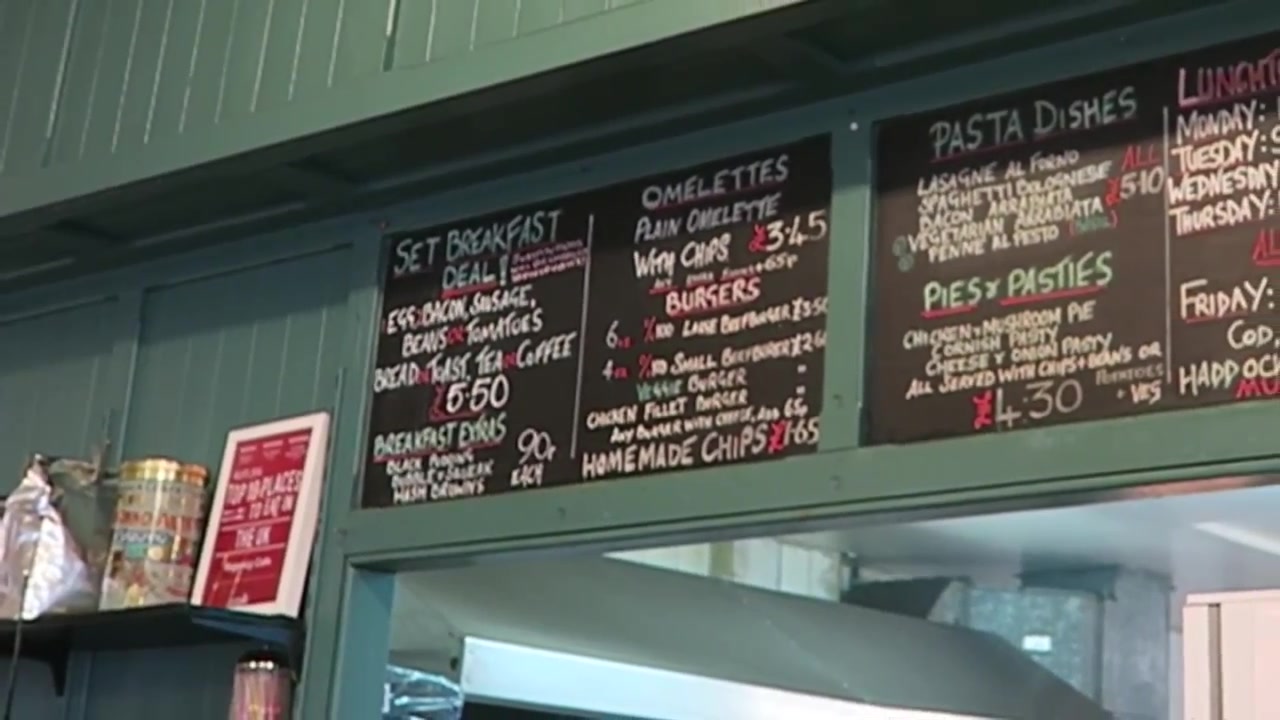
The chalkboard in the film lists the set breakfast at £5.50: egg, bacon, sausage, a choice of beans or tomatoes, bread or toast, and tea or coffee. The Roberts London order added black pudding, hash browns, orange juice and a small pot of Marmite, taking the total to £9.50.
Those prices belong to September 2016 and should not be read as today’s menu. They matter because they show how the café worked at the time: a filling central-London breakfast priced for regular trade rather than treated as a themed experience.
The plate is generous rather than styled—bacon, sausage, fried egg, beans, black pudding and hash browns—with toast and tea set alongside. Tomato ketchup and brown sauce are both used, avoiding one breakfast argument only by inviting another.
Marmite on toast
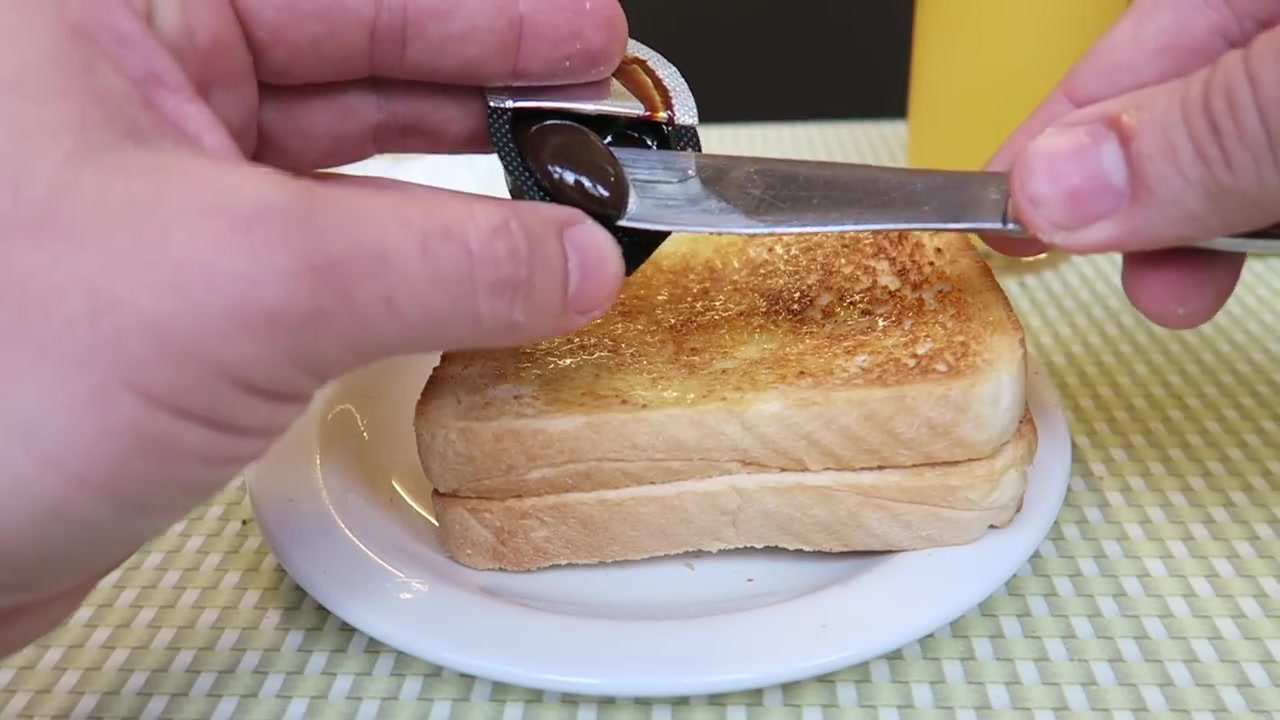
Marmite is not an essential part of a full English, but the small individual pot made the café a convenient place for a visitor to try it without buying a jar. The method in the film is sensible: butter the toast first, then spread the Marmite thinly enough for the surface to remain visible beneath it.
Its reputation rests on intensity. A heavy opaque layer can overwhelm the toast; a restrained one gives salt, yeast and depth beside the fried breakfast. One little pot was more than enough for two slices.
The short Marmite demonstration below was published separately on 21 October 2016, using footage from this breakfast visit. Butter the toast first, then spread a small amount of Marmite thinly enough to see the toast beneath it.
Breakfast, tea and the verdict
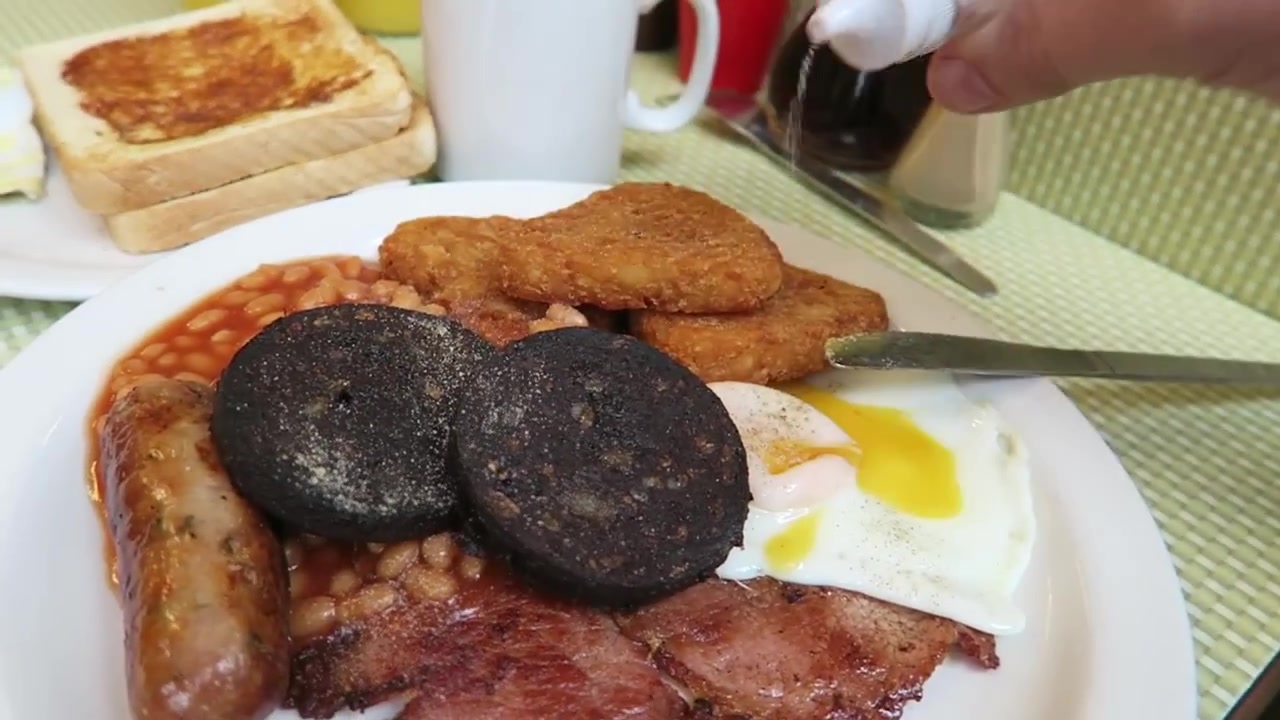
The black pudding had enough character, the hash browns provided the expected crispness and the beans tasted sweet in the familiar tinned-caff manner. The tea was stronger than anticipated. Nothing attempted to disguise itself as a light breakfast.
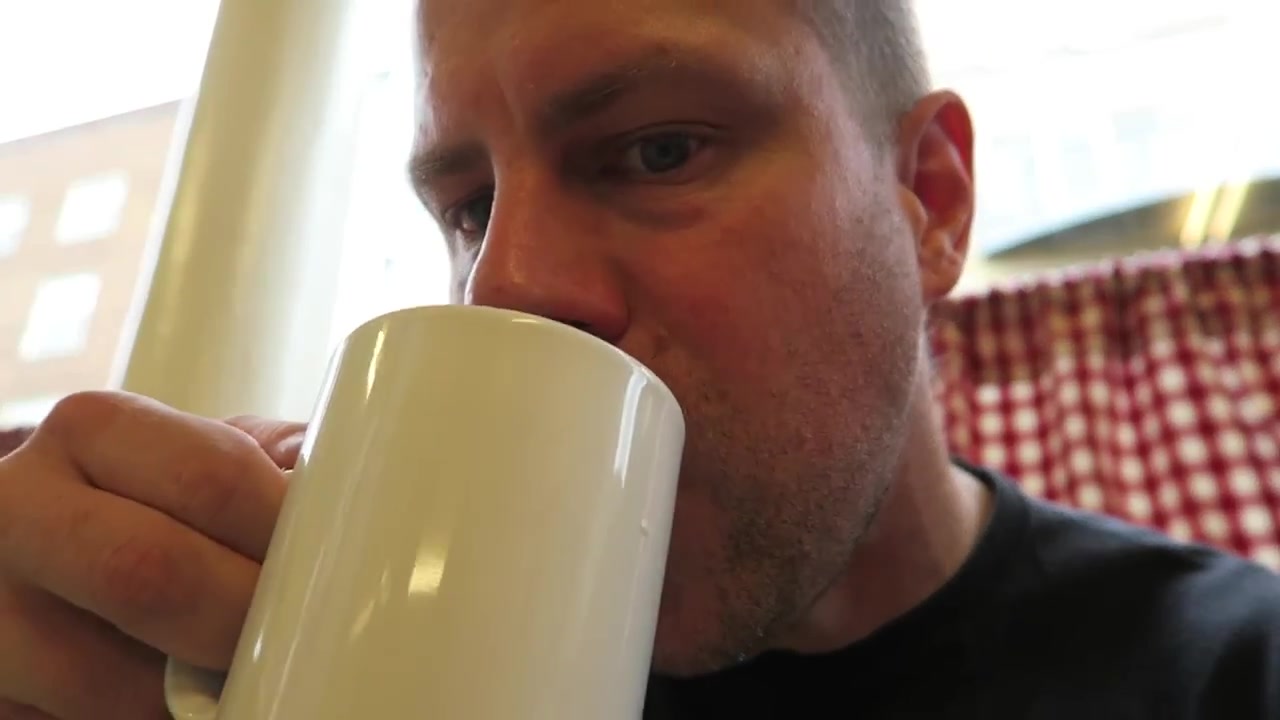
The lasting impression was not a claim to technical perfection. It was the completeness of the experience: the walk through Westminster, the queue, names called over the room, the condiments, gingham curtains, crowded walls and the sudden weight of the breakfast once back outside in the wind and rain.
For a visitor trying a full English for the first time, the expanded order in the film covered most of the essential territory. For a regular breakfast, the simpler set plate would have been enough.
A London café made for the screen
The Regency’s film history follows directly from the room. Its official filming record includes Layer Cake (2004), Warriors (1999) and Pride (2014), with appearances also credited in Rocketman, Judge John Deed and London Spy.
It requires little persuasion as a period interior. The tiled walls, dark joinery, blackboards, photographs and close arrangement of tables supply visual character before a production designer adds anything. In Layer Cake, the café becomes the setting for one of the film’s most memorable and violent meetings; in everyday use, it remains a room built around breakfast and rapid service.
What changed after the film
The 2016 film captures the café during the long stewardship of Antonio Perotti and Gino Schiavetta. After the business was offered for sale and closed in late 2024, the lease was acquired by Fevzi and Zafer Gungor and the café reopened in July 2025.
Westminster City Council remains the freeholder and landlord. It has stated that the protected lease requires the premises to continue as a local restaurant or café. In March 2026 the council also confirmed that the new operators were required to complete statutory improvements, including customer toilets, so the practical arrangement recorded in the old film should not be assumed to describe the café indefinitely.
The useful continuity is the central one: the Regency is still trading as a café in the room that made it famous.
Visiting the Regency Café now
- Address: 17–19 Regency Street, Westminster, London SW1P 4BY
- Nearest useful stations: Pimlico, St James’s Park and Victoria
- Official hours checked August 2026: Monday–Saturday, 7.00am–3.30pm; Sunday closed
- Current official set breakfast: £9.99, including beans or tomatoes, toast or bread, and tea or coffee
Hours and prices can change. Check the Regency Café’s official website before making a special journey, particularly around public holidays.
Watch the original Roberts London film
The film is preserved here as an archive of the café, the surrounding streets and the way a London breakfast worked in September 2016.
Frequently asked questions
Where is the Regency Café in London?
It is at 17–19 Regency Street on the corner with Page Street in Westminster, between the Thames and Victoria.
When did the Regency Café open?
The café was established in 1946. Its tiled, Art Deco-influenced interior is central to its identity and screen appeal.
What was the Roberts London breakfast?
The 2016 order combined the set breakfast—egg, bacon, sausage, beans, toast and tea—with black pudding, hash browns, orange juice and Marmite. The total at the time was £9.50.
Which films used the Regency Café?
Its official filming record includes Layer Cake, Warriors and Pride. The café also identifies appearances in Rocketman, Judge John Deed and London Spy.
Is the 2016 price still current?
No. The £5.50 set breakfast and £9.50 expanded order shown in the film are archive prices. The official menu listed the current set breakfast at £9.99 when checked in August 2026.

Recent Comments