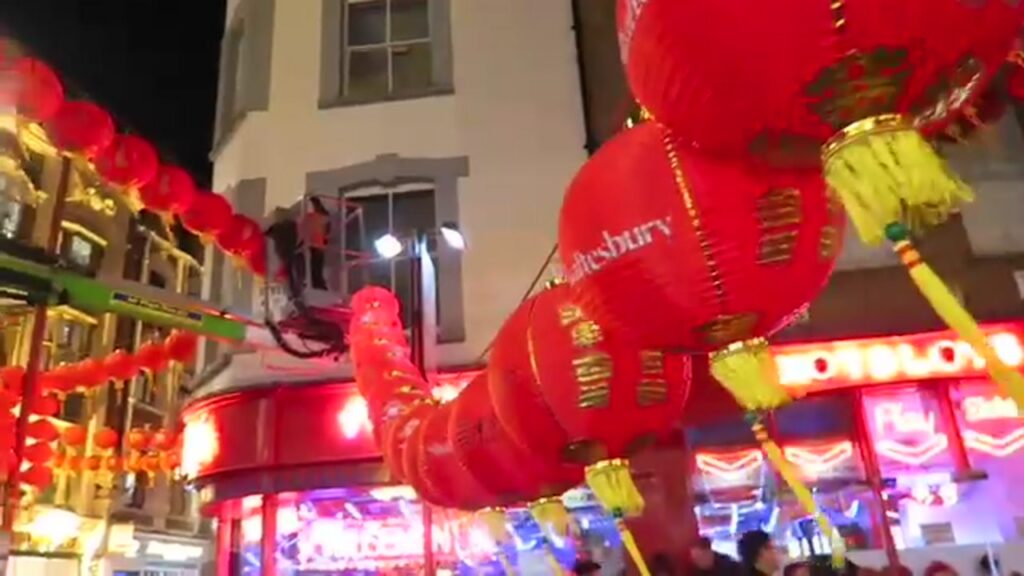
London’s Chinatown was already dressed for Chinese New Year when Barry arrived on 28 January 2017. Red lanterns crossed the streets between Soho and Leicester Square, restaurants glowed beneath them and the evening crowds moved between bakeries, cafés and food shops. This Roberts London archive film follows a long winter walk through the neighbourhood, built around dumplings, filled buns and bubble tea.
The visit took place during the opening weekend of the Year of the Rooster. Rather than concentrating on the main public parade, the film records Chinatown at street level: the decorations above Gerrard Street, cooks working behind windows, people queuing for food and the succession of small stops that make an unplanned walk through the district so rewarding.
Chinatown beneath the New Year lanterns
Approaching from the West End, the decorations become more elaborate as the route reaches Chinatown. Lines of red lanterns fill the space between the upper floors, while larger lanterns hang close to the restaurants and illuminated shopfronts. At night, the red and gold decorations turn the narrow streets into a continuous festive interior.
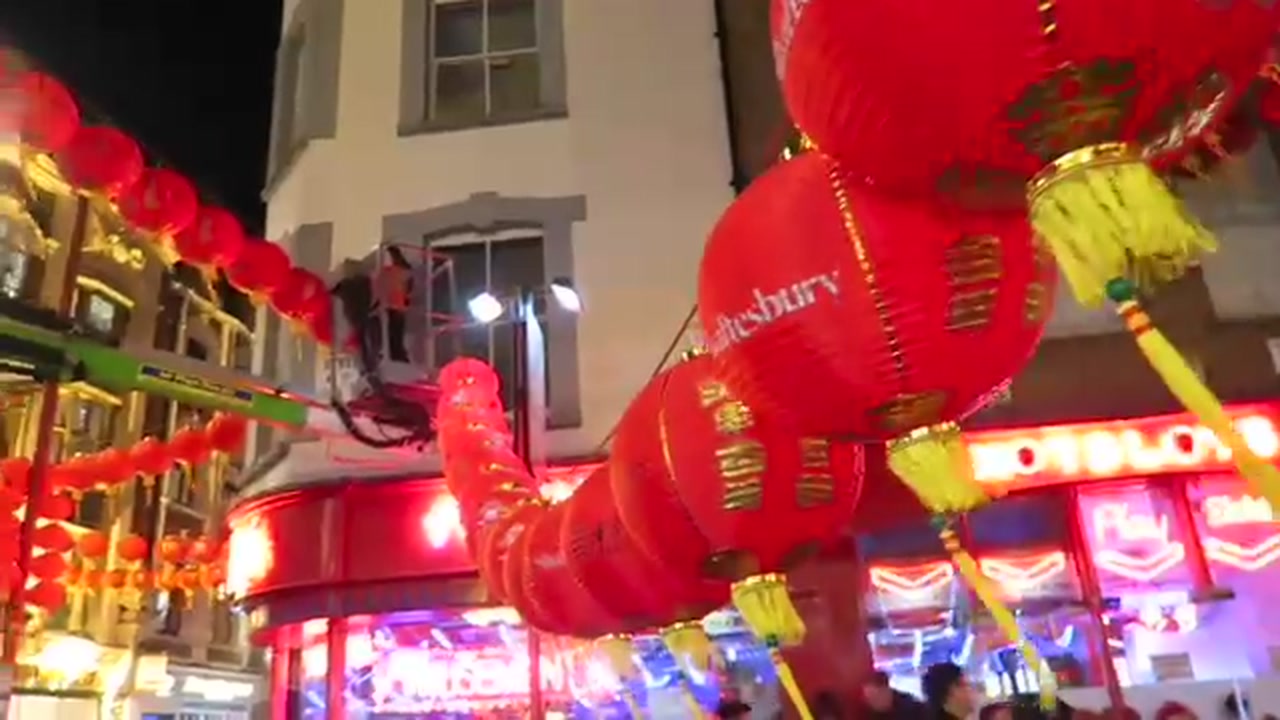
The film preserves the atmosphere on the eve of the largest celebrations. There are no barriers separating the visitor from the neighbourhood: tables remain busy, bakeries continue serving from their counters and the decorations form part of ordinary evening trade. The result is less a formal event record than a portrait of Chinatown preparing for a significant weekend.
Dumplings made by hand at Jen Café
The first substantial food stop is Jen Café, the distinctive green-fronted corner café on Newport Place. From the pavement and dining room, its dumpling-making station is visible through glass. Two cooks roll pieces of dough, add filling and fold each wrapper by hand before the dumplings are cooked.
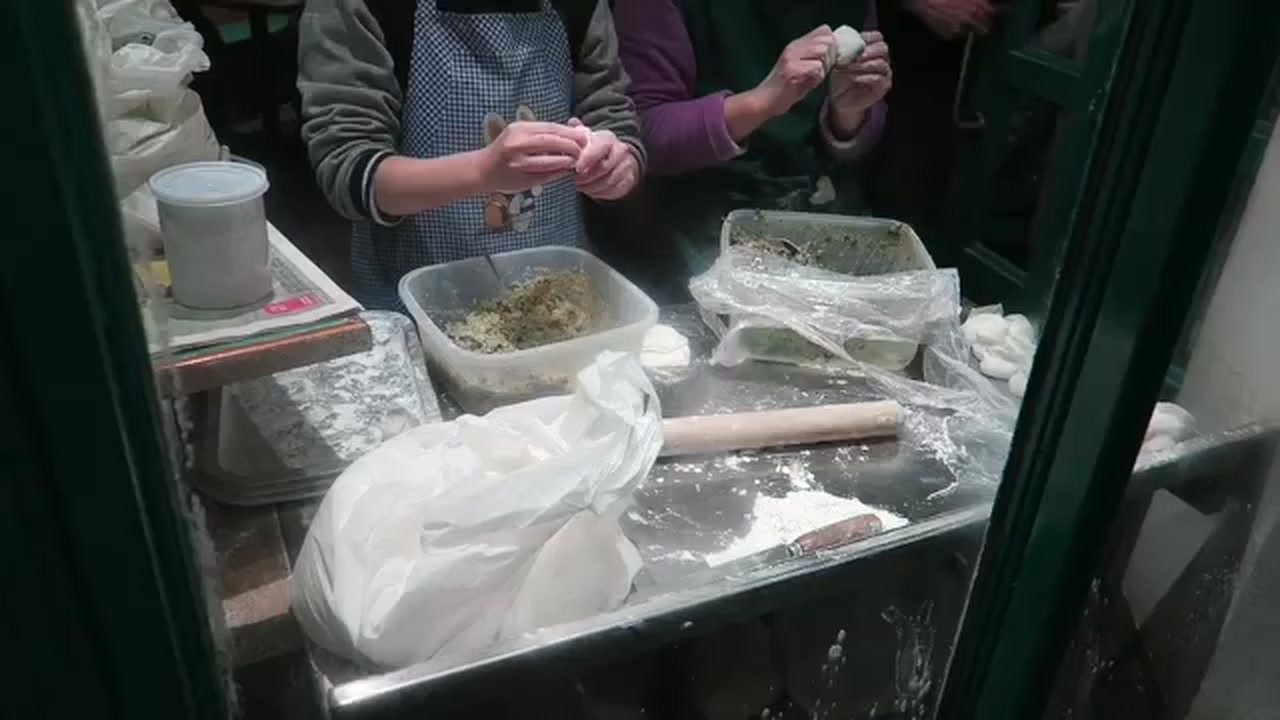
The open preparation area makes the work part of the meal. Flour, rolling pins and trays of filling occupy the compact counter, and the repeated hand movements show how quickly an experienced cook can shape each dumpling. The sequence is one of the strongest pieces of documentary material in the film because it records the food before it reaches the table.
A plate of Beijing dumplings
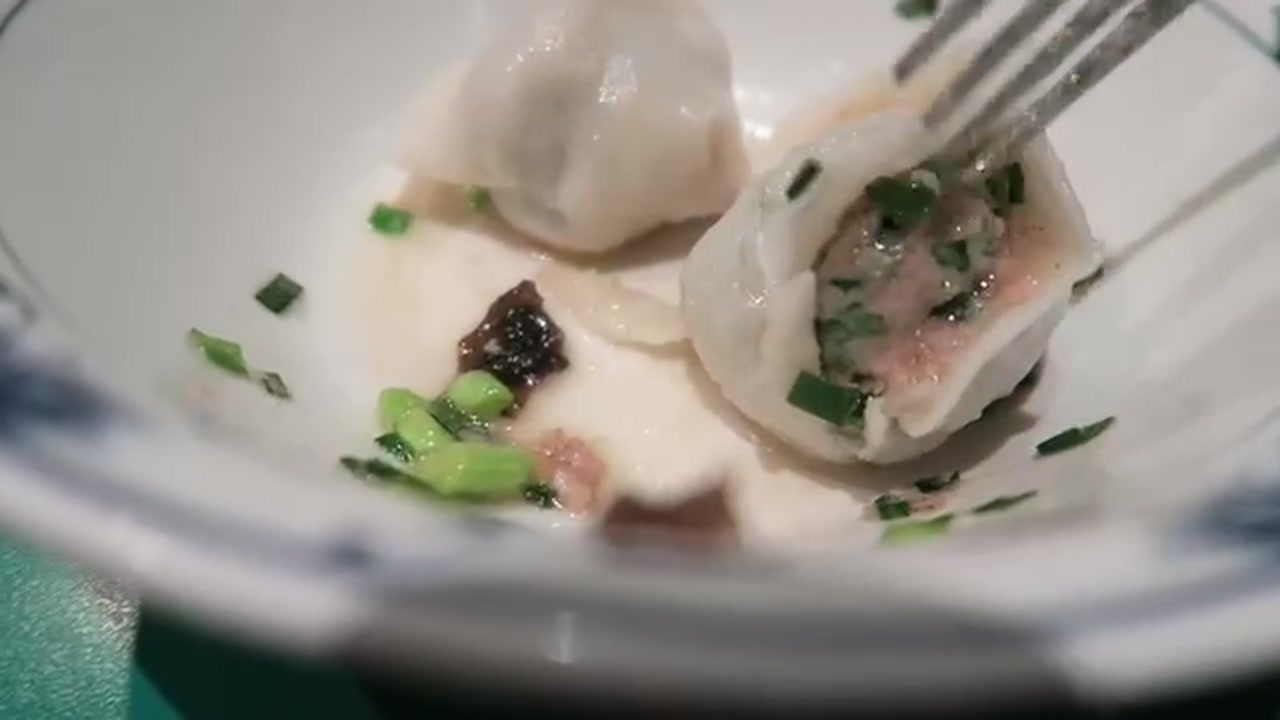
At the table, the dumplings arrive in a blue-and-white bowl with a simple dipping sauce. One is opened to reveal the filling of meat and green vegetables inside the pale wrapper. Their appearance is deliberately plain; the appeal comes from the soft dough, savoury filling and the knowledge that they were made only a few feet away.
This stop also gives the film a useful sense of place. Jen Café’s bright green interior, close-set tables and street-facing windows contrast with the darker streets outside. After the meal, the camera returns to the pavement and looks back at the illuminated corner frontage before continuing deeper into Chinatown.
Char siu buns from a Chinatown bakery
The next stage is a tour of the bakeries. Their windows present rows of sweet and savoury buns, cakes and pastries beneath bright display lighting. Barry chooses filled buns and tastes them outside while the New Year crowds continue behind him.
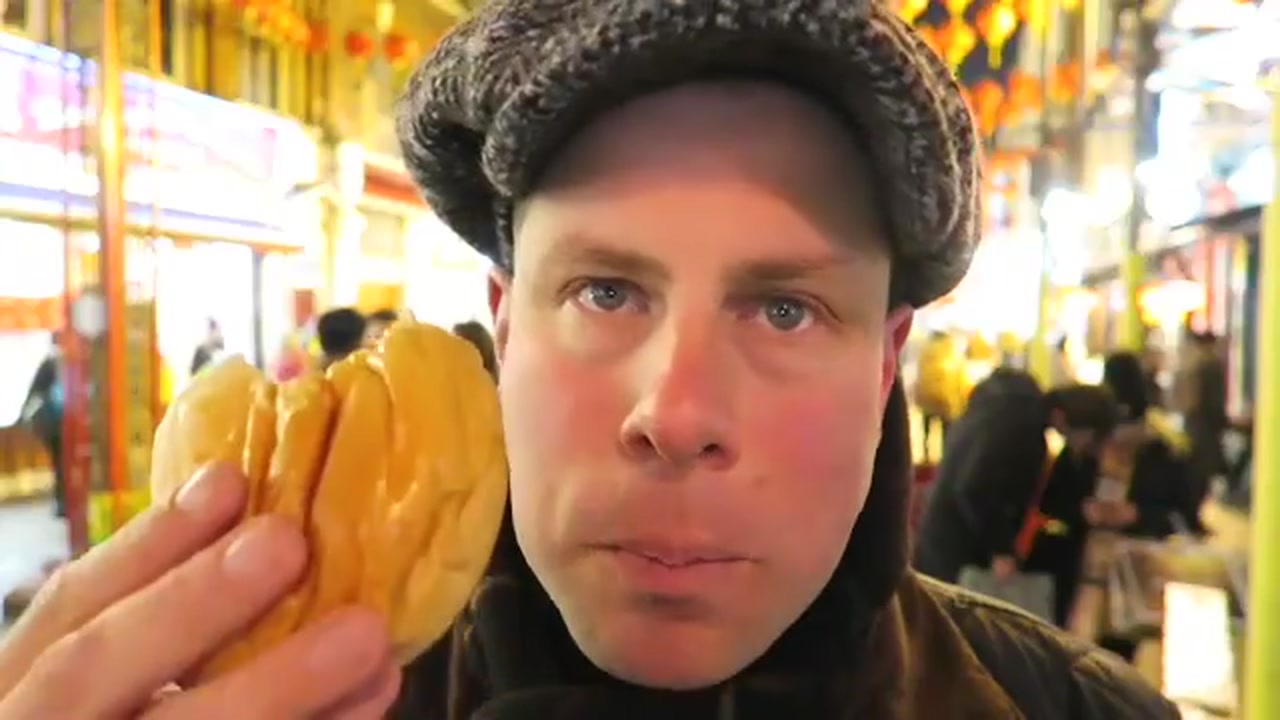
The char siu bun has a glossy golden exterior and a soft bread-like crumb surrounding the barbecue-pork filling. Opened for the camera, the contrast between the pale bun and darker filling is clear. It is a compact bakery snack well suited to walking, and it adds a different texture to the freshly boiled dumplings eaten earlier.
Bakery windows after dark
The film continues past several bakery and restaurant frontages rather than treating one business as the entire story. Bright counters can be seen through the glass, with trays arranged close to the pavement and customers moving in and out. These shops are part of Chinatown’s evening rhythm, offering food that can be taken away as well as eaten nearby.
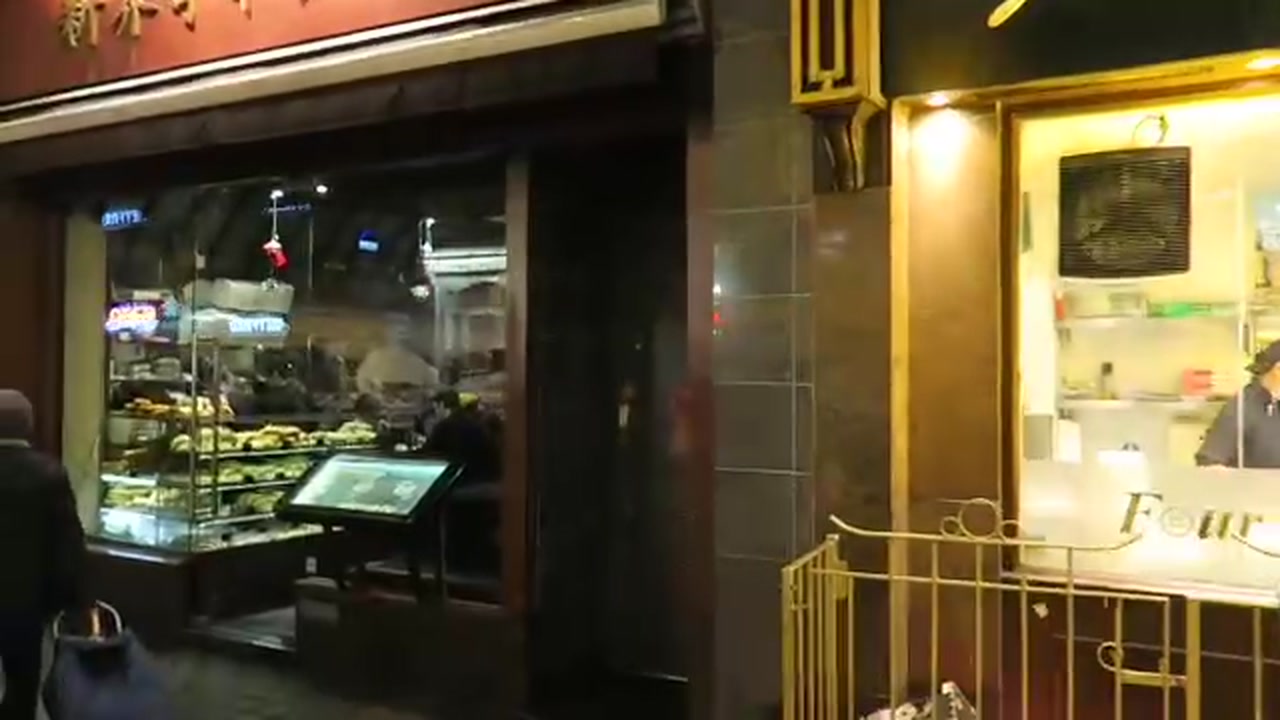
Seen in the archive film, the mixture of narrow façades, illuminated signs and food displays is inseparable from the overhead lanterns. The street itself becomes the connecting space between each tasting, with every stop only a short walk from the next.
Bubble tea beneath the lanterns
The final food stop is bubble tea. Barry carries the sealed cup back into the street and uses the wide straw to reach the dark tapioca pearls settled at the bottom. The drink brings the route to a close beneath the same red lanterns that marked the arrival in Chinatown.
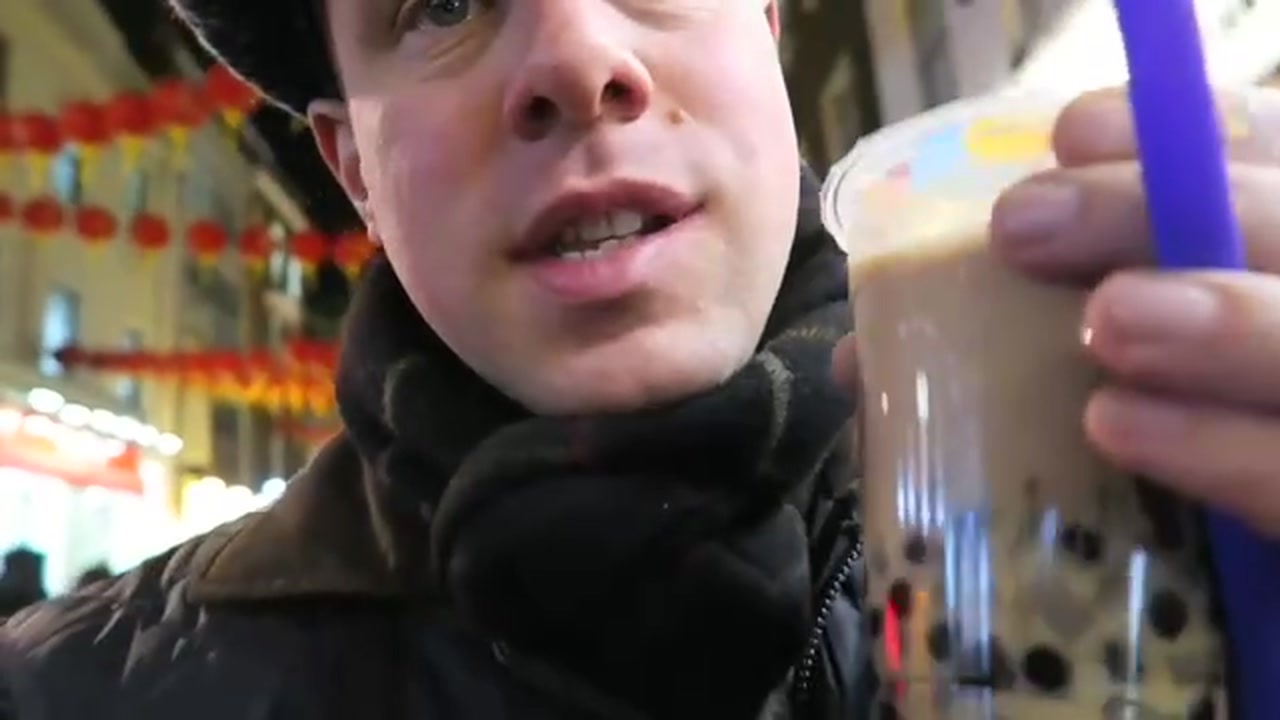
Together, the dumplings, buns and bubble tea form a record of a very particular London evening. The film does not attempt to catalogue every restaurant or explain the whole festival. Its value lies in the sequence of ordinary encounters: watching food being made, choosing from bakery windows and eating in the street while Chinatown prepared to welcome the Year of the Rooster.
